AFDP 3-60, page 9
Targeting
Air Force Doctrine Publication: Targeting
01 May 2026 (Wayback 2026-07-12; S2 Wire cited this URL as “JP 3-60”)
Searchable page text (OCR / PDF)
Air Force Doctrine Publication 3-60, Targeting
6
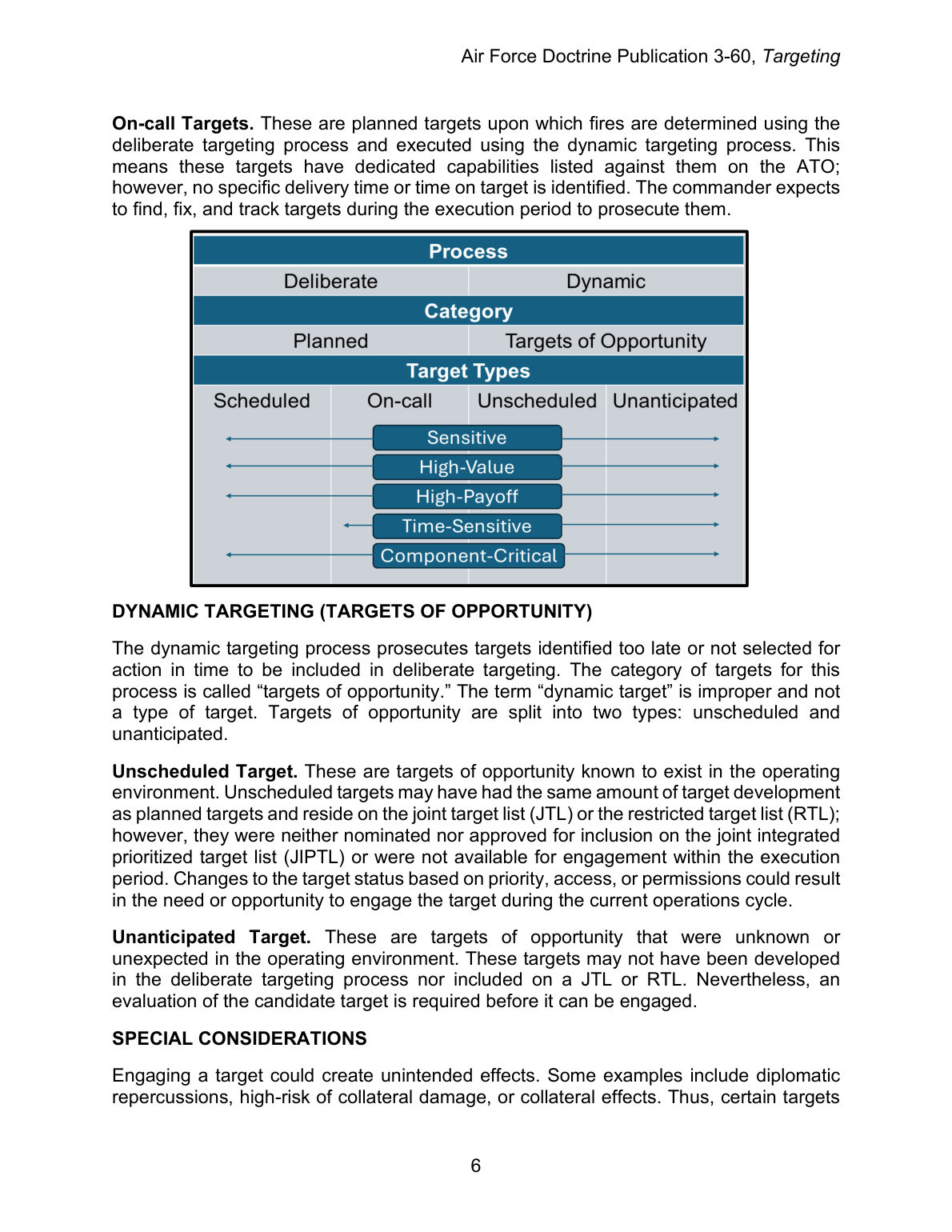
On-call Targets. These are planned targets upon which fires are determined using the
deliberate targeting process and executed using the dynamic targeting process. This
means these targets have dedicated capabilities listed against them on the ATO;
however, no specific delivery time or time on target is identified. The commander expects
to find, fix, and track targets during the execution period to prosecute them.
DYNAMIC TARGETING (TARGETS OF OPPORTUNITY)
The dynamic targeting process prosecutes targets identified too late or not selected for
action in time to be included in deliberate targeting. The category of targets for this
process is called “targets of opportunity.” The term “dynamic target” is improper and not
a type of target. Targets of opportunity are split into two types: unscheduled and
unanticipated.
Unscheduled Target. These are targets of opportunity known to exist in the operating
environment. Unscheduled targets may have had the same amount of target development
as planned targets and reside on the joint target list (JTL) or the restricted target list (RTL);
however, they were neither nominated nor approved for inclusion on the joint integrated
prioritized target list (JIPTL) or were not available for engagement within the execution
period. Changes to the target status based on priority, access, or permissions could result
in the need or opportunity to engage the target during the current operations cycle.
Unanticipated Target. These are targets of opportunity that were unknown or
unexpected in the operating environment. These targets may not have been developed
in the deliberate targeting process nor included on a JTL or RTL. Nevertheless, an
evaluation of the candidate target is required before it can be engaged.
SPECIAL CONSIDERATIONS
Engaging a target could create unintended effects. Some examples include diplomatic
repercussions, high-risk of collateral damage, or collateral effects. Thus, certain targets