ATP 2-33.4, page 12
Intelligence Analysis
Army Techniques Publication: Intelligence Analysis
2014 public edition (Archive.org)
Searchable page text (OCR / PDF)
Chapter 1
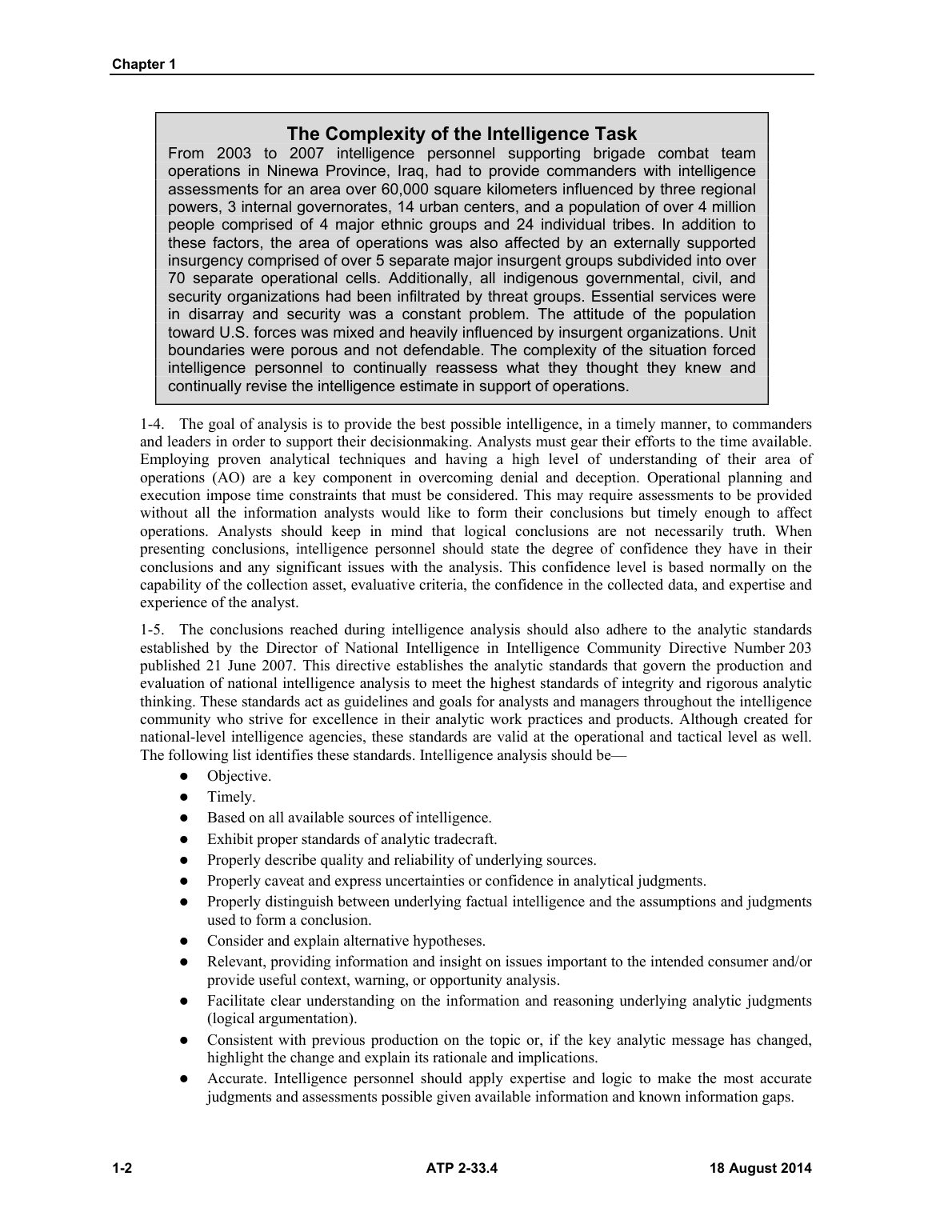
The Complexity of the Intelligence Task
From 2003 to 2007 intelligence personnel supporting brigade combat team
operations in Ninewa Province, Iraq, had to provide commanders with intelligence
assessments for an area over 60,000 square kilometers influenced by three regional
powers, 3 internal governorates, 14 urban centers, and a population of over 4 million
people comprised of 4 major ethnic groups and 24 individual tribes. In addition to
these factors, the area of operations was also affected by an externally supported
insurgency comprised of over 5 separate major insurgent groups subdivided into over
70 separate operational cells. Additionally, all indigenous governmental, civil, and
security organizations had been infiltrated by threat groups. Essential services were
in disarray and security was a constant problem. The attitude of the population
toward U.S. forces was mixed and heavily influenced by insurgent organizations. Unit
boundaries were porous and not defendable. The complexity of the situation forced
intelligence personnel to continually reassess what they thought they knew and
continually revise the intelligence estimate in support of operations.
1-4. The goal of analysis is to provide the best possible intelligence, in a timely manner, to commanders
and leaders in order to support their decisionmaking. Analysts must gear their efforts to the time available.
Employing proven analytical techniques and having a high level of understanding of their area of
operations (AO) are a key component in overcoming denial and deception. Operational planning and
execution impose time constraints that must be considered. This may require assessments to be provided
without all the information analysts would like to form their conclusions but timely enough to affect
operations. Analysts should keep in mind that logical conclusions are not necessarily truth. When
presenting conclusions, intelligence personnel should state the degree of confidence they have in their
conclusions and any significant issues with the analysis. This confidence level is based normally on the
capability of the collection asset, evaluative criteria, the confidence in the collected data, and expertise and
experience of the analyst.
1-5. The conclusions reached during intelligence analysis should also adhere to the analytic standards
established by the Director of National Intelligence in Intelligence Community Directive Number 203
published 21 June 2007. This directive establishes the analytic standards that govern the production and
evaluation of national intelligence analysis to meet the highest standards of integrity and rigorous analytic
thinking. These standards act as guidelines and goals for analysts and managers throughout the intelligence
community who strive for excellence in their analytic work practices and products. Although created for
national-level intelligence agencies, these standards are valid at the operational and tactical level as well.
The following list identifies these standards. Intelligence analysis should be—
@ Objective.
© Timely.
@ Based on all available sources of intelligence.
e Exhibit proper standards of analytic tradecraft.
© Properly describe quality and reliability of underlying sources.
e@ Properly caveat and express uncertainties or confidence in analytical judgments.
e Properly distinguish between underlying factual intelligence and the assumptions and judgments
used to form a conclusion.
e@ Consider and explain alternative hypotheses.
e Relevant, providing information and insight on issues important to the intended consumer and/or
provide useful context, warning, or opportunity analysis.
e Facilitate clear understanding on the information and reasoning underlying analytic judgments
(logical argumentation).
e Consistent with previous production on the topic or, if the key analytic message has changed,
highlight the change and explain its rationale and implications.
e Accurate. Intelligence personnel should apply expertise and logic to make the most accurate
judgments and assessments possible given available information and known information gaps.
1-2 ATP 2-33.4 18 August 2014
Chapter 1
1-2
ATP 2-33.4
18 August 2014
The Complexity of the Intelligence Task
From 2003 to 2007 intelligence personnel supporting brigade combat team
operations in Ninewa Province, Iraq, had to provide commanders with intelligence
assessments for an area over 60,000 square kilometers influenced by three regional
powers, 3 internal governorates, 14 urban centers, and a population of over 4 million
people comprised of 4 major ethnic groups and 24 individual tribes. In addition to
these factors, the area of operations was also affected by an externally supported
insurgency comprised of over 5 separate major insurgent groups subdivided into over
70 separate operational cells. Additionally, all indigenous governmental, civil, and
security organizations had been infiltrated by threat groups. Essential services were
in disarray and security was a constant problem. The attitude of the population
toward U.S. forces was mixed and heavily influenced by insurgent organizations. Unit
boundaries were porous and not defendable. The complexity of the situation forced
intelligence personnel to continually reassess what they thought they knew and
continually revise the intelligence estimate in support of operations.
1-4. The goal of analysis is to provide the best possible intelligence, in a timely manner, to commanders
and leaders in order to support their decisionmaking. Analysts must gear their efforts to the time available.
Employing proven analytical techniques and having a high level of understanding of their area of
operations (AO) are a key component in overcoming denial and deception. Operational planning and
execution impose time constraints that must be considered. This may require assessments to be provided
without all the information analysts would like to form their conclusions but timely enough to affect
operations. Analysts should keep in mind that logical conclusions are not necessarily truth. When
presenting conclusions, intelligence personnel should state the degree of confidence they have in their
conclusions and any significant issues with the analysis. This confidence level is based normally on the
capability of the collection asset, evaluative criteria, the confidence in the collected data, and expertise and
experience of the analyst.
1-5. The conclusions reached during intelligence analysis should also adhere to the analytic standards
established by the Director of National Intelligence in Intelligence Community Directive Number 203
published 21 June 2007. This directive establishes the analytic standards that govern the production and
evaluation of national intelligence analysis to meet the highest standards of integrity and rigorous analytic
thinking. These standards act as guidelines and goals for analysts and managers throughout the intelligence
community who strive for excellence in their analytic work practices and products. Although created for
national-level intelligence agencies, these standards are valid at the operational and tactical level as well.
The following list identifies these standards. Intelligence analysis should be—
Objective.
Timely.
Based on all available sources of intelligence.
Exhibit proper standards of analytic tradecraft.
Properly describe quality and reliability of underlying sources.
Properly caveat and express uncertainties or confidence in analytical judgments.
Properly distinguish between underlying factual intelligence and the assumptions and judgments
used to form a conclusion.
Consider and explain alternative hypotheses.
Relevant, providing information and insight on issues important to the intended consumer and/or
provide useful context, warning, or opportunity analysis.
Facilitate clear understanding on the information and reasoning underlying analytic judgments
(logical argumentation).
Consistent with previous production on the topic or, if the key analytic message has changed,
highlight the change and explain its rationale and implications.
Accurate. Intelligence personnel should apply expertise and logic to make the most accurate
judgments and assessments possible given available information and known information gaps.