ATP 2-33.4, page 35
Intelligence Analysis
Army Techniques Publication: Intelligence Analysis
2014 public edition (Archive.org)
Searchable page text (OCR / PDF)
Basic Structured Analytic Techniques
THREAT INTENTIONS MATRIX
3-19. The threat intentions matrix is a technique used to efficiently look at information from the threat’s
point of view. It is necessary for the analyst using the technique to have knowledge of the motivation,
goals, and objectives of the threat making the decision and to assess the criteria in the matrix from the
threat’s point of view.
Facts
3-20. When completed, the threat intentions matrix will help mitigate bias while providing insight into the
effect of each of the threat’s different decisionmaking criteria on their different options. The matrix gives
the analyst the ability to develop clear indicators for each option under study, permitting specific collection
planning.
3-21. With the threat’s decisionmaking criteria already established in the column headings, the analyst only
has to enter the alternatives or options being considered. Normally the matrix can be completed in less than
an hour. During the input of information into the matrix, new and potentially better options become
apparent, increasing the value of the technique.
3-22. The criteria used in the matrix are not as extensive as and quite possibly less relevant than criteria
derived during use of the weighted ranking technique. As a result, the insight gained may be less than that
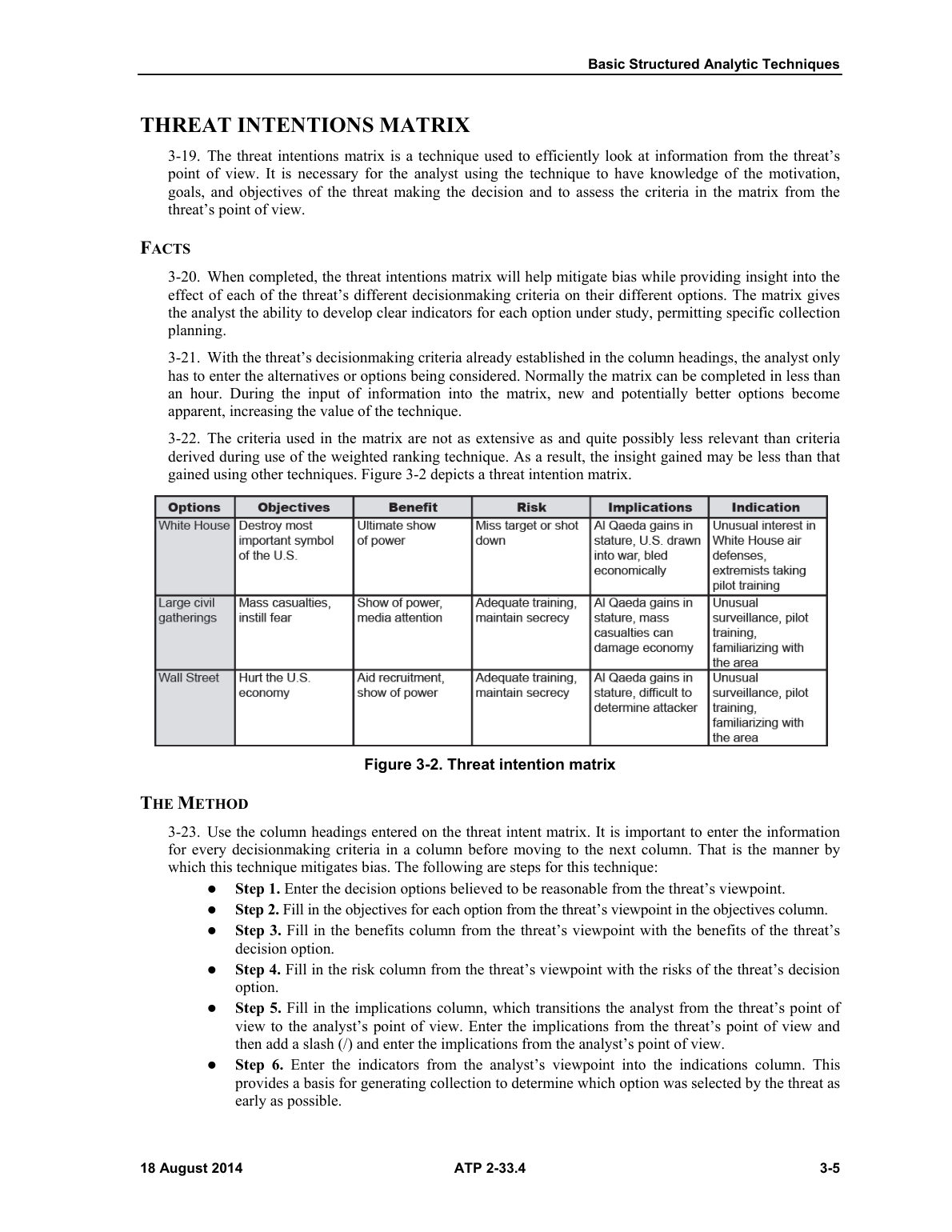
gained using other techniques. Figure 3-2 depicts a threat intention matrix.
[options | objectives [Benefit | Risk | Implications | Indication |
White House | Destroy most Ultimate show Miss target or shot [AT Qaeda gains in__| Unusual interest in
important symbol _ J of power down stature, U.S. drawn | White House air
of the US. into war, bled defenses,
economically extremists taking
pilot training
Targe civil [Mass casualties, [Show of power, __ | Adequate training, |Al Qaeda gains in_| Unusual
gatherings _ | instill fear media attention [maintain secrecy _| stature, mass surveillance, pilot
casualties can training,
damage economy | familiarizing with
the area
Wall Sireet_ [Hurt the US. ‘Aid recruitment, | Adequate training, | Al Qaeda gains in_ [Unusual
economy show of power maintain secrecy | stature, difficultto | surveillance, pilot
determine attacker | training,
familiarizing with
the area
Figure 3-2. Threat intention matrix
THE METHOD
3-23. Use the column headings entered on the threat intent matrix. It is important to enter the information
for every decisionmaking criteria in a column before moving to the next column. That is the manner by
which this technique mitigates bias. The following are steps for this technique:
e Step 1. Enter the decision options believed to be reasonable from the threat’s viewpoint.
e = Step 2. Fill in the objectives for each option from the threat’s viewpoint in the objectives column.
e = Step 3. Fill in the benefits column from the threat’s viewpoint with the benefits of the threat’s
decision option.
e@ Step 4. Fill in the risk column from the threat’s viewpoint with the risks of the threat’s decision
option.
e = Step 5. Fill in the implications column, which transitions the analyst from the threat’s point of
view to the analyst’s point of view. Enter the implications from the threat’s point of view and
then add a slash (/) and enter the implications from the analyst’s point of view.
e Step 6. Enter the indicators from the analyst’s viewpoint into the indications column. This
provides a basis for generating collection to determine which option was selected by the threat as
early as possible.
18 August 2014 ATP 2-33.4 3-5
Basic Structured Analytic Techniques
18 August 2014
ATP 2-33.4
3-5
THREAT INTENTIONS MATRIX
3-19. The threat intentions matrix is a technique used to efficiently look at information from the threat’s
point of view. It is necessary for the analyst using the technique to have knowledge of the motivation,
goals, and objectives of the threat making the decision and to assess the criteria in the matrix from the
threat’s point of view.
FACTS
3-20. When completed, the threat intentions matrix will help mitigate bias while providing insight into the
effect of each of the threat’s different decisionmaking criteria on their different options. The matrix gives
the analyst the ability to develop clear indicators for each option under study, permitting specific collection
planning.
3-21. With the threat’s decisionmaking criteria already established in the column headings, the analyst only
has to enter the alternatives or options being considered. Normally the matrix can be completed in less than
an hour. During the input of information into the matrix, new and potentially better options become
apparent, increasing the value of the technique.
3-22. The criteria used in the matrix are not as extensive as and quite possibly less relevant than criteria
derived during use of the weighted ranking technique. As a result, the insight gained may be less than that
gained using other techniques. Figure 3-2 depicts a threat intention matrix.
Figure 3-2. Threat intention matrix
THE METHOD
3-23. Use the column headings entered on the threat intent matrix. It is important to enter the information
for every decisionmaking criteria in a column before moving to the next column. That is the manner by
which this technique mitigates bias. The following are steps for this technique:
Step 1. Enter the decision options believed to be reasonable from the threat’s viewpoint.
Step 2. Fill in the objectives for each option from the threat’s viewpoint in the objectives column.
Step 3. Fill in the benefits column from the threat’s viewpoint with the benefits of the threat’s
decision option.
Step 4. Fill in the risk column from the threat’s viewpoint with the risks of the threat’s decision
option.
Step 5. Fill in the implications column, which transitions the analyst from the threat’s point of
view to the analyst’s point of view. Enter the implications from the threat’s point of view and
then add a slash (/) and enter the implications from the analyst’s point of view.
Step 6. Enter the indicators from the analyst’s viewpoint into the indications column. This
provides a basis for generating collection to determine which option was selected by the threat as
early as possible.