ATP 2-33.4, page 91
Intelligence Analysis
Army Techniques Publication: Intelligence Analysis
2014 public edition (Archive.org)
Searchable page text (OCR / PDF)
Analytic Support to Decisive Action
18 August 2014
ATP 2-33.4
6-5
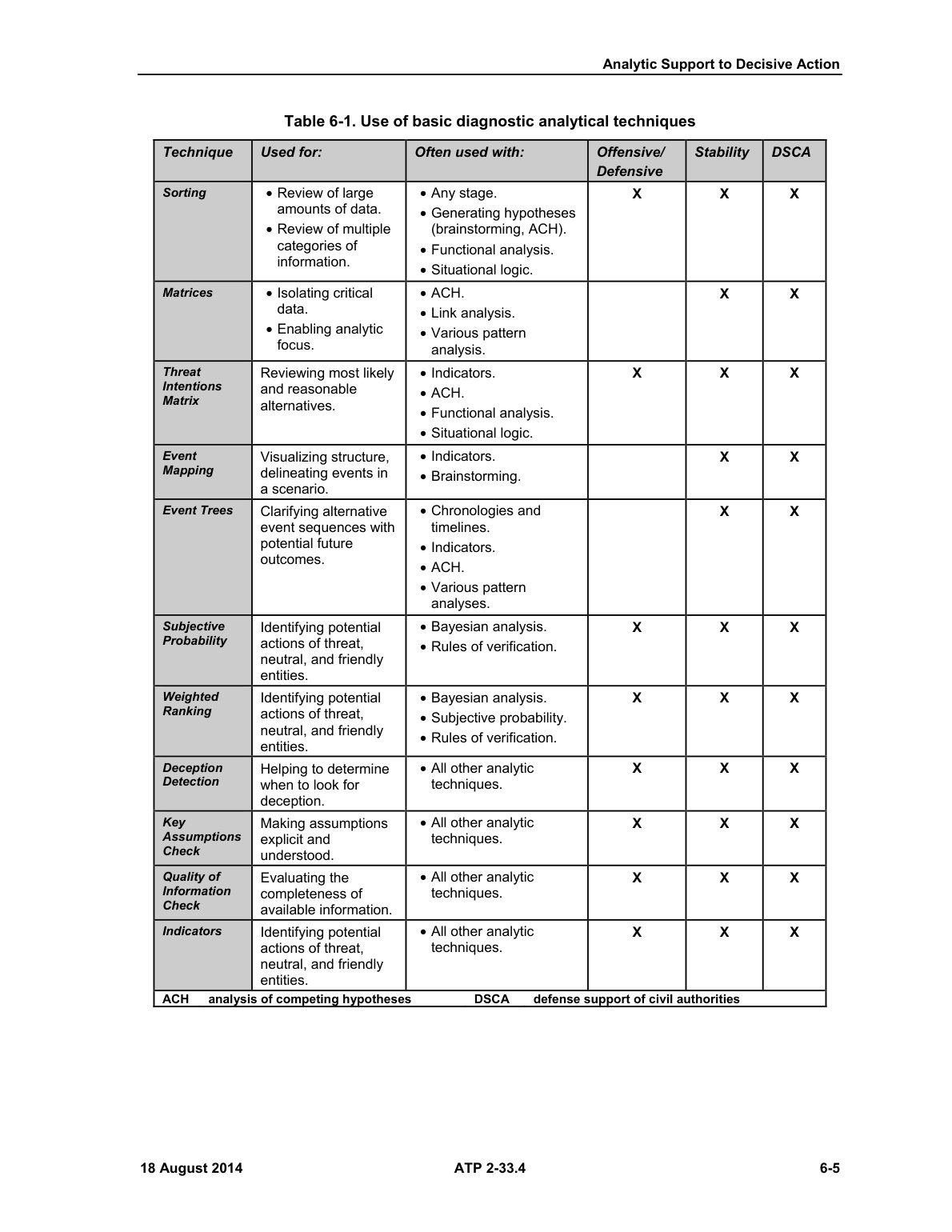
Table 6-1. Use of basic diagnostic analytical techniques
Technique
Used for:
Often used with:
Offensive/
Defensive
Stability
DSCA
Sorting
• Review of large
amounts of data.
• Review of multiple
categories of
information.
• Any stage.
• Generating hypotheses
(brainstorming, ACH).
• Functional analysis.
• Situational logic.
X
X
X
Matrices
• Isolating critical
data.
• Enabling analytic
focus.
• ACH.
• Link analysis.
• Various pattern
analysis.
X
X
Threat
Intentions
Matrix
Reviewing most likely
and reasonable
alternatives.
• Indicators.
• ACH.
• Functional analysis.
• Situational logic.
X
X
X
Event
Mapping
Visualizing structure,
delineating events in
a scenario.
• Indicators.
• Brainstorming.
X
X
Event Trees
Clarifying alternative
event sequences with
potential future
outcomes.
• Chronologies and
timelines.
• Indicators.
• ACH.
• Various pattern
analyses.
X
X
Subjective
Probability
Identifying potential
actions of threat,
neutral, and friendly
entities.
• Bayesian analysis.
• Rules of verification.
X
X
X
Weighted
Ranking
Identifying potential
actions of threat,
neutral, and friendly
entities.
• Bayesian analysis.
• Subjective probability.
• Rules of verification.
X
X
X
Deception
Detection
Helping to determine
when to look for
deception.
• All other analytic
techniques.
X
X
X
Key
Assumptions
Check
Making assumptions
explicit and
understood.
• All other analytic
techniques.
X
X
X
Quality of
Information
Check
Evaluating the
completeness of
available information.
• All other analytic
techniques.
X
X
X
Indicators
Identifying potential
actions of threat,
neutral, and friendly
entities.
• All other analytic
techniques.
X
X
X
ACH
analysis of competing hypotheses
DSCA
defense support of civil authorities