ATP 2-33.4, page 94
Intelligence Analysis
Army Techniques Publication: Intelligence Analysis
2014 public edition (Archive.org)
Searchable page text (OCR / PDF)
Chapter 6
6-8
ATP 2-33.4
18 August 2014
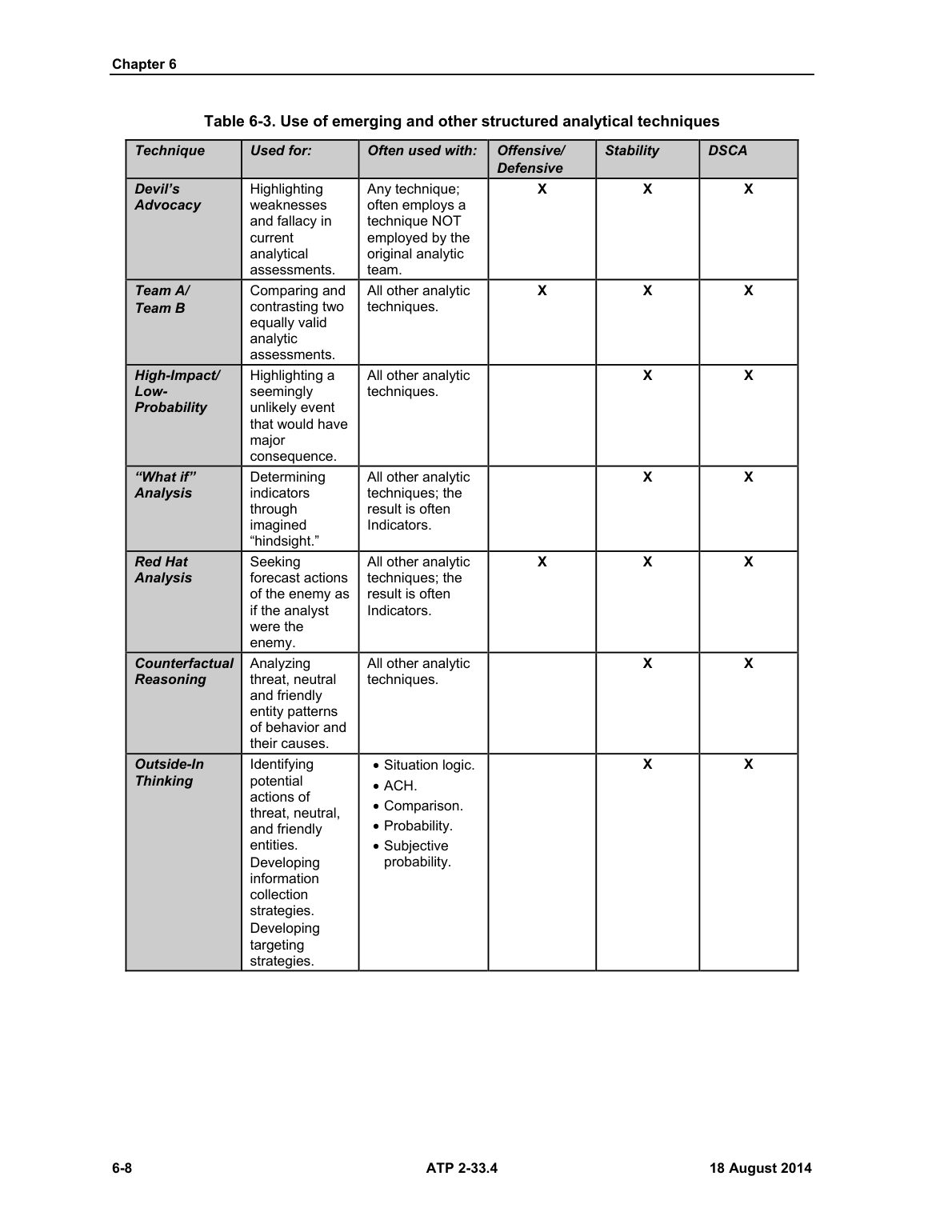
Table 6-3. Use of emerging and other structured analytical techniques
Technique
Used for:
Often used with:
Offensive/
Defensive
Stability
DSCA
Devil’s
Advocacy
Highlighting
weaknesses
and fallacy in
current
analytical
assessments.
Any technique;
often employs a
technique NOT
employed by the
original analytic
team.
X
X
X
Team A/
Team B
Comparing and
contrasting two
equally valid
analytic
assessments.
All other analytic
techniques.
X
X
X
High-Impact/
Low-
Probability
Highlighting a
seemingly
unlikely event
that would have
major
consequence.
All other analytic
techniques.
X
X
“What if”
Analysis
Determining
indicators
through
imagined
“hindsight.”
All other analytic
techniques; the
result is often
Indicators.
X
X
Red Hat
Analysis
Seeking
forecast actions
of the enemy as
if the analyst
were the
enemy.
All other analytic
techniques; the
result is often
Indicators.
X
X
X
Counterfactual
Reasoning
Analyzing
threat, neutral
and friendly
entity patterns
of behavior and
their causes.
All other analytic
techniques.
X
X
Outside-In
Thinking
Identifying
potential
actions of
threat, neutral,
and friendly
entities.
Developing
information
collection
strategies.
Developing
targeting
strategies.
• Situation logic.
• ACH.
• Comparison.
• Probability.
• Subjective
probability.
X
X