ATP 2-33.4, page 93
Intelligence Analysis
Army Techniques Publication: Intelligence Analysis
2014 public edition (Archive.org)
Searchable page text (OCR / PDF)
Analytic Support to Decisive Action
18 August 2014
ATP 2-33.4
6-7
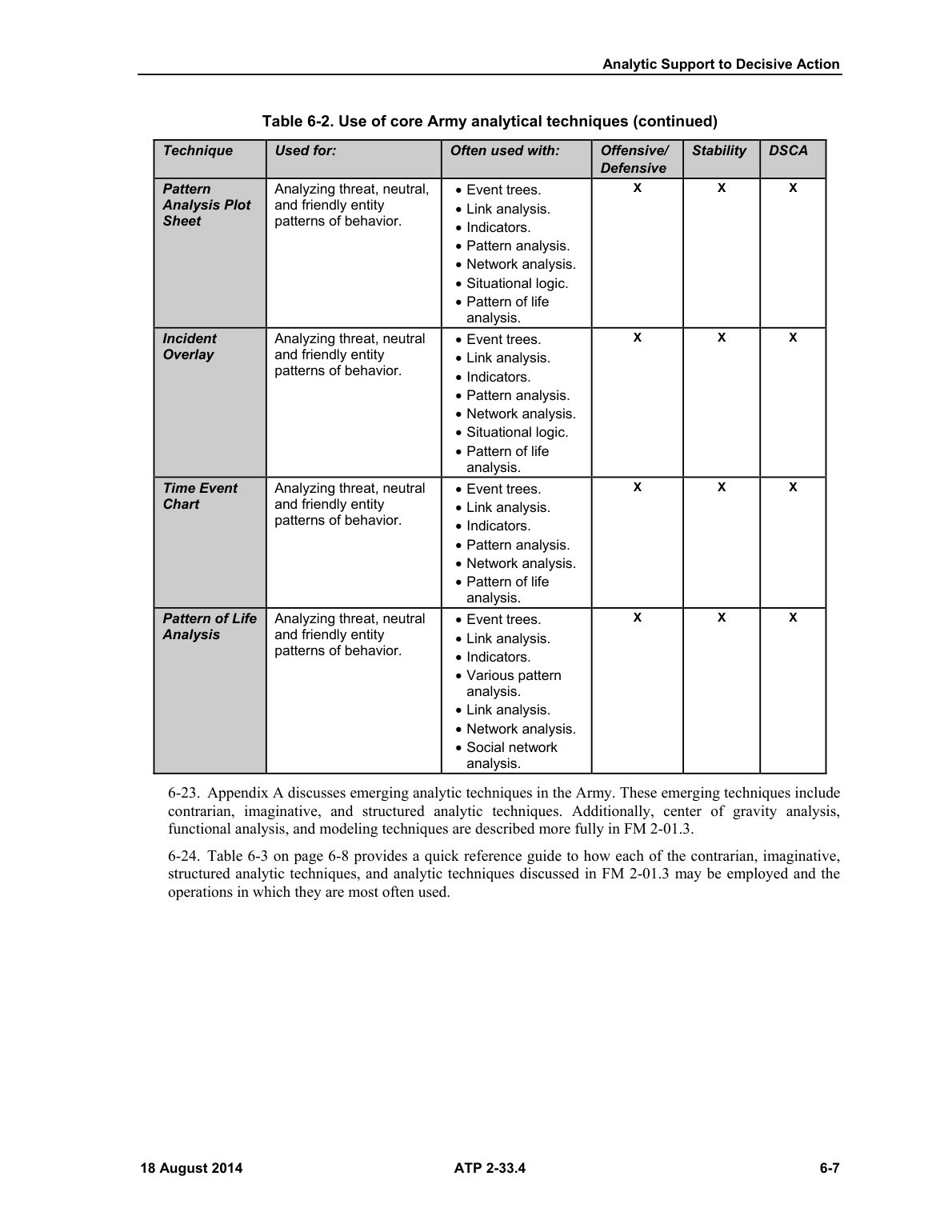
Table 6-2. Use of core Army analytical techniques (continued)
Technique
Used for:
Often used with:
Offensive/
Defensive
Stability
DSCA
Pattern
Analysis Plot
Sheet
Analyzing threat, neutral,
and friendly entity
patterns of behavior.
• Event trees.
• Link analysis.
• Indicators.
• Pattern analysis.
• Network analysis.
• Situational logic.
• Pattern of life
analysis.
X
X
X
Incident
Overlay
Analyzing threat, neutral
and friendly entity
patterns of behavior.
• Event trees.
• Link analysis.
• Indicators.
• Pattern analysis.
• Network analysis.
• Situational logic.
• Pattern of life
analysis.
X
X
X
Time Event
Chart
Analyzing threat, neutral
and friendly entity
patterns of behavior.
• Event trees.
• Link analysis.
• Indicators.
• Pattern analysis.
• Network analysis.
• Pattern of life
analysis.
X
X
X
Pattern of Life
Analysis
Analyzing threat, neutral
and friendly entity
patterns of behavior.
• Event trees.
• Link analysis.
• Indicators.
• Various pattern
analysis.
• Link analysis.
• Network analysis.
• Social network
analysis.
X
X
X
6-23. Appendix A discusses emerging analytic techniques in the Army. These emerging techniques include
contrarian, imaginative, and structured analytic techniques. Additionally, center of gravity analysis,
functional analysis, and modeling techniques are described more fully in FM 2-01.3.
6-24. Table 6-3 on page 6-8 provides a quick reference guide to how each of the contrarian, imaginative,
structured analytic techniques, and analytic techniques discussed in FM 2-01.3 may be employed and the
operations in which they are most often used.