JP 3-60, page 76
Joint Targeting
Joint Publication: Joint Targeting
31 January 2013 public edition
Searchable page text (OCR / PDF)
Chapter III
III-10
JP 3-60
(a) Work closely with J-3 and J-5 in developing targeting guidance, priorities,
and objectives for inclusion in the JFC’s planning guidance, planning directives, and daily
guidance letter.
(b) Conduct JIPOE in support of planning and execution. For further
information on JIPOE, see JP 2-01.3, Joint Intelligence Preparation of the Operational
Environment.
(c) Produce and maintain target intelligence products: TSAs, ETFs, target lists,
and target intelligence assessments.
See CJCSI 3370.01, Target Development Standards, and JP 2-0, Joint Intelligence, for more
details on target intelligence.
(d) Conduct target development including analysis, assessment, and
documentation.
(e) Manage the CTL, and coordinate target vetting with the national IC.
(f) Nominate targets for engagement based on all-source fusion analysis in the
JIOC and/or JISE, component intelligence organizations, and federated partners.
(g) Recommend targets for inclusion in the JIPTL in coordination with the
JFE.
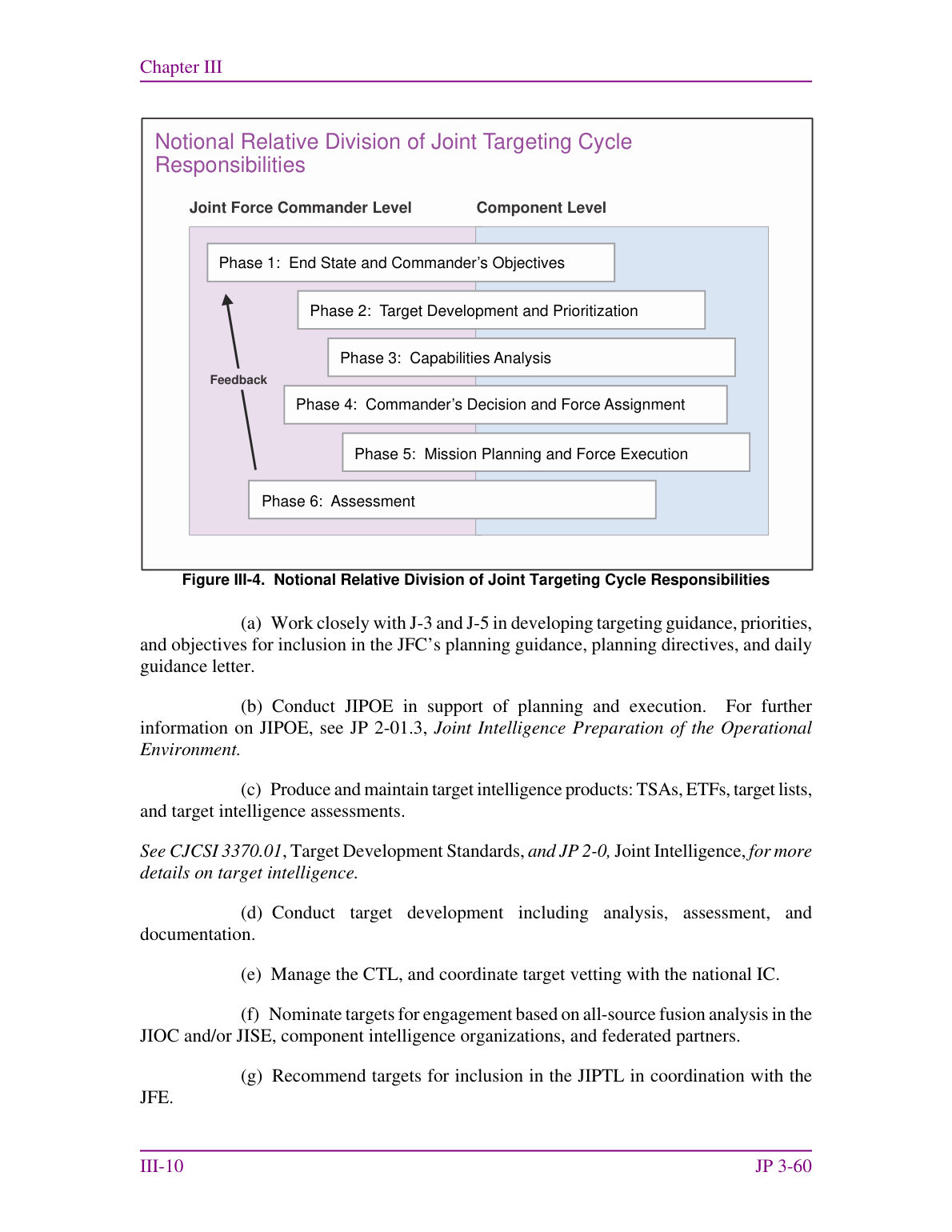
Figure III-4. Notional Relative Division of Joint Targeting Cycle Responsibilities
Notional Relative Division of Joint Targeting Cycle
Responsibilities
Feedback
Joint Force Commander Level
Component Level
Phase 1: End State and C
ommander’s Objectives
Phase 2: Target Development and Prioritization
Phase 3: Capabilities Analysis
Phase 4: Commander’s Decision and Force Assignment
Phase 5: Mission Planning and Force Execution
Phase 6: Assessment