MCRP 12-10B.1, page 259
Military Operations on Urbanized Terrain (MOUT)
Marine Corps Reference Publication: Military Operations on Urbanized Terrain (MOUT)
Public distribution statement A; S2 KOCOA cited as MCRP 12-10 b.1
Searchable page text (OCR / PDF)
Target
Loophole
Breach Hole
3-inch brick wall at 0-degree obliquity
22 rounds
75 rounds
3-inch brick wall at 45-degree obliquity
22 rounds
351 rounds
5-inch brick wall at 0-degree obliquity
32 rounds
501 rounds
8-inch reinforced concrete at 0-degree obliquity
22 rounds
75 rounds (Note: Reinforcing
rods still in place)
8-inch reinforced concrete at 45-degree obliquity
22 rounds
401 rounds (Note: Reinforcing rods
still in place)
1 Obliquity and depth tend to increase the amount of wall material removed.
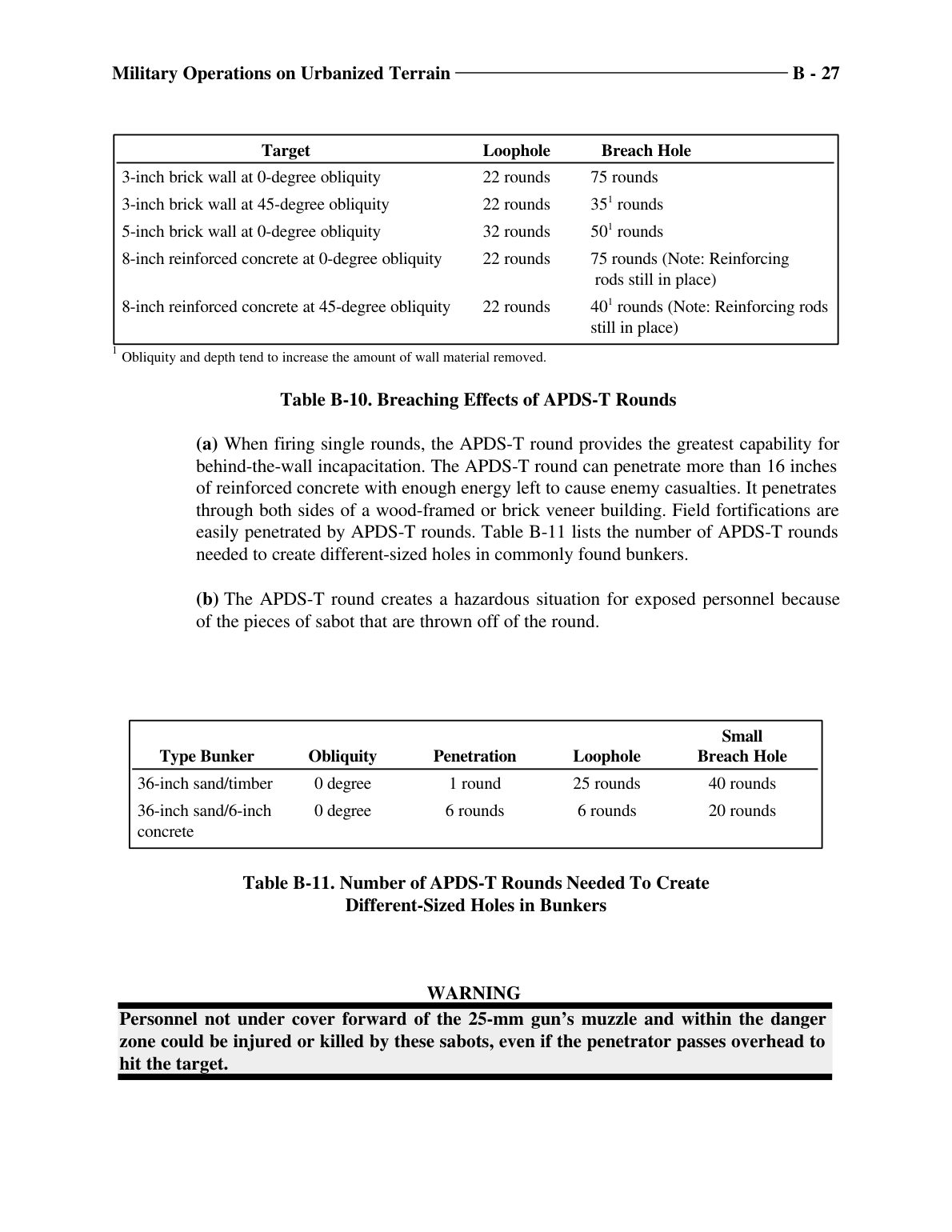
Table B-10. Breaching Effects of APDS-T Rounds
(a) When firing single rounds, the APDS-T round provides the greatest capability for
behind-the-wall incapacitation. The APDS-T round can penetrate more than 16 inches
of reinforced concrete with enough energy left to cause enemy casualties. It penetrates
through both sides of a wood-framed or brick veneer building. Field fortifications are
easily penetrated by APDS-T rounds. Table B-11 lists the number of APDS-T rounds
needed to create different-sized holes in commonly found bunkers.
(b) The APDS-T round creates a hazardous situation for exposed personnel because
of the pieces of sabot that are thrown off of the round.
Type Bunker
Obliquity
Penetration
Loophole
Small
Breach Hole
36-inch sand/timber
0 degree
1 round
25 rounds
40 rounds
36-inch sand/6-inch
concrete
0 degree
6 rounds
6 rounds
20 rounds
Table B-11. Number of APDS-T Rounds Needed To Create
Different-Sized Holes in Bunkers
WARNING
Personnel not under cover forward of the 25-mm gun’s muzzle and within the danger
zone could be injured or killed by these sabots, even if the penetrator passes overhead to
hit the target.
Military Operations on Urbanized Terrain
B - 27