MCRP 12-10B.1, page 279
Military Operations on Urbanized Terrain (MOUT)
Marine Corps Reference Publication: Military Operations on Urbanized Terrain (MOUT)
Public distribution statement A; S2 KOCOA cited as MCRP 12-10 b.1
Searchable page text (OCR / PDF)
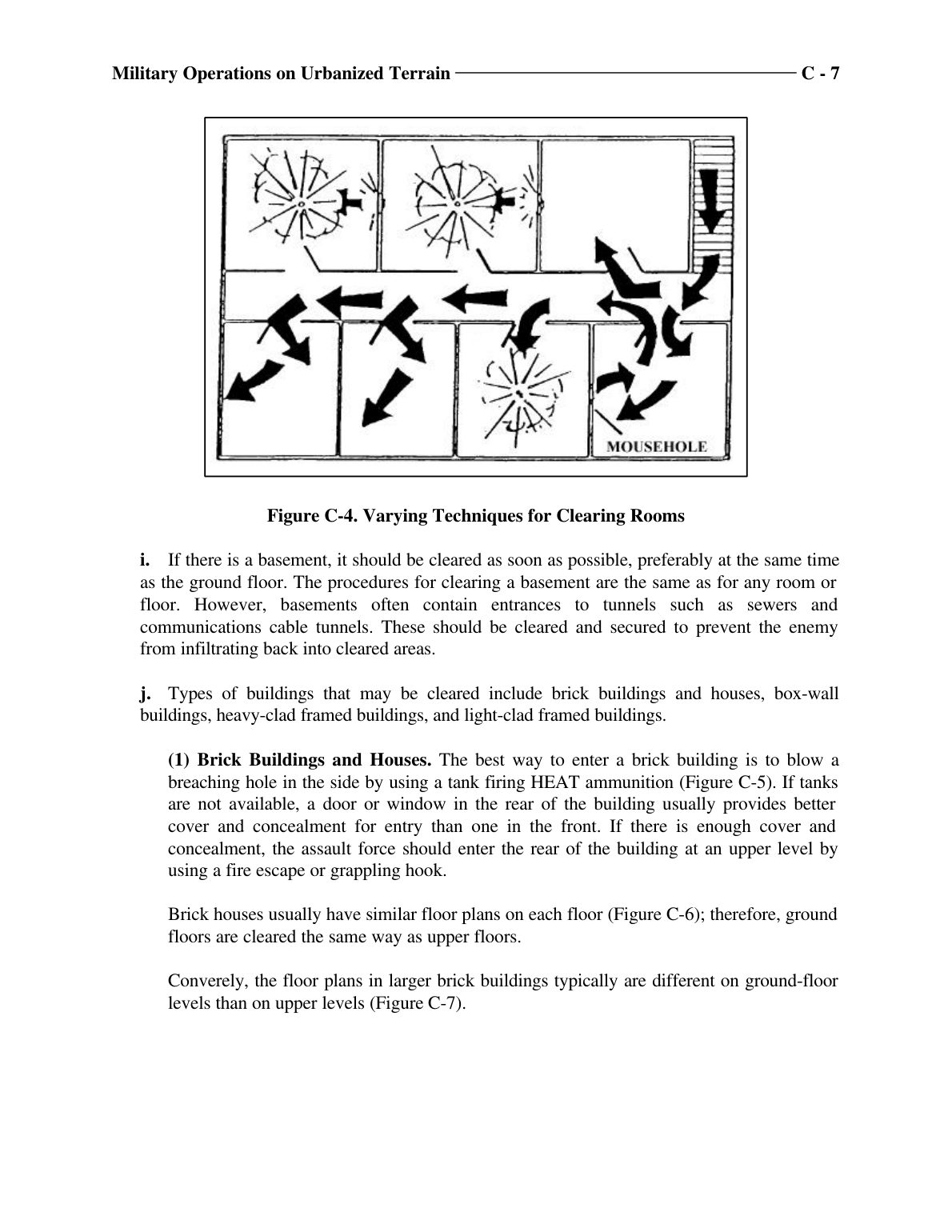
Figure C-4. Varying Techniques for Clearing Rooms
i.
If there is a basement, it should be cleared as soon as possible, preferably at the same time
as the ground floor. The procedures for clearing a basement are the same as for any room or
floor. However, basements often contain entrances to tunnels such as sewers and
communications cable tunnels. These should be cleared and secured to prevent the enemy
from infiltrating back into cleared areas.
j.
Types of buildings that may be cleared include brick buildings and houses, box-wall
buildings, heavy-clad framed buildings, and light-clad framed buildings.
(1) Brick Buildings and Houses. The best way to enter a brick building is to blow a
breaching hole in the side by using a tank firing HEAT ammunition (Figure C-5). If tanks
are not available, a door or window in the rear of the building usually provides better
cover and concealment for entry than one in the front. If there is enough cover and
concealment, the assault force should enter the rear of the building at an upper level by
using a fire escape or grappling hook.
Brick houses usually have similar floor plans on each floor (Figure C-6); therefore, ground
floors are cleared the same way as upper floors.
Converely, the floor plans in larger brick buildings typically are different on ground-floor
levels than on upper levels (Figure C-7).
Military Operations on Urbanized Terrain
C - 7