MCRP 12-10B.1, page 290
Military Operations on Urbanized Terrain (MOUT)
Marine Corps Reference Publication: Military Operations on Urbanized Terrain (MOUT)
Public distribution statement A; S2 KOCOA cited as MCRP 12-10 b.1
Searchable page text (OCR / PDF)
(1) Basements and Ground Floors. Basements require preparation similar to that of the
ground floor. Any underground system that is not used by the defender but that could
provide enemy access to the position must be blocked.
(a) Doors. Unused doors should be locked, nailed shut, blocked, and reinforced with
furniture, sandbags, or other field expedients. Outside doors can be boobytrapped by
engineers or other personnel.
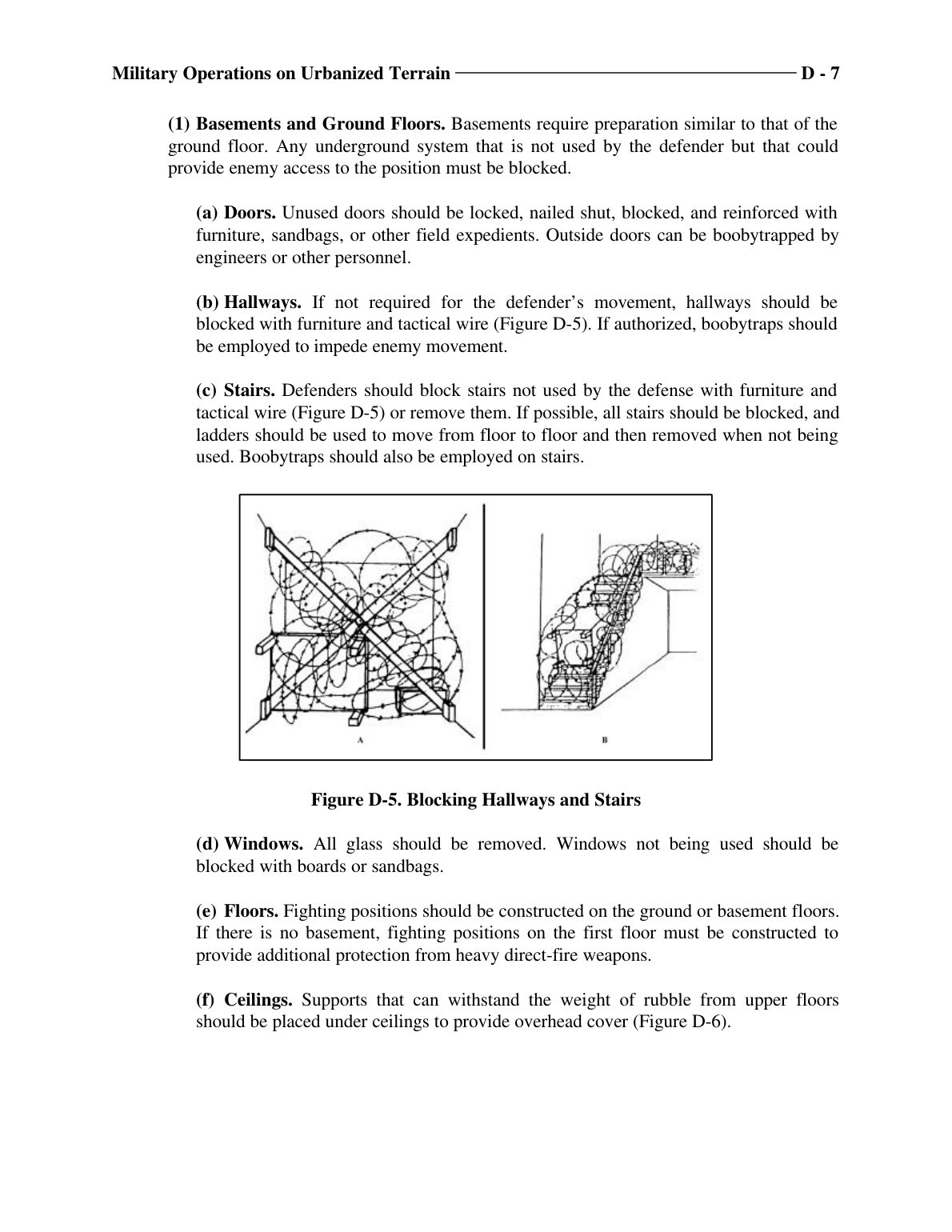
(b) Hallways. If not required for the defender’s movement, hallways should be
blocked with furniture and tactical wire (Figure D-5). If authorized, boobytraps should
be employed to impede enemy movement.
(c) Stairs. Defenders should block stairs not used by the defense with furniture and
tactical wire (Figure D-5) or remove them. If possible, all stairs should be blocked, and
ladders should be used to move from floor to floor and then removed when not being
used. Boobytraps should also be employed on stairs.
Figure D-5. Blocking Hallways and Stairs
(d) Windows. All glass should be removed. Windows not being used should be
blocked with boards or sandbags.
(e) Floors. Fighting positions should be constructed on the ground or basement floors.
If there is no basement, fighting positions on the first floor must be constructed to
provide additional protection from heavy direct-fire weapons.
(f) Ceilings. Supports that can withstand the weight of rubble from upper floors
should be placed under ceilings to provide overhead cover (Figure D-6).
Military Operations on Urbanized Terrain
D - 7