S2 Search · Reading list

S2 Actual reading list

Books from S2 Actual on Goodreads, organized by his shelves and topic buckets (intel lists, military history, logistics, etc.). Metadata filled via Open Library.

Not official S2 Underground. Independent fan index — not affiliated with or endorsed by S2. Official hub: linktr.ee/S2_underground. S2 materials are CC BY-NC-SA 4.0.

S2 topic buckets (Goodreads)

Subjects & genres

402 books · Read · page 1 of 17

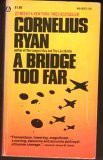
A Bridge Too Far

Cornelius Ryan

★★★★★
Read Military history WWII Air power ISBN 9780450837319

Popular Library · Apr 05, 1974

Another classic WWII Book This book is a powerful and well documented account of Operation Marker Garden. Mr. Ryan gives a vivid desciption and analysis of why Monty's ambitious plan failed. He covers both sides of the story (Allies and Axis) at such great lengths that you almost feel as if you are right in the middle of the action yourself. The most compelling part of Mr. Ryan's book is his perspective of this disaster from the individual soldier level, both officer and enlisted. The drama that resulted from this opeartion, especially in Arnhem, will keep you turning the pages to find out what happens in the end. I definitely recommend this book for anyone who has read Mr. Ryan's other books (The Longest Day, The Last Battle), or has an interest in WWII, and airborne operations. The movie that was made based on this book is also a classic.
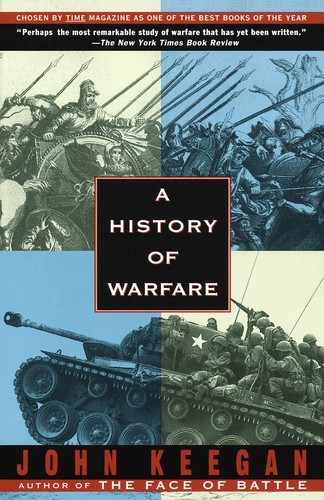
A History of Warfare

John Keegan

★★★★★
Read Intel history Strategy / theory ISBN 0679730826

Random House · 1994

The acclaimed author of The Face of Battle examines centures of conflict in a variety of diverse societies and cultures. "Keegan is at once the most readable and the most original of living military historians . . . A History of Warfare is perhaps the most remarkable study of warfare that has yet been written."--The New York Times Book Review.

A Spy Among Friends: Kim Philby and the Great Betrayal

Ben Macintyre

★★★★★
Read Cold War Espionage Russia / USSR Biography ISBN 9780804136631

Crown · 2014

Master storyteller Ben Macintyre’s most ambitious work to date brings to life the twentieth century’s greatest spy story. Kim Philby was the greatest spy in history, a brilliant and charming man who rose to head Britain’s counterintelligence against the Soviet Union during the height of the Cold War—while he was secretly working for the enemy. And nobody thought he knew Philby like Nicholas Elliott, Philby’s best friend and fellow officer in MI6. The two men had gone to the same schools, belonged to the same exclusive clubs, grown close through the crucible of wartime intelligence work and long nights of drink and revelry. It was madness for one to think the other might be a communist spy, bent on subverting Western values and the power of the free world. But Philby was secretly betraying his friend. Every word Elliott breathed to Philby was transmitted back to Moscow—and not just Elliott’s words, for in America, Philby had made another powerful friend: James Jesus Angleton, the crafty, paranoid head of CIA counterintelligence. Angleton's and Elliott’s unwitting disclosures helped Philby sink almost every important Anglo-American spy operation for twenty years, leading countless operatives to their doom. Even as the web of suspicion closed around him, and Philby was driven to greater lies to protect his cover, his two friends never abandoned him—until it was too late. The stunning truth of his betrayal would have devastating consequences on the two men who thought they knew him best, and on the intelligence services he left crippled in his wake. Told with heart-pounding suspense and keen psychological insight, and based on personal papers and never-before-seen British intelligence files, A Spy Among Friends is Ben Macintyre’s best book yet, a high-water mark in Cold War history telling.

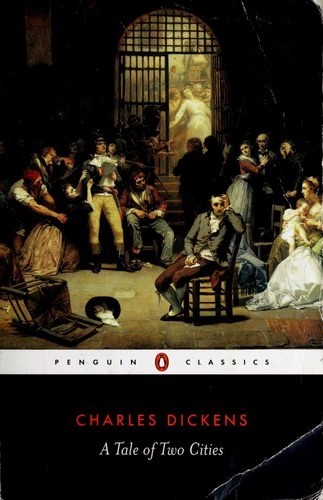
A Tale of Two Cities

Charles Dickens

★★★★★
Read Revolution ISBN 9780141439600

Penguin Books · 2003

A Tale of Two Cities is Charles Dickens’s great historical novel, set against the violent upheaval of the French Revolution. The most famous and perhaps the most popular of his works, it compresses an event of immense complexity to the scale of a family history, with a cast of characters that includes a bloodthirsty ogress and an antihero as believably flawed as any in modern fiction. Though the least typical of the author’s novels, A Tale of Two Cities still underscores many of his enduring themes—imprisonment, injustice, social anarchy, resurrection, and the renunciation that fosters renewal.

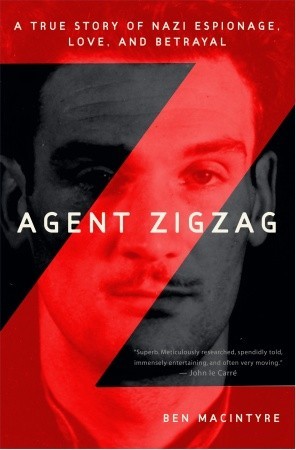
Agent Zigzag: A True Story of Nazi Espionage, Love, and Betrayal

Ben Macintyre

★★★★★
Read Basic intel Intel history WWII Espionage Intel history Biography ISBN 9780307353405

Harmony Books · 2007

Eddie Chapman was a charming criminal, a con man, and a philanderer. He was also one of the most remarkable double agents Britain has ever produced. Inside the traitor was a man of loyalty; inside the villain was a hero. The problem for Chapman, his spymasters, and his lovers was to know where one persona ended and the other began. In 1941, after training as a German spy in occupied France, Chapman was parachuted into Britain with a revolver, a wireless, and a cyanide pill, with orders from the Abwehr to blow up an airplane factory. Instead, he contacted MI5, the British Secret Service. For the next four years, Chapman worked as a double agent, a lone British spy at the heart of the German Secret Service who at one time volunteered to assassinate Hitler for his countrymen. Crisscrossing Europe under different names, all the while weaving plans, spreading disinformation, and, miraculously, keeping his stories straight under intense interrogation, he even managed to gain some profit and seduce beautiful women along the way. The Nazis feted Chapman as a hero and awarded him the Iron Cross. In Britain, he was pardoned for his crimes, becoming the only wartime agent to be thus rewarded. Both countries provided for the mother of his child and his mistress. Sixty years after the end of the war, and ten years after Chapman’s death, MI5 has now declassified all of Chapman’s files, releasing more than 1,800 pages of top secret material and allowing the full story of Agent Zigzag to be told for the first time. A gripping story of loyalty, love, and treachery, Agent Zigzag offers a unique glimpse into the psychology of espionage, with its thin and shifting line between fidelity and betrayal.

No cover · Amazon

Alexander Dolgun's story: An American in the Gulag

Alexander Dolgun

★★★★★
Read Advanced intel Biographies Privacy Russia / USSR

Alexander Dolgun, from embassy employee, to prisoner, then falsely convicted of being a terrorist against Russia and sentenced to hard labor. Released after eight long years he is finally able to recount the experience of being transported to and between prisons, interactions and friendships with other prisoners, the day to day drudgery of trying to stay alive under horrendous conditions which involved trying to meet ridiculously high work quotas for extremely strenuous jobs while in a constant state of starvation and often, sickness.

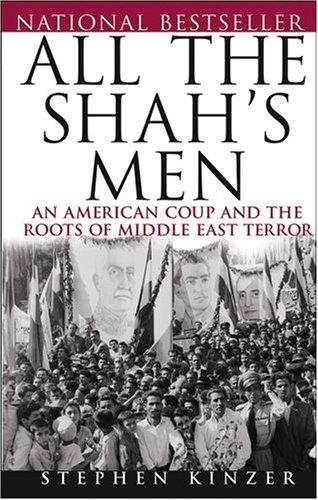
All the Shah's Men: An American Coup and the Roots of Middle East Terror

Stephen Kinzer

★★★★★
Read Advanced intel Intel history Military history Espionage GWOT Middle East Intel history Orthodox / theology ISBN 9780471678786

Wiley · August 12, 2004

Half a century ago, the United States overthrew a Middle Eastern government for the first time. The victim was Mohammad Mossadegh, the democratically elected prime minister of Iran. Although the coup seemed a success at first, today it serves as a chilling lesson about the dangers of foreign intervention.In this book, veteran New York Times correspondent Stephen Kinzer gives the first full account of this fateful operation. His account is centered around an hour-by-hour reconstruction of the events of August 1953, and concludes with an assessment of the coup's "haunting and terrible legacy." Operation Ajax, as the plot was code-named, reshaped the history of Iran, the Middle East, and the world. It restored Mohammad Reza Shah to the Peacock Throne, allowing him to impose a tyranny that ultimately sparked the Islamic Revolution of 1979. The Islamic Revolution, in turn, inspired fundamentalists throughout the Muslim world, including the Taliban and terrorists who thrived under its protection."It is not far-fetched," Kinzer asserts in this book, "to draw a line from Operation Ajax through the Shah's repressive regime and the Islamic Revolution to the fireballs that engulfed the World Trade Center in New York."Drawing on research in the United States and Iran, and using material from a long-secret CIA report, Kinzer explains the background of the coup and tells how it was carried out. It is a cloak-and-dagger story of spies, saboteurs, and secret agents. There are accounts of bribes, staged riots, suitcases full of cash, and midnight meetings between the Shah and CIA agent Kermit Roosevelt, who was smuggled in and out of the royal palace under a blanket in the back seat of a car. Roosevelt,the grandson of President Theodore Roosevelt, was a real-life James Bond in an era when CIA agents operated mainly by their wits. After his first coup attempt failed, he organized a second attempt that succeeded three days later.The colorful cast of characters includes the terrified young Shah, who fled his country at the first sign of trouble; General H. Norman Schwarzkopf, father of the Gulf War commander and the radio voice of "Gang Busters," who flew to Tehran on a secret mission that helped set the coup in motion; and the fiery Prime Minister Mossadegh, who outraged the West by nationalizing the immensely profitable Anglo-Iranian Oil Company. The British, outraged by the seizure of their oil company, persuaded President Dwight Eisenhower that Mossadegh was leading Iran toward Communism. Eisenhower and Prime Minister Winston Churchill of Great Britain became the coup's main sponsors. Brimming with insights into Middle Eastern history and American foreign policy, this book is an eye-opening look at an event whose unintended consequences - Islamic revolution and violent anti-Americanism--have shaped the modern world. As the United States assumes an ever-widening role in the Middle East, it is essential reading.

Argo: How the CIA & Hollywood Pulled Off the Most Audacious Rescue in History

Antonio J. Méndez

★★★★★
Read Basic intel Biographies Intel history Espionage Middle East Intel history ISBN 9780670026227

Viking · 2012

The true account of the 1979 rescue of six American hostages from Iran On November 4, 1979, Iranian militants stormed the American embassy in Tehran and held dozens of Americans hostage, sparking a 444-day ordeal and a quake in global politics that still reverberates today. Beaneath this crisis another shocking story was known by only a select few: six Americans escaped the embassy and hid within a city roiling with suspicion and fear. A top-level CIA officer named Antonio Mendez devised an ingenious yet incredibly risky plan to rescue them before they were detected. Disguising himself as a Hollywood producer, and supported by a cast of expert forgers, deep-cover CIA operatives, foreign agents, and Hollywood special-effects artists, Mendez traveled to Tehran under the guise of scouting locations for a fake science fiction film called "Argo." While pretending to find the ideal film backdrops, Mendez and a colleague succeeded in contacting the escapees and eventually smuggled them out of Iran. After more than three decades, Antonio Mendez finally details the extraordinarily complex and dangerous operation he led. A riveting story of secret identities, international intrigue, and good old-fashioned American ingenuity, Argo is the pulse-pounding account of the history-making collusion between Hollywood and high-stakes espionage.

No cover · Amazon

Armageddon: The Battle for Germany, 1944-1945

Max Hastings

★★★★★
Read Military history Advanced intel WWII

In September 1944, the Allies believed that Hitler’s army was beaten and expected the bloodshed to end by Christmas. Yet a series of mistakes and setbacks, including the Battle of the Bulge, drastically altered this timetable and led to eight more months of brutal fighting. With Armageddon, the eminent military historian Max Hastings gives us memorable accounts of the great battles and captures their human impact on soldiers and civilians. He tells the story of both the Eastern and Western Fronts, raising provocative questions and offering vivid portraits of the great leaders. This rousing and revelatory chronicle brings to life the crucial final months of the twentieth century’s greatest global conflict.

No cover · Amazon

Band of Brothers: E Company, 506th Regiment, 101st Airborne from Normandy to Hitler's Eagle's Nest

Stephen E. Ambrose

★★★★★
Read WWII

As good a rifle company as any, Easy Company, 506th Airborne Division, US Army, kept getting tough assignments--responsible for everything from parachuting into France early DDay morning to the capture of Hitler's Eagle's Nest at Berchtesgaden. In "Band of Brothers," Ambrose tells of the men in this brave unit who fought, went hungry, froze & died, a company that took 150% casualties & considered the Purple Heart a badge of office. Drawing on hours of interviews with survivors as well as the soldiers' journals & letters, Stephen Ambrose recounts the stories, often in the men's own words, of these American heroes. Foreword "We wanted those wings"; Camp Toccoa, 7-12/42 "Stand up & hook up"; Benning, Mackall, Bragg, Shanks, 12/42-9/43 "Duties of the latrine orderly"; Aldbourne, 9/43-3/44 "Look out, Hitler! Here we come!"; Slapton Sands, Uppottery, 4/1-6/5/44 "Follow me"; Normandy, 6/6/44 "Move out!"; Carentan, 6/7-7/12/44 Healing wounds & scrubbed missions; Aldbourne, 7/13-9/16/44 "Hell's highway"; Holland, 9/17-10/1/44 Island; Holland, 10/2-11/25/44 Resting, recovering & refitting: Mourmelon-le-Grand, 11/26-12/18/44 "They got us surrounded-the poor bastards"; Bastogne, 12/19-31/44 Breaking point; Bastogne, 1/1-13/45 Attack; Noville, 1/14-17/45 Patrol: Haguenau, 1/18-2/23/45 "Best feeling in the world": Mourmelon, 2/25-4/2/45 Getting to know the enemy: Germany, 4/2-30/45 Drinking Hitler's champagne; Berchtesgaden, 5/1-8/45 Soldier's dream life; Austria, 5/8-7/31/45 Postwar careers; 1945-91 Acknowledgments & Sources Index

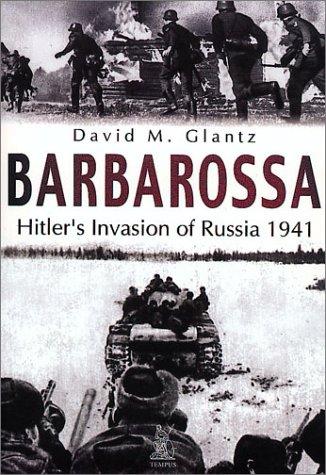
Barbarossa: Hitler's Invasion of Russia 1941

David M. Glantz

★★★★★
Read Military history WWII Cold War Russia / USSR ISBN 075241979X

Tempus · 2001

From a world expert on Hitler's war in Russia's western borders to the immediate outskirts of Leningrad, Moscow and Rostov in the shockingly brief period of less than six months. The sudden, deep, relentless German advance virtually destroyed the entire peacetime Red Army and captured almost 40 percent of European Russia before expiring inexplicably at the gates of Moscow and Leningrad. An invasion designed to achieve victory in three to six weeks failed and, four years later, resulted in unprecedented and total German defeat.

No cover · Amazon

Besieged: The Epic Battle For Cholm

Jason D. Mark

★★★★★
Read Advanced intel Military history Logistics WWII Naval Air power Guerrilla / COIN Russia / USSR Logistics

Kampfgruppe Scherer’s outstanding feat of arms was one of Germany’s most famous military achievements during the Second World War. With only a few thousand men from all branches of the service, including mountain troopers, elderly reservists, police officers, navy drivers, SS partisan hunters and supply troops, Generalmajor Theodor Scherer was ordered to hold Cholm in the face of a superior enemy force. That Scherer and his men prevailed is now an historical fact but analysis of daily radio traffic and combat reports reveals that the pocket’s survival was precarious; at times, even senior commanders doubted if it could be saved. On several occasions the Soviet onslaught looked poised to inflict the death blow but somehow the exhausted men of Cholm grimly clung to a few resistance nests upon which a new line was anchored. General Scherer, a popular leader and inspiration to all his soldiers, despaired many times and was forced to continually plead for more men, more supplies and more aerial support. Urgent demands by other sectors meant Kampfgruppe Scherer was drip-fed just enough supplies and reinforcements to stay alive until, eventually, a relief force forged a permanent link and freed the exhausted survivors. After a catastrophic winter of setbacks and resounding defeats for the Wehrmacht, the General and his men were lauded as heroes and recognised with an arm shield that marked them as “Cholmkämpfer,” men of exceptional courage who had prevailed despite overwhelming odds. Primary sources have been utilised for the first time to present this battle in a detailed day-by-day format, from the forlorn days of January and February to liberation in early May.

No cover · Amazon

Black Hawk Down: A Story of Modern War

Mark Bowden

★★★★★
Read Basic intel Advanced intel Military history Intel history

On October 3, 1993, about a hundred U.S. soldiers were dropped by helicopter into a teeming market in the heart of Mogadishu, Somalia, to abduct two top lieutenants of a Somali warlord. The action was supposed to take an hour. Instead, they spent a long and terrible night fighting thousands of armed Somalis. By morning, eighteen Americans were dead, and more than seventy badly injured. Mark Bowden's gripping narrative is one of the most exciting accounts of modern war ever written--a riveting story that captures the heroism, courage and brutality of battle.

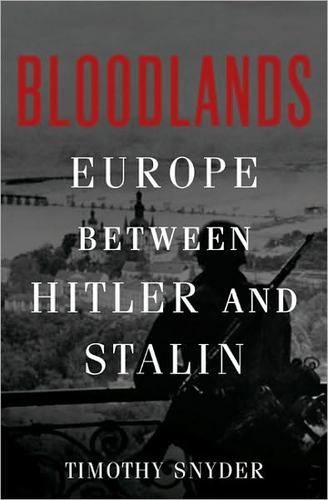
Bloodlands: Europe Between Hitler and Stalin

Timothy Snyder

★★★★★
Read Military history Advanced intel Logistics WWII Cold War Russia / USSR Logistics ISBN 9780465002399

Basic Books · 2010

Americans call the Second World War “The Good War.” But before it even began, America’s wartime ally Josef Stalin had killed millions of his own citizens—and kept killing them during and after the war. Before Hitler was finally defeated, he had murdered six million Jews and nearly as many other Europeans. At war’s end, both the German and the Soviet killing sites fell behind the iron curtain, leaving the history of mass killing in darkness. Bloodlands is a new kind of European history, presenting the mass murders committed by the Nazi and Stalinist regimes as two aspects of a single history, in the time and place where they occurred: between Germany and Russia, when Hitler and Stalin both held power. Assiduously researched, deeply humane, and utterly definitive, Bloodlands will be required reading for anyone seeking to understand the central tragedy of modern history. From Booklist If there is an explanation for the political killing perpetrated in eastern Europe in the 1930s and 1940s, historian Snyder roots it in agriculture. Stalin wanted to collectivize farmers; Hitler wanted to eliminate them so Germans could colonize the land. The dictators wielded frightening power to advance such fantasies toward reality, and the despots toted up about 14 million corpses between them, so stupefying a figure that Snyder sets himself three goals here: to break down the number into the various actions of murder that comprise it, from liquidation of the kulaks to the final solution; to restore humanity to the victims via surviving testimony to their fates; and to deny Hitler and Stalin any historical justification for their policies, which at the time had legions of supporters and have some even today. Such scope may render Snyder’s project too imposing to casual readers, but it would engage those exposed to the period’s chronology and major interpretive issues, such as the extent to which the Nazi and Soviet systems may be compared. Solid and judicious scholarship for large WWII collections.

No cover · Amazon

Citizen Soldiers: The US Army from the Normandy Beaches to the Bulge to the Surrender of Germany

Stephen E. Ambrose

★★★★★
Read WWII Biography

From Stephen E. Ambrose, bestselling author of Band of Brothers and D-Day , the inspiring story of the ordinary men of the U.S. army in northwest Europe from the day after D-Day until the end of the bitterest days of World War II. In this riveting account, historian Stephen E. Ambrose continues where he left off in his #1 bestseller D-Day. Citizen Soldiers opens at 0001 hours, June 7, 1944, on the Normandy beaches, and ends at 0245 hours, May 7, 1945, with the allied victory. It is biography of the US Army in the European Theater of Operations, and Ambrose again follows the individual characters of this noble, brutal, and tragic war. From the high command down to the ordinary soldier, Ambrose draws on hundreds of interviews to re-create the war experience with startling clarity and immediacy. From the hedgerows of Normandy to the overrunning of Germany, Ambrose tells the real story of World War II from the perspective of the men and women who fought it.

No cover · Amazon

Colossus Reborn: The Red Army at War (Modern War Studies)

David M. Glantz

★★★★★
Read Military history WWII Russia / USSR Strategy / theory

In Stumbling Colossus , David Glantz explored why the Red Army was unprepared for the German blitzkrieg that nearly destroyed it and left more than four million of its soldiers dead by the end of 1941. In Colossus Reborn he recounts the miraculous resurrection of the Red Army, which, with a dazzling display of military strategy and operational prowess, stopped the Wehrmacht in its tracks and turned the tide of war. A major achievement in the recovery and preservation of an entire nation's military experience, Colossus Reborn is marked by Glantz's unrivaled access to and use of Soviet archival sources. This allows him to illuminate not only Russian victories in the Battles of Moscow, Stalingrad, and Kursk, but also to rescue a host of major "forgotten battles," many of which had been suppressed to preserve reputations and national pride. As he reveals in unprecedented detail, disastrous defeats vied with resounding victories throughout the early years of the conflict, as the Red Army struggled to find itself in the "Great Patriotic War." Beyond the battles themselves, Glantz also presents an in-depth portrait of the Red Army as an evolving military institution. Assessing more clearly than ever before the army's size, strength, and force structure, he provides keen insights into its doctrine, strategy, tactics, weaponry, training, officer corps, and political leadership. In the process, he puts a human face on the Red Army's commanders and soldiers, including women and those who served in units—security (NKVD), engineer, railroad, auto-transport, construction, and penal forces—that have till now remained poorly understood. The world's top authority on the Soviet military, Glantz has produced a remarkable study that adds immeasurably to our understanding of the one part of World War II that's still struggling to emerge from the shadows of history.

No cover · Amazon

Crime and Punishment

Fyodor Dostoevsky

★★★★★
Read Advanced intel

Raskolnikov, a destitute and desperate former student, wanders through the slums of St Petersburg and commits a random murder without remorse or regret. He imagines himself to be a great man, a Napoleon: acting for a higher purpose beyond conventional moral law. But as he embarks on a dangerous game of cat-and-mouse with Porfiry, a suspicious detective, Raskolnikov is pursued by the growing voice of his conscience and finds the noose of his own guilt tightening around his neck. Only Sonya, a downtrodden prostitute, can offer the chance of redemption. As the ensuing investigation and trial reveal the true identity of the murderer, Dostoyevsky's dark masterpiece evokes a world where the lines between innocence and corruption, good and evil, blur and everyone's faith in humanity is tested.

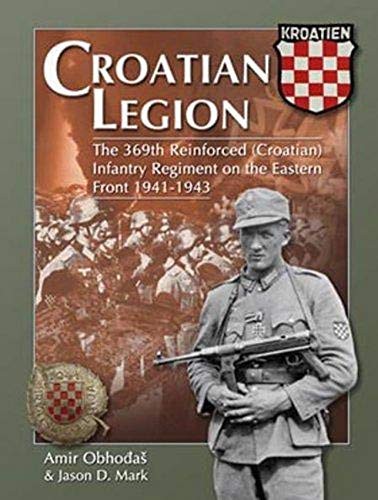
Croatian Legion: The 369th Reinforced (Croation) Infantry Regiment on the Eastern Front 1941-1943

Amir Obhođaš

★★★★★
Read Military history Logistics WWII Cold War Russia / USSR Logistics ISBN 9780975107683

Leaping Horseman Books · Mar 01, 2011

Soon after Germany invaded the Soviet Union, the leadership of the newly founded Independent State of Croatia expressed its desire to participate in this "crusade against Bolshevism". Hitler approved the request and so the Croatian Legion, consisting of volunteers from all three branches of the Croatian Armed Forces, was created. Its ground component, the 369th Reinforced (Croatian) Infantry Regiment, was the first to be formed. The Croatian legionaries participated in some of the most famous engagements of World War 2, including the first battle of Kharkov, Operation Fridericus, Plan Blau and finally the grim struggle for Stalingrad. The Regiment was the only non-German unit to participate in the attack on Stalin's city... the other allies were relegated to holding flanks. Initially, this was viewed as a great honour, a reward for its sacrifices and successes, proof that the Wehrmacht had full trust in the Regiment. However, this "honour" would demand the ultimate price. Croatian blood soaked Stalingrad's soil and four months later the unit's pitiful remnants were herded into captivity. Two Croatian sergeants managed to preserve the regimental archive by taking it with them on one of the last flights out of besieged Stalingrad. This unique collection, which includes war diaries, daily orders, combat reports and award recommendations, was the primary resource used to create this book. Additional records from German and Russian archives complete the picture. The Regiment's origins, formation, training and battles are examined in detail. Croatian Legion: The 369th Reinforced (Croatian) Infantry Regiment on the Eastern Front, 1941-1943 offers a unique perspective of the fighting on the Eastern Front through the eyes of a foreign volunteer unit.

No cover · Amazon

Crusade: The Untold Story of the Persian Gulf War

Rick Atkinson

★★★★★
Read Basic intel Advanced intel Technical warfare Logistics Intel history Military history Middle East Logistics Strategy / theory

A definitive account of the Gulf War told by Pulitzer Prize–winning correspondent Rick Atkinson. This previously untold story of the US war with Iraq in the early 1990s, Atkinson follows the 42-day war from the first night to the final day, providing vivid accounts of bombing runs, White House strategy sessions, firefights, and bitter internal conflicts.

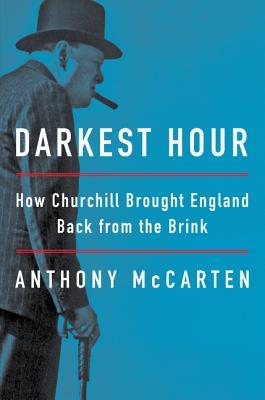
Darkest Hour: How Churchill Brought England Back from the Brink

Anthony McCarten

★★★★★
Read Biographies Military history WWII Biography Orthodox / theology ISBN 9780062749543

HarperCollins Publishers · 2017

From the acclaimed novelist and screenwriter of The Theory of Everything comes a revelatory look at the period immediately following Winston Churchill’s ascendancy to Prime Minister—soon to be a major motion picture starring Gary Oldman. “He was speaking to the nation, the world, and indeed to history...”  May, 1940. Britain is at war. The horrors of blitzkrieg have seen one western European democracy after another fall in rapid succession to Nazi boot and shell. Invasion seems mere hours away.  Just days after becoming Prime Minister, Winston Churchill must deal with this horror—as well as a skeptical King, a party plotting against him, and an unprepared public. Pen in hand and typist-secretary at the ready, how could he change the mood and shore up the will of a nervous people?  In this gripping day-by-day, often hour-by-hour account of how an often uncertain Churchill turned Britain around, the celebrated Bafta-winning writer Anthony McCarten exposes sides of the great man never seen before. He reveals how he practiced and re-wrote his key speeches, from ‘Blood, toil, tears and sweat’ to ‘We shall fight on the beaches’; his consideration of a peace treaty with Nazi Germany, and his underappreciated role in the Dunkirk evacuation; and, above all, how 25 days helped make one man an icon.  Using new archive material, McCarten reveals the crucial behind-the-scenes moments that changed the course of history. It’s a scarier—and more human—story than has ever been told.  “McCarten's pulse-pounding narrative transports the reader to those springtime weeks in 1940 when the fate of the world rested on the shoulders of Winston Churchill. A true story thrillingly told. Thoroughly researched and compulsively readable.”—Michael F. Bishop, Executive Director of the International Churchill Society

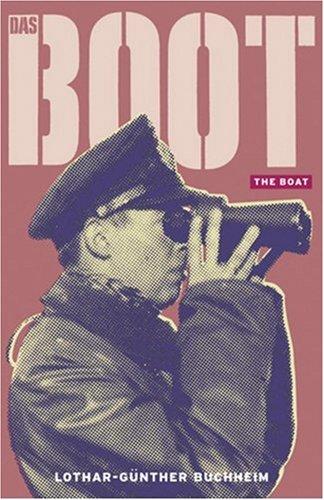
Das Boot

Lothar-Günther Buchheim

★★★★★
Read Military history Naval ISBN 9780006166467

Fontana · 1976

Alternate cover edition of ISBN 9780304352319 The thrilling wartime novel that inspired Wolfgang Petersen's Academy Award-nominated, blockbuster film! Written by an actual survivor of Germany's U-boat fleet, Das Boot is one of the most exciting stories of naval warfare ever published, a tale filled with almost unbearable tension and suspense. In autumn 1941, a German U-boat commander and his crew set out on yet another hazardous patrol in the Battle of the Atlantic. Over the coming weeks they brave the ocean's stormy waters and seek out British supply ships to destroy. But their targets travel in well-guarded convoys. When contact finally occurs, the hunter quickly becomes the hunted, and a cat-and-mouse game begins as the U-boat hides deep beneath the surface of the sea. Soon, claustrophobia becomes an enemy almost as frightening as the depth charges exploding around them.

No cover · Amazon

Death of the Leaping Horseman: 24 Panzer-Division in Stalingrad 12th August-20th November 1942

Jason D. Mark

★★★★★
Read Military history Logistics WWII Air power Armor Russia / USSR Logistics Intel history

The gripping story of an elite panzer division and its battles in the shattered streets of Stalingrad. In "Death of the Leaping Horseman: 24th Panzer-Division in Stalingrad," the untold story of 24th Panzer-Division's savage fighting on Stalingrad's outskirts - and in the devastated ruins of the city itself - is revealed in a detailed day-by-day account. Beginning in the heady days of the victorious march toward Stalingrad in August 1942, the book follows the Division into Stalingrad's suburbs as it is slowly and inexorably suked into the fiery crucible that was Stalingrad. Panzer losses and casualties increased daily until finally, after three months of draining combat, the Division was reduced to a battlegroup consisting of a couple of panzers and a few hundred men. Woven through official combat reports and entries from the Division's war diaries are gripping accounts from the few remaining veterans - including an Oakleaves winner and several Knight's Cross winners. Contains over 200 photos and 85 maps and aerial photos.

Death Traps: The Survival of an American Armored Division in World War II

Belton Y. Cooper

★★★★★
Read Military history WWII Vietnam Korea Armor Biography ISBN 9780891418146

Presidio Press · April 29, 2003

“An important contribution to the history of World War II . . . I have never before been able to learn so much about maintenance methods of an armored division, with precise details that underline the importance of the work, along with descriptions of how the job was done.”—Russell F. Weigley, author of  Eisenhower’s Lieutenants “Cooper saw more of the war than most junior officers, and he writes about it better than almost anyone. . . . His stories are vivid, enlightening, full of life—and of pain, sorrow, horror, and triumph.” —Stephen E. Ambrose, from his Foreword  “In a down-to-earth style, Death Traps tells the compelling story of one man’s assignment to the famous 3rd Armored Division that spearheaded the American advance from Normandy into Germany. Cooper served as an ordnance officer with the forward elements and was responsible for coordinating the recovery and repair of damaged American tanks. This was a dangerous job that often required him to travel alone through enemy territory, and the author recalls his service with pride, downplaying his role in the vast effort that kept the American forces well equipped and supplied. . . . [Readers] will be left with an indelible impression of the importance of the support troops and how dependent combat forces were on them.” — Library Journal “As an alumnus of the 3rd, I eagerly awaited this book’s coming out since I heard of its release . . . and the wait and the book have both been worth it. . . . Cooper is a very polished writer, and the book is very readable. But there is a certain quality of ‘you are there’ many other memoirs do not seem to have. . . . Nothing in recent times—ridgerunning in Korea, firebases in Vietnam, or even the one hundred hours of Desert Storm—pressed the ingenuity and resolve of American troops . . . like WWII. This book lays it out better than any other recent effort, and should be part of the library of any contemporary warrior.” —Stephen Sewell,  Armor Magazine “Cooper’s writing and recall of harrowing events is superb and engrossing. Highly recommended.” —Robert A. Lynn, The Stars and Stripes “This detailed story will become a classic of WWII history and required reading for anyone interested in armored warfare.” — Publishers Weekly (starred review) “[ Death Traps ] fills a critical gap in WWII literature. . . . It’s a truly unique and valuable work.” —G.I. Journal