S2 Search · Reading list

S2 Actual reading list

Books from S2 Actual on Goodreads, organized by his shelves and topic buckets (intel lists, military history, logistics, etc.). Metadata filled via Open Library.

Not official S2 Underground. Independent fan index — not affiliated with or endorsed by S2. Official hub: linktr.ee/S2_underground. S2 materials are CC BY-NC-SA 4.0.

S2 topic buckets (Goodreads)

Subjects & genres

415 books · All shelves · page 10 of 18

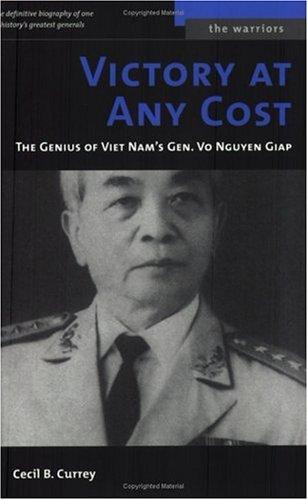
Victory at Any Cost: The Genius of Viet Nam's Gen. Vo Nguyen Giap

Cecil B. Currey

★★★★
Read Biographies Military history Intel history Technical warfare Advanced intel Vietnam Biography ISBN 9781574887426

Potomac Books Inc. · April 27, 2005

Many people do not understand why America lost the Viet Nam War. Author Cecil B. Currey makes one primary reason North Viet Nam's Senior Gen. Vo Nguyen Giap. Victory at Any Cost tells the full story of the man who fought three of the world's great powers—and beat them all.

War In The Shadows: The Guerrilla in History

Robert B. Asprey

★★★★
Read Intel history Advanced intel Vietnam Cold War Guerrilla / COIN Russia / USSR Middle East Strategy / theory Economics Revolution ISBN 9780595225934

Backinprint.com · May 2002

Ranging from Alexander the Great's battles with Asiatic Scythians, through the Russian Revolution, and on up to the turmoil in the Middle East and the battle in Northern Ireland, War in the Shadows is a book of monumental sweep and singular perspective. It also contains a comprehensive and hard-hitting strategic evaluation of the Vietnam War-one of the most significant analyses of "the war that won't go away." War in the Shadows tells the story of the countries currently torn by armed insurgencies and clarifies the causes of each conflict. It provides the broad viewpoint necessary for understanding them in the historical terms of guerilla warfare. With the collapse of the Soviet Union, the end of the Cold War, and a highly unstable "new world order," this brand of rebellion has never been more powerful and potentially disruptive. As the author states in his Foreword, "For a number of reasons guerilla warfare has evolved into an ideal instrument for the realization of social-political-economic aspirations of underprivileged peoples. This is so patently true as to allow one to suggest that we may be witnessing a transition to a new era in warfare, an era as radically different as those of which followed the writings of Sun Tzu, Machiavelli, Clausewitz, and Mahan." War in the Shadows is crucial to understanding the complex challenges of our new and dangerous era.

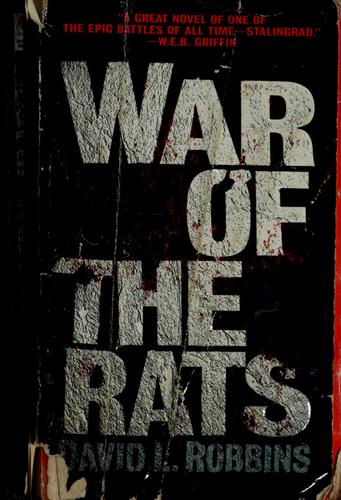
War of the Rats (WWII, #1)

David L. Robbins

★★★★
Read Biographies Military history Technical warfare WWII Cold War Russia / USSR ISBN 9780553581355

Bantam · 2000

For six months in 1942, Stalingrad is the center of a titanic struggle between the Russian and German armies—the bloodiest campaign in mankind's long history of warfare. The outcome is pivotal. If Hitler's forces are not stopped, Russia will fall. And with it, the world.... German soldiers call the battle Rattenkrieg, War of the Rats . The combat is horrific, as soldiers die in the smoking cellars and trenches of a ruined city. Through this twisted carnage stalk two men—one Russian, one German—each the top sniper in his respective army. These two marksmen are equally matched in both skill and tenacity. Each man has his own to find his counterpart—and kill him. But an American woman trapped in Russia complicates this extraordinary duel. Joining the Russian sniper's cadre, she soon becomes one of his most talented assassins—and perhaps his greatest weakness. Based on a true story, this is the harrowing tale of two adversaries enmeshed in their own private war—and whose fortunes will help decide the fate of the world.

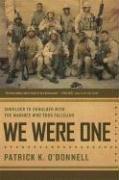
We Were One: Shoulder to Shoulder with the Marines Who Took Fallujah

Patrick K. O'Donnell

★★★★
Read Military history WWII GWOT Air power Guerrilla / COIN Middle East Biography ISBN 9780306814693

Da Capo Press · October 30, 2006

The platoon included four pairs of best friends. Each of the four would lose a best friend forever.Five months after being deployed to Iraq, Lima Company’s 1st Platoon found itself in Fallujah, embroiled in some of the most intense house-to-house, hand-to-hand combat since World War II. Civilians were used as human shields or as bait to lure soldiers into buildings rigged with explosives; suicide bombers approached from every corner hoping to die and take Americans with them; radical insurgents, high on adrenaline, fought to the death. The Marines of the 1st Platoon (part of 3rd Battalion, 1st Marine Regiment) were among the first to fight in Fallujah, and they bore the brunt of this epic battle. When it was over, the platoon had suffered thirty-five casualties, including four dead.This is their story.Award-winning author and historian Patrick O’Donnell stood shoulder-to-shoulder with this modern band of brothers as they marched and fought through the streets of Fallujah, and he stayed with them as the casualties mounted. O’Donnell captures not only the sights, sounds, and smells of the gritty street combat, but also the human drama of young men in a close-knit platoon fighting for their lives-and the lives of their buddies. We Were One chronicles the 1st Platoon’s story, from its formation at Camp Pendleton in California to its near destruction in the smoldering ruins of Fallujah.We Were One is an unforgettable portrait of the new “Greatest Generation.”With 16 pages of extraordinary photographs from the front lines of the Battle for Fallujah.

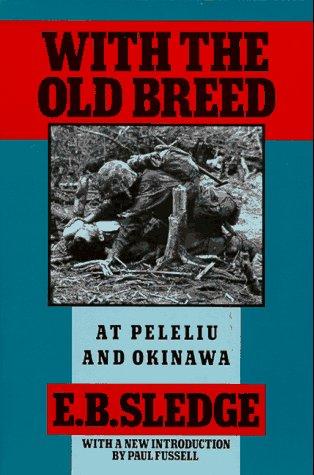
With the Old Breed: At Peleliu and Okinawa

Eugene B. Sledge

★★★★
Read Military history Biographies WWII Biography ISBN 0195067142

Oxford University Press · 1990

In his own book, Wartime, Paul Fussell called With the Old Breed "one of the finest memoirs to emerge from any war." John Keegan referred to it in The Second World War as "one of the most arresting documents in war literature." And Studs Terkel was so fascinated with the story he interviewed its author for his book, "The Good War." What has made E.B. Sledge's memoir of his experience fighting in the South Pacific during World War II so devastatingly powerful is its sheer honest simplicity and compassion. Now including a new introduction by Paul Fussell, With the Old Breed presents a stirring, personal account of the vitality and bravery of the Marines in the battles at Peleliu and Okinawa. Born in Mobile, Alabama in 1923 and raised on riding, hunting, fishing, and a respect for history and legendary heroes such as George Washington and Daniel Boone, Eugene Bondurant Sledge (later called "Sledgehammer" by his Marine Corps buddies) joined the Marines the year after the bombing of Pearl Harbor and from 1943 to 1946 endured the events recorded in this book. In those years, he passed, often painfully, from innocence to experience. Sledge enlisted out of patriotism, idealism, and youthful courage, but once he landed on the beach at Peleliu, it was purely a struggle for survival. Based on the notes he kept on slips of paper tucked secretly away in his New Testament, he simply and directly recalls those long months, mincing no words and sparing no pain. The reality of battle meant unbearable heat, deafening gunfire, unimaginable brutality and cruelty, the stench of death, and, above all, constant fear. Sledge still has nightmares about "the bloody, muddy month of May on Okinawa." But, as he also tellingly reveals, the bonds of friendship formed then will never be severed. Sledge's honesty and compassion for the other marines, even complete strangers, sets him apart as a memoirist of war. Read as sobering history or as high adventure, With the Old Breed is a moving chronicle of action and courage.

No cover · Amazon

World War 1: A History From Beginning to End

Henry Freeman

★★★★
Read Military history WWI Armor

World War IWorld War 1 was one of the bloodiest wars in modern history. At its end, it had claimed over seventeen million lives. It led to the collapse of nations, the abdication of monarchies and ended empires. Entire divisions of men perished in the pursuit of mere miles of uninhabitable wasteland –– towns were pulverized and millions displaced. It became a horrendous war of attrition, each side competing to kill as many of their foe as possible.Inside you will read about... ✓ 1914 - Blood is spilled ✓ 1915 - The dawn of the industrialized war ✓ 1916 - Unrelenting bloodshed ✓ 1917 - Revolution, revelation and catastrophe ✓ 1918 - The great war at an endIt became the first industrialized war in history and introduced revolutionary technology into the fray. The airplane, the tank and the machine gun first saw action collectively during the conflict. It was also the first war in which poison gas was used to choke young men out of their trenches.This book is a timeline account of the important events that shaped the First World War. It details the events and causes that led the world to war. This book covers the milestone moments, important battles, and how the outcome changed the world forever.

1776

David McCullough

★★★☆☆
Read Biography Revolution ISBN 9780743226721

Simon & Schuster Paperbacks · 2006

America’s beloved and distinguished historian presents, in a book of breathtaking excitement, drama, and narrative force, the stirring story of the year of our nation’s birth, 1776, interweaving, on both sides of the Atlantic, the actions and decisions that led Great Britain to undertake a war against her rebellious colonial subjects and that placed America’s survival in the hands of George Washington. In this masterful book, David McCullough tells the intensely human story of those who marched with General George Washington in the year of the Declaration of Independence—when the whole American cause was riding on their success, without which all hope for independence would have been dashed and the noble ideals of the Declaration would have amounted to little more than words on paper. Based on extensive research in both American and British archives, 1776 is a powerful drama written with extraordinary narrative vitality. It is the story of Americans in the ranks, men of every shape, size, and color; farmers, schoolteachers, shoemakers, no-accounts, and mere boys turned soldiers. And it is the story of the King’s men, the British commander, William Howe, and his highly disciplined redcoats who looked on their rebel foes with contempt and fought with a valor too little known. Written as a companion work to his celebrated biography of John Adams, David McCullough’s 1776 is another landmark in the literature of American history.

1984

George Orwell

★★★☆☆
Read Espionage ISBN 9781405862417

Pearson Education ESL · 2003

1984 tells us about a world ruled by a totalitarian in the novel, society is dominated by "Big Brother," a mysterious character whom no one has ever met in person and who constantly spies on citizens' lives through the use of special telescreens. In this world where freedom has been completely abolished, the protagonist of the novel, Winston Smith, decides to rebel and, although aware that this is considered a highly subversive activity, begins to write a diary. And when Winston falls in love with Julia, he must choose whether to submit to power or fight for a different world, one in which history is not rewritten by the ruling Party and in which even people's thoughts are controlled. 1984 is one of the greatest political novels of the last century, capable of shaking our conscience with its visionary nature. It is both a denunciation of totalitarianism and a strenuous defense of individual integrity. The entire novel focuses on the contradictions of power, the conflict between the individual and society, and the deceptions of utopia. Never before, in the age of the Internet, has it been so surprisingly relevant.

Air Force Advising and Assistance: Developing Airpower in Client States (Modern Military History)

Donald Stoker

★★★☆☆
Read Advanced intel Intel history GWOT Naval Air power Guerrilla / COIN Strategy / theory Economics ISBN 9781912390601

Helion and Company · Sep 20, 2018

The increased focus on counterinsurgency warfare and US nation building efforts after the attacks of 11 September 2001 reignited interest in military advising within military and other government organizations, private think tanks, and defense related contractors. Most studies on the subject, based on the chronological scope and numerical preponderance of ground advising missions, has quite naturally focused on these past efforts. Less attention has been given to air or naval advisory missions. This work seeks in part to help redress this current imbalance by examining a number of historical case studies dealing with air advisory efforts. By examining a number of historical case studies, this volume analyzes the challenges and opportunities inherent in aerial advisory efforts and offers insights into the methods by which such missions succeed or fail. Air advisory missions date almost to the first days of powered flight. Air advisory efforts have a number of unique elements based on the fundamental role of advanced technology and the extensive resource requirements associated with aviation operations. For example, air advisory efforts are profoundly influenced by the types of aircraft involved and the types of mission flown. Likewise, the issues of maintenance support and the infrastructure needed for these missions plays a key role in determining capabilities available to the host nation. In the case of infrastructure, airfields, fuelling depots, maintenance and repair facilities, and radar and communications equipment offer a few of the most obvious requirements to support flight operations. The early history of advisory efforts reveal issues that remain relevant today, including questions related to the nature of aerial technology to be shared, the type of training to be provided, and the potential economic benefits that might accrue to the donor nation as a result of the sale of aviation technology to the host country. In many respects, air advisory efforts raise a number of profound strategic questions for the donor nation. Among others, these questions relate to the type of technology to be shared, the nature of training to be given, the role of foreign advisors in operations, the issue of infrastructure development and auxiliary training programs, the preparation of foreign advisors for their duties, and perhaps most significantly the development of the type of capabilities required to address the host nation’s security environment. Via a series of historical case studies, this volume explores these questions and others.

No cover · Amazon

Black Flags: The Rise of ISIS

Joby Warrick

★★★☆☆
Read Basic intel Intel history Espionage GWOT Guerrilla / COIN Middle East Intel history US Civil War

Pulitzer Prize-winning reporter Joby Warrick reveals how the strain of militant Islam now raising its banner across Iraq and Syria spread from a remote Jordanian prison with the unwitting aid of American military intervention.      When he succeeded his father in 1999, King Abdullah of Jordan released a batch of political prisoners in the hopes of smoothing his transition to power. Little did he know that among those released was Abu Musab al-Zarqawi, a man who would go on to become a terrorist mastermind too dangerous even for al-Qaeda and give rise to an Islamist movement bent on dominating the Middle East.      Zarqawi began by directing hotel bombings and assassinations in Jordan from a base in northern Iraq, but it was the American invasion of that country in 2003 that catapulted him to the head of a vast insurgency. By identifying him as the link between Saddam and bin Laden, the CIA inadvertently created a monster. Like-minded radicals saw him as a hero resisting the infidel occupiers and rallied to his cause. Their wave of brutal beheadings and suicide bombings continued for years until Jordanian intelligence provided the Americans with the crucial intelligence needed to eliminate Zarqawi in a 2006 airstrike.      But his movement endured, first called al-Qaeda in Iraq, then renamed Islamic State of Iraq and Syria, or ISIS, seeking refuge in unstable, ungoverned pockets on the Iraq-Syria border. And as the Syrian civil war broke out in 2011, ISIS seized its chance to pursue Zarqawi's dream of a sweeping, ultra-conservative Islamic caliphate.       Drawing on unique access to CIA and Jordanian sources, Joby Warrick weaves together heart-pounding, moment-by-moment operational details with overarching historical perspectives to reveal the long trajectory of today's most dangerous Islamic extremist threat. From the Hardcover edition.

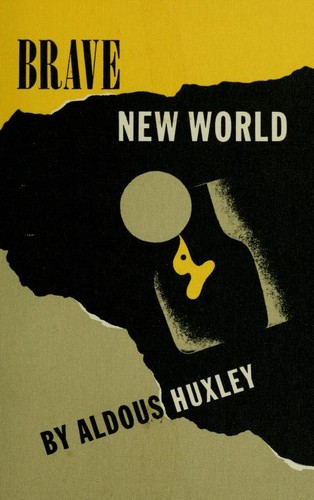
Brave New World

Aldous Huxley

★★★☆☆
Read ISBN 9789681500566

Diana · 1932

Brave New World is a dystopian social science fiction novel by English author Aldous Huxley. Largely set in a futuristic World State, whose citizens are environmentally engineered into an intelligence-based social hierarchy, the novel anticipates huge scientific advancements in reproductive technology, sleep-learning, psychological manipulation and classical conditioning that are combined to make a dystopian society which is challenged by only a single individual: the story's protagonist.

No cover · Amazon

Brother Number One: A Political Biography of Pol Pot

David P. Chandler

★★★☆☆
Read Biographies WWII Vietnam Espionage Guerrilla / COIN Biography US Civil War

In the tragic recent history of Cambodia—a past scarred by a long occupation by Vietnamese forces and by the preceding three-year reign of terror by the brutal Khmer Rouge—no figure looms larger or more ominously than that of Pol Pot. As secretary of the Central Committee of the Communist Party of Kampuchea (CPK) since 1962 and as prime minister of Democratic Kampuchea (DK), he has been widely blamed for trying to destroy Cambodian society. By implementing policies whose effects were genocidal, he oversaw the deaths of more than one million of his nation’s people.The political career of Saloth Sar, better known by his nom de guerre Pol Pot, forms a critical but largely inaccessible portion of twentieth-century Cambodian history. What we know about his life is sketchy: a comfortable childhood, three years of study in France, and a short career as a schoolteacher preceded several years—spent mostly in hiding—as a guerrilla and the commander of the victorious army in Cambodia’s civil war. His career reached a climax when he and his associates, coming to power, attempted to transform their country along lines more radical than any attempted by a modern regime. Driven into hiding in 1979 by invading Vietnamese forces, Pol Pot maintained his leadership of a Khmer Rouge guerrilla army in exile, remaining a power and a threat.In this political biography, David P. Chandler throws light on the shadowy figure of Pol Pot. Basing his study on interviews and on a wide range of sources in English, Cambodian, and French, the author illuminates the ideas and behavior of this enigmatic man and his entourage against the background of post–World War II events, providing a key to understanding this horrific, pivotal period of Cambodian history. In this revised edition, Chandler provides new information on the state of Cambodia and the Khmer Rouge following the death of Pol Pot in 1997.

Bury My Heart at Wounded Knee: An Indian History of the American West

Dee Brown

★★★☆☆
Read ISBN 9780805066692

Owl Books · January 23, 2001

Världens mest berömda indianbok utkommer nu i en ny, illustrerad utgåva med 300 fantastiska bilder! Dee Browns Begrav mitt hjärta vid Wounded Knee skildrar USA:s kolonisation av vilda västern under andra halvan av 1800-talet, då apacher, cheyenner, comancher, siouxer och andra stammar bjuder de vita inkräktarna ett oväntat hårt motstånd. I Arizona gäckar hövdingar som Cochise och Geronimo fienden i ett kvartssekel med sin gerillakrigföring. Längs vägen till guldfyndigheterna i Montana tvingar Red Cloud ”blårockarna” att lämna sina fort och dra sig tillbaka. Vid Little Bighorn nedgör Crazy Horse och Sitting Bull general Custers sjunde kavalleriregemente till sista man. Till slut tvingas emellertid indianerna att ge sig för övermakten. Men det rättvisepatos och den motståndsvilja som de visar prov på i denna sin sista strid – och som Dee Brown skildrar så livfullt och gripande i sin bok – har gjort deras namn och kultur beundrade av eftervärlden. Författaren kallar dem ”de kanske mest heroiska amerikaner som någonsin levat”.

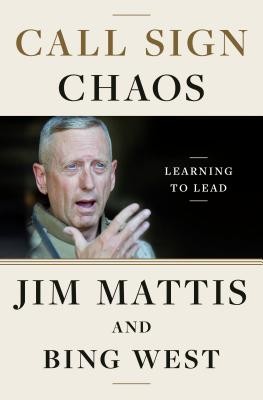
Call Sign Chaos: Learning to Lead

Jim Mattis

★★★☆☆
Read Biographies Middle East Intel history Biography Strategy / theory ISBN 9780812996838

Random House · 2019

#1 NEW YORK TIMES BESTSELLER - A clear-eyed account of learning how to lead in a chaotic world, by General Jim Mattis--the former Secretary of Defense and one of the most formidable strategic thinkers of our time--and Bing West, a former assistant secretary of defense and combat Marine. "A four-star general's five-star memoir."--The Wall Street Journal Call Sign Chaos is the account of Jim Mattis's storied career, from wide-ranging leadership roles in three wars to ultimately commanding a quarter of a million troops across the Middle East. Along the way, Mattis recounts his foundational experiences as a leader, extracting the lessons he has learned about the nature of warfighting and peacemaking, the importance of allies, and the strategic dilemmas--and short-sighted thinking--now facing our nation. He makes it clear why America must return to a strategic footing so as not to continue winning battles but fighting inconclusive wars. Mattis divides his book into three parts: Direct Leadership, Executive Leadership, and Strategic Leadership. In the first part, Mattis recalls his early experiences leading Marines into battle, when he knew his troops as well as his own brothers. In the second part, he explores what it means to command thousands of troops and how to adapt your leadership style to ensure your intent is understood by your most junior troops so that they can own their mission. In the third part, Mattis describes the challenges and techniques of leadership at the strategic level, where military leaders reconcile war's grim realities with political leaders' human aspirations, where complexity reigns and the consequences of imprudence are severe, even catastrophic. Call Sign Chaos is a memoir of a life of warfighting and lifelong learning, following along as Mattis rises from Marine recruit to four-star general. It is a journey about learning to lead and a story about how he, through constant study and action, developed a unique leadership philosophy, one relevant to us all.

No cover · Amazon

Churchill: Walking with Destiny

Andrew Roberts

★★★☆☆
Read Biographies WWII Armor Biography Orthodox / theology

A landmark reconsideration of the iconoclastic war leader, based on extensive new material, from private letters to war cabinet meetings, by the bestselling, award-winning author of Napoleon and The Storm of War. When we seek an example of unalloyed courage, the man who comes to mind is Winston Churchill: the visionary leader, immune from the consensus of the day, who stood firmly for his beliefs when everyone doubted him. But how did young Winston become Churchill? What gave him the strength to take on the superior force of Nazi Germany when bombs rained on London and so many others had caved? In The Storm of War, Andrew Roberts gave us a tantalizing glimpse of Churchill the war leader. Now, at last, we have the full and definitive biography, as personally revealing as it is compulsively readable, about one of the great leaders of all time. Roberts was granted exclusive access to extensive new material: the transcripts of war cabinet meetings - the equivalent of the Nixon and JFK tapes - diaries, letters, unpublished memoirs, and detailed notes taken by the king after their bi-weekly meetings. Having read every one of Churchill's letters, including deeply personal ones that Churchill's son Randolph had previously chosen to withhold, and spoken to more than one hundred people who knew or worked with him, Roberts identifies the hidden forces fueling Churchill's drive. Churchill put his faith in the British Empire and fought as hard to preserve it as he did to defend London. Having started his career in India and South Africa, he understood better than most idealists how hard it can be to pacify reluctant people far from home. We think of Churchill as a hero of the age of mechanized warfare, but Roberts's masterwork reveals that he has as much to teach us about the challenges we face today and the fundamental values of courage, tenacity, leadership, and moral conviction.

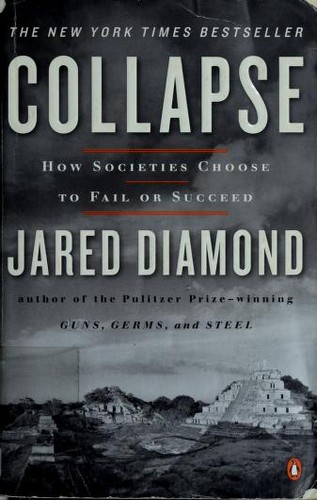
Collapse: How Societies Choose to Fail or Succeed

Jared Diamond

★★★☆☆
Read Basic intel Military history China ISBN 0143036556

Penguin Books · 2006

Brilliant, illuminating, and immensely absorbing, Collapse is destined to take its place as one of the essential books of our time, raising the urgent question: How can our world best avoid committing ecological suicide? In his million-copy bestseller Guns, Germs, and Steel, Jared Diamond examined how and why Western civilizations developed the technologies and immunities that allowed them to dominate much of the world. Now in this brilliant companion volume, Diamond probes the other side of the equation: What caused some of the great civilizations of the past to collapse into ruin, and what can we learn from their fates? As in Guns, Germs, and Steel, Diamond weaves an all-encompassing global thesis through a series of fascinating historical-cultural narratives. Moving from the Polynesian cultures on Easter Island to the flourishing American civilizations of the Anasazi and the Maya and finally to the doomed Viking colony on Greenland, Diamond traces the fundamental pattern of catastrophe. Environmental damage, climate change, rapid population growth, and unwise political choices were all factors in the demise of these societies, but other societies found solutions and persisted. Similar problems face us today and have already brought disaster to Rwanda and Haiti, even as China and Australia are trying to cope in innovative ways. Despite our own society's apparently inexhaustible wealth and unrivaled political power, ominous warning signs have begun to emerge even in ecologically robust areas like Montana. Brilliant, illuminating, and immensely absorbing, Collapse is destined to take its place as one of the essential books of our time, raising the urgent question: How can our world best avoid committing ecological suicide?

No cover · Amazon

Extreme Ownership: How U.S. Navy SEALs Lead and Win

Jocko Willink

★★★☆☆
Read Basic intel Military history Special ops Naval Middle East Intel history

The #1 New York Times bestseller Sent to the most violent battlefield in Iraq, Jocko Willink and Leif Babin’s SEAL task unit faced a seemingly impossible help U.S. forces secure Ramadi, a city deemed “all but lost.” In gripping firsthand accounts of heroism, tragic loss, and hard-won victories in SEAL Team Three’s Task Unit Bruiser, they learned that leadership―at every level―is the most important factor in whether a team succeeds or fails.Willink and Babin returned home from deployment and instituted SEAL leadership training that helped forge the next generation of SEAL leaders. After departing the SEAL Teams, they launched Echelon Front, a company that teaches these same leadership principles to businesses and organizations. From promising startups to Fortune 500 companies, Babin and Willink have helped scores of clients across a broad range of industries build their own high-performance teams and dominate their battlefields. Now, detailing the mind-set and principles that enable SEAL units to accomplish the most difficult missions in combat, Extreme Ownership shows how to apply them to any team, family or organization. Each chapter focuses on a specific topic such as Cover and Move, Decentralized Command, and Leading Up the Chain, explaining what they are, why they are important, and how to implement them in any leadership environment. A compelling narrative with powerful instruction and direct application, Extreme Ownership revolutionizes business management and challenges leaders everywhere to fulfill their ultimate lead and win.

No cover · Amazon

Extreme Privacy: What It Takes to Disappear

Michael Bazzell

★★★☆☆
Read Advanced intel Privacy

Completely rewritten Second Edition (2020) presents the definitive 565-page privacy manual. Michael Bazzell has helped hundreds of celebrities, billionaires, and everyday citizens completely disappear from public view. He is now known in Hollywood as the guy that “fixes” things. His previous books about privacy were mostly REACTIVE and he focused on ways to hide information, clean up an online presence, and sanitize public records to avoid unwanted exposure. This textbook is PROACTIVE. It is about starting over. It is the complete guide that he would give to any new client in an extreme situation. It leaves nothing out, and provides explicit details of every step he takes to make someone completely disappear, including document templates and a chronological order of events. The information shared in this volume is based on real experiences with his actual clients, and is unlike any content ever released in his other books.

No cover · Amazon

Extreme Privacy: What It Takes to Disappear in America

Michael Bazzell

★★★☆☆
Read Advanced intel Privacy

2019 release to replace all previous privacy & security books by Michael Bazzell. For the past five years, Michael Bazzell has been helping celebrities, billionaires, and everyday citizens disappear completely from public view. He is now known in Hollywood as the guy that “fixes” things. His previous books about privacy were mostly REACTIVE and he focused on ways to hide information, clean up an online presence, and sanitize public records to avoid unwanted exposure. This 370-page textbook is PROACTIVE. It is about starting over. It is the complete guide that he would give to any new client in an extreme situation. It leaves nothing out, and provides explicit details of every step he takes to make someone completely disappear, including document templates and a chronological order of events. The information shared in this book is based on real experiences with his actual clients, and is unlike any content ever released in his other books. The stories are all true, with the exception of changed names, locations, and minor details in order to protect the privacy of those described.

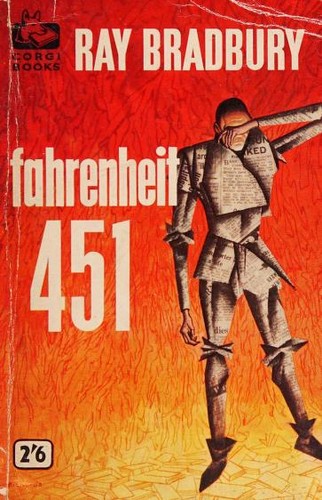
Fahrenheit 451

Ray Bradbury

★★★☆☆
Read ISBN 9780008303693

Chivers · 1953

Nearly seventy years after its original publication, Ray Bradbury’s internationally acclaimed novel Fahrenheit 451 stands as a classic of world literature set in a bleak, dystopian future. Today its message has grown more relevant than ever before. Guy Montag is a fireman. His job is to destroy the most illegal of commodities, the printed book, along with the houses in which they are hidden. Montag never questions the destruction and ruin his actions produce, returning each day to his bland life and wife, Mildred, who spends all day with her television “family.” But when he meets an eccentric young neighbor, Clarisse, who introduces him to a past where people didn’t live in fear and to a present where one sees the world through the ideas in books instead of the mindless chatter of television, Montag begins to question everything he has ever known.

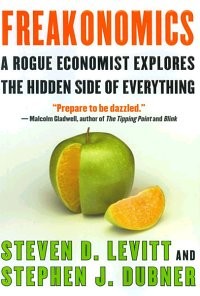
Freakonomics: A Rogue Economist Explores the Hidden Side of Everything

Steven D. Levitt

★★★☆☆
Read Economics ISBN 9780061234002

William Morrow · 2007

Which is more dangerous, a gun or a swimming pool? What do schoolteachers and sumo wrestlers have in common? Why do drug dealers still live with their moms? How much do parents really matter? What kind of impact did Roe v. Wade have on violent crime? Freakonomics will literally redefine the way we view the modern world. These may not sound like typical questions for an economist to ask. But Steven D. Levitt is not a typical economist. He is a much heralded scholar who studies the stuff and riddles of everyday life -- from cheating and crime to sports and child rearing -- and whose conclusions regularly turn the conventional wisdom on its head. He usually begins with a mountain of data and a simple, unasked question. Some of these questions concern life-and-death issues; others have an admittedly freakish quality. Thus the new field of study contained in this book: freakonomics. Through forceful storytelling and wry insight, Levitt and co-author Stephen J. Dubner show that economics is, at root, the study of incentives -- how people get what they want, or need, especially when other people want or need the same thing. In Freakonomics, they set out to explore the hidden side of ... well, everything. The inner workings of a crack gang. The truth about real-estate agents. The myths of campaign finance. The telltale marks of a cheating schoolteacher. The secrets of the Ku Klux Klan. What unites all these stories is a belief that the modern world, despite a surfeit of obfuscation, complication, and downright deceit, is not impenetrable, is not unknowable, and -- if the right questions are asked -- is even more intriguing than we think. All it takes is a new way of looking. Steven Levitt, through devilishly clever and clear-eyed thinking, shows how to see through all the clutter. Freakonomics establishes this unconventional premise: If morality represents how we would like the world to work, then economics represents how it actually does work. It is true that readers of this book will be armed with enough riddles and stories to last a thousand cocktail parties. But Freakonomics can provide more than that. It will literally redefine the way we view the modern world. (front flap)

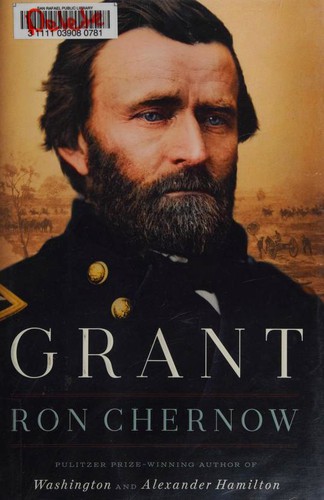
Grant

Ron Chernow

★★★☆☆
Read Military history Biography Strategy / theory US Civil War ISBN 9780143110637

Books on Tape · 2017

Ulysses S. Grant's life has typically been misunderstood. All too often he is caricatured as a chronic loser and inept businessman, fond of drinking to excess; or as the triumphant but brutal Union general of the Civil War; or as a credulous and hapless president whose tenure came to symbolize the worst excesses of the Gilded Age. These stereotypes don't come close to capturing adequately his spirit and the sheer magnitude of his monumental accomplishments. A biographer at the height of his powers, Chernow has produced a portrait of Grant that is a masterpiece, the first to provide a complete understanding of the general and president whose fortunes rose and fell with dizzying speed and frequency. Before the Civil War, Grant was flailing. His business ventures had been dismal, and despite distinguished service in the Mexican War, he ended up resigning from the army in disgrace amid recurring accusations of drunkenness. But in the Civil War, Grant began to realize his remarkable potential, soaring through the ranks of the Union army, prevailing at the Battle of Shiloh and in the Vicksburg campaign and ultimately defeating the legendary Confederate general Robert E. Lee after a series of unbelievably bloody battles in Virginia. Along the way Grant endeared himself to President Lincoln and became his most trusted general and the strategic genius of the war effort. His military fame translated into a two-term presidency, but one plagued by corruption scandals involving his closest staff. All the while Grant himself remained more or less above reproach. But, more importantly, he never failed to seek freedom and justice for black Americans, working to crush the Ku Klux Klan and earning the admiration of Frederick Douglass, who called him 'the vigilant, firm, impartial, and wise protector of my race." After his presidency, he was again brought low by a trusted colleague, this time a dashing young swindler on Wall Street, but he resuscitated his image by working with Mark Twain to publish his memoirs, which are recognized as a masterpiece of the genre. With his famous lucidity, breadth, and meticulousness, Chernow finds the threads that bind these disparate stories together, shedding new light on the man whom Walt Whitman described as "nothing heroic... and yet the greatest hero." His probing portrait of Grant's lifelong struggle with alcoholism transforms our understanding of the man at the deepest level. This is America's greatest biographer, bringing movingly to life one of America's finest but most underappreciated presidents. The definitive biography, Grant is a grand synthesis of painstaking research and literary brilliance that makes sense of all sides of Grant's life, explaining how this simple Midwesterner could at once be so ordinary and so extraordinary.

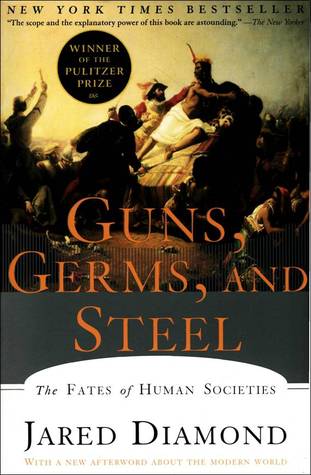
Guns, Germs, and Steel: The Fates of Human Societies

Jared Diamond

★★★☆☆
Read Basic intel ISBN 9780739467350

W.W. Norton and Company · 2005

"Diamond has written a book of remarkable scope ... one of the most important and readable works on the human past published in recent years." Winner of the Pulitzer Prize and a national bestseller: the global account of the rise of civilization that is also a stunning refutation of ideas of human development based on race. In this "artful, informative, and delightful" (William H. McNeill, New York Review of Books) book, Jared Diamond convincingly argues that geographical and environmental factors shaped the modern world. Societies that had a head start in food production advanced beyond the hunter-gatherer stage, and then developed writing, technology, government, and organized religion—as well as nasty germs and potent weapons of war—and adventured on sea and land to conquer and decimate preliterate cultures. A major advance in our understanding of human societies, Guns, Germs, and Steel chronicles the way that the modern world came to be and stunningly dismantles racially based theories of human history. Winner of the Pulitzer Prize, the Phi Beta Kappa Award in Science, the Rhone-Poulenc Prize, and the Commonwealth Club of California's Gold Medal

No cover · Amazon

Hiding from the Internet: Eliminating Personal Online Information

Michael Bazzell

★★★☆☆
Read Privacy Advanced intel Cyber

This book will serve as a reference guide for anyone that values privacy. Each technique is explained in simple steps. It is written in a hands-on style that encourages the reader to execute the tutorials as they go. I provide personal experiences from my journey to disappear from public view. Much of the content of this book has never been discussed in any publication. Always thinking like a hacker, I identify new ways to force companies to remove you from their data collection systems. This book exposes loopholes that create unique opportunities for privacy seekers. Among other techniques, you will learn Remove your personal information from public databases and people search websites Create free anonymous mail addresses, email addresses, and telephone numbers Control your privacy settings on social networks and remove sensitive data Provide disinformation to conceal true private details Apply proper security to your computers using free resources Force data brokers to stop sharing your information with private and public organizations Prevent marketing companies from monitoring your browsing and shopping habits Remove your landline and cellular telephone numbers from online websites Use a credit freeze to eliminate the worry of financial identity theft and fraud Change your future habits to promote complete privacy and anonymity Conduct a complete background check to verify proper information removal