S2 Search · Reading list

S2 Actual reading list

Books from S2 Actual on Goodreads, organized by his shelves and topic buckets (intel lists, military history, logistics, etc.). Metadata filled via Open Library.

Not official S2 Underground. Independent fan index — not affiliated with or endorsed by S2. Official hub: linktr.ee/S2_underground. S2 materials are CC BY-NC-SA 4.0.

S2 topic buckets (Goodreads)

Subjects & genres

402 books · Read · page 11 of 17

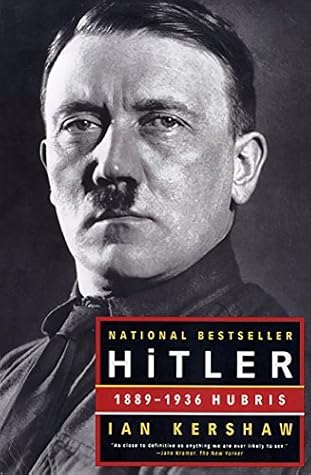
Hitler: 1889-1936 Hubris

Ian Kershaw

★★★☆☆
Read Biographies WWII WWI Biography Economics ISBN 0393320359

W.W. Norton · 2000

From his illegitimate birth in a small Austrian village to his fiery death in a bunker under the Reich chancellery in Berlin, Adolf Hitler left a murky trail, strewn with contradictory tales & overgrown with self-created myths. One truth prevails: the sheer scale of the evils that he unleashed on the world has made him a demonic figure without equal in this century. Kershaw's Hitler brings us closer than ever before to the character of the bizarre misfit in his 30-year ascent from a Viennese shelter for the indigent to uncontested rule over the German nation that had tried & rejected democracy in the crippling aftermath of WWI. With extraordinary vividness, Kershaw recreates the settings that made Hitler's rise possible: the virulent anti-Semitism of prewar Vienna, the crucible of a war with immense casualties, the toxic nationalism that gripped Bavaria in the 20s, the undermining of the Weimar Republic by extremists of the Right & the Left, the hysteria that accompanied Hitler's seizure of power in 1933 & then mounted in brutal attacks by his storm troopers on Jews & others condemned as enemies of the Aryan race. In an account drawing on many previously untapped sources, Hitler metamorphoses from an obscure fantasist, a drummer sounding an insistent beat of hatred in Munich beer halls, to the instigator of an infamous failed putsch &, ultimately, to the leadership of a ragtag alliance of right-wing parties fused into a movement that enthralled the German people. This volume, 1st of two, ends with the promulgation of the infamous Nuremberg laws that pushed German Jews to the outer fringes of society, & with the march of the German army into the Rhineland, Hitler's initial move toward the abyss of war.

No cover · Amazon

Human Hacking: Win Friends, Influence People, and Leave Them Better Off for Having Met You

Christopher Hadnagy

★★★☆☆
Read Cyber Economics

A global security expert draws on psychological insights to help you master the art of social engineering—human hacking. Make friends, influence people, and leave them feeling better for having met you by being more empathetic, generous, and kind. Eroding social conventions, technology, and rapid economic change are making human beings more stressed and socially awkward and isolated than ever. We live in our own bubbles, reluctant to connect, and feeling increasingly powerless, insecure, and apprehensive when communicating with others. A pioneer in the field of social engineering and a master hacker, Christopher Hadnagy specializes in understanding how malicious attackers exploit principles of human communication to access information and resources through manipulation and deceit. Now, he shows you how to use social engineering as a force for good—to help you regain your confidence and control. Human Hacking provides tools that will help you establish rapport with strangers, use body language and verbal cues to your advantage, steer conversations and influence other’s decisions, and protect yourself from manipulators. Ultimately, you’ll become far more self-aware about how you’re presenting yourself—and able to use it to improve your life.  Hadnagy includes lessons and interactive “missions”—exercises spread throughout the book to help you learn the skills, practice them, and master them. With Human Hacking, you’ll soon be winning friends, influencing people, and achieving your goals.

Inside the Third Reich

Albert Speer

★★★☆☆
Read Biographies WWII Biography ISBN 9780684829494

Simon & Schuster · April 1, 1997

Written by Hitler's Minister of Armaments and War Production, the man who kept Germany armed and the war machine running even after Hitler's mystique had faded, this memoir gives us as complete a view as we will ever get of the inside of the Nazi state. B&W photos.

Legacy of Ashes: The History of the CIA

Tim Weiner

★★★☆☆
Read Military history Intel history WWII Cold War Espionage GWOT Intel history ISBN 9780385514453

Doubleday · 2007

For the last sixty years, the CIA has managed to maintain a formidable reputation in spite of its terrible record, burying its blunders in top-secret archives. Its mission was to know the world. When it did not succeed, it set out to change the world. Its failures have handed us, in the words of President Eisenhower, “a legacy of ashes.” Now Pulitzer Prize–winning author Tim Weiner offers the first definitive history of the CIA—and everything is on the record. LEGACY OF ASHES is based on more than 50,000 documents, primarily from the archives of the CIA itself, and hundreds of interviews with CIA veterans, including ten Directors of Central Intelligence. It takes the CIA from its creation after World War II, through its battles in the cold war and the war on terror, to its near-collapse after September 11th, 2001. Tim Weiner’s past work on the CIA and American intelligence was hailed as “impressively reported” and “immensely entertaining” in The New York Times. The Wall Street Journal called it “truly extraordinary . . . the best book ever written on a case of espionage.” Here is the hidden history of the CIA: why eleven presidents and three generations of CIA officers have been unable to understand the world; why nearly every CIA director has left the agency in worse shape than he found it; and how these failures have profoundly jeopardized our national security.

No cover · Amazon

Military Deception: Hiding The Real - Showing The Fake - Denial Operations, Propaganda, Disinformation, Joint Doctrine, Soviet Maskirovka, Desert Storm Persian Gulf War Examples

U.S. Government

★★★☆☆
Read Advanced intel Military history Intel history Technical warfare WWII Russia / USSR Middle East Strategy / theory

Professionally converted for accurate flowing-text e-book format reproduction, this book discusses military deception techniques and history. "Military deception" is an umbrella term that includes both denial and deception. Denial hides the real and deception shows the fake. Denial and deception are operations; propaganda and disinformation are the products. Joint doctrine says that military deception, as applied by a joint force commander (JFC), targets an adversary's decision-making process. Ultimately, the intent is to shape the adversary's behavior in the JFC's favor or to cause an adversary to form an inaccurate impression of the battlespace. Consequently, planning for deception operations depends on intelligence and security for success. Obviously, a commander wants to conceal deception efforts from the enemy, but often he'll conceal all or some of his efforts from his own troops to prevent confusion and/or compromise of the plan. During the early years of Soviet involvement in World War II, mishandling of information by soldiers and planners resulted in the compromise of many maskirovka (or deception) operations. As a result, the Soviets implemented aggressive security measures to protect their deception plans. Specifically, Soviet commanders restricted the number of planners and documents involved in the deception operations and communicated to subordinates only what they needed to know, when they needed to know it. The general enjoyed his breakfast while reading his morning paper and listening to the international news channel. Hearing the Balkans mentioned—his area of responsibility—he looked up as a foreign correspondent began to comment on the aftermath of an Allied bombing mission from the day before. The gruesome details suddenly made the general's scrambled eggs a bit less appealing. The graphic pictures showed what appeared to be the remnants of an orphanage. There in the rubble lay a bloodstained, tattered doll. Those images left him wondering about the carnage that lay beneath the collapsed brick and mortar. Had his staff miscalculated and inadvertently struck an orphanage? A similar misstep had occurred a few weeks ago when another bombing mission resulted in civilian casualties in a marketplace. As the general bemoaned the potential ramifications of accidentally bombing an orphanage, a memory surfaced. Years of flying high-performance aircraft had sharpened his senses, and something about the scene seemed familiar. Could that be the same bloodstained doll he had seen in photographs of the earlier marketplace mishap? The general had been briefed on the enemy's rather low-tech yet successful use of deception. Was he, along with the rest of the world, a target of military deception? As he pondered this, his pager went off. This fictitious example illustrates both how easy it is to manipulate the media in deception operations and how a thorough understanding of deception can help prevent a military leader from falling victim to it. The U.S. military is transforming itself with technological advancements in warfighting capability. Weapon systems, force structure and training have all improved. The amount and kind of information available to the warfighter is also improving. But even a technologically advanced nation like the United States is susceptible to deception. Analysis of friendly and enemy deception techniques in Operations DESERT STORM and ALLIED FORCE shows the main U.S. vulnerabilities to include its insatiable appetite for "news," the lack of deception-detection expertise in the military, and the tendency to believe that technological advancements make a nation deception-proof. Therefore, the key to mitigating the U.S. vulnerabilities to deception lies in educating the media about the military and common deception practices, giving the military intensive deception-detection training, and abandoning the notion that technolo

No cover · Amazon

My Commando Operations: The Memoirs of Hitler's Most Daring Commando

Otto Skorzeny

★★★☆☆
Read Advanced intel Biographies Intel history Military history WWII Special ops Russia / USSR Intel history Biography

The memoirs of the legendary Skorzeny appear here in its first unabridged English edition. Skorzeny's fame began with the successful raid to free Benito Mussolini from the Gran Sasso, Italy in 1943. His elite commandos surprised Italian guards in a daring daytime raid. Hitler presented Skorzeny with the Knight's Cross for this operation. Not only is this raid explained in minute detail, many of Skorzeny's previously unknown operations in all European and Russian theatres of World War II are given in detailed accounts. Operation Griffin - the innovative use of German Kommandos dressed as American soldiers working behind enemy lines - during the Ardennes Offensive in 1944 is given in-depth coverage, as is Skorzeny's rememberances on the Malmedy massacre. Skorzeny also offers his insights into the mysterious Rudolf Hess mission to England in May 1941, and offers a behind the scenes look at German and Russian secret military intelligence, and the workings of Canaris and Gehlen. ***This 1997 Schiffer edition has the same ISBN (0887407188. 9780887407185) as the 1995 edition from the same publisher, though the dust-jacket is completely different.***

Nazi Economics: Ideology, Theory, and Policy

Avraham Barkai

★★★☆☆
Read Advanced intel Logistics WWII Middle East Logistics Economics ISBN 0300044666

Yale University Press · 1990

This respected Israeli scholar argues that fundamental ideological and political goals of Nazi leaders made them receptive to revolutionary economic theories such as those of J. M. Keynes. He examines how the economic system of the Third Reich was based on an anti-liberal philosophy that proved extraordinarily effective in bringing about the 'German Economic Miracle' by 1937.

Of Mice and Men

John Steinbeck

★★★☆☆
Read Cyber ISBN 9780142000670

Penguin Books · 2002

“I got you to look after me, and you got me to look after you, and that's why.” They are an unlikely pair: George is "small and quick and dark of face"; Lennie, a man of tremendous size, has the mind of a young child. Yet they have formed a "family," clinging together in the face of loneliness and alienation. Laborers in California's dusty vegetable fields, they hustle work when they can, living a hand-to-mouth existence. But George and Lennie have a plan: to own an acre of land and a shack they can call their own. While the powerlessness of the laboring class is a recurring theme in Steinbeck's work of the late 1930s, he narrowed his focus when composing Of Mice and Men, creating an intimate portrait of two men facing a world marked by petty tyranny, misunderstanding, jealousy, and callousness. But though the scope is narrow, the theme is universal: a friendship and a shared dream that makes an individual's existence meaningful. A unique perspective on life's hardships, this story has achieved the status of timeless classic due to its remarkable success as a novel, a Broadway play, and three acclaimed films.

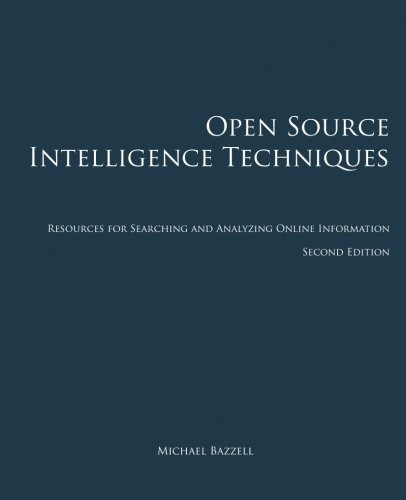
Open Source Intelligence Techniques: Resources for Searching and Analyzing Online Information

Michael Bazzell

★★★☆☆
Read Privacy Basic intel Cyber ISBN 9781481282208

CreateSpace Independent Publishing Platform · Jan 01, 2013

THIRD EDITION NOW AVAILABLE ON amazon.com/Open-Source-Intelligence-T... Details about this retired (2nd) Second Edition Sheds New Light on Open Source Intelligence Collection and Analysis. Author Michael Bazzell has been well known and respected in government circles for his ability to locate personal information about any target through Open Source Intelligence (OSINT). In this book, he shares his methods in great detail. Each step of his process is explained throughout sixteen chapters of specialized websites, application programming interfaces, and software solutions. Over 200 resources are identified with narrative tutorials and screen captures. This book will serve as a reference guide for anyone that is responsible for the collection of online content. It is written in a hands-on style that encourages the reader to execute the tutorials as they go. The search techniques offered will inspire analysts to "think outside the box" when scouring the internet for personal information. Much of the content of this book has never been discussed in any publication. Always thinking like a hacker, the author has identified new ways to use various technologies for an unintended purpose. This book will improve anyone's online investigative skills. Among other techniques, you will learn how to Twitter GPS & Account Data, Hidden Social Network Content, Cell Phone Owner Information, Hidden Photo GPS & Metadata, Deleted Websites & Posts, Website Owner Information, Alias Social Network Profiles, Additional User Accounts, Sensitive Documents & Photos, Live Streaming Social Content, Videos Uploaded by Location, Newspaper Archives & Scans, Social Content by Location, Text Transcripts of Videos, Historical Satellite Imagery, Duplicate Copies of Photos, Local Personal Radio Frequencies, Compromised Email Information, Wireless Routers by Location, Hidden Mapping Applications, Free Investigative Software, Alternative Search Engines, Stolen Items for Sale, Unlisted Addresses, Unlisted Phone Numbers, Public Government Records, Document Metadata, Voter Registration Records, Facebook Wall Posts, Online Criminal Activity

PAVN: People's Army of Vietnam

Douglas Pike

★★★☆☆
Read Advanced intel Military history Vietnam Cold War China Russia / USSR ISBN 0306804328

Da Capo Press · 1991

From the original 34-man Armed Propaganda Team of the 1930s, headed by Vo Nguyen Giap and managed by Ho Chi Minh, the People's Army of Vietnam has grown into the third largest military force in the world, exceeded only by the armies of the USSR and China. When viewed in terms of military capability and success, it is a phenomenon. Since its inception, the PAVN has taken on two major powers - France and the United States - and won decisive victories. It is this phenomenon that Douglas Pike describes in this work. At the same time, there also appears a picture of the use of force in politics, the nature of organizations and the limits of both technology and ideology. The book is aimed at those interested in the inner workings of the army that won the Vietnam War.

Russia's War: A History of the Soviet Effort, 1941-1945

Richard Overy

★★★☆☆
Read Advanced intel Military history Logistics WWII Cold War Russia / USSR Logistics ISBN 0140271694

Penguin Books · 1998

A penetrating and compassionate book on the most gigantic military struggle in world history.--The New York Times Book Review An extraordinary tale... Overy's engrossing book provides extensive details of teh slaughter, brutality, bitterness and destruction on the massive front from the White Sea to the flank of Asia.--Chicago Tribune The Russian war effort to defeat invading Axis powers, an effort that assembled the largest military force in recorded history and that cost the lives of more than 25 million Soviet soldiers and civilians, was the decisive factor for securing an Allied victory. Now with access to the wealth of film archives and interview material from Russia used to produce the ten-hour television documentary Russia's War, Richard Overy tackles the many persuasive questions surrounding this conflict. Was Stalin a military genius? Was the defense of Mother Russia a product of something greater than numbers of tanks and planes--of something deep within the Russian soul?

No cover · Amazon

SHTF Survival Stories: Memories from the Balkan War

Selco Begovic

★★★☆☆
Read Military history

There are many books out there on all the different aspects of preparedness and survival that can provide you with information, checklists, and theoretical solutions to potential problems. But no matter how much you read or how well-researched the books you choose are, there’s only so much you can take away from these tomes. Getting your information from someone who has survived a "sh*t hit the fan" crisis will take your preparedness to an entirely different level. Meet Selco, a legend in the preparedness world. He survived in a city that was under siege for more than a year. He had no power, no running water, no stores for supplies, and every day, he ran the risk of meeting a violent death, whether by shells, sniper fire, or a person intent on hurting others. This book is a collection of memories from the darkest days of the Balkan War, where each moment could have been his last. This isn’t a cheerful and uplifting guide to survival. There’s no misplaced optimism. There’s only Selco, the darkness he faced, and the grim reality of an SHTF scenario most of us can’t even fathom. But if you can grasp it all before it happens, you’ll be much further ahead than those who are frozen in shock. ***Please note that Selco's first language is not English. These stories have been lightly edited for clarity, but they still retain the "accent."

Social Engineering

Christopher Hadnagy

★★★☆☆
Read Privacy Advanced intel Cyber ISBN 9780470639535

Wiley · 2011

The first book to reveal and dissect the technical aspect ofmany social engineering maneuvers From elicitation, pretexting, influence and manipulation allaspects of social engineering are picked apart, discussed andexplained by using real world examples, personal experience and thescience behind them to unraveled the mystery in social engineering. Kevin Mitnick--one of the most famous social engineers inthe world--popularized the term "social engineering." He explained that it is much easier to tricksomeone into revealing a password for a system than to exert theeffort of hacking into the system. Mitnick claims that this socialengineering tactic was the single-most effective method in hisarsenal. This indispensable book examines a variety of maneuversthat are aimed at deceiving unsuspecting victims, while it alsoaddresses ways to prevent social engineering threats. Examines social engineering, the science of influencing atarget to perform a desired task or divulge information Arms you with invaluable information about the many methods oftrickery that hackers use in order to gather information with theintent of executing identity theft, fraud, or gaining computersystem access Reveals vital steps for preventing social engineeringthreats Social Engineering: The Art of Human Hacking does itspart to prepare you against nefarious hackers--now you can doyour part by putting to good use the critical information withinits pages.

Stalingrad: The Fateful Siege, 1942–1943

Antony Beevor

★★★☆☆
Read Military history WWII Russia / USSR ISBN 9780140284584

Longman · 1991

The Battle of Stalingrad was not only the psychological turning point of World War II: it also changed the face of modern warfare. Historians and reviewers worldwide have hailed Antony Beevor's magisterial Stalingrad as the definitive account of World War II's most harrowing battle. In August 1942, Hitler's huge Sixth Army reached the city that bore Stalin's name. In the five-month siege that followed, the Russians fought to hold Stalingrad at any cost; then, in an astonishing reversal, encircled and trapped their Nazi enemy. This battle for the ruins of a city cost more than a million lives. Stalingrad conveys the experience of soldiers on both sides, fighting in inhuman conditions, and of civilians trapped on an urban battlefield. Antony Beevor has interviewed survivors and discovered completely new material in a wide range of German and Soviet archives, including prisoner interrogations and reports of desertions and executions. As a story of cruelty, courage, and human suffering, Stalingrad is unprecedented and unforgettable.

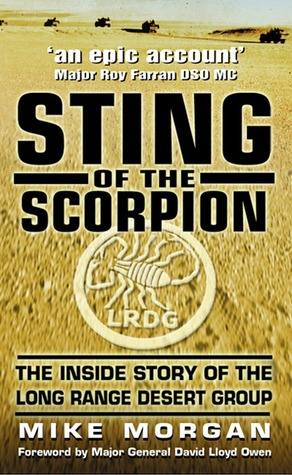
Sting of the Scorpion: The Inside Story of the Long Range Desert Group

Mike Morgan

★★★☆☆
Read Advanced intel Military history Logistics WWII Special ops Logistics ISBN 0750937041

Sutton Pub. · 2003

The Long Range Desert Group was Britain's original Special Force in the Western Desert long before the SAS burst onto the scene. Sting of the Scorpion is the exclusive, authorised, inside story of the tough LRDG raiders of the Second World War, drawn from the unpublished records of the famous force. The unit won unrivalled mastery of the North African desert in their wide-ranging and heavily armed trucks, earning grudging praise even from Rommel, the Desert Fox himself, for their skilful reconnaissance, punishing raids and powers of evasion.

Stopped at Stalingrad: The Luftwaffe and Hitler's Defeat in the East, 1942-1943 (Modern War Studies)

Joel S.A. Hayward

★★★☆☆
Read Intel history Military history Advanced intel Logistics WWII Cold War Air power Russia / USSR Logistics Strategy / theory ISBN 9780700611461

University Press of Kansas · September 2001

By the time Hitler declared war on the Soviet Union in 1941, he knew that his military machine was running out of fuel. In response, he launched Operation Blau, a campaign designed to protect Nazi oilfields in Rumania while securing new ones in the Caucasus. All that stood in the way was Stalingrad. Most accounts of the Battle of Stalingrad have focused on the dismal fate of the German Army. Joel Hayward now chronicles Luftwaffe operations during that campaign, focusing on Hitler's use of the air force as a tactical rather than strategic weapon in close support of ground forces. He vividly details the Luftwaffe's key role as flying artillery, showing that the army relied on Luftwaffe support to a far greater degree than has been previously revealed and that its successes in the East occurred largely because of the effectiveness of that support. Hayward analyzes this major German offensive from the standpoint of cooperation between ground and air forces to attain mutually agreed objectives. He draws on diaries of both key commanders and regular airmen to recreate crucial battles and convey the drama of Hitler's frustrations and reckless leadership. Ultimately, Hayward shows, the poorly conceived strategies of Hitler, Goering, and others in Berlin doomed the efforts of air commander Wolfram von Richthofen, a courageous and resolute leader attempting to come to grips with an increasingly impossible situation. Stopped at Stalingrad is a dynamic case study in combined arms warfare that fills in many of the gaps left by other studies of the eastern war. By reconsidering the campaign in the light of a wider body of documentary sources and analyzing many previously ignored events, Hayward provides military historians and general readers a much deeper and more complete understanding of the Battle of Stalingrad and its impact on World War II.

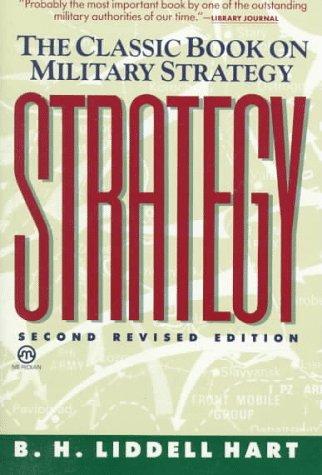
Strategy

B.H. Liddell Hart

★★★☆☆
Read Military history Advanced intel Guerrilla / COIN Strategy / theory ISBN 0452010713

Meridian · 1991

"The most important book by one of the outstanding military authorities of our time." – Library Journal   This is the classic book on war as we know it. During his long life, Basil H. Liddell Hart was considered one of the world's foremost military thinkers--a man generally regarded as the "Clausewitz of the 20th century." Strategy is a seminal work of military history and theory, a perfect companion to Sun-tzu’s The Art of War and Carl von Clauswitz’s On War. Liddell Hart stressed movement, flexibility, and surprise. He saw that in most military campaigns dislocation of the enemy's psychological and physical balance is prelude to victory. This dislocation results from a strategic indirect approach. Reflect for a moment on the results of direct confrontation (trench war in WW I) versus indirect dislocation (Blitzkreig in WW II). Liddell Hart is also tonic for business and political planning: just change the vocabulary and his concepts fit.

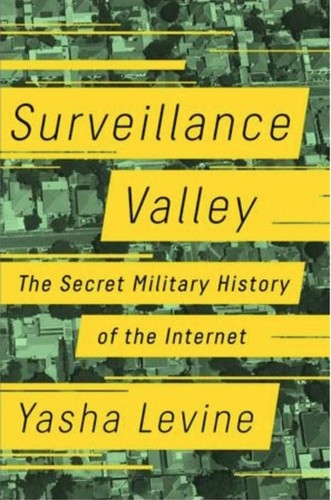
Surveillance Valley: The Rise of the Military-Digital Complex

Yasha Levine

★★★☆☆
Read Intel history Military history Vietnam Espionage GWOT Guerrilla / COIN ISBN 9781610398022

PublicAffairs · 2018

The internet is the most effective weapon the government has ever built. In this fascinating book, investigative reporter Yasha Levine uncovers the secret origins of the internet, tracing it back to a Pentagon counterinsurgency surveillance project. A visionary intelligence officer, William Godel, realized that the key to winning the war in Vietnam was not outgunning the enemy, but using new information technology to understand their motives and anticipate their movements. This idea--using computers to spy on people and groups perceived as a threat, both at home and abroad--drove ARPA to develop the internet in the 1960s, and continues to be at the heart of the modern internet we all know and use today. As Levine shows, surveillance wasn't something that suddenly appeared on the internet; it was woven into the fabric of the technology. But this isn't just a story about the NSA or other domestic programs run by the government. As the book spins forward in time, Levine examines the private surveillance business that powers tech-industry giants like Google, Facebook, and Amazon, revealing how these companies spy on their users for profit, all while doing double duty as military and intelligence contractors. Levine shows that the military and Silicon Valley are effectively inseparable: a military-digital complex that permeates everything connected to the internet, even coopting and weaponizing the antigovernment privacy movement that sprang up in the wake of Edward Snowden. With deep research, skilled storytelling, and provocative arguments, Surveillance Valley will change the way you think about the news--and the device on which you read it.

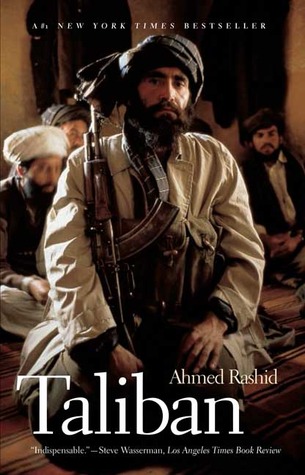
Taliban: Militant Islam, Oil and Fundamentalism in Central Asia

Ahmed Rashid

★★★☆☆
Read Basic intel Intel history GWOT Russia / USSR Middle East US Civil War ISBN 0300089023

Yale Nota Bene · 2001

Shrouding themselves and their aims in deepest secrecy, the leaders of the Taliban movement control Afghanistan with an inflexible, crushing fundamentalism. The most extreme and radical of all Islamic organizations, the Taliban inspires fascination, controversy, and especially fear in both the Muslim world and the West. Correspondent Ahmed Rashid brings the shadowy world of the Taliban into sharp focus in this enormously interesting and revealing book. It is the only authoritative account of the Taliban and modern day Afghanistan available to English language readers. Based on his experiences as a journalist covering the civil war in Afghanistan for twenty years, traveling and living with the Taliban, and interviewing most of the Taliban leaders since their emergence to power in 1994, Rashid offers unparalleled firsthand information. He explains how the growth of Taliban power has already created severe instability in Russia, Iran, Pakistan, and five Central Asian republics. He describes the Taliban's role as a major player in a new "Great Game"—a competition among Western countries and companies to build oil and gas pipelines from Central Asia to Western and Asian markets. The author also discusses the controversial changes in American attitudes toward the Taliban—from early support to recent bombings of Osama Bin Laden's hideaway and other Taliban-protected terrorist bases—and how they have influenced the stability of the region.

The Agricola and The Germania

Tacitus

★★★☆☆
Read Advanced intel Military history Biography ISBN 0140442413

Penguin Books · 1975

The Agricola is both a portrait of Julius Agricola - the most famous governor of Roman Britain and Tacitus' well-loved and respected father-in-law - and the first detailed account of Britain that has come down to us. It offers fascinating descriptions of the geography, climate and peoples of the country, and a succinct account of the early stages of the Roman occupation, nearly fatally undermined by Boudicca's revolt in AD 61 but consolidated by campaigns that took Agricola as far as Anglesey and northern Scotland. The warlike German tribes are the focus of Tacitus' attention in the Germania, which, like the Agricola, often compares the behaviour of 'barbarian' peoples favourably with the decadence and corruption of Imperial Rome.

The Bottom Billion: Why the Poorest Countries Are Failing and What Can Be Done About It

Paul Collier

★★★☆☆
Read Basic intel Economics US Civil War ISBN 9780195311457

Oxford University Press · 2007

In the universally acclaimed and award-winning The Bottom Billion, Paul Collier reveals that fifty failed states--home to the poorest one billion people on Earth--pose the central challenge of the developing world in the twenty-first century. The book shines much-needed light on this group of small nations, largely unnoticed by the industrialized West, that are dropping further and further behind the majority of the world's people, often falling into an absolute decline in living standards. A struggle rages within each of these nations between reformers and corrupt leaders--and the corrupt are winning. Collier analyzes the causes of failure, pointing to a set of traps that ensnare these countries, including civil war, a dependence on the extraction and export of natural resources, and bad governance. Standard solutions do not work, he writes; aid is often ineffective, and globalization can actually make matters worse, driving development to more stable nations. What the bottom billion need, Collier argues, is a bold new plan supported by the Group of Eight industrialized nations. If failed states are ever to be helped, the G8 will have to adopt preferential trade policies, new laws against corruption, new international charters, and even conduct carefully calibrated military interventions. Collier has spent a lifetime working to end global poverty. In The Bottom Billion, he offers real hope for solving one of the great humanitarian crises facing the world today.