S2 Search · Reading list

S2 Actual reading list

Books from S2 Actual on Goodreads, organized by his shelves and topic buckets (intel lists, military history, logistics, etc.). Metadata filled via Open Library.

Not official S2 Underground. Independent fan index — not affiliated with or endorsed by S2. Official hub: linktr.ee/S2_underground. S2 materials are CC BY-NC-SA 4.0.

S2 topic buckets (Goodreads)

Subjects & genres

402 books · Read · page 12 of 17

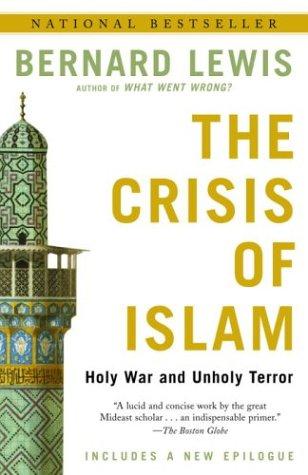
The Crisis of Islam: Holy War and Unholy Terror

Bernard Lewis

★★★☆☆
Read Cold War GWOT Air power Russia / USSR Middle East ISBN 9780812967852

Random House Trade Paperbacks · March 2, 2004

In his first book since What Went Wrong? Bernard Lewis examines the historical roots of the resentments that dominate the Islamic world today and that are increasingly being expressed in acts of terrorism. He looks at the theological origins of political Islam and takes us through the rise of militant Islam in Iran, Egypt, and Saudi Arabia, examining the impact of radical Wahhabi proselytizing, and Saudi oil money, on the rest of the Islamic world. The Crisis of Islam ranges widely through thirteen centuries of history, but in particular it charts the key events of the twentieth century leading up to the violent confrontations of today: the creation of the state of Israel, the Cold War, the Iranian Revolution, the Soviet defeat in Afghanistan, the Gulf War, and the September 11th attacks on the United States. While hostility toward the West has a long and varied history in the lands of Islam, its current concentration on America is new. So too is the cult of the suicide bomber. Brilliantly disentangling the crosscurrents of Middle Eastern history from the rhetoric of its manipulators, Bernard Lewis helps us understand the reasons for the increasingly dogmatic rejection of modernity by many in the Muslim world in favor of a return to a sacred past. Based on his George Polk Award–winning article for The New Yorker , The Crisis of Islam is essential reading for anyone who wants to know what Usama bin Ladin represents and why his murderous message resonates so widely in the Islamic world.
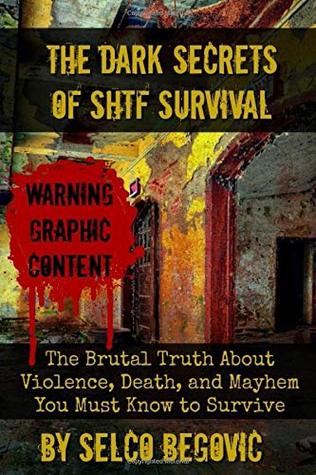
The Dark Secrets of SHTF Survival: The Brutal Truth About Violence, Death, & Mayhem You Must Know to Survive

Selco Begovic

★★★☆☆
Read Logistics Logistics ISBN 9781792159220

Independently Published · 2019

This is not a guide that will tell you step-by-step HOW to survive. This is a reality check that will tell you that everything you have expected and planned for is probably wrong. Selco is a household name in prepping and survival circles. He survived the Balkan War in a city with no power, no running water, and no supplies. For a year, he and his family fought every single day for bare subsistence. Over the years since the war, Selco has written nearly a quarter of a million words of memories, articles, and advice. This book is a collection of his darkest moments. The first thing you must do when disaster strikes is to adapt quickly to the “new rules” that apply when the SHTF. And to do that, you need to know what it’s like so you won’t be shocked…frozen…paralyzed by the atrocities taking place right in front of you.This book is Selco’s version of tough love. There’s nothing watered down about it. It is a collection of stories, memories, and articles he has documented over the past decade. He has revisited those horrible days to give us the reality check we must have. It's a glimpse into the day-to-day events of the SHTF. It is smelly. It is dirty. It’s dark and brutal. It’s REAL. It is all the stuff that Selco rarely talks about because the memories are so ugly. This book contains graphic content. It truly gives you the terrifying reality of the SHTF and you need to know these things. in order to survive if you ever find yourself in the chaos and mayhem of an apocalyptic situation.It is not a cheery, optimistic overview of the SHTF. It’s dark, brutal, and shocking. It is the real, gritty truth about what it’s like to live in a world where everyone has become something other than an ordinary human. Where death and fear are constantly near. Where evil comes out to play. Don't say we didn't warn you. PLEASE This book is written by a person from Bosnia. English is not Selco's first language. The book is lightly edited for clarity but these stories are his and should be told in his own words.

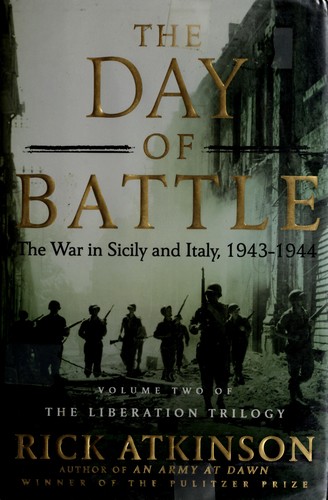
The Day of Battle: The War in Sicily and Italy, 1943-1944 (World War II Liberation Trilogy, #2)

Rick Atkinson

★★★☆☆
Read Military history WWII Vietnam ISBN 9780805062892

Henry Holt and Company · 2007

In the second volume of his epic trilogy about the liberation of Europe in World War II, Pulitzer Prize winner Rick Atkinson tells the harrowing story of the campaigns in Sicily and Italy In An Army at Dawn―winner of the Pulitzer Prize―Rick Atkinson provided an authoritative history of the Allied triumph in North Africa during World War II. Now, in The Day of Battle, he follows the strengthening American and British armies as they invade Sicily in July 1943 and then, mile by bloody mile, fight their way north toward Rome. The decision to invade the so-called soft underbelly of Europe was controversial, but once under way, the commitment to liberate Italy from the Nazis never wavered. The battles at Salerno, Anzio, the Rapido River, and Monte Cassino were particularly lethal, yet as the months passed, the Allied forces continued to drive the Germans up the Italian peninsula. And with the liberation of Rome in June 1944, ultimate victory at last began to seem inevitable. Drawing on a wide array of primary source material, written with great drama and flair, The Day of Battle is a masterly account of one of history's most compelling military campaigns.

The Devil in the White City: Murder, Magic, and Madness at the Fair That Changed America

Erik Larson

★★★☆☆
Read Biography ISBN 0609608444

Crown Publishers · 2003

Author Erik Larson imbues the incredible events surrounding the 1893 Chicago World's Fair with such drama that readers may find themselves checking the book's categorization to be sure that 'The Devil in the White City' is not, in fact, a highly imaginative novel. Larson tells the stories of two men: Daniel H. Burnham, the architect responsible for the fair's construction, and H.H. Holmes, a serial killer masquerading as a charming doctor. Burnham's challenge was immense. In a short period of time, he was forced to overcome the death of his partner and numerous other obstacles to construct the famous "White City" around which the fair was built. His efforts to complete the project, and the fair's incredible success, are skillfully related along with entertaining appearances by such notables as Buffalo Bill Cody, Susan B. Anthony, and Thomas Edison. The activities of the sinister Dr. Holmes, who is believed to be responsible for scores of murders around the time of the fair, are equally remarkable. He devised and erected the World's Fair Hotel, complete with crematorium and gas chamber, near the fairgrounds and used the event as well as his own charismatic personality to lure victims. Combining the stories of an architect and a killer in one book, mostly in alternating chapters, seems like an odd choice but it works. The magical appeal and horrifying dark side of 19th-century Chicago are both revealed through Larson's skillful writing. - John Moe

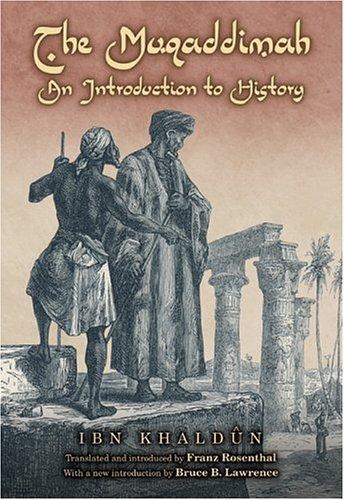
The Muqaddimah: An Introduction to History

Ibn Khaldun

★★★☆☆
Read Advanced intel Military history Middle East Biography Economics ISBN 9789953432540

Commission internationale pour la traduction des chefs-d'oeuvre · 1858

كتاب في التاريخ وعلم الإجتماع، هذا الكتاب مقدمة لكتاب في التاريخ، أراد فيه ابن خلدون أن يشرح علم التاريخ وأحوال المجتمعات وسياستها وأسباب نشوئها، فإن كان علم الإجتماع يعود لمؤسس فلا شك أنه يعود لابن خلدون، وتعتبر المقدمة مرجعا مهما لكل باحث في التاريخ أو علم الإجتماع أو باحث في أسباب نشوء الأمم أو جغرافية وحدود كثير من الدول في تلك الفترة، سواء كان الباحث عربي أو أجنبي

The Tiger's Way: A U.S. Private's Best Chance for Survival

H. John Poole

★★★☆☆
Read Military history Special ops Guerrilla / COIN Strategy / theory ISBN 0963869566

Posterity Press · 2003

This book is not just fun reading for determined riflemen, but vital self-defense info. for all security ranks and jobs. The Pentagon lost on the ground 40 years ago, and its squad tactics haven't changed much. Herein lie more advanced techniques for every category of short-range combat. They will permit better small-unit maneuvers (and fewer losses) for every intensity of combat. As Western ordnance turned more lethal, Eastern armies came to rely on tiny semi-autonomous elements. Most provide every rifleman with guerrilla training. Until the Pentagon follows suit, its own infantry enlistees will have less field skill, initiative, and decision-making experience than their Communist counterparts. In any close encounter, they will die unnecessarily and their commanders too often fail to win.

The White Sniper: Simo Häyhä

Tapio Saarelainen

★★★☆☆
Read Biographies Technical warfare Russia / USSR Intel history Biography ISBN 9781612004297

Casemate · Oct 19, 2016

Simo Häyhä (1905 - 2002) is the most famous sniper in the world. During the Winter War fought between Russia and Finland in 1939 - 1940 he had 542 confirmed kills with iron sights, a record that still stands today. He has been a role model for snipers all over the world and paved the way for them by demonstrating their significance on the battlefield. Simo Häyhä was a man of action who spoke very little, but he was hugely respected by his men and his superiors and given many difficult missions, including taking out specific targets. Able to move silently and swiftly through the landscape, melting into the snowbound surroundings in his white camouflage fatigues, his aim was deadly and his quarry rarely escaped. The Russians learned of his reputation as a marksman and tried several times to kill him by indirect fire. He was promoted from corporal to second lieutenant and he was awarded the Cross of Kollaa. For sniping Simo Häyhä only ever used his own m/28-30 rifle. Eventually his luck ran out and Simo received a serious head wound on March 6 1940, though he subsequently recovered. After the war Simo Häyhä lead a quiet, unassuming life in farming and forestry. His roots were deep in the Finnish soil and he loved life in rural Finland. A true patriot, he epitomized the traits of a professional soldier, performing his duty and setting an example of bravery that personified the Finnish spirit when confronted by the Russian onslaught. The White Sniper fully explores Simo Häyhä's life, his exploits in the Winter War, the secrets behind his success including character and technique, and also includes a detailed look at his rifle itself. There are appendices on the basics of shooting, the impact of fire on the battlefield, battles on the Kollaa Front during the Winter War and a list of ranked snipers of the world.

Thinking, Fast and Slow

Daniel Kahneman

★★★☆☆
Read Intel history ISBN 9780374275631

Farrer, Straus and Giroux · 2011

In the highly anticipated Thinking, Fast and Slow, Kahneman takes us on a groundbreaking tour of the mind and explains the two systems that drive the way we think. System 1 is fast, intuitive, and emotional; System 2 is slower, more deliberative, and more logical. Kahneman exposes the extraordinary capabilities—and also the faults and biases—of fast thinking, and reveals the pervasive influence of intuitive impressions on our thoughts and behavior. The impact of loss aversion and overconfidence on corporate strategies, the difficulties of predicting what will make us happy in the future, the challenges of properly framing risks at work and at home, the profound effect of cognitive biases on everything from playing the stock market to planning the next vacation—each of these can be understood only by knowing how the two systems work together to shape our judgments and decisions. Engaging the reader in a lively conversation about how we think, Kahneman reveals where we can and cannot trust our intuitions and how we can tap into the benefits of slow thinking. He offers practical and enlightening insights into how choices are made in both our business and our personal lives—and how we can use different techniques to guard against the mental glitches that often get us into trouble. Thinking, Fast and Slow will transform the way you think about thinking.

Unbroken: A World War II Story of Survival, Resilience and Redemption

Laura Hillenbrand

★★★☆☆
Read WWII Air power Biography ISBN 9781400064168

Random House · 2010

On a May afternoon in 1943, an Army Air Forces bomber crashed into the Pacific Ocean and disappeared, leaving only a spray of debris and a slick of oil, gasoline, and blood. Then, on the ocean surface, a face appeared. It was that of a young lieutenant, the plane's bombardier, who was struggling to a life raft and pulling himself aboard. So began one of the most extraordinary odysseys of the Second World War. The lieutenant’s name was Louis Zamperini. In boyhood, he'd been a cunning and incorrigible delinquent, breaking into houses, brawling, and fleeing his home to ride the rails. As a teenager, he had channeled his defiance into running, discovering a prodigious talent that had carried him to the Berlin Olympics and within sight of the four-minute mile. But when war had come, the athlete had become an airman, embarking on a journey that led to his doomed flight, a tiny raft, and a drift into the unknown. Ahead of Zamperini lay thousands of miles of open ocean, leaping sharks, a foundering raft, thirst and starvation, enemy aircraft, and, beyond, a trial even greater. Driven to the limits of endurance, Zamperini would answer desperation with ingenuity; suffering with hope, resolve, and humor; brutality with rebellion. His fate, whether triumph or tragedy, would be suspended on the fraying wire of his will.

Why Nations Fail: The Origins of Power, Prosperity, and Poverty

Daron Acemoğlu

★★★☆☆
Read Basic intel Korea Cold War China Russia / USSR Economics ISBN 9780307719218

Crown Publishers · 2012

Brilliant and engagingly written, Why Nations Fail answers the question that has stumped the experts for centuries: Why are some nations rich and others poor, divided by wealth and poverty, health and sickness, food and famine? Is it culture, the weather, geography? Perhaps ignorance of what the right policies are? Simply, no. None of these factors is either definitive or destiny. Otherwise, how to explain why Botswana has become one of the fastest growing countries in the world, while other African nations, such as Zimbabwe, the Congo, and Sierra Leone, are mired in poverty and violence? Daron Acemoglu and James Robinson conclusively show that it is man-made political and economic institutions that underlie economic success (or lack of it). Korea, to take just one of their fascinating examples, is a remarkably homogeneous nation, yet the people of North Korea are among the poorest on earth while their brothers and sisters in South Korea are among the richest. The south forged a society that created incentives, rewarded innovation, and allowed everyone to participate in economic opportunities. The economic success thus spurred was sustained because the government became accountable and responsive to citizens and the great mass of people. Sadly, the people of the north have endured decades of famine, political repression, and very different economic institutions—with no end in sight. The differences between the Koreas is due to the politics that created these completely different institutional trajectories. Based on fifteen years of original research Acemoglu and Robinson marshall extraordinary historical evidence from the Roman Empire, the Mayan city-states, medieval Venice, the Soviet Union, Latin America, England, Europe, the United States, and Africa to build a new theory of political economy with great relevance for the big questions of today, including:    - China has built an authoritarian growth machine. Will it continue to grow at such high speed and overwhelm the West?    - Are America’s best days behind it? Are we moving from a virtuous circle in which efforts by elites to aggrandize power are resisted to a vicious one that enriches and empowers a small minority?    - What is the most effective way to help move billions of people from the rut of poverty to prosperity? More philanthropy from the wealthy nations of the West? Or learning the hard-won lessons of Acemoglu and Robinson’s breakthrough ideas on the interplay between inclusive political and economic institutions? Why Nations Fail will change the way you look at—and understand—the world.

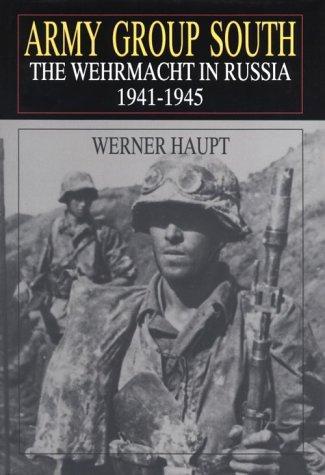
Army Group South: The Wehrmacht in Russia 1941-1945 (Schiffer Military History)

Werner Haupt

★★☆☆☆
Read Biographies Military history Logistics WWII Russia / USSR Logistics ISBN 0764303856

Schiffer Pub. · 1998

After long years of studying sources and literature, Werner Haupt presents the military history of one of the larger theaters of World War II. The completion of the history of “Army Group South” is the result of the author’s utilization of all available German and Russian literature, as well as those combat diaries and documents of the committed troop units that are available in German archives. In addition, the author was assisted in clearing up several questions by the advice of former members of the army group – from commanders to drivers. This third and final volume of a three volume set by Werner Haupt includes a volume each on Army Group North, Army Group Center, and now Army Group South. The author served in the German Army as a soldier and officer in the northern sector of the Eastern Front during the Second World War. He is also the author of Assault on Moscow 1941 (available from Schiffer Publishing Ltd.).

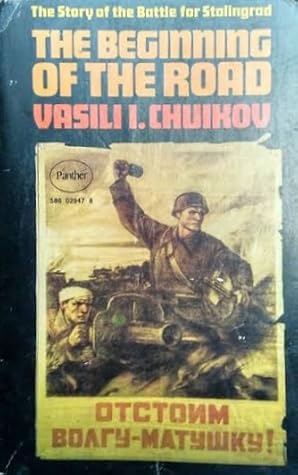
Beginning of the Road

Vasily Chuikov

★★☆☆☆
Read Biographies Military history WWII Russia / USSR ISBN 0586029478

Panther · 1970

1970. No Edition Remarks. 384 pages. Paperback book with pictorial cover. Pages and binding are presentable with no major defects. Minor issues present such as mild cracking, inscriptions, inserts, light foxing, tanning and thumb marking. Overall a good condition item. Paper cover has mild edge-wear with light rubbing and creasing. Some light marking and tanning.

No cover · Amazon

Fry The Brain: The Art of Urban Sniping and its Role in Modern Guerrilla Warfare (Volume 0)

John West

★★☆☆☆
Read Advanced intel Technical warfare Guerrilla / COIN

Fry The Brain is a detailed, original study of urban guerrilla sniping and its employment in modern unconventional warfare. Fry The Brain strives to educate the interested reader in all aspects of modern urban guerrilla sniping. As such, Fry The Brain is a unique, relevant work that is a must read for all students of contemporary guerrilla warfare.

No cover · Amazon

Looking for the Enemy: Mullah Omar and the Unknown Taliban

Bette Dam

★★☆☆☆
Read GWOT

For twenty years, the Taliban was the number one enemy of Western forces in Afghanistan. But it was an enemy that they knew little about, and about whose founder and leader, Mullah Omar, they knew even less. Armed with only a fuzzy black-and-white photo of the man, investigative journalist Bette Dam decided to track down the reclusive Taliban chief a decade back. But in the course of what had seemed an almost impossible job, she got to know the Taliban inside out, realized how dangerously misinformed the global forces fighting it were, and made a startling discovery about the elusive Omar’s whereabouts. The outcome of a five-year-long pursuit, Looking for the Enemy is a woman journalist’s epic story that takes the reader deep into the dangerous mountains and war-ravaged valleys of Afghanistan as it throws up several unknowns about an organization that is now once again at the helm in one of the world’s most fragile states.

Mein Kampf

Adolf Hitler

★★☆☆☆
Read Advanced intel Military history Biographies WWII WWI Biography ISBN 0395078016

Houghton Mifflin · 1971

Mi lucha, con título original en alemán Mein Kampf, es un libro escrito por Adolf Hitler en el que plasmó su ideología y el manifiesto de la política del nacionalsocialismo entremezclado con una serie de elementos autobiográficos. El libro es un documento interesante ya que describe cómo y por qué Hitler, el dictador de la Alemania nazi de 1933 a 1945, se volvió antisemita, además de detallar sus planes futuros para Alemania. Mein Kampf fue publicado en 1925, tras la etapa en prisión de Hitler tras su golpe de Estado fallido en Múnich en 1923. A grandes rasgos, expone el programa ideológico de Hitler, en el cual identifica a los judíos y a los «bolcheviques» como racial e ideológicamente inferiores y un peligro para la nación. Por el contrario, establece a los «arios» y a los nacionalsocialistas como racialmente superiores y políticamente progresistas. El gran objetivo de Hitler era la unificación de los pueblos alemanes en una sola Gran Alemania y la expulsión de los judíos de la nación. Desde Elejandría, aunque sabemos que es una obra polémica y controvertida, optamos por mantener este libro en el catálogo ya que es un documento histórico y creemos que la historia hay que conocerla para que no se vuelva a repetir.

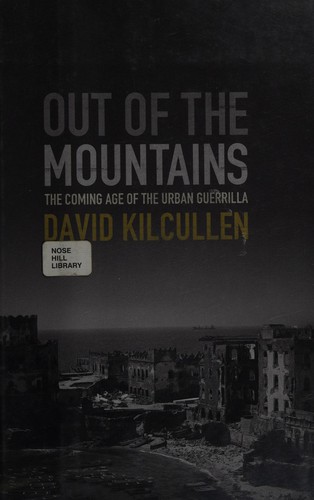
Out of the Mountains: The Coming Age of the Urban Guerrilla

David Kilcullen

★★☆☆☆
Read Basic intel GWOT Guerrilla / COIN Middle East Intel history Strategy / theory ISBN 9780199737505

Oxford University Press · 2013

When Americans think of modern warfare, what comes to mind is the US army skirmishing with terrorists and insurgents in the mountains of Afghanistan. But the face of global conflict is ever-changing. In Out of the Mountains , David Kilcullen, one of the world's leading experts on current and future conflict, offers a groundbreaking look at what may happen after today's wars end. This is a book about future conflicts and future cities, and about the challenges and opportunities that four powerful megatrends--population, urbanization, coastal settlement, and connectedness--are creating across the planet. And it is about what cities, communities and businesses can do to prepare for a future in which all aspects of human society--including, but not limited to, conflict, crime and violence--are changing at an unprecedented pace. Kilcullen argues that conflict is increasingly likely to occur in sprawling coastal cities, in peri-urban slum settlements that are enveloping many regions of the Middle East, Africa, Latin America and Asia, and in highly connected, electronically networked settings. He suggests that cities, rather than countries, are the critical unit of analysis for future conflict and that resiliency, not stability, will be the key objective. Ranging across the globe--from Kingston to Mogadishu to Lagos to Benghazi to Mumbai--he offers a unified theory of "competitive control" that explains how non-state armed groups such as drug cartels, street gangs, and warlords draw their strength from local populations, providing useful ideas for dealing with these groups and with diffuse social conflicts in general. His extensive fieldwork on the ground in a series of urban conflicts suggests that there will be no military solution for many of the struggles we will face in the future. We will need to involve local people deeply to address problems that neither outsiders nor locals alone can solve, drawing on the insight only locals can bring, together with outsider knowledge from fields like urban planning, systems engineering, renewable energy, conflict resolution and mediation. This deeply researched and compellingly argued book provides an invaluable roadmap to a future that will increasingly be crowded, urban, coastal, connected--and dangerous.

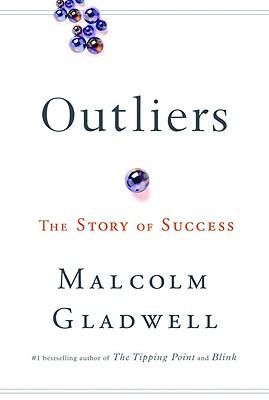
Outliers: The Story of Success

Malcolm Gladwell

★★☆☆☆
Read Economics ISBN 9780316017923

Little, Brown and Co. · 2008

In this stunning book, Malcolm Gladwell takes us on an intellectual journey through the world of "outliers"—the best and the brightest, the most famous and the most successful. He asks the question: what makes high-achievers different? His answer is that we pay too much attention to what successful people are like, and too little attention to where they are from: that is, their culture, their family, their generation, and the idiosyncratic experiences of their upbringing. Along the way he explains the secrets of software billionaires, what it takes to be a great soccer player, why Asians are good at math, and what made the Beatles the greatest rock band.

Rhodesian SAS Combat Manual

Rhodesian Forces

★★☆☆☆
Read Basic intel Advanced intel Intel history Military history Logistics Special ops Guerrilla / COIN Logistics ISBN 9798610200842

Independently Published · 2020

The "Rhodesian SAS Combat Manual" is a significant historical look of the small unit tactics employed by the elite unit during the Rhodesian Bush War. Not only is it a glimpse back at how this unit operated, but a lot of the material is still relevant today fighting counter-insurgencies. This book covers tactical follow-ups, ambush tactics, infiltration methods and combat tracking and more!

The Doctrine of Fascism

Benito Mussolini

★★☆☆☆
Read Advanced intel Military history Biographies Strategy / theory ISBN 9780865274631

Howard Fertig · September 2006

“Democracy is a kingless regime infested by many kings who are sometimes more exclusive, tyrannical and destructive than one, even if he be a tyrant.” 'The Doctrine of Fascism' (Originally known as 'La dottrina del fascismo') is an essay written by Giovanni Gentile, with credit given to Benito Mussolini as a co-author. It was first published in the Enciclopedia Italiana of 1932, as the first section of a lengthy entry on "Fascismo" (Fascism). The entire entry on Fascism spans pages 847-884 of the Enciclopedia Italiana, and includes numerous photographs and graphic images. Today, it is considered the most complete articulation of Mussolini's political views. A key concept of the Mussolini essay was that fascism was a rejection of previous models: "Granted that the 19th century was the century of socialism, liberalism, democracy, this does not mean that the 20th century must also be the century of socialism, liberalism, democracy. Political doctrines pass; nations remain. We are free to believe that this is the century of authority, a century tending to the 'right', a Fascist century. If the 19th century was the century of the individual, we are free to believe that this is the 'collective' century, and therefore the century of the State." Regardless of one's political inclinations, this essay is of great curiosity to any reader with intellectual interests, and a must-read for those who seek to buttress or demolish its unwavering premises.