S2 Search · Reading list

S2 Actual reading list

Books from S2 Actual on Goodreads, organized by his shelves and topic buckets (intel lists, military history, logistics, etc.). Metadata filled via Open Library.

Not official S2 Underground. Independent fan index — not affiliated with or endorsed by S2. Official hub: linktr.ee/S2_underground. S2 materials are CC BY-NC-SA 4.0.

S2 topic buckets (Goodreads)

Subjects & genres

402 books · Read · page 13 of 17

The Great Gatsby

F. Scott Fitzgerald

★★☆☆☆
Read Economics ISBN 9780743273565

Independently Published · 2021

Alternate covers of this ISBN can be found here, here and here. The only edition of the beloved classic that is authorized by Fitzgerald’s family and from his lifelong publisher. This edition is the enduring original text, updated with the author’s own revisions, a foreword by his granddaughter, and with a new introduction by National Book Award winner Jesmyn Ward. The Great Gatsby, F. Scott Fitzgerald’s third book, stands as the supreme achievement of his career. First published by Scribner in 1925, this quintessential novel of the Jazz Age has been acclaimed by generations of readers. The story of the mysteriously wealthy Jay Gatsby and his love for the beautiful Daisy Buchanan is an exquisitely crafted tale of America in the 1920s.

The Spectre of Babeuf

Ian H. Birchall

★★☆☆☆
Read Biographies Biography Revolution ISBN 0333683013

St. Martin's Press · 1997

This study of Babeuf as a political thinker, based on an analysis of his extensive writings, and on scholarship unavailable in English, shows him to be a major precursor of the modern revolutionary socialist tradition. The first part traces Babeuf's political evolution in the context of the French Revolution; the second examines his changing reputation among subsequent historians. The final section assesses the originality of his thought, showing him to be neither a Jacobin nor a Utopian.

The Hunger Games (The Hunger Games, #1)

Suzanne Collins

☆☆☆☆
Read ISBN 9780439023481

Scholastic Press · 2008

Winning means fame and fortune. Losing means certain death. The Hunger Games have begun. . . . In the ruins of a place once known as North America lies the nation of Panem, a shining Capitol surrounded by twelve outlying districts. The Capitol is harsh and cruel and keeps the districts in line by forcing them all to send one boy and one girl between the ages of twelve and eighteen to participate in the annual Hunger Games, a fight to the death on live TV. Sixteen-year-old Katniss Everdeen regards it as a death sentence when she steps forward to take her sister's place in the Games. But Katniss has been close to dead before-and survival, for her, is second nature. Without really meaning to, she becomes a contender. But if she is to win, she will have to start making choices that weigh survival against humanity and life against love.

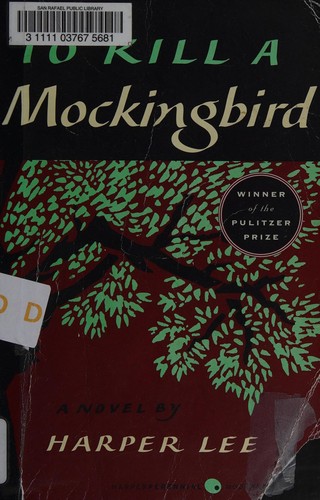
To Kill a Mockingbird

Harper Lee

☆☆☆☆
Read Intel history ISBN 0060935464

HarperPerennial ModernClassics · 2016

"Shoot all the bluejays you want, if you can hit 'em, but remember it's a sin to kill a mockingbird." A lawyer's advice to his children as he defends the real mockingbird of Harper Lee's classic novel - a black man charged with the rape of a white girl. Through the young eyes of Scout and Jem Finch, Harper Lee explores with exuberant humour the irrationality of adult attitudes to race and class in the Deep South of the 1930s. The conscience of a town steeped in prejudice, violence and hypocrisy is pricked by the stamina of one man's struggle for justice. But the weight of history will only tolerate so much. "To Kill A Mockingbird" became both an instant bestseller and a critical success when it was first published in 1960. It went on to win the Pulitzer Prize in 1961 and was later made into an Academy Award-winning film.

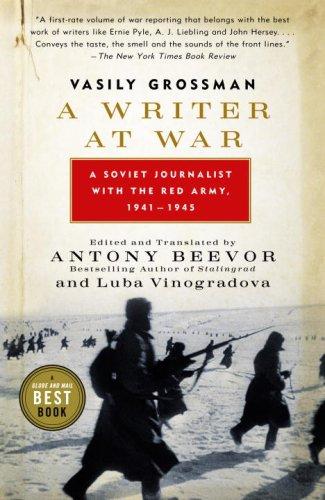
A Writer at War: Vasily Grossman with the Red Army

Vasily Grossman

unrated
Read Military history WWII Cold War Armor Russia / USSR Biography ISBN 9780676978117

Vintage Canada · March 13, 2007

Edited and translated from the Russian by Antony Beevor and Luba Vinogradova Knopf Canada is proud to present a masterpiece of the Second World War, never before published in English, from one of the great Russian writers of the 20th century – a vivid eyewitness account of the Eastern Front and “the ruthless truth of war.” When the Germans invaded Russia in 1941, Vasily Grossman became a special correspondent for the Red Star, the Red Army’s newspaper. A Writer at War – based on the notebooks in which Grossman gathered raw material for his articles – depicts the crushing conditions on the Eastern Front, and the lives and deaths of soldiers and civilians alike. It also includes some of the earliest reportage on the Holocaust. In the three years he spent on assignment, Grossman witnessed some of the most savage fighting of the war: the appalling defeats of the Red Army, the brutal street fighting in Stalingrad, the Battle of Kursk (the largest tank engagement in history), the defense of Moscow, the battles in Ukraine, and much more. Historian Antony Beevor has taken Grossman’s raw notebooks, and fashioned them into a narrative providing one of the most even-handed descriptions – at once unflinching and sensitive – we have ever had of what he called “the ruthless truth of war.” From the Hardcover edition.

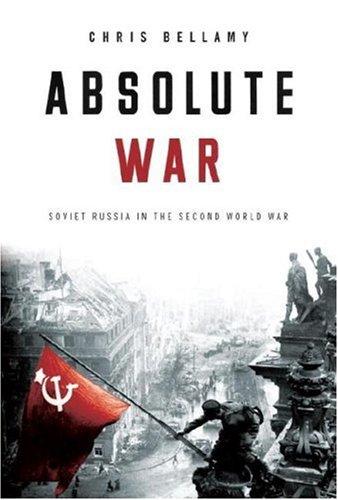
Absolute War: Soviet Russia in the Second World War

Christopher Bellamy

unrated
Read Economics Military history Logistics WWII Cold War Russia / USSR Logistics Economics ISBN 9780375410864

Knopf · October 30, 2007

The battle on the Eastern Front between 1941 and 1945 was arguably the single most decisive factor of World War II, fixing the course of world history over the next half century. Now, drawing on sources newly available since the collapse of the Soviet Union and the reunification of Germany, historian and journalist Chris Bellamy presents the first full account of this deadly conflict. Bellamy outlines the lead-up to the war—in which the fragile alliance between Hitler and Stalin was unceremoniously broken—and takes us headlong into the hostilities. He presents a shocking picture of battle in which the traditional restraints of “civilized” warfare were shed. He makes clear how the Soviets quickly rallied against Hitler, choosing homegrown despotism over foreign domination in a struggle that the Russian people call the Great Patriotic War. Bellamy charts the early gains of the German army, whose advances into Soviet territory were brought to a halt in Moscow in the winter of 1941, and whose defeat was sealed in the Battle of Stalingrad, the most merciless campaign of the bloodiest front. He shows how Soviet men—and women—joined to fight a war whose casualties were later steeply underestimated by their government, and how even the true death toll, at 27 million, does not take into account the millions of lives on both sides that lay shattered in the aftermath. Finally, Bellamy examines the far-reaching consequences of the battle’s outcome—the reverberations of which are still felt today—and argues that the cost of victory was ultimately too much for the Soviet Union to bear. A magisterial study, and an essential addition to our understanding of contemporary world history.

No cover · Amazon

Alamein: War Without Hate

Colin Smith

unrated
Read Intel history Logistics Technical warfare Logistics Intel history

For the British, the battle fought at El Alamein in October 1942 became the turning point of the Second World War. In this study of the desert war, John Bierman and Colin Smith show why it is remembered by its survivors as a 'war without hate'. Through extensive research the authors provide a compellingly fresh perspective on the see-saw campaign in which the two sides chased each other back and forth across the unforgiving North African landscape.

Alexander Hamilton

Ron Chernow

unrated
Read Biographies Biography Economics ISBN 9781524708658

Penguin Random House Audio · 2004

An alternate cover edition can be found here. Pulitzer Prize-winning author Ron Chernow presents a landmark biography of Alexander Hamilton, the Founding Father who galvanized, inspired, scandalized, and shaped the newborn nation. In the first full-length biography of Alexander Hamilton in decades, Ron Chernow tells the riveting story of a man who overcame all odds to shape, inspire, and scandalize the newborn America. According to historian Joseph Ellis, Alexander Hamilton is “a robust full-length portrait, in my view the best ever written, of the most brilliant, charismatic and dangerous founder of them all.” Few figures in American history have been more hotly debated or more grossly misunderstood than Alexander Hamilton. Chernow’s biography gives Hamilton his due and sets the record straight, deftly illustrating that the political and economic greatness of today’s America is the result of Hamilton’s countless sacrifices to champion ideas that were often wildly disputed during his time. “To repudiate his legacy,” Chernow writes, “is, in many ways, to repudiate the modern world.” Chernow here recounts Hamilton’s turbulent life: an illegitimate, largely self-taught orphan from the Caribbean, he came out of nowhere to take America by storm, rising to become George Washington’s aide-de-camp in the Continental Army, coauthoring The Federalist Papers, founding the Bank of New York, leading the Federalist Party, and becoming the first Treasury Secretary of the United States.Historians have long told the story of America’s birth as the triumph of Jefferson’s democratic ideals over the aristocratic intentions of Hamilton. Chernow presents an entirely different man, whose legendary ambitions were motivated not merely by self-interest but by passionate patriotism and a stubborn will to build the foundations of American prosperity and power. His is a Hamilton far more human than we’ve encountered before—from his shame about his birth to his fiery aspirations, from his intimate relationships with childhood friends to his titanic feuds with Jefferson, Madison, Adams, Monroe, and Burr, and from his highly public affair with Maria Reynolds to his loving marriage to his loyal wife Eliza. And never before has there been a more vivid account of Hamilton’s famous and mysterious death in a duel with Aaron Burr in July of 1804. Chernow’s biography is not just a portrait of Hamilton, but the story of America’s birth seen through its most central figure. At a critical time to look back to our roots, Alexander Hamilton will remind readers of the purpose of our institutions and our heritage as Americans.

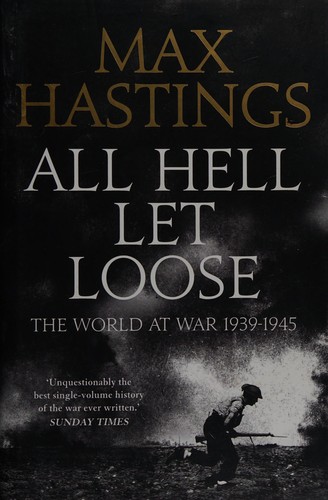
All Hell Let Loose: The World at War, 1939-1945

Max Hastings

unrated
Read Technical warfare WWII Russia / USSR ISBN 9780007338092

HarperPress · 2011

HardCover. Pub Date :2011-09-29 768 English HarperPress A magisterial history of the greatest and most terrible event in history. from one of the finest historians of the Second World War A book which shows the impact. of war upon hundreds of millions of people around the world-soldiers. sailors and airmen; housewives. farm workers and children.Reflecting Max Hastingss thirty-five years of research on World War II. All Hell Let Loose describes the course of events. but focuses chiefly upon human experience. which varied immensely from campaign to campaign. continent to continent.The author emphasises the Russian front. where more than 90% of all German soldiers who perished met their fate. He argues that. while Hitlers army often fought its battles brilliantly well. the Nazis conducted their war effort with stunning incompetence. He suggests that ...

No cover · Amazon

Behind the battle: Intelligence in the war with Germany, 1939-45

Ralph Bennett

unrated
Read Advanced intel Intel history WWII Espionage Naval Air power Intel history

By the end of 1942, Ultra had become the richest and most reliable of the many different sources of intelligence, however, the relation between their individual contributions requires analysis. Ralph Bennett's study aims to present a succinct survey and analysis of the military intelligence available to Britain and her allies during World War II. When war began, Britain was as ill-prepared in intelligence as in armaments. Civilian scientists had discovered the principle of radar in the mid-1930s, but everything else had to be learned from scratch in the heat of emergency. In 1939, all three armed services lacked staff trained to appraise and distribute intelligence. Because it had so often been unreliable in the past, field commanders were reluctant to accept it and had to learn new ways. First signs of improvement came in mid-1941, when Ultra targeted naval vessels and bomber aircraft onto so many of Rommel's supply ships that the Afrika Korps almost withered on the vine. From then on intelligence played an increasingly indispensable part in final victory. Ultra won the Battle of the Atlantic, driving the U-boats back to coastal waters by June 1943. A lower grade code gave Montgomery the vital first news of the whereabouts of the German tanks as he planned the breakthrough at Alamein. Only "Bomber" Harris refused to give intelligence the credit it deserved, for reasons investigated in "Behind the Battle".

Bitskrieg: The New Challenge of Cyberwarfare

John Arquilla

unrated
Read Cryptography Espionage Nuclear Cyber Strategy / theory ISBN 9781509543649

Polity Press · 2021

New technologies are changing how we protect our citizens and wage our wars. Among militaries, everything taken for granted about the ability to maneuver and fight is now undermined by vulnerability to “weapons of mass disruption”: cutting-edge computer worms, viruses, and invasive robot networks. At home, billions of household appliances and other “smart” items that form the Internet of Things risk being taken over, then added to the ranks of massive, malicious “zombie” armies. The age of Bitskrieg is here, bringing vexing threats that range from the business sector to the battlefield. In this new book, world-renowned cybersecurity expert John Arquilla looks unflinchingly at the challenges posed by cyberwarfare – which he argues have been neither met nor mastered. He offers fresh solutions for protecting against enemies that are often anonymous, unpredictable, and capable of projecting force and influence vastly disproportionate to their size, strength, or wealth. The changes called for require radical rethinking of military and security affairs, diplomacy, and even the routines of our daily lives.

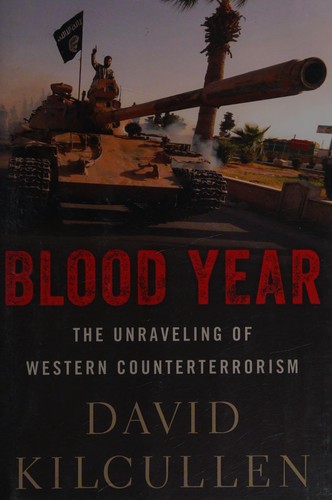
Blood Year: The Unraveling of Western Counterterrorism

David Kilcullen

unrated
Read Advanced intel Cold War GWOT Russia / USSR Middle East Strategy / theory US Civil War ISBN 9780190600549

Oxford University Press · 2016

2014 has the potential to go down as a crucial year in modern world history. A resurgent and bellicose Russia took over Crimea and fueled a civil war in Eastern Ukraine. Post-Saddam Iraq, in many respects a creature of the United States because of the war that began in 2003, lost a third of its territory to an army of hyper-violent millennialists. The peace process in Israel seemed to completely collapse. Finally, after coalescing in Syria as a territorial entity, the Islamic State swept into northern Iraq and through northeastern Syria, attracting legions of recruits from Europe and the Middle East. In short, the post-Cold War security order that the US had constructed after 1991 seemed to be coming apart at the seams. David Kilcullen was one of the architects of America's strategy in the late phases of the second Gulf War, and also spent time in Afghanistan and other hotspots. In Blood Year, he provides a wide-angle view of the current situation in the Middle East and analyzes how America and the West ended up in such dire circumstances. Whereas in 2008 it appeared that the U.S. might pull a modest stalemate from the jaws of defeat in Iraq, six years later the situation had reversed. After America pulled out of Iraq completely in 2011, the Shi'ite president cut Sunnis out of the power structure and allowed Iranian influence to grow. And from the debris of Assad's Syria arose an extremist Sunni organization even more radical than Al Qaeda. Unlike Al Qaeda, ISIS was intent on establishing its own state, and within a remarkably short time they did. Interestingly, Kilcullen highlights how embittered former Iraqi Ba'athist military officers were key contributors to ISIS's military successes. Kilcullen lays much of the blame on Bush's initial decision to invade Iraq (which had negative secondary effects in Afghanistan), but also takes Obama to task for simply withdrawing and adopting a "leading from behind" strategy. As events have proven, Kilcullen contends, withdrawal was a fundamentally misguided plan. The U.S. had uncorked the genie, and it had a responsibility to at least attempt to keep it under control. Instead, the U.S. is at a point where administration officials state that the losses of Ramadi and Palmyra are manageable setbacks. Kilcullen argues that the U.S. needs to re-engage in the region, whether it wants to or not, because it is largely responsible for the situation that is now unfolding. Blood Year is an essential read for anyone interested in understanding not only why the region that the U.S. invaded a dozen years ago has collapsed into utter chaos, but also what it can do to alleviate the grim situation.

No cover · Amazon

Book of the Blockade

Alieś Adamovič

unrated
Read Logistics Armor Russia / USSR Logistics Biography

Leningrad was under siege for almost three years, and the first winter of that siege was one of the coldest on record. The Russians had been taken by surprise by the Germans' sudden onslaught in June 1941. This book tells the story of that long, bitter siege in the words of those who were there. It vividly describes how ordinary Leningraders struggled to stay alive and to defend their beloved city in the most appalling conditions. They were bombed, shelled, starved and frozen. They dug tank-traps and trenches, built shelters and fortifications, fought fires, cleared rubble, tended the wounded and, for as long as they had strength to do so, buried their dead. Many were killed by German bombs or shells, but most of them died of hunger and cold. Based on interviews with survivors of the siege and on contemporary diaries and personal memoirs. The primary focus is on three a young mother with two small children, a boy of sixteen at the outbreak of war, and an elderly academic. We see the siege through their eyes as its horrors unfold and as they struggle to survive.

Bosnia: A Short History

Noel Malcolm

unrated
Read Military history Strategy / theory Orthodox / theology ISBN 9780814755617

New York University Press · October 1, 1996

The most comprehensive narrative history of Bosnia available in English This updated edition of Noel Malcolm's highly-acclaimed A Short History provides the reader with the most comprehensive narrative history of Bosnia in the English language. Malcolm examines the different religious and ethnic inhabitants of Bosnia, a land of vast cultural upheaval where the empires of Rome, Charlemagne, the Ottomans, and the Austro-Hungarians overlapped. Clarifying the various myths that have clouded the modern understanding of Bosnia's past, Malcolm brings to light the true causes of the country's destruction. This expanded edition of Bosnia includes a new epilogue by the author examining the failed Vance-Owen peace plan, the tenuous resolution of the Dayton Accords, and the efforts of the United Nations to keep the uneasy peace. What went wrong in the country where Christians and Muslims mingled and tolerated each other for over five centuries? It was a land with a vibrant political and cultural history, unlike any other in Europe, where great powers and religions-the empires of Rome, Charlemagne, the Ottomans; the faiths of Roman Catholicism, Eastern Orthodoxy, Judaism, and Islam overlapped and combined. In this first English-language history of Bosnia, Noel Malcolm provides a narrative chronicle of the country from its beginnings to its tragic end. Clarifying the various myths that have clouded the modern understanding of Bosnia's past, Malcolm brings to light the true causes of the country's the political strategy of the Serbian leadership, the conflict between the city and the countryside, the fatal inaction and miscalculations of Western politicians. Putting the Bosnia war into perspective, this volume celebrates the complex history of a country whose past, as well as its future, has been all but erased. At last, here is the guide for the general reader seeking a comprehensive and accessible account of the war in the former Yugoslavia.

No cover · Amazon

Bracketing the Enemy: Forward Observers in World War II

John R. Walker

unrated
Read Advanced intel Intel history Military history Technical warfare WWII US Civil War

After the end of World War II, General George Patton declared that artillery had won the war. Yet howitzers did not achieve victory on their own. Crucial to the success of these big guns were forward observers, artillerymen on the front lines who directed the artillery fire. Until now, the vital role of forward observers in ground combat has received little scholarly attention. In Bracketing the Enemy, John R. Walker remedies this oversight by offering the first full-length history of forward observer teams during World War II. As early as the U.S. Civil War, artillery fire could reach as far as two miles, but without an “FO” (forward observer) to report where the first shot had landed in relation to the target, and to direct subsequent fire by outlining or “bracketing” the targeted range, many of the advantages of longer-range fire were wasted. During World War II, FOs accompanied infantrymen on the front lines. Now, for the first time, gun crews could bring deadly accurate fire on enemy positions immediately as advancing riflemen encountered these enemy strongpoints. According to Walker, this transition from direct to indirect fire was one of the most important innovations to have occurred in ground combat in centuries. Using the 37th Division in the Pacific Theater and the 87th in Europe as case studies, Walker presents a vivid picture of the dangers involved in FO duty and shows how vitally important forward observers were to the success of ground operations in a variety of scenarios. FO personnel not only performed a vital support function as artillerymen but often transcended their combat role by fighting as infantrymen, sometimes even leading soldiers into battle. And yet, although forward observers lived, fought, and bled with the infantry, they were ineligible to wear the Combat Infantryman’s Badge awarded to the riflemen they supported. Forward observers are thus among the unsung heroes of World War II. Bracketing the Enemy signals a long-overdue recognition of their distinguished service.

Burma: The Longest War 1941-45

Louis Allen

unrated
Read Advanced intel Military history Logistics WWII Logistics ISBN 1842122606

Phoenix Press · 2000

Charting the whole Burma war, this book flows like a novel from the high command to the sharp end setting out a myriad of facts and considerations in a clear and coherent narrative. Ranging far beyond pure military history the story is multi-layered, combining objective analysis with a sensitive account of human reaction in the face of bitter, cruel warfare, disease and an inhospitable terrain. Military events are painstakingly detailed, and set in their political and cultural context. Equal attention is paid to both sides of the conflict and the insights made into Japanese plans and responses make the book uniquely informative, exciting and moving. 'If one had to select one book about the Burma War, this fine work is the best' Dekho, magazine of the Burma Star Association 'There will be few more thorough chronicles of World War Two's most dreaded front than Louis Allen's The Longest War' The Listener

China in the Anti-Japanese War, 1937-1945: Politics, Culture, and Society

David P. Barrett

unrated
Read China Economics Privacy Military history China Economics ISBN 9780820445564

Peter Lang Publishing · November 1, 2000

This book is a collection of eleven articles written by scholars of international repute that specializes in the history of China during her long war against Japan from 1937 to 1945. The topics addressed include political, economic, social, and diplomatic issues related to wartime China based on materials newly opened for research. They give strong evidence that the Sino-Japanese War was of a complexity and magnitude that must be understood in terms that go far beyond those solely of its military dimensions.

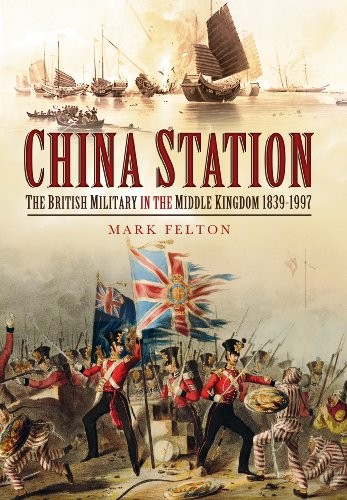
China Station: The British Military in the Middle Kingdom 1839 – 1997

Mark Felton

unrated
Read Military history Naval China Economics US Civil War ISBN 9781781590690

Pen and Sword Military · Oct 19, 2013

The author, who lives in Shanghai, sets out to demonstrate that the British military has been at the forefront of many of the great changes that have swept China over the last two centuries. The author, who lives in Shanghai, sets out to demonstrate that the British military has been at the forefront of many of the great changes that have swept China over the last two centuries. He devotes chapters to the various wars, military adventures and rebellions that regularly punctuated Sino/British relationships since the 1st Opium War 1839-1842. This classic example of Imperial intervention saw the establishment of Hong Kong and Shanghai as key trading centers. The Second Opium War and the Taiping and Boxer Rebellions saw the advancement of British influence despite determined but unsuccessful efforts by the Chinese to loosen the grip of Western domination. The Royal Navy's might ensured that, by gunboat diplomacy, trading rights and new posts were established and great fortunes made. But in the 1940s the British grossly underestimated Japanese military might and intentions with disastrous results. After the Second World War the British returned to find that the Americans had supplanted them. The Communists victory in the Civil War sealed British and Western fates and, while Hong Kong remained under British control until 1997, the end of British rule was almost inevitable. But the handover was a masterly piece of pragmatic capitalism and the former Colony remains an economic powerhouse with strong British influence.

Churchill on The Home Front, 1900-1955

Paul Addison

unrated
Read Logistics Logistics Biography Orthodox / theology ISBN 0712658262

Pimlico · 1993

Winston Churchill's place in history as an orator, war leader and international statesman is secure. Far less attention has been given to his ideas about the development of our national life at home. No other politician has crossed the floor of the House of Commons twice and gone on to become Prime Minister. Yet it is the narrow view, Addison argues, to see Churchill's performance on the home front as merely that of an egoistic opportunist, employing his gift for rhetoric to keep centre stage regardless of principle. In his youth an Edwardian liberal, in middle age a supporter of the far right, few regarded him as anything but an old-fashioned figure when, unexpectedly, he returned to the centre of British politics in 1940. Yet few today can deny the impact made by his vision of Britain.

Codes, Ciphers and Spies: Tales of Military Intelligence in World War I

John F. Dooley

unrated
Read Cryptography WWI Espionage Intel history ISBN 9783319294148

Springer · 2016

When the United States declared war on Germany in April 1917, it was woefully unprepared to wage a modern war. Whereas their European counterparts already had three years of experience in using code and cipher systems in the war, American cryptologists had to help in the building of a military intelligence unit from scratch. This book relates the personal experiences of one such character, providing a uniquely American perspective on the Great War. It is a story of spies, coded letters, plots to blow up ships and munitions plants, secret inks, arms smuggling, treason, and desperate battlefield messages. Yet it all begins with a college English professor and Chaucer scholar named John Mathews Manly. In 1927, John Manly wrote a series of articles on his service in the Code and Cipher Section (MI-8) of the U.S. Army’s Military Intelligence Division (MID) during World War I. Published here for the first time, enhanced with references and annotations for additional context, these articles form the basis of an exciting exploration of American military intelligence and counter-espionage in 1917-1918. Illustrating the thoughts of prisoners of war, draftees, German spies, and ordinary Americans with secrets to hide, the messages deciphered by Manly provide a fascinating insight into the state of mind of a nation at war.

Countdown to Zero Day: Stuxnet and the Launch of the World's First Digital Weapon

Kim Zetter

unrated
Read Cryptography Espionage Nuclear Cyber Middle East ISBN 9780770436179

Crown Publishers · 2014

In January 2010, inspectors with the International Atomic Energy Agency noticed that centrifuges at a uranium enrichment plant in Iran were failing and being replaced at an unprecedented rate. The cause of their failure was a complete mystery. Five months later, a seemingly unrelated event occurred. A computer security firm in Belarus was called in to troubleshoot some computers in Iran that were caught in a reboot loop—crashing and rebooting repeatedly. At first, technicians with the firm believed the malicious code they found on the machines was a simple, routine piece of malware. But as they and other experts around the world investigated, they discovered a virus of unparalleled complexity and mysterious provenance and intent. They had, they soon learned, stumbled upon the world’s first digital weapon. Stuxnet, as it came to be known, was unlike any other virus or worm built before: It was the first attack that reached beyond the computers it targeted to physically destroy the equipment those computers controlled. It was an ingenious attack, jointly engineered by the United States and Israel, that worked exactly as planned, until the rebooting machines gave it all away. And the discovery of Stuxnet was just the beginning: Once the digital weapon was uncovered and deciphered, it provided clues to other tools lurking in the wild. Soon, security experts found and exposed not one but three highly sophisticated digital spy tools that came from the same labs that created Stuxnet. The discoveries gave the world its first look at the scope and sophistication of nation-state surveillance and warfare in the digital age. Kim Zetter, a senior reporter at Wired, has covered hackers and computer security since 1999 and is one of the top journalists in the world on this beat. She was among the first reporters to cover Stuxnet after its discovery and has authored many of the most comprehensive articles about it. In COUNTDOWN TO ZERO DAY: Stuxnet and the Launch of the World’s First Digital Weapon, Zetter expands on this work to show how the code was designed and unleashed and how its use opened a Pandora’s Box, ushering in an age of digital warfare in which any country’s infrastructure—power grids, nuclear plants, oil pipelines, dams—is vulnerable to the same kind of attack with potentially devastating results. A sophisticated digital strike on portions of the power grid, for example, could plunge half the U.S. into darkness for weeks or longer, having a domino effect on all other critical infrastructures dependent on electricity.

No cover · Amazon

COUNTERINSURGENCY

David Kilcullen

unrated
Read Advanced intel GWOT Guerrilla / COIN Middle East Strategy / theory

David Kilcullen is one of the world's most influential experts on counterinsurgency and modern warfare, a ground-breaking theorist whose ideas "are revolutionizing military thinking throughout the west" ( Washington Post ). Indeed, his vision of modern warfare powerfully influenced the United States' decision to rethink its military strategy in Iraq and implement "the Surge," now recognized as a dramatic success. In Counterinsurgency , Kilcullen brings together his most salient writings on this vitally important topic. Here is a picture of modern warfare by someone who has had his boots on the ground in some of today's worst trouble spots-including Iraq and Afghanistan-and who has been studying counterinsurgency since 1985. Filled with down-to-earth, common-sense insights, this book is the definitive account of counterinsurgency, indispensable for all those interested in making sense of our world in an age of terror.

No cover · Amazon

Culture, Conflict & Crises in the Icelandic Fisheries: An Anthropological Study of People, Policy & Marine Resources in the North Atlantic Arctic (Uppsala Studies in Cultural Anthropology, 48)

Níels Einarsson

unrated
Read Logistics Logistics

This book is a contribution to studies of social and cultural change in the Icelandic fisheries and fishing communities. Such changes may be seen as a result of the interplay of internal dynamics with both national and global forces and processes, not least with regard to the impacts of fisheries governance. These changes occur also in an international context of new enviornmental ideologies and perceptions of marine mammals, with consequences for social dynamics of local resource-use. Here it is argued that the conflicts over the harvesting or conservation of cetaceans can productively be understood from a cultural perspective.

Desert Sniper: How One Ordinary Brit Went to War Against ISIS

Ed Nash

unrated
Read Advanced intel Military history Technical warfare Biographies GWOT Air power Middle East Intel history ISBN 9781408711330

Little, Brown Book Group Limited · 2018

What makes an ordinary but highly educated Englishman, with no previous military training, decide to travel and fight in one of the most brutal conflicts on the planet? Desert Sniper is an extraordinary, true account of one man's journey from well-meaning volunteer to battle-scarred combat sniper, placing himself daily in the line of fire to fight one of the greatest evils of this new century. Ed Nash has travelled across the globe, and is working with refugees in Burma, when he first becomes aware of the terrible atrocities being committed under ISIS's newly established 'Caliphate', covering vast tracts of Iraq and Syria. In June 2015, he chooses to undertake the hazardous journey, via Northern Iraq, to Syria, to join ill-equipped and poorly trained but battle-hardened Kurdish forces as they attempt to halt Daesh's relentless advance. Nash is an articulate, insightful and refreshingly honest companion as he unpacks the shifting complexities of the political and military situation in which he finds himself. As one of a motley band of foreign volunteer fighters - veterans of other conflicts, adventurers and misfits, from many different countries - we follow him through his rudimentary training and early combat operations as he and his companions slowly gain the trust and respect of their Kurdish colleagues. Nash shows us the realities of the war on the ground in Syria in fascinating detail; the privations of the ordinary Kurdish soldiers, the terrible price paid by civilians caught in the cross-fire, the ever-present danger of lethal suicide bombers and occasional moments of striking beauty in amongst the carnage. A modern classic in the making, Desert Sniper will prove to be one of the most unforgettable accounts to emerge from the war against ISIS.