S2 Search · Reading list

S2 Actual reading list

Books from S2 Actual on Goodreads, organized by his shelves and topic buckets (intel lists, military history, logistics, etc.). Metadata filled via Open Library.

Not official S2 Underground. Independent fan index — not affiliated with or endorsed by S2. Official hub: linktr.ee/S2_underground. S2 materials are CC BY-NC-SA 4.0.

S2 topic buckets (Goodreads)

Subjects & genres

415 books · All shelves · page 14 of 18

No cover · Amazon

COUNTERINSURGENCY

David Kilcullen

unrated
Read Advanced intel GWOT Guerrilla / COIN Middle East Strategy / theory

David Kilcullen is one of the world's most influential experts on counterinsurgency and modern warfare, a ground-breaking theorist whose ideas "are revolutionizing military thinking throughout the west" ( Washington Post ). Indeed, his vision of modern warfare powerfully influenced the United States' decision to rethink its military strategy in Iraq and implement "the Surge," now recognized as a dramatic success. In Counterinsurgency , Kilcullen brings together his most salient writings on this vitally important topic. Here is a picture of modern warfare by someone who has had his boots on the ground in some of today's worst trouble spots-including Iraq and Afghanistan-and who has been studying counterinsurgency since 1985. Filled with down-to-earth, common-sense insights, this book is the definitive account of counterinsurgency, indispensable for all those interested in making sense of our world in an age of terror.


No cover · Amazon

Culture, Conflict & Crises in the Icelandic Fisheries: An Anthropological Study of People, Policy & Marine Resources in the North Atlantic Arctic (Uppsala Studies in Cultural Anthropology, 48)

Níels Einarsson

unrated
Read Logistics Logistics

This book is a contribution to studies of social and cultural change in the Icelandic fisheries and fishing communities. Such changes may be seen as a result of the interplay of internal dynamics with both national and global forces and processes, not least with regard to the impacts of fisheries governance. These changes occur also in an international context of new enviornmental ideologies and perceptions of marine mammals, with consequences for social dynamics of local resource-use. Here it is argued that the conflicts over the harvesting or conservation of cetaceans can productively be understood from a cultural perspective.

D-Day: The Battle for Normandy

Antony Beevor

unrated
To read WWII Naval Russia / USSR ISBN 9780670887033

Viking · 2009

The Normandy Landings that took place on D-Day involved by far the largest invasion fleet ever known. The scale of the undertaking was simply awesome. What followed them was some of the most cunning and ferocious fighting of the war, at times as savage as anything seen on the Eastern Front. As casualties mounted, so too did the tensions between the principal commanders on both sides. Meanwhile, French civilians caught in the middle of these battlefields or under Allied bombing endured terrible suffering. Even the joys of Liberation had their darker side. The war in northern France marked not just a generation but the whole of the post-war world, profoundly influencing relations between America and Europe. Making use of overlooked and new material from over thirty archives in half a dozen countries, "D-Day" is the most vivid and well-researched account yet of the battle of Normandy. As with Stalingrad and Berlin, Antony Beevor's gripping narrative conveys the true experience of war.

Desert Sniper: How One Ordinary Brit Went to War Against ISIS

Ed Nash

unrated
Read Advanced intel Military history Technical warfare Biographies GWOT Air power Middle East Intel history ISBN 9781408711330

Little, Brown Book Group Limited · 2018

What makes an ordinary but highly educated Englishman, with no previous military training, decide to travel and fight in one of the most brutal conflicts on the planet? Desert Sniper is an extraordinary, true account of one man's journey from well-meaning volunteer to battle-scarred combat sniper, placing himself daily in the line of fire to fight one of the greatest evils of this new century. Ed Nash has travelled across the globe, and is working with refugees in Burma, when he first becomes aware of the terrible atrocities being committed under ISIS's newly established 'Caliphate', covering vast tracts of Iraq and Syria. In June 2015, he chooses to undertake the hazardous journey, via Northern Iraq, to Syria, to join ill-equipped and poorly trained but battle-hardened Kurdish forces as they attempt to halt Daesh's relentless advance. Nash is an articulate, insightful and refreshingly honest companion as he unpacks the shifting complexities of the political and military situation in which he finds himself. As one of a motley band of foreign volunteer fighters - veterans of other conflicts, adventurers and misfits, from many different countries - we follow him through his rudimentary training and early combat operations as he and his companions slowly gain the trust and respect of their Kurdish colleagues. Nash shows us the realities of the war on the ground in Syria in fascinating detail; the privations of the ordinary Kurdish soldiers, the terrible price paid by civilians caught in the cross-fire, the ever-present danger of lethal suicide bombers and occasional moments of striking beauty in amongst the carnage. A modern classic in the making, Desert Sniper will prove to be one of the most unforgettable accounts to emerge from the war against ISIS.

Eating for Victory: Food Rationing and the Politics of Domesticity

Amy Bentley

unrated
Read Economics Military history Logistics WWII Logistics Economics ISBN 0252024192

University of Illinois Press · 1998

      Victory gardens, ration books.         While men fought overseas, women fought the war at home, by going to work         and, more subtly, by feeding their families. Mandatory food rationing         during World War II challenged, for the first time, the image of the United         States as a land of plenty and collapsed the boundaries between women's         public and private lives by declaring home production and consumption         to be political activities.       In this fascinating cultural         history, Amy Bentley examines the food-related propaganda surrounding         rationing. She also explores the dual message purveyed by government and         the media that while mandatory rationing was necessary (enabling enough         food to be sent to the U.S. military and Allies overseas), women, black         and white, were also "required" to provide their families with nutritious         food.       Eating for Victory         explores the role of the Wartime Homemaker (media counterpart to the more         familiar Rosie the Riveter) as a pivotal component not only of World War         II but of the development of the United States into a superpower.

No cover · Amazon

Eating for Victory: Healthy Home Front Cooking on War Rations

Jill Norman

unrated
Read Logistics Economics Naval Logistics Economics

Food rationing was introduced in England in January 1940 after supply ships were attacked by German U-boats. The first food items to be rationed were butter, sugar, bacon, and ham, though restrictions were also eventually placed on meat, fish, jam, biscuits, cheese, eggs, and milk. In response, the Ministry of Food produced a series of "Eating for Victory" pamphlets that advised the general public on how to cope with these shortages. Designed to lift spirits in a time of shortage, these jolly leaflets contained a variety of recipes and cooking advice ranging from how to make steamed and boiled puddings and hints on how to reconstitute dried eggs. For all the hardship that rationing brought, the food restrictions resulted in many people eating more healthily than ever before. A nostalgic look back at one of the most difficult and yet healthiest times in history, this quaint collection is also a relevant guide to good eating today.

Failed States and Fragile Societies: A New World Disorder? (Baker Series in Peace and Conflict Stud)

Ingo Trauschweizer

unrated
Read Advanced intel Cold War Middle East Economics ISBN 9780821420904

Ohio University Press · 2014

Since the end of the Cold War, a new dynamic has arisen within the international system, one that does not conform to established notions of the state’s monopoly on war. In this changing environment, the global community must decide how to respond to the challenges posed to the state by military threats, political and economic decline, and social fragmentation. This insightful work considers the phenomenon of state failure and asks how the international community might better detect signs of state decay at an early stage and devise legally and politically legitimate responses. This collection of essays brings military and social historians into conversation with political and social scientists and former military officers. In case studies from the former Yugoslavia, Somalia, Iraq, and Colombia, the distinguished contributors argue that early intervention to stabilize social, economic, and political systems offers the greatest promise, whereas military intervention at a later stage is both costlier and less likely to succeed. Contributors : David Carment, Yiagadeesen Samy, David Curp, Jonathan House, James Carter, Vanda Felbab-Brown, Robert Rotberg, and Ken Menkhaus.

No cover · Amazon

Fangs of the Lone Wolf: Chechen Tactics in the Russian-Chechen War 1994-2009

Dodge Billingsley

unrated
Read Technical warfare GWOT Guerrilla / COIN Russia / USSR Middle East Logistics

Books on guerrilla war are seldom written from the tactical perspective and even less seldom from the guerrilla's perspective. Fangs of the Lone Wolf: Chechen Tactics in the Russian-Chechen Wars 1994-2009 is an exception. These are the stories of low-level guerrilla combat as told by the survivors. They cover fighting from the cities of Grozny and Argun to the villages of Bamut and Serzhen-yurt, and finally the hills, river valleys and mountains that make up so much of Chechnya. The author embedded with Chechen guerrilla forces and knows the conflict, country and culture. Yet, as a Western outsider, he is able to maintain perspective and objectivity. He traveled extensively to interview Chechen former combatants now displaced, some now in hiding or on the run from Russian retribution and justice. The military professional will appreciate the book's crisp narration, organization by type of combat, accurate color maps and insightful analysis and commentary. The civilian reader will discover the complexity of "simple guerrilla tactics" and the demands on individual perseverance and endurance that guerrilla warfare exacts.The book is organized into vignettes that provide insight on the nature of both Chechen and Russian tactics utilized during the two wars. They show the chronic problem of guerrilla logistics, the necessity of digging in fighting positions, the value of the correct use of terrain and the price paid in individual discipline and unit cohesion when guerrillas are not bound by a military code and law. Guerrilla warfare is probably as old as man, but has been overshadowed by maneuver war by modern armies and recent developments in the technology of war. As Iraq, Afghanistan, the Philippines and Chechnya demonstrate, guerrilla war is not only still viable, but is increasingly common. Fangs of the Lone Wolf provides a unique insight into what is becoming modern and future war.

Fire & Steam: How the Railways Transformed Britain

Christian Wolmar

unrated
Read Logistics Military history Logistics Economics Orthodox / theology ISBN 9781843546290

Atlantic · 2007

Now in paperback, Fire and Steam tells the dramatic story of the people and events that shaped the world’s first railway network, one of the most impressive engineering achievements in history. The opening of the pioneering Liverpool and Manchester Railway in 1830 marked the beginning of the railways’ vital role in changing the face of Britain. Fire and Steam celebrates the vision and determination of the ambitious Victorian pioneers who developed this revolutionary transport system and the navvies who cut through the land to enable a country-wide network to emerge. The rise of the steam train allowed goods and people to circulate around Britain as never before, stimulating the growth of towns and industry, as well many of the facets of modern life, from fish and chips to professional football. From the early days of steam to electrification, via the railways’ magnificent contribution in two world wars, the checkered history of British Rail, and the buoyant future of the train, Fire and Steam examines the social and economical importance of the railway and how it helped to form the Britain of today.

Food Supplies and the Japanese Occupation in South-East Asia (Studies in the Economies of East and South-East Asia)

Paul H. Kratoska

unrated
Read Logistics Military history Vietnam Logistics ISBN 0312215045

St. Martins's Press · 1998

The Japanese occupation of Southeast Asia between 1941 and 1945 brought with it severe food shortages, largely arising from organizational failures and inadequate transportation. The nine essays in this volume examine the situation in food exporting countries such as Burma, Thailand and Vietnam, in food deficit areas such as Malaya, the Philippines and Java, and in Sarawak which was largely self sufficient. Two essays examine in detail the famine that struck the Tonkin area of northern Vietnam in 1945.

From Troy to Entebbe

John Arquilla

unrated
Read Advanced intel Intel history Military history WWII WWI Special ops China Strategy / theory US Civil War ISBN 9780761801863

Univ.P.of America · 1996

Special operations, though most commonly associated with the period from the Second World War to the present, have played a key role throughout the history of conflict from the Trojan War to the great arms struggles of the 20th century. This volume introduces the reader to the broad sweep of the history of special operations, and also includes several excerpts from the classic literature on the subject. Contents: Origins: Robert Graves, 'The Wooden Horse', 'The Sack of Troy'; Raiding in the Age of Sail: G.M. Thomson, 'The Damage Done by this Corsair', 'The Wind Commands Me Away'; Ian Grimble, 'The Imp,^Rrieuse'; The Early American Tradition: Kenneth Roberts, 'The Raid on St. Francis'; Fred Cook, 'Struggle for the South'; R.E. Dupuy and W.H. Baumer, 'Wars With the Barbary Pirates'; 19th Century Colonial Warfare; Leo Tolstoy, The Raid; Wyatt Blassingame, 'How the Legion Began', 'The Legion Fights in Algeria'; The Civil War: Archer Hines, 'Military Means, Political Ends'; Bruce Catton, 'Total War and an Election'; World War I: Lowell Thomas, 'Trapped by a G-Ship..'; T.E. Lawrence, 'The Raid Upon the Bridges'; World War II in Western Europe and North Africa: Cajus Bekker, 'The Coup de Main at Eben Emael', 'The Blood-Bath of Crete'; Paul Carell, 'A British Commando Attempt to Capture Rommel', 'The British Raid on Tobruk', 'Brandenburgers in Action Behind the Front'; John Lodwick, Raiders from the Sea, Chapters 16-18; The Pacific War: Walter Lord, 'A Very Private War';Ronald Spector, 'The Road to Myitkyina'; Milton E. Miles, 'Chinese Pirates and the SACO Dragon'; Algeria, Round II: Jean Lart,^Rguy, 'The Leap of Leucadia'; The Ultimate Rescue: Chaim Herzog, 'Entebbe'; Bibliography; Index.

No cover · Amazon

Generation Kill: Devil Dogs, Iceman, Captain America, and the New Face of American War

Evan Wright

unrated
Read Military history WWII Vietnam GWOT Middle East Orthodox / theology

Another nameless town, another target for First Recon. It's only five in the afternoon, but a sandtorm has plunged everything into a hellish twilight of murky, red dust. On rooftops, in alleyways lurk militiamen with machine guns, AK rifles and the odd rocket-propelled grenade. Artillery bombardment has shattered the town's sewers and rubble is piled up in lagoons of human excrement. It stinks. Welcome to Iraq... Within hours of 9/11, America's war on terrorism fell to those like the 23 Marines of the First Recon Battalion, the first generation dispatched into open-ed combat since Vietnam. They were a new breed of American warrior unrecognizable to their forebears-soldiers raised on hip hop, Internet porn, Marilyn Manson, video games and The Real World, a band of born-again Christians, dopers, Buddhists, and New Agers who gleaned their precepts from kung fu movies and Oprah Winfrey. Cocky, brave, headstrong, wary, and mostly unprepared for the physical, emotional, and moral horrors ahead, the "First Suicide Battalion" would spearhead the blitzkrieg on Iraq, and fight against the hardest resistance Saddam had to offer. Generation Kill is the funny, frightening, and profane firsthand account of these remarkable men, of the personal toll of victory, and of the randomness, brutality, and camaraderie of a new American war.

German Military Intelligence in World War II: The Abwehr

Lauran Paine

unrated
Read Advanced intel WWII Cold War Espionage Russia / USSR Intel history ISBN 0812829662

Stein and Day · 1984

The astonishing true story of the German military intelligence organization dedicated to Nazi victory - commanded by a man who was dedicated to Nazi defeat. It was primarily from the Abwehr that Hitler and his top generals got the information they used in planning the subjugation of Europe. But to this day few people know the full story of how the commander of that organization, Admiral Wilhelm Canaris, and some of his trusted subordinates, deliberately and secretly contributed to the downfall of Nazi Germany. high treason against Hitler's government originated within the Abwehr; at least three attempts on the Fuhrer's life were secretly planned, ordered, and carried out by its personnel. From 1938 until the last months of the war, Abwehr officers balanced on the sword's edge and did it so well that detection and terrible retribution came only when the armies of America and the Soviet Union were approaching Berlin. After peace came, strict orders were issued against revealing much that is now detailed in this book. Lauran Paine was associated with U.S. intelligence operations for over thirty years. He was also the author of "The CIA At Work" and several other books on intelligence matters.

No cover · Amazon

Guerrilla Days in Ireland

Tom Barry

unrated
Read Technical warfare Guerrilla / COIN

Guerilla Days in Ireland is the extraordinary story of the fight between two unequal forces, which ended in the withdrawal of the British from twenty-six counties. Seven weeks before the truce to the Anglo-Irish War of July, 1921, the British presence in County Cork consisted of 8,800 front line infantry troops, 1,150 Black & Tan soldiers, 540 Auxiliaries, 2,080 machine gun corps, artillery and other unites -- a total of over 12,500 men. Against these British forces stood the Irish Republican Army whose Flying Columns never exceeded 310 riflemen in the whole of County Cork. These flying columns were small groups of dedicated volunteers, severely commanded and disciplined. Constantly on the move, their paramount objective was merely to exist; to strike when conditions were favorable, to avoid disaster at all costs. In Guerilla Days in Ireland Tom Barry describes the setting up of the West Cork Flying Column, its training, and its plan of campaign.

Guerrilla Strategies: An Historical Anthology from the Long March to Afghanistan

Gérard Chaliand

unrated
Read Advanced intel Technical warfare Basic intel GWOT Guerrilla / COIN ISBN 0520044444

University of California Press · 1982

This unique anthology of writings on revolutionary warfare and counterinsurgency covers almost all the major struggles of the modern world. Chaliand, who has had firsthand experience with guerrilla movements in Afghanistan, Africa, and Latin America, provides a concise yet panoramic overview of political and military strategies in revolutionary warfare, noting their strengths, limitations, and pathologies.

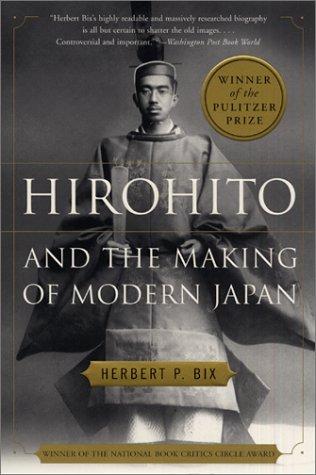
Hirohito and the Making of Modern Japan

Herbert P. Bix

unrated
Read Biographies Military history WWII Espionage China Russia / USSR Biography Strategy / theory ISBN 9780060931308

Harper Perennial · September 4, 2001

Winner of the Pulitzer PrizeIn this groundbreaking biography of the Japanese emperor Hirohito, Herbert P. Bix offers the first complete, unvarnished look at the enigmatic leader whose sixty-three-year reign ushered Japan into the modern world. Never before has the full life of this controversial figure been revealed with such clarity and vividness. Bix shows what it was like to be trained from birth for a lone position at the apex of the nation's political hierarchy and as a revered symbol of divine status. Influenced by an unusual combination of the Japanese imperial tradition and a modern scientific worldview, the young emperor gradually evolves into his preeminent role, aligning himself with the growing ultranationalist movement, perpetuating a cult of religious emperor worship, resisting attempts to curb his power, and all the while burnishing his image as a reluctant, passive monarch. Here we see Hirohito as he truly was: a man of strong will and real authority. Supported by a vast array of previously untapped primary documents, Hirohito and the Making of Modern Japan is perhaps most illuminating in lifting the veil on the mythology surrounding the emperor's impact on the world stage. Focusing closely on Hirohito's interactions with his advisers and successive Japanese governments, Bix sheds new light on the causes of the China War in 1937 and the start of the Asia-Pacific War in 1941. And while conventional wisdom has had it that the nation's increasing foreign aggression was driven and maintained not by the emperor but by an elite group of Japanese militarists, the reality, as witnessed here, is quite different. Bix documents in detail the strong, decisive role Hirohito played in wartime operations, from the takeover of Manchuria in 1931 through the attack on Pearl Harbor and ultimately the fateful decision in 1945 to accede to an unconditional surrender. In fact, the emperor stubbornly prolonged the war effort and then used the horrifying bombings of Hiroshima and Nagasaki, together with the Soviet entrance into the war, as his exit strategy from a no-win situation. From the moment of capitulation, we see how American and Japanese leaders moved to justify the retention of Hirohito as emperor by whitewashing his wartime role and reshaping the historical consciousness of the Japanese people. The key to this strategy was Hirohito's alliance with General MacArthur, who helped him maintain his stature and shed his militaristic image, while MacArthur used the emperor as a figurehead to assist him in converting Japan into a peaceful nation. Their partnership ensured that the emperor's image would loom large over the postwar years and later decades, as Japan began to make its way in the modern age and struggled -- as it still does -- to come to terms with its past. Until the very end of a career that embodied the conflicting aims of Japan's development as a nation, Hirohito remained preoccupied with politics and with his place in history. Hirohito and the Making of Modern Japan provides the definitive account of his rich life and legacy. Meticulously researched and utterly engaging, this book is proof that the history of twentieth-century Japan cannot be understood apart from the life of its most remarkable and enduring leader.

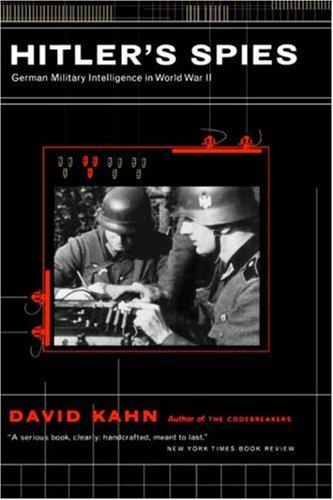
Hitler's Spies: German Military Intelligence In World War II

David Kahn

unrated
Read Intel history WWII Espionage Air power Russia / USSR Intel history ISBN 0306809494

Da Capo Press · 2000

A German patrol wiggles through Russian lines to return with details of Soviet defenses. An expert Luftwaffe interrogator teases secret information from downed Allied airmen. Two spies steal ashore in Maine and make their way into New York City. Filled with episodes of intrigue and adventure, Hitler's Spies reveals the workings of German intelligence—the famed Abwehr, the dreaded SD, the codebreakers, the spies, and the intelligence gatherers of the Foreign Office—and explains its failure to best the Allies. Draws on original documents and extensive interviews.

No cover · Amazon

Hitler's Table Talk, 1941-1944

Norman Cameron

unrated
Read Military history Biographies Advanced intel WWII ISBN 1929631057

Enigma Books · 2000

This is a new edition of a major document from World War II with additional, previously unavailable texts assembled from the stenographic record of Hitler’s informal conversations ordered by Martin Bormann. These texts remain the classic collection of Hitler’s nighttime monologues with his entourage, covering mostly nonmilitary subjects and long-range plans. Hitler lets his thoughts wander, never failing to provide an opinion on every subject. Additional documents from various archives make this the most complete English-language edition in print.

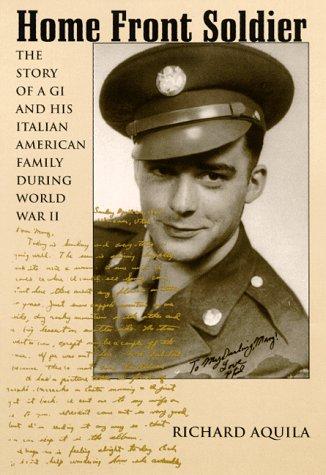
Home Front Soldier: The Story of a GI and His Italian American Family During World War II

Richard Aquila

unrated
Read Military history Logistics Biographies WWII Logistics Biography ISBN 0791440753

State University of New York Press · 1999

While other collections of letters and memoirs from World War II have dealt with upper-class individuals, officers, or college-educated people, Home Front Soldier is the first to explore the life of an ordinary, working-class, first-generation American. This gripping story of a young soldier, Philip L. Aquila, and his Italian American family during the Second World War includes a detailed introduction, providing historical context to the more than 500 letters that this sergeant wrote to his family back home in Buffalo, New York. Like an epistolary novel, the letters offer an intimate personal history of how a large immigrant family with four sons in the military coped with the daily traumas of World War II. Each of the major and minor plots relates to larger questions in American social history of the 1930s and 1940s, offering fresh insights about family history, gender relations, ethnic and immigration history, and everyday life on the home front. The book also fills a gap in military history by providing detailed information about soldiers stationed in the United States during the war.

Human Action: A Treatise on Economics

Ludwig von Mises

unrated
Read Economics Economics ISBN 0809297434

Contemporary Books · 1966

In the foreword to Human Action: A Treatise on Economics, Mises explains complex market phenomena as "the outcomes of countless conscious, purposive actions, choices, and preferences of individuals, each of whom was trying as best as he or she could under the circumstances to attain various wants and ends and to avoid undesired consequences." It is individual choices in response to personal subjective value judgments that ultimately determine market phenomena—supply and demand, prices, the pattern of production, and even profits and losses. Although governments may presume to set "prices," it is individuals who, by their actions and choices through competitive bidding for money, products, and services, actually determine "prices". Thus, Mises presents economics—not as a study of material goods, services, and products—but as a study of human actions. He sees the science of human action, praxeology, as a science of reason and logic, which recognizes a regularity in the sequence and interrelationships among market phenomena. Mises defends the methodology of praxeology against the criticisms of Marxists, socialists, positivists, and mathematical statisticians. Mises attributes the tremendous technological progress and the consequent increase in wealth and general welfare in the last two centuries to the introduction of liberal government policies based on free-market economic teachings, creating an economic and political environment which permits individuals to pursue their respective goals in freedom and peace. Mises also explains the futility and counter-productiveness of government attempts to regulate, control, and equalize all people's circumstances: "Men are born unequal and ... it is precisely their inequality that generates social cooperation and civilization." Ludwig von Mises (1881–1973) was the leading spokesman of the Austrian School of Economics throughout most of the twentieth century. He earned his doctorate in law and economics from the University of Vienna in 1906. In 1926, Mises founded the Austrian Institute for Business Cycle Research. From 1909 to 1934, he was an economist for the Vienna Chamber of Commerce. Before the Anschluss, in 1934 Mises left for Geneva, where he was a professor at the Graduate Institute of International Studies until 1940, when he emigrated to New York City. From 1948 to 1969, he was a visiting professor at New York University. Bettina Bien Greaves is a former resident scholar, trustee, and longtime staff member of the Foundation for Economic Education. She has written and lectured extensively on topics of free market economics. Her articles have appeared in such journals as Human Events, Reason, and The Freeman: Ideas on Liberty. A student of Mises, Greaves has become an expert on his work in particular and that of the Austrian School of economics in general. She has translated several Mises monographs, compiled an annotated bibliography of his work, and edited collections of papers by Mises and other members of the Austrian School.

Hunger Disease (Current concepts in nutrition, vol. 7)

Martha Osnos

unrated
Read Military history Logistics Technical warfare WWII Cold War Logistics ISBN 0471050032

Wiley · 1979

A translation from the Polish of a manuscript smuggled out of the Warsaw Ghetto that details studies performed by resident Jewish physicians on patients suffering from starvation. Topics include: clinical changes in adults and children, metabolic adaptations, circulatory changes, changes in the eye and in vision, changes in the blood and bone marrow, and pathologic anatomy.

No cover · Amazon

Huế 1968: A Turning Point of the American War in Vietnam

Mark Bowden

unrated
Read Advanced intel Basic intel Military history Intel history WWII Vietnam Intel history Strategy / theory

In the early hours of January 31, 1968, the North Vietnamese launched over one hundred attacks across South Vietnam in what would become known as the Tet Offensive. The lynchpin of Tet was the capture of Hue, Vietnam?s intellectual and cultural capital, by 10,000 National Liberation Front troops who descended from hidden camps and surged across the city of 140,000. Within hours the entire city was in their hands save for two small military outposts. American commanders refused to believe the size and scope of the Front?s presence, ordering small companies of marines against thousands of entrenched enemy troops. After several futile and deadly days, Lieutenant Colonel Ernie Cheatham would finally come up with a strategy to retake the city, block by block and building by building, in some of the most intense urban combat since World War II. With unprecedented access to war archives in the U.S. and Vietnam and interviews with participants from both sides, Bowden narrates each stage of this crucial battle through multiple viewpoints. Played out over 24 days and ultimately costing 10,000 lives, the Battle of Hue was by far the bloodiest of the entire war. When it ended, the American debate was never again about winning, only about how to leave. Hue 1968 is a gripping and moving account of this pivotal moment.

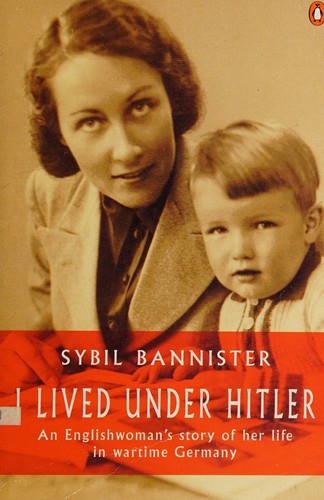
I Lived Under Hitler: An Englishwoman's Story of Her Life in Wartime Germany

Sybil Bannister

unrated
Read Biographies Military history Logistics WWII Logistics Biography ISBN 014024672X

Penguin · 1995

In 1933 Sybil Bannister, a young British woman, set up home in Danzig with her new husband, a German medical student. This is an account of the hardship of her war experience. Her marriage broke up, she was separated from her son, and endured Hamburg's bombing raids and the Wuppertal firestorm.

Invisible Armies: An Epic History of Guerrilla Warfare from Ancient Times to the Present

Max Boot

unrated
Read Basic intel Intel history Military history Vietnam GWOT Naval Guerrilla / COIN Middle East Strategy / theory ISBN 9780871404244

Liveright Pub. Corporation · 2012

As fitting for the twenty-first century as von Clausewitz’s On War was in its own time, Invisible Armies is a complete global history of guerrilla uprisings through the ages. Beginning with the first insurgencies in the ancient world―when Alexander the Great discovered that fleet nomads were harder to defeat than massive conventional armies―Max Boot, best-selling author and military advisor in Iraq and Afghanistan, masterfully guides us from the Jewish rebellion against the Roman Empire up through the horrors of the French-Indochina War and the shadowy, post-9/11 battlefields of today. Relying on a diverse cast of unforgettable characters―not only Mao and Che but also the legendary Italian nationalist Giuseppe Garibaldi, the archaeologist-turned–military commander T. E. Lawrence, and the “Quiet American” Edward Lansdale, among others―Boot explodes everything we thought we knew about unconventional combat. The result is both an enthralling read and our most important work on nontraditional warfare. 70 illustrations; 8 maps