S-2 in Action
Thomas Shipley
unratedThe Military service publishing co. · 1940
Instructions for military intelligence gathering officers (S-2).
S2 Search · Reading list
Books from S2 Actual on Goodreads, organized by his shelves and topic buckets (intel lists, military history, logistics, etc.). Metadata filled via Open Library.
S2 topic buckets (Goodreads)
Subjects & genres
415 books · All shelves · page 16 of 18
Thomas Shipley
unratedThe Military service publishing co. · 1940
Instructions for military intelligence gathering officers (S-2).
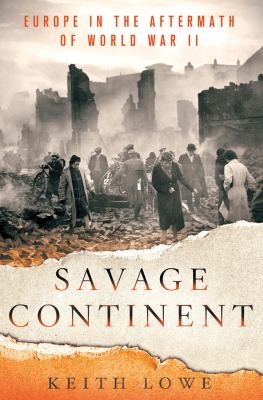
Keith Lowe
unratedSt. Martin's Press · 2012
The Second World War might have officially ended in May 1945, but in reality it rumbled on for another ten years... The end of the Second World War in Europe is one of the twentieth century’s most iconic moments. It is fondly remembered as a time when cheering crowds filled the streets, danced, drank and made love until the small hours. These images of victory and celebration are so strong in our minds that the period of anarchy and civil war that followed has been forgotten. Across Europe, landscapes had been ravaged, entire cities razed and more than thirty million people had been killed in the war. The institutions that we now take for granted - such as the police, the media, transport, local and national government - were either entirely absent or hopelessly compromised. Crime rates were soaring, economies collapsing, and the European population was hovering on the brink of starvation. In Savage Continent, Keith Lowe describes a continent still racked by violence, where large sections of the population had yet to accept that the war was over. Individuals, communities and sometimes whole nations sought vengeance for the wrongs that had been done to them during the war. Germans and collaborators everywhere were rounded up, tormented and summarily executed. Concentration camps were reopened and filled with new victims who were tortured and starved. Violent anti-Semitism was reborn, sparking murders and new pogroms across Europe. Massacres were an integral part of the chaos and in some places – particularly Greece, Yugoslavia and Poland, as well as parts of Italy and France – they led to brutal civil wars. In some of the greatest acts of ethnic cleansing the world has ever seen, tens of millions were expelled from their ancestral homelands, often with the implicit blessing of the Allied authorities. Savage Continent is the story of post WWII Europe, in all its ugly detail, from the end of the war right up until the establishment of an uneasy stability across Europe towards the end of the 1940s. Based principally on primary sources from a dozen countries, Savage Continent is a frightening and thrilling chronicle of a world gone mad, the standard history of post WWII Europe for years to come.
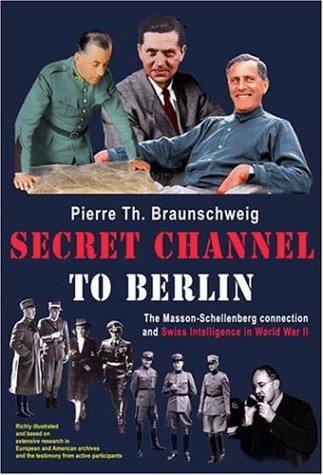
Pierre-Th. Braunschweig
unratedCasemate · 2004
This book focuses on the delicate connection between the head of Swiss Intelligence, Colonel Roger Masson, and the German Chief of Espionage, SS General Walter Schellenberg. The author had access to hitherto inaccessible documents, including newly discovered material in American archives, to fully illuminate this secret connection for the first time. The book also includes surprising new details about the alarming military threats Switzerland faced in March 1943. Masson's extraordinary secret channel to Berlin was not, of course, the only Swiss intelligence operation during the war. Braunschweig outlines in detail the gradual buildup, tasks and functions of Swiss Intelligence during World War II. He furthermore describes conflicts between Swiss Intelligence and the Federal government in Bern and within the Intelligence service itself. During World War II, Switzerland was famous as a center of spies and espionage fielded by Allies and Axis alike. Less has been known, however, about Switzerland's own Intelligence activities, including its secret sources in Hitler's councils and its counterespionage program at home. With this intensely researched, scholarly, yet exciting book, that gap in the history of wartime Intelligence operations has been filled. PIERRE-TH. BRAUNSCHWEIG earned a Ph.D. in history from the University of Bern and later served as an assistant to Hans Senn, the Chief of Staff of the Swiss Army. He is a member of the United States Strategic Institute in Washinton DC, the International Institute for Strategic Studies in London, and the National Intelligence Study Center in Washington.
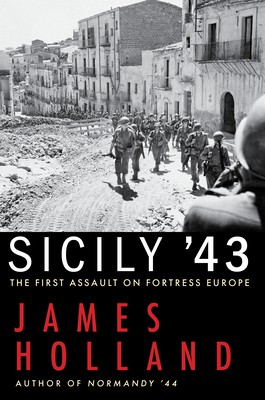
James Holland
unratedAtlantic Monthly Press · November 3, 2020
On July 10, 1943, the largest amphibious invasion ever mounted took place, larger even than the Normandy invasion eleven months later: 160,000 American, British, and Canadian troops came ashore or were parachuted onto Sicily, signaling the start of the campaign to defeat Nazi Germany on European soil. Operation HUSKY, as it was known, was enormously complex, involving dramatic battles on land, in the air, and at sea. Yet, despite its paramount importance to ultimate Allied victory, and its drama, very little has been written about the 38-day Battle for Sicily. Based on his own battlefield studies in Sicily and on much new research, James Holland's Sicily '43 offers a vital new perspective on a major turning point in World War II and a chronicle of a multi-pronged campaign in a uniquely diverse and contained geographical location. The characters involved--Generals George Patton and Bernard Montgomery among many--were as colorful as the air and naval battles and the fighting on the ground across the scorching plains and mountaintop of Sicily were brutal. But among Holland's great skills is incorporating the experience of on-the-ground participants on all sides--from American privates Tom and Dee Bowles and Tuskegee fighter pilot Charlie Dryden to British major Hedley Verity and Canadian lieutenant Farley Mowat (later a celebrated author), to German and Italian participants such as Wilhelm Schmalz, brigade commander in the Hermann G�ring Division, or Luftwaffe fighter pilot major Johannes "Macky" Steinhoff and to Italian combatants, civilians and mafiosi alike--which gives readers an intimate sense of what occurred in July and August 1943. Emphasizing the significance of Allied air superiority, Holland overturns conventional narratives that have criticized the Sicily campaign for the vacillations over the plan, the slowness of the Allied advance and that so many German and Italian soldiers escaped to the mainland; rather, he shows that clearing the island in 38 days against geographical challenges and fierce resistance was an impressive achievement. A powerful and dramatic account by a master military historian, Sicily '43 fills a major gap in the narrative history of World War II.
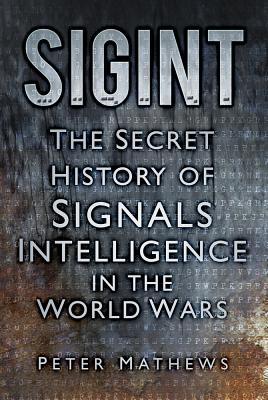
Peter F. Matthews
unratedThe History Press · 2013
From MORSE to ENIGMA, ULTRA to PURPLE, Room 40 to Bletchley—the story of secret signals in both of the World Wars Communicating in the chaos of war is complicated, but vital. Signals intelligence makes it possible. In World War I, a vast network of signals rapidly expanded across the globe, spawning a new breed of spies and intelligence operatives to code, decode, and analyze thousands of messages. Signalers and cryptographers in the Admiralty's famous Room 40 paved the way for the code breakers of Bletchley Park during World War II. In the ensuing war years, the world battled against a web of signals intelligence that gave birth to ENIGMA and ULTRA, and saw agents from Britain, France, Germany, Russia, America, and Japan race to outwit each other through infinitely complex codes. For the first time, the secret history of global signals intelligence in the world wars is revealed.

Samuel M. Katz
unratedPresidio Press · 1992
Chronicling the spectacular successes of Israel's often overlooked military intelligence service, the first full length history of A'man discusses the agency's role in Israel's history, from the War of Independence to the present. 10,000 first printing.

Huw J. Davies
unratedUniversity of Oklahoma Press · Nov 08, 2018
Intelligence is often the critical factor in a successful military campaign. This was certainly the case for Arthur Wellesley, the Duke of Wellington, in the Peninsular War. In this book, author Huw J. Davies offers the first full account of the scope, complexity, and importance of Wellington’s intelligence department, describing a highly organized, multifaceted series of networks of agents and spies throughout Spain and Portugal—an organization that is at once a microcosm of British intelligence at the time and a sophisticated forebear to intelligence developments in the twentieth century. Spying for Wellington shows us an organization that was, in effect, two parallel networks: one made up of Foreign Office agents “run” by British ambassadors in Spain and Portugal, the other comprising military spies controlled by Wellington himself. The network of agents supplied strategic intelligence, giving the British army advance warning of the arrival, destinations, and likely intentions of French reinforcements. The military network supplied operational intelligence, which confirmed the accuracy of the strategic intelligence and provided greater detail on the strengths, arms, and morale of the French forces. Davies reveals how, by integrating these two forms of intelligence, Wellington was able to develop an extremely accurate and reliable estimate of French movements and intentions not only in his own theater of operations but also in other theaters across the Iberian Peninsula. The reliability and accuracy of this intelligence, as Davies demonstrates, was central to Wellington’s decision-making and, ultimately, to his overall success against the French. Correcting past, incomplete accounts, this is the definitive book on Wellington’s use of intelligence. As such, it contributes to a clearer, more comprehensive understanding of Wellington at war and of his place in the history of British military intelligence.
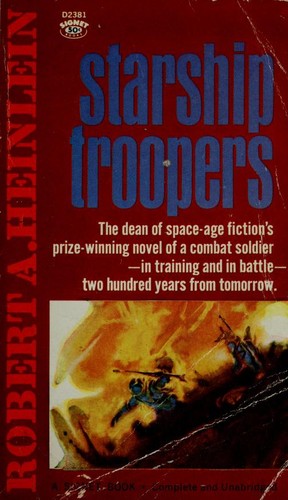
Robert A. Heinlein
unratedBuccaneer Books · 1959
The historians can’t seem to settle whether to call this one "The Third Space War" (or the fourth), or whether "The First Interstellar War" fits it better. We just call it “The Bug War." Everything up to then and still later were "incidents," "patrols," or "police actions." However, you are just as dead if you buy the farm in an "incident" as you are if you buy it in a declared war... In one of Robert A. Heinlein’s most controversial bestsellers, a recruit of the future goes through the toughest boot camp in the Universe—and into battle with the Terran Mobile Infantry against mankind’s most alarming enemy.
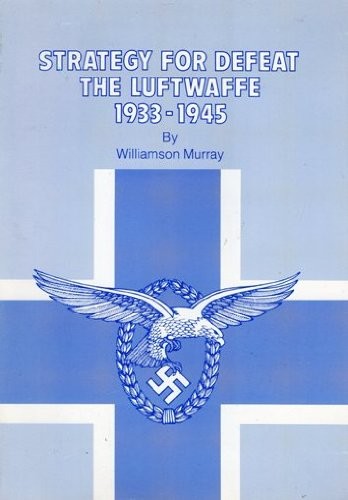
Williamson Murray
unratedUnited States Government Printing Office · 1983
A penetrating and powerfully presented explanation of the successes and failures of the German air force in World War II. "Authoritative and thorough . . . an interesting and thought provoking book of real value to historians and military thinkers."--RUSI Journal.

Janet MacDonald
unratedPen & Sword Books Limited · 2019
An in-depth look at the logistics of keeping the British Army fed, clothed, armed, and supplied during World War I. Napoleon famously said that an army marches on its stomach, but it also marches in its boots and its uniforms, carrying or driving its weapons and other equipment, and all this material has to be ordered from headquarters, produced and delivered. Janet Macdonald’s detailed and scholarly new study explains how this enormously complex task of organization and labour was carried out by the British army during the First World War. She describes the personnel who performed these tasks, from the government and military command in London to those who handled the items in the field. They were responsible for clothing, accommodation, medicine, transport, hand weapons, armament, and communications—a vast logistical network that had evolved to keep millions of men in the field. This meticulously researched account of this important subject—one which has hitherto been neglected by military historians—will be essential reading and reference for anyone who is interested in the modern British army, in particular in its organization and performance in the First World War.

Janet MacDonald
unratedPen & Sword Books Limited · 2020
The noted military historian reveals the fascinating history of British Army logistics during WWII in this scholarly study.Armies have always required large amounts of material, but by the Second World War the numbers of men involved had grown exponentially, their equipment had become mechanized, and their deployment was global. Elaborate planning and administration at every level had to ensure that items of all kinds were collected, transported and handed out in every theatre of the war. But how were these items selected, ordered, produced, and delivered? Following her previous volume, Supplying the British Army in the First World War, Janet MacDonald continues her study of how the British Army kept its soldiers fed, clothed, and ready to fight. The scale of the operation was enormous, and it had to be performed to critical timetables. Often threatened by enemy action, it was vital to the army’s success. MacDonald describes the necessity for central advanced planning for each expeditionary force as well as those engaged in home defense. She then elucidates the complex organization of personnel who performed these tasks, from the government and military command in London to those who distributed the equipment on the battlefield.
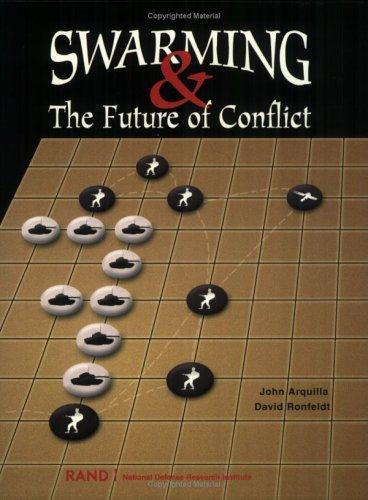
John Arquilla
unratedRAND · 2000
Swarming is a seemingly amorphous, but deliberately structured, coordinated, strategic way to perform military strikes from all directions. It employs a sustainable pulsing of force and/or fire that is directed from both close-in and stand-off positions. It will work best—perhaps it will only work—if it is designed mainly around the deployment of myriad, small, dispersed, networked maneuver units. This calls for an organizational redesign—involving the creation of platoon-like pods joined in company-like clusters—that would keep but retool the most basic military unit structures. It is similar to the corporate redesign principle of flattening, which often removes or redesigns middle layers of management. This has proven successful in the ongoing revolution in business affairs and may prove equally useful in the military realm.
Doris Kearns Goodwin
unratedWinner of the Lincoln Prize Acclaimed historian Doris Kearns Goodwin illuminates Lincoln's political genius in this highly original work, as the one-term congressman and prairie lawyer rises from obscurity to prevail over three gifted rivals of national reputation to become president. On May 18, 1860, William H. Seward, Salmon P. Chase, Edward Bates, and Abraham Lincoln waited in their hometowns for the results from the Republican National Convention in Chicago. When Lincoln emerged as the victor, his rivals were dismayed and angry. Throughout the turbulent 1850s, each had energetically sought the presidency as the conflict over slavery was leading inexorably to secession and civil war. That Lincoln succeeded, Goodwin demonstrates, was the result of a character that had been forged by experiences that raised him above his more privileged and accomplished rivals. He won because he possessed an extraordinary ability to put himself in the place of other men, to experience what they were feeling, to understand their motives and desires. It was this capacity that enabled Lincoln as president to bring his disgruntled opponents together, create the most unusual cabinet in history, and marshal their talents to the task of preserving the Union and winning the war. We view the long, horrifying struggle from the vantage of the White House as Lincoln copes with incompetent generals, hostile congressmen, and his raucous cabinet. He overcomes these obstacles by winning the respect of his former competitors, and in the case of Seward, finds a loyal and crucial friend to see him through. This brilliant multiple biography is centered on Lincoln's mastery of men and how it shaped the most significant presidency in the nation's history.
David Kilcullen
unratedOxford University Press · 2009
David Kilcullen is one of the world's most influential experts on counterinsurgency and modern warfare. A Senior Counterinsurgency Advisor to General David Petraeus in Iraq, his vision of war dramatically influenced America's decision to rethink its military strategy in Iraq and implement "the surge." Now, in The Accidental Guerrilla , Kilcullen provides a remarkably fresh perspective on the War on Terror. Kilcullen takes us "on the ground" to uncover the face of modern warfare, illuminating both the big global war (the "War on Terrorism") and its relation to the associated "small wars" across the Iraq, Afghanistan, the Philippines, Indonesia, Thailand, Chechnya, Pakistan and North Africa. Kilcullen sees today's conflicts as a complex pairing of contrasting local social networks and worldwide movements; traditional and postmodern culture; local insurgencies seeking autonomy and a broader pan-Islamic campaign. He warns that America's actions in the war on terrorism have tended to conflate these trends, blurring the distinction between local and global struggles and thus enormously complicating our challenges. Indeed, the US had done a poor job of applying different tactics to these very different situations, continually misidentifying insurgents with limited aims and legitimate grievances (whom he calls "accidental guerrillas") as part of a coordinated worldwide terror network. We must learn how to disentangle these strands, develop strategies that deal with global threats, avoid local conflicts where possible, and win them where necessary. Colored with gripping battlefield experiences that range from the jungles and highlands of Southeast Asia to the mountains of the Afghanistan-Pakistan border to the dusty towns of the Middle East, The Accidental Guerrilla will, quite simply, change the way we think about war. This much anticipated book will be a must read for everyone concerned about the war on terror.
Christopher A. Ford
unratedOperational intelligence, knowledge of the enemy’s location and actions, is crucial to effective military operations. The Admirals’ Advantage offers a revealing look at naval operational intelligence based on the findings of a classified Operational Intelligence (OPINTEL) Lessons-Learned Project and a 1998 Symposium at the Navy and Marine Corps Intelligence Training Center. Participants included senior intelligence and operational leaders who explored the evolution and significance of OPINTEL since World War II. Past and current practices were examined with inputs from fleet and shore commands and insights from interviews and correspondence with senior flag officers and intelligence professionals.
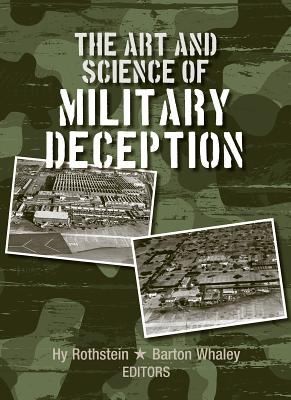
Hy Rothstein
unratedArtech House Publishers · 2013
It is said that deception among people in a civilized society is something to be loathed even though it seems to be part of human nature; but deception in war is a virtue. This title provides the reader with sufficient knowledge to pursue General Eisenhower's vision for the proper role of deception in support of the national interest.
Kevin D. Mitnick
unratedLittle, Brown and Company · 2017
Kevin Mitnick, the world's most famous hacker, teaches you easy cloaking and counter-measures for citizens and consumers in the age of Big Brother and Big Data. Like it or not, your every move is being watched and analyzed. Consumer's identities are being stolen, and a person's every step is being tracked and stored. What once might have been dismissed as paranoia is now a hard truth, and privacy is a luxury few can afford or understand. In this explosive yet practical book, Kevin Mitnick illustrates what is happening without your knowledge--and he teaches you "the art of invisibility." Mitnick is the world's most famous--and formerly the Most Wanted--computer hacker. He has hacked into some of the country's most powerful and seemingly impenetrable agencies and companies, and at one point he was on a three-year run from the FBI. Now, though, Mitnick is reformed and is widely regarded as the expert on the subject of computer security. He knows exactly how vulnerabilities can be exploited and just what to do to prevent that from happening. In THE ART OF INVISIBILITY Mitnick provides both online and real life tactics and inexpensive methods to protect you and your family, in easy step-by-step instructions. He even talks about more advanced "elite" techniques, which, if used properly, can maximize your privacy. Invisibility isn't just for superheroes--privacy is a power you deserve and need in this modern age.
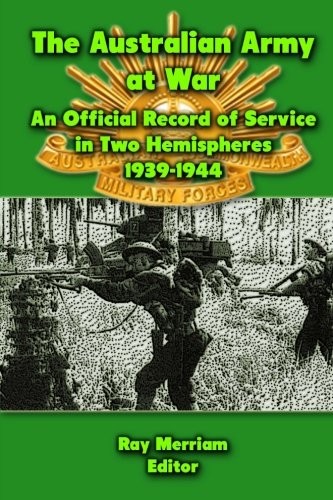
Ray Merriam
unratedCreateSpace Independent Publishing Platform · Mar 21, 2012
Merriam Press Military Monograph 304. Seventh Edition (March 2012). This work presents a brief but comprehensive summary of the Australian Army from 1939 to 1944, including coverage of their "battle record" in North Africa, Greece, Crete, Syria, Malaya, Java, Timor, Portuguese Timor, New Britain, New Guinea, Milne Bay, The Owen Stanleys, Wau, Markham and Ramu Valleys, and Ethiopia. Other contents * Special forces * Mainland defense * Australia's Home Guard * Army Women's Services * Manpower * Artillery * Rations * Equipment * Signals * Medical service * 56 Photos * 1 Maps * 1 Drawing.
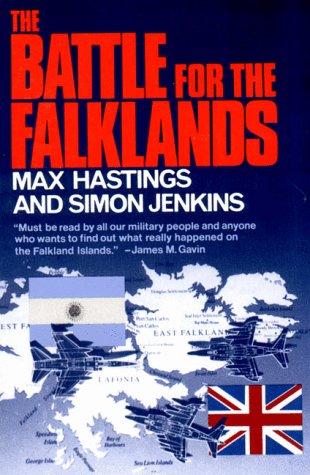
Max Hastings
unratedW. W. Norton & Company · September 1984
"Must be read by all our military people and anyone who wants to find out what really happened on the Falkland Islands." - James M. Gavin
Larry Hama
unratedRosen Publishing Group · 2006
America’s “island hopping” strategy to inch closer and closer to the Japanese mainland was kicked into high gear after the Allied victory on and around the island of Guadalcanal in the southern Solomon Islands in early 1943. The six-month campaign was the first important combined arms Allied victory in the Pacific, putting Japan on the defensive for the rest of the war, resulting in repeated victories for America and its allies, until the Japan’s surrender in August 1945.
Mark Felton
unratedThe death of Adolf Hitler inside his Berlin bunker on 30 April 1945 was one of the most important events of World War II. Find out what happened in the bunker in the days leading up to his suicide, the important events, personalities, betrayals and military moves as well as how the bunker was organised, protected and defended. Written by Mark Felton, the author of over 20 books on WWII subjects and an expert on Nazi Germany and the Battle of Berlin.

Thaddeus Holt
unratedScribner · 2004
A chronological analysis of the use of systematic deception by allied forces during World War II covers the development of deception techniques, explores the groundbreaking work of double agents, and reveals specific tactics that were used at key moments during the war. 30,000 first printing.

Frederick Taylor
unrated2013
A hundred years ago, many theorists believed-just as they did at the beginning of our twenty-first century-that the world had reached a state of economic perfection, a never before seen human interdependence that would lead to universal growth and prosperity. Then, as now, the German mark was one of the most trusted currencies in the world. Yet the early years of the Weimar Republic in Germany witnessed the most calamitous meltdown of a developed economy in modern times. The Downfall of Money will tell anew the dramatic story of the hyperinflation that saw the mark-worth 4.2 to the dollar in 1914-plunge until it traded at over 4 trillion to 1 by the autumn of 1923. The story of the Weimar Republic's financial crisis clearly resonates today, when the world is again anxious about what money is, what it means, and how we can judge if its value is true. It is a trajectory of events uncomfortably relevant for our own uncertain world. Frederick Taylor-one of the leading historians of Germany writing today- explores the causes of the crisis and what the collapse meant to ordinary people and traces its connection to the dark decades that followed. Drawing on a wide range of sources and accessibly presenting vast amounts of research, The Downfall of Money is a timely and chilling exploration of a haunting episode in history.
Omer Bartov
unratedPalgrave Macmillan · October 12, 2001
Based largely upon unpublished sources, Omer Bartov's study looks closely at the background of the German army on the Eastern Front during the Second World War. He describes the physical hardship, the discipline and morale at the front, and analyses the social, educational and political background of the junior officers who formed the backbone of the German army. Only with these factors in mind - together with the knowledge of the extent of National Socialist indoctrination - can we begin to explain the criminal activities of the German army in Russia and the extent of involvement of the army in the execution of Hitler's brutal policies.