S2 Search · Reading list

S2 Actual reading list

Books from S2 Actual on Goodreads, organized by his shelves and topic buckets (intel lists, military history, logistics, etc.). Metadata filled via Open Library.

Not official S2 Underground. Independent fan index — not affiliated with or endorsed by S2. Official hub: linktr.ee/S2_underground. S2 materials are CC BY-NC-SA 4.0.

S2 topic buckets (Goodreads)

Subjects & genres

71 books · Basic intel · page 2 of 3

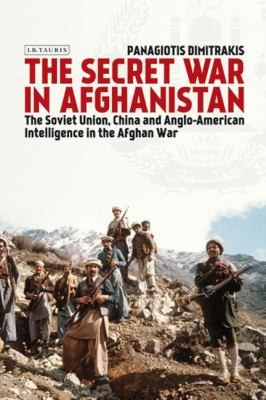
The Secret War in Afghanistan: The Soviet Union, China and Anglo-American Intelligence in the Afghan War (Library of Middle East History)

Panagiotis Dimitrakis

★★★★★
Read Basic intel Intel history Cold War Espionage GWOT China Russia / USSR Middle East Intel history ISBN 9781780764191

I.B.Tauris & Co Ltd · 2013

The Soviet invasion of Afghanistan, in support of a Marxist-Leninist government, and the subsequent nine-year conflict with the indigenous Afghan Mujahedeen was one of the bloodiest conflicts of the Cold War. Key details of the circumstances surrounding the invasion and its ultimate conclusion only months before the fall of the Berlin Wall in November 1989 have long remained unclear; it is a confidential narrative of clandestine correspondence, covert operations and failed intelligence. The Secret War in Afghanistan undertakes a full analysis of recently declassified intelligence archives in order to asses Anglo-American secret intelligence and diplomacy relating to the invasion of Afghanistan and unveil the Cold War realities behind the rhetoric. Rooted at every turn in close examination of the primary evidence, it outlines the secret operations of the CIA, MI6 and the KGB, and the full extent of the aid and intelligence from the West which armed and trained the Afghan fighters. Drawing from US, UK and Russian archives, Panagiotis Dimitrakis analyses the Chinese arms deals with the CIA, the multiple recorded intelligence failures of KGB intelligence and secret letters from the office of Margaret Thatcher to Jimmy Carter. In so doing, this study brings a new scholarly perspective to some of the most controversial events of Cold War history. Dimitrakis also outlines the full extent of China's involvement in arming the Mujahedeen, which led to the PRC effectively fighting the Soviet Union by proxy. This will be essential reading for scholars and students of the Cold War, American History and the Modern Middle East.
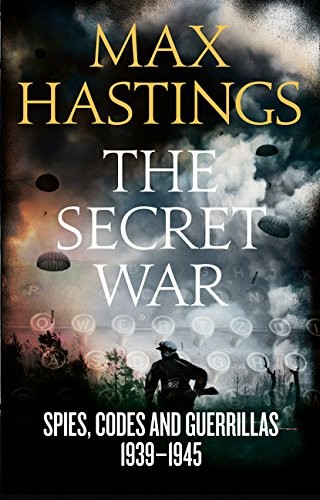
The Secret War: Spies, Codes and Guerrillas 1939-1945

Max Hastings

★★★★★
Read Basic intel Intel history WWII Espionage Guerrilla / COIN Russia / USSR ISBN 9780007503742

William Collins · Sep 10, 2015

Examining the espionage and intelligence stories in World War II, on a global basis, bringing together the British, American, German, Russian and Japanese histories. There were two Second World Wars: one fought on the battlefields, and another conducted by men and women few of whom ever fired a weapon in anger, but whose efforts vastly influenced the conflict. ‘The Secret War 1939-45’ examines that other war waged by British, American, German, Russian and Japanese intelligence-gathering personnel. Moving chronologically through the conflict, Max Hastings charts the successes and failures of allied and axis forces, espionage and counterespionage. Observing how the evolution of electronic communications dramatically increased the possibilities and significance of these secret battles, this is the story of intelligence beyond Bletchley to the FBI, Russia and the spies of axis dictatorships. For the first time since his best-selling ‘All Hell Let Loose’, Max Hastings returns to the Second World War, this time to chronicle its second, untold story.

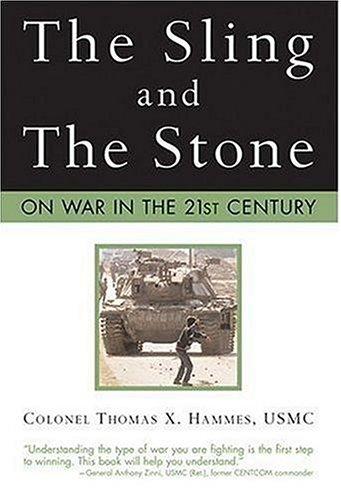
The Sling and the Stone: On War in the 21st Century

Thomas X. Hammes

★★★★★
Read Basic intel Advanced intel Military history Intel history Vietnam Cold War GWOT Guerrilla / COIN Russia / USSR Middle East Strategy / theory ISBN 9780760324073

Zenith Press · February 17, 2006

4GW (Fourth Generation Warfare) is the only kind of war America has ever lost. And we have done so three times - in Vietnam, Lebanon, and Somalia. This form of warfare has also defeated the French in Vietnam and Algeria, and the USSR in Afghanistan.As the only Goliath left in the world, we should be worried that the world's Davids have found a sling and stone that work." - Chapter 1, The Sling and the Stone: On War in the 21st Century. The War in Iraq. The War on Terror. These types of "asymmetrical" warfare are the conflicts of the 21st century - and show how difficult it is for the world's remaining superpower to battle insurgents and terrorists who will fight unconventionally in the face of superior military power. This change in military conflict may seem sudden.

The Spy and the Traitor: The Greatest Espionage Story of the Cold War

Ben Macintyre

★★★★★
Read Basic intel Intel history Cold War Espionage Nuclear Russia / USSR Biography ISBN 9780771060335

Signal · Sep 18, 2018

If anyone could be considered a Russian counterpart to the infamous British double-agent Kim Philby, it was Oleg Gordievsky. The son of two KGB agents and the product of the best Soviet institutions, the savvy, sophisticated Gordievsky grew to see his nation’s communism as both criminal and philistine. He took his first posting for Russian intelligence in 1968 and eventually became the Soviet Union’s top man in London, but from 1973 on he was secretly working for MI6. For nearly a decade, as the Cold War reached its twilight, Gordievsky helped the West turn the tables on the KGB, exposing Russian spies and helping to foil countless intelligence plots, as the Soviet leadership grew increasingly paranoid at the United States’s nuclear first-strike capabilities and brought the world closer to the brink of war. Desperate to keep the circle of trust close, MI6 never revealed Gordievsky’s name to its counterparts in the CIA, which in turn grew obsessed with figuring out the identity of Britain’s obviously top-level source. Their obsession ultimately doomed Gordievsky: the CIA officer assigned to identify him was none other than Aldrich Ames, the man who would become infamous for secretly spying for the Soviets. Unfolding the delicious three-way gamesmanship between America, Britain, and the Soviet Union, and culminating in the gripping cinematic beat-by-beat of Gordievsky’s nail-biting escape from Moscow in 1985, Ben Macintyre has crafted an electrifying account of an international hero. Like the greatest novels of John le Carré, The Spy and the Traitor brings readers deep into a world of treachery and betrayal, where the lines bleed between the personal and the professional, and one man’s hatred of communism had the power to change the future of nations.

The Tet Offensive: Intelligence Failure in War

James J. Wirtz

★★★★★
Read Basic intel Vietnam Intel history Strategy / theory ISBN 9780801482090

Cornell University Press · July 1994

In this account of one of the worst intelligence failures in American history, James J. Wirtz explains why U.S. forces were surprised by the North Vietnamese Tet Offensive in 1968. Wirtz reconstructs the turning point of the Vietnam War in unprecedented detail. Drawing upon Vietcong and recently declassified U.S. sources, he is able to trace the strategy and unfolding of the Tet campaign as well as the U.S. response.

The Winter War: Russia's Invasion Of Finland, 1939-40

Robert Edwards

★★★★★
Read Advanced intel Basic intel Military history Intel history Logistics WWII Cold War Russia / USSR Logistics Economics ISBN 9781933648507

Pegasus Books · December 30, 2007

On November 30, 1939, the Soviet Union's Red Army invaded the young nation-state of Finland, in the full expectation of routing the small, ill-equipped Finnish army and annexing the former Russian territory by the end of the year. But Finland held out for 105 bitterly cold, fiercely combative days, until March 15, 1940, when a peace agreement ended the short, savage Winter War. At the stirring center of the story lie the resourcefulness and resolve of the Finnish people, who against all military odds—in want of ammunition, food, sleep, and troops—fought a blundering, ineptly commanded Red Army to a standstill. On March 15, they ceded to the Soviet 11 percent of their territory and 30 percent of their economic assets, but none of their national pride. The Russians meanwhile had markedly damaged their international standing and effectively ruined their military reputation-to such an extent, as this probing chapter in World War II history demonstrates, that Germany, with proud-blooded Finland as an ally, dared to launch its 1940 invasion of Russia. At the same time, though, the fiasco of the Winter War forced Stalin to acknowledge the shortcomings of the Red Army and to reform it: Germany would fall at Stalingrad in 1941. With authority, this skillfully narrated military history unfolds its story of the four-month Soviet-Finnish war and explores its consequences from London to Moscow, from Helsinki to Paris, to Washington, DC.

No cover · Amazon

Weaving the Tangled Web: Military Deception in Large-Scale Combat Operations (Large-Scale Combat Operations Series Book 1)

Christopher M. Rein

★★★★★
Read Basic intel Military history Intel history WWII Korea Cold War GWOT Guerrilla / COIN China Russia / USSR Middle East Intel history Strategy / theory

This book is from Army University Press and is Volume 1 in it's Large-Scale Combat Operations Series. It has footnotes, maps, and pictures, and was originally published in 2018. “Since the Soviet Union’s fall in 1989, the specter of large-scale ground combat against a peer adversary was remote. During the years following, the US Army found itself increasingly called upon to lead multinational operations in the lower to middle tiers of the range of military operations and conflict continuum. The events of 11 September 2001 led to more than 15 years of intense focus on counterterrorism, counterinsurgency, and stability operations in Iraq and Afghanistan. An entire generation of Army leaders and Soldiers were culturally imprinted by this experience. We emerged as an Army more capable in limited contingency operations than at any time in our nation’s history, but the geopolitical landscape continues to shift and the risk of great power conflict is no longer a remote possibility. “While our Army focused on limited contingency operations in the Middle East and Southwest Asia, other regional and peer adversaries scrutinized US military processes and methods and adapted their own accordingly. As technology has proliferated and become accessible in even the most remote corners of the world, the US military’s competitive advantage is being challenged across all of the warfighting domains. In the last decade, we have witnessed an emergent China, a revanchist and aggressive Russia, a menacing North Korea, and a cavalier Iranian regime. Each of these adversaries seeks to change the world order in their favor and contest US strategic interests abroad. The chance for war against a peer or regional near-peer adversary has increased exponentially, and we must rapidly shift our focus to successfully compete in all domains and across the full range of military operations." Includes: Introduction: Multi-Domain Deception (Christopher M. Rein, General Editor); Chapter 1: The Belfort Ruse the American Deception plan for the battle of st. Mihiel, 1918 (Mark E. Grotelueschen); Chapter 2: From Beersheba To Megiddo British Deception Operations During The Palestine Campaign, 1917-1918; (Major Brian J. Drohan); Chapter 3: Operation Bertram British Deception At El Alamein (Gary W. Linhart); Chapter 4: Operations Barclay, Cascade, And Mincemeat Allied Deception In The Mediterranean, 1943 (Gregory S. Hospodor); Chapter 5: Operation Kreml German Strategic Deception On The Eastern Front In 1942 (Alan P. Donohue); Chapter 6: Red Star Resurgent Soviet Deception Operations At Stalingrad, 1942-1943 (First Lieutenant Kyle B. Vautrinot); Chapter 7: Operation Bagration Maskirovka At Its Height, Summer 1944 (Curtis S. King); Chapter 8: Deceive, Divert, And Delay Operation Fortitude In Support Of D-Day (Scott C. Farquhar); Chapter 9: Chinese Deception And The 1950 Intervention In The Korean War (Joseph G.D. Babb); Chapter 10: From Maneuvers To War The Egyptian Deception Plan On The Eve Of The Yom-Kippur War (Tal Tovy); Chapter 11: Target San Carlos British Deception During The Repossession Of The Falkland Islands (Steven Paget); Chapter 12: Deception In The Desert Deceiving Iraq In Operation Desert Storm (Donald P. Wright); Conclusion: The Future Of Military Deception Operations (Conrad C. Crane)

Agent Sonya: Moscow's Most Daring Wartime Spy

Ben Macintyre

★★★★
Read Basic intel Intel history Cold War Espionage Nuclear Russia / USSR ISBN 9780593136300

Crown · Sep 15, 2020

Kui üks elegantne koduperenaine 1942. aastal vaikses Inglise linnakeses kodust väljus, teadsid naabrid, et pr Burton võiks minna näiteks perele toitu ostma. Tegelikult oli ta aga üks ajaloo suurimaid naisspioone, sünnipäraselt Ursula Kuczynski, koodnimega Sonja. Saksamaa juut, veendunud kommunist, Punaarmee polkovnik ja ülimalt osav luuraja, kes osales mitmes 20. sajandi ohtlikumas operatsioonis Mandžuuriast Šveitsini. „Agent Sonja” on põnev ülevaade ühe naise elust, mis liikus samas rütmis kommunismi tõusu ja langusega. Tunnustatud ajaloolase Ben Macintyre’i sulest on varem eesti keeles ilmunud „Spioon ja reetur”.

No cover · Amazon

Barren SEAD: USAF Defense Suppression Doctrine, 1953-1972

James L. Young Jr.

★★★★
Read Basic intel Military history Intel history Technical warfare Vietnam Cold War Special ops Naval Air power Cyber Biography Strategy / theory

Since 1972, the United States Air Force has argued that its operations against North Vietnam were unsuccessful primarily through a combination of civilian interference and poor strategic choices. Often citing the “success” of Operation Linebacker II as an example of what might have been had its leaders been given free rein, for almost fifty years the Air Force has maintained that its proper employment is the key to winning America’s wars. In Barren SEAD, award winning historian James L. Young Jr. propagates a different Instead of being a sign of what the Air Force was capable of, Linebacker II was a bitter failure that starkly outlined the USAF’s limitations. Furthermore, the meddling of the Johnson and Nixon Administrations played a minor role in this outcome. The USAF's defeat was not brought about by civilian meddling, but resulted from Air Force leaders’ refusal to develop a Suppression of Enemy Air Defenses (SEAD) doctrine from 1953-1972. Relying primarily on Air Force archival documents, memoirs, and contemporary doctrinal publications, Dr. Young illustrates just how dangerous the Air Force’s inability to nurture its SEAD capability was during this period of the Cold War. James L. Young Jr. holds a doctorate in U.S. History from Kansas State University and is a graduate of the United States Military Academy. Barren SEAD is his first non-fiction book. Previously he has won the United States Naval Institute's 2016 Cyberwarfare Essay Contest, runner up in the 2011 James Adams Cold War Essay Contest, and has had an essay selected by the U.S. Naval Heritage Command for its professional reading list. Dr. Young's other professional articles can be found in Armor Magazine, The Journal of Military History, and Proceedings. For those who prefer fiction, Dr. Young also writes alternate history (Usurper's War series / Phases of Mars anthologies) and military science fiction (Vergassy Universe).

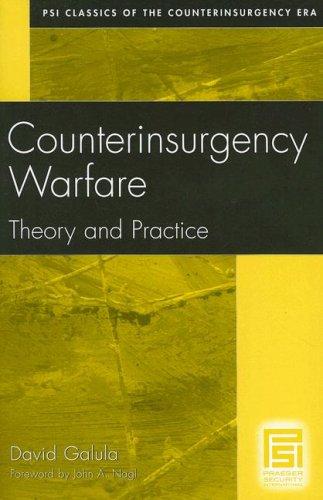
Counterinsurgency Warfare: Theory and Practice (PSI Classics of the Counterinsurgency Era)

David Galula

★★★★
Read Basic intel Vietnam GWOT Guerrilla / COIN Middle East Strategy / theory ISBN 9780275993030

Praeger Security International Paperback · August 30, 2006

This volume in the Praeger Security International (PSI) series Classics of the Counterinsurgency Era defines the laws of insurgency and outlines the strategy and tactics to combat such threats. Drawn from the observations of a French officer, David Galula, who witnessed guerrilla warfare on three continents, the book remains relevant today as American policymakers, military analysts, and members of the public look to the counterinsurgency era of the 1960s for lessons to apply to the current situation in Iraq and Afghanistan. With a new foreword by John A. Nagl, author of Counterinsurgency Lessons from Malaya and Vietnam (Praeger, 2002).

Economics in One Lesson

Henry Hazlitt

★★★★
Read Basic intel Logistics Economics Logistics Intel history Economics Orthodox / theology ISBN 9780870004278

Blackstone Audiobooks · 1946

A million copy seller, Henry Hazlitt’s Economics in One Lesson is a classic economic primer. But it is also much more, having become a fundamental influence on modern “libertarian” economics of the type espoused by Ron Paul and others. Considered among the leading economic thinkers of the “Austrian School,” which includes Carl Menger, Ludwig von Mises, Friedrich (F.A.) Hayek, and others, Henry Hazlitt (1894-1993), was a libertarian philosopher, an economist, and a journalist. He was the founding vice-president of the Foundation for Economic Education and an early editor of The Freeman magazine, an influential libertarian publication.  Hazlitt wrote Economics in One Lesson, his seminal work, in 1946. Concise and instructive, it is also deceptively prescient and far-reaching in its efforts to dissemble economic fallacies that are so prevalent they have almost become a new orthodoxy. Many current economic commentators across the political spectrum have credited Hazlitt with foreseeing the collapse of the global economy which occurred more than 50 years after the initial publication of Economics in One Lesson. Hazlitt’s focus on non-governmental solutions, strong — and strongly reasoned — anti-deficit position, and general emphasis on free markets, economic liberty of individuals, and the dangers of government intervention make Economics in One Lesson, every bit as relevant and valuable today as it has been since publication.

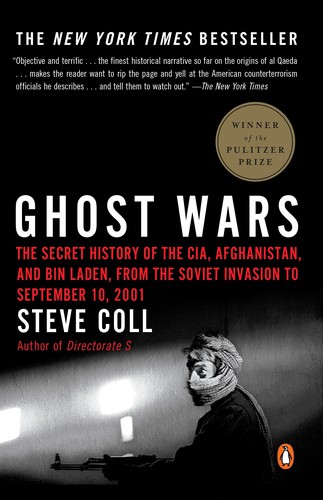
Ghost Wars: The Secret History of the CIA, Afghanistan, and Bin Laden from the Soviet Invasion to September 10, 2001

Steve Coll

★★★★
Read Basic intel Intel history Espionage GWOT Russia / USSR Middle East Intel history ISBN 0143034669

Penguin Books · 2005

The news-breaking book that has sent shockwaves through the Bush White House, Ghost Wars is the most accurate and revealing account yet of the CIA's secret involvement in al-Qaeda's evolution. It won the Pulitzer Prize in 2005.Prize-winning journalist Steve Coll has spent years reporting from the Middle East, accessed previously classified government files and interviewed senior US officials and foreign spymasters. Here he gives the full inside story of the CIA's covert funding of an Islamic jihad against Soviet forces in Afghanistan, explores how this sowed the seeds of Bin Laden's rise, traces how he built his global network and brings to life the dramatic battles within the US government over national security. Above all, he lays bare American intelligence's continual failure to grasp the rising threat of terrorism in the years leading to 9/11 - and its devastating consequences.

One Bullet Away: The Making of a Marine Officer

Nathaniel Fick

★★★★
Read Basic intel Military history Vietnam GWOT Middle East Biography ISBN 9780618773435

Mariner Books · September 7, 2006

If the Marines are “the few, the proud,” Recon Marines are the fewest and the proudest. Nathaniel Fick’s career begins with a hellish summer at Quantico, after his junior year at Dartmouth. He leads a platoon in Afghanistan just after 9/11 and advances to the pinnacle—Recon— two years later, on the eve of war with Iraq. His vast skill set puts him in front of the front lines, leading twenty-two Marines into the deadliest conflict since Vietnam. He vows to bring all his men home safely, and to do so he’ll need more than his top-flight education. Fick unveils the process that makes Marine officers such legendary leaders and shares his hard-won insights into the differences between military ideals and military practice, which can mock those ideals. In this deeply thoughtful account of what it’s like to fight on today’s front lines, Fick reveals the crushing pressure on young leaders in combat. Split-second decisions might have national consequences or horrible immediate repercussions, but hesitation isn’t an option. One Bullet Away never shrinks from blunt truths, but ultimately it is an inspiring account of mastering the art of war.

Out of Nowhere: A History of the Military Sniper

Martin Pegler

★★★★
Read Military history Technical warfare Advanced intel Basic intel Vietnam Russia / USSR US Civil War Revolution ISBN 9781846031403

Osprey Publishing · October 31, 2006

From the American Revolution to World War Two, the history of the military combat marksman is one of indifference, unpreparedness and cost cutting. Despite the proven effectiveness of the rifleman in battle, the sniper in the 20th century has been regarded as little more than a paid assassin, whose life if captured was forfeit. However, since the Vietnam War the undeniably effective use of such men in combat means that the value of the sniper has gradually become more appreciated by the military, and their prominence on the modern battlefield has increased significantly. In the 21st century they are now regarded as one of the most vital battlefield specialists. Illustrated throughout with colour and black and white photographs, this is a chronological study of snipers, detailing their evolution, training, weaponry and actions. There are also unique contributions from the men and women whose skill and extraordinary courage have made them the most greatly feared specialist in warfare. From the Foreword by Harry Furness, decorated Sniper-Sergeant, British Army Wold War II We will always need to deploy our new age warrior, that highly trained specialist, the military sniper.... Factual books on snipers are few and far between, so I find it refreshing and timely that this new book has been published which will provide the reader with the true facts about these unique soldiers; and readers of this excellent, deeply researched book will now be more knowledgeable about a rarely discussed subject. You have to dig deep to bypass the many half truths in order to reach any conclusion as to why manking continues to wage wars that kill off the cream of our young society, but it might be said that if it is the fate of a soldier to die in battle, then a sniper's swift killing bullet must be preferable to dying from devastating wounds. Chapter Heads The sniper in perspective. The rifleman emerges 1500-1854. The American Civil War and European wars 1854-1914. The First World War, the watershed 1914-16. The First World War, the fight back 1916-18. Russian sniping 1936-45. The German sniper and the war with Russia 1941-45. The war against Japan 1941-45. The war in Western Europe 1940-45. Limited wars 1945-85. Vietnam, America's nemesis. Into the 21st century.

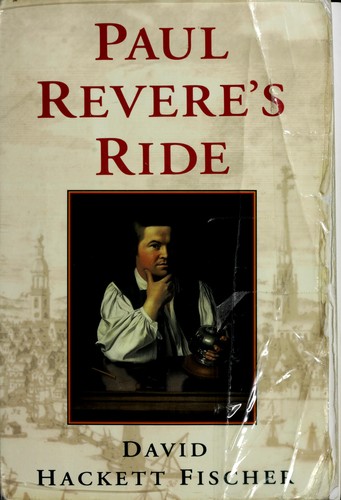
Paul Revere's Ride

David Hackett Fischer

★★★★
Read Basic intel Advanced intel Military history Intel history Logistics Technical warfare Espionage Cyber Logistics Revolution ISBN 0195098315

Oxford University Press · 1995

Paul Revere's midnight ride is a legendary event in American history - yet it has been largely ignored by scholars, and left to patriotic writers and debunkers. Now one of the foremost American historians offers the first serious study of this event - what led to it, what really happened, what followed - uncovering a truth more remarkable than the many myths it has inspired. In Paul Revere's Ride, David Hackett Fischer has created an exciting narrative that offers new insight into the coming of the American Revolution. From research in British and American archives, the author unravels a plot that no novelist would dare invent - a true story of high drama and deep suspense, of old-fashioned heroes and unvarnished villains, of a beautiful American spy who betrayed her aristocratic British husband, of violent mobs and marching armies, of brave men dying on their doorsteps, of high courage, desperate fear, and the destiny of nations. The narrative is constructed around two thematic lines. One story centers on the American patriot Paul Revere; the other, on British General Thomas Gage. Both were men of high principle who played larger roles than recent historiography has recognized. Thomas Gage was not the Tory tyrant of patriot legend, but an English Whig who believed in liberty and the rule of law. In 1774 and 1775, General Gage's advice shaped the fatal choices of British leaders, and his actions guided the course of American events. Paul Revere was more than a "simple artizan, " as his most recent biographer described him fifty years ago. The author presents new evidence that revolutionary Boston was a world of many circles - more complex than we have known. Paul Revere and his friend Joseph Warren ranged more widely through those circles than any other leaders. They became the linchpins of the Whig movement. On April 18th, 1775, Paul Revere played that role in a manner that has never been told before. He and William Dawes were not the only midnight riders to ca

Supplying War: Logistics from Wallenstein to Patton

Martin van Creveld

★★★★
Read Basic intel Logistics Logistics Strategy / theory ISBN 0521837448

Cambridge University Press · 2004

Drawing on a very wide range of unpublished and previously unexploited sources, Martin van Creveld examines the "nuts and bolts" of war. He considers the formidable problems of movement and supply, transportation and administration, often mentioned (but rarely explored) by the vast majority of books on military history. By concentrating on logistics rather than on the more traditional tactics and strategy, van Creveld is also able to offer an original reinterpretation of military history. First Edition Hb (1977): 0-521-21730-X FIrst Edition Pb (1979): 0-521-29793-1

The Art of War

Sun Tzu

★★★★
Read Basic intel Military history Intel history China Strategy / theory ISBN 9781533142467

Pearson Education Asia · 1900

Twenty-Five Hundred years ago, Sun Tzu wrote this classic book of military strategy based on Chinese warfare and military thought. Since that time, all levels of military have used the teaching on Sun Tzu to warfare and civilization have adapted these teachings for use in politics, business and everyday life. The Art of War is a book which should be used to gain advantage of opponents in the boardroom and battlefield alike.

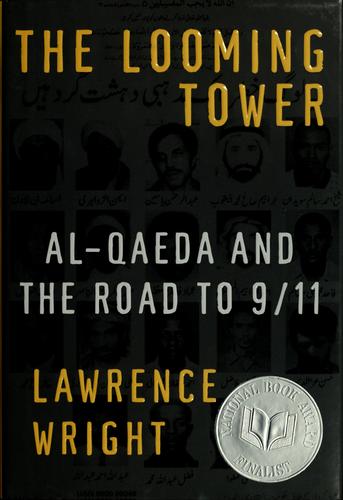
The Looming Tower: Al-Qaeda and the Road to 9/11

Lawrence Wright

★★★★
Read Military history Intel history Basic intel Espionage GWOT Middle East ISBN 037541486X

Knopf · 2006

A sweeping narrative history of the events leading to 9/11, a groundbreaking look at the people and ideas, the terrorist plans and the Western intelligence failures that culminated in the assault on America. Lawrence Wright's remarkable book is based on five years of research and hundreds of interviews that he conducted in Egypt, Saudi Arabia, Pakistan, Afghanistan, Sudan, England, France, Germany, Spain, and the United States. The Looming Tower achieves an unprecedented level of intimacy and insight by telling the story through the interweaving lives of four men: the two leaders of al-Qaeda, Osama bin Laden and Ayman al-Zawahiri; the FBI's counterterrorism chief, John O'Neill; and the former head of Saudi intelligence, Prince Turki al-Faisal. As these lives unfold, we see revealed: the crosscurrents of modern Islam that helped to radicalize Zawahiri and bin Laden . . . the birth of al-Qaeda and its unsteady development into an organization capable of the American embassy bombings in Kenya and Tanzania and the attack on the USS Cole . . . O'Neill's heroic efforts to track al-Qaeda before 9/11, and his tragic death in the World Trade towers . . . Prince Turki's transformation from bin Laden's ally to his enemy . . . the failures of the FBI, CIA, and NSA to share intelligence that might have prevented the 9/11 attacks. The Looming Tower broadens and deepens our knowledge of these signal events by taking us behind the scenes. Here is Sayyid Qutb, founder of the modern Islamist movement, lonely and despairing as he meets Western culture up close in 1940s America; the privileged childhoods of bin Laden and Zawahiri; family life in the al-Qaeda compounds of Sudan and Afghanistan; O'Neill's high-wire act in balancing his all-consuming career with his equally entangling personal life--he was living with three women, each of them unaware of the others' existence--and the nitty-gritty of turf battles among U.S. intelligence agencies. Brilliantly conceived and written, The Looming Tower draws all elements of the story into a galvanizing narrative that adds immeasurably to our understanding of how we arrived at September 11, 2001. The richness of its new information, and the depth of its perceptions, can help us deal more wisely and effectively with the continuing terrorist threat.

No cover · Amazon

Black Flags: The Rise of ISIS

Joby Warrick

★★★☆☆
Read Basic intel Intel history Espionage GWOT Guerrilla / COIN Middle East Intel history US Civil War

Pulitzer Prize-winning reporter Joby Warrick reveals how the strain of militant Islam now raising its banner across Iraq and Syria spread from a remote Jordanian prison with the unwitting aid of American military intervention.      When he succeeded his father in 1999, King Abdullah of Jordan released a batch of political prisoners in the hopes of smoothing his transition to power. Little did he know that among those released was Abu Musab al-Zarqawi, a man who would go on to become a terrorist mastermind too dangerous even for al-Qaeda and give rise to an Islamist movement bent on dominating the Middle East.      Zarqawi began by directing hotel bombings and assassinations in Jordan from a base in northern Iraq, but it was the American invasion of that country in 2003 that catapulted him to the head of a vast insurgency. By identifying him as the link between Saddam and bin Laden, the CIA inadvertently created a monster. Like-minded radicals saw him as a hero resisting the infidel occupiers and rallied to his cause. Their wave of brutal beheadings and suicide bombings continued for years until Jordanian intelligence provided the Americans with the crucial intelligence needed to eliminate Zarqawi in a 2006 airstrike.      But his movement endured, first called al-Qaeda in Iraq, then renamed Islamic State of Iraq and Syria, or ISIS, seeking refuge in unstable, ungoverned pockets on the Iraq-Syria border. And as the Syrian civil war broke out in 2011, ISIS seized its chance to pursue Zarqawi's dream of a sweeping, ultra-conservative Islamic caliphate.       Drawing on unique access to CIA and Jordanian sources, Joby Warrick weaves together heart-pounding, moment-by-moment operational details with overarching historical perspectives to reveal the long trajectory of today's most dangerous Islamic extremist threat. From the Hardcover edition.

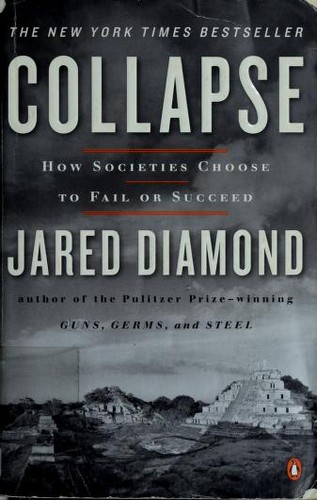
Collapse: How Societies Choose to Fail or Succeed

Jared Diamond

★★★☆☆
Read Basic intel Military history China ISBN 0143036556

Penguin Books · 2006

Brilliant, illuminating, and immensely absorbing, Collapse is destined to take its place as one of the essential books of our time, raising the urgent question: How can our world best avoid committing ecological suicide? In his million-copy bestseller Guns, Germs, and Steel, Jared Diamond examined how and why Western civilizations developed the technologies and immunities that allowed them to dominate much of the world. Now in this brilliant companion volume, Diamond probes the other side of the equation: What caused some of the great civilizations of the past to collapse into ruin, and what can we learn from their fates? As in Guns, Germs, and Steel, Diamond weaves an all-encompassing global thesis through a series of fascinating historical-cultural narratives. Moving from the Polynesian cultures on Easter Island to the flourishing American civilizations of the Anasazi and the Maya and finally to the doomed Viking colony on Greenland, Diamond traces the fundamental pattern of catastrophe. Environmental damage, climate change, rapid population growth, and unwise political choices were all factors in the demise of these societies, but other societies found solutions and persisted. Similar problems face us today and have already brought disaster to Rwanda and Haiti, even as China and Australia are trying to cope in innovative ways. Despite our own society's apparently inexhaustible wealth and unrivaled political power, ominous warning signs have begun to emerge even in ecologically robust areas like Montana. Brilliant, illuminating, and immensely absorbing, Collapse is destined to take its place as one of the essential books of our time, raising the urgent question: How can our world best avoid committing ecological suicide?