S2 Search · Reading list

S2 Actual reading list

Books from S2 Actual on Goodreads, organized by his shelves and topic buckets (intel lists, military history, logistics, etc.). Metadata filled via Open Library.

Not official S2 Underground. Independent fan index — not affiliated with or endorsed by S2. Official hub: linktr.ee/S2_underground. S2 materials are CC BY-NC-SA 4.0.

S2 topic buckets (Goodreads)

Subjects & genres

210 books · Military history · page 2 of 9

Hybrid Warfare: Fighting Complex Opponents from the Ancient World to the Present

Williamson Murray

★★★★★
Read Military history Intel history Logistics Technical warfare GWOT Guerrilla / COIN Logistics Strategy / theory ISBN 9781107026087

Cambridge University Press · 2012

Hybrid warfare has been an integral part of the historical landscape since the ancient world, but only recently have analysts incorrectly categorized these conflicts as unique. Great powers throughout history have confronted opponents who used a combination of regular and irregular forces to negate the advantage of the great powers' superior conventional military strength. As this study shows, hybrid wars are labor-intensive and long-term affairs; they are difficult struggles that defy the domestic logic of opinion polls and election cycles. Hybrid wars are also the most likely conflicts of the twenty-first century, as competitors use hybrid forces to wear down America's military capabilities in extended campaigns of exhaustion. Nine historical examples of hybrid warfare, from ancient Rome to the modern world, provide readers with context by clarifying the various aspects of conflicts and examining how great powers have dealt with them in the past.
No cover · Amazon

Into Oblivion: The Story of Pionier-Batallion 305

Jason D. Mark

★★★★★
Read Logistics Military history WWII Cold War Air power Russia / USSR Logistics Intel history

After 16 months of training and garrison duty in France, Pionier-Bataillon 305 – together with the rest of 305. Infanterie-Division – was sent to the Eastern Front. Little could they know that an inevitable train of events had been set in motion that would lead to their destruction at Stalingrad barely nine months later. An unprecedented discovery of original material has permitted an examination of the brutal fighting on the Eastern Front through the eyes of one German battalion. Commanded by apolitical officers, reservists mainly, its ranks were filled with older-than-normal recruits. When they arrived on the Eastern Front in May 1942, it was a first time visit for most of them, yet they sensed what awaited them. Everyone knew someone who had been killed in the Soviet Union. Stories about the ferocity of combat on the Eastern Front had reached them through the soldier’s grapevine. They were under no illusions, but still believed they would prevail. Weeks of monotonous, endless marching were interspersed with terrifying encounters and set-piece attacks. How would this fresh battalion compare with experienced units? Were its men less jaded and more inspired than those that had been at the front since Barbarossa began in June 1941? Was the arrival of a tough, battle-hardened commander enough to compensate for the unit’s lack of combat experience? What effect did the ongoing casualties have on both the soldiers and the battalion’s performance in battle? By exploring and answering these questions and others, this intimate analysis of an ordinary battalion enables the Eastern Front to be seen as never before. • 620 pages on a high-quality satin (semi-gloss) stock • 210 x 157mm • Hardcover only • 327 photos • 56 maps and sketches • 7 aerial photos • 5 tables • 3 appendices, including officer biographies and medal lists.

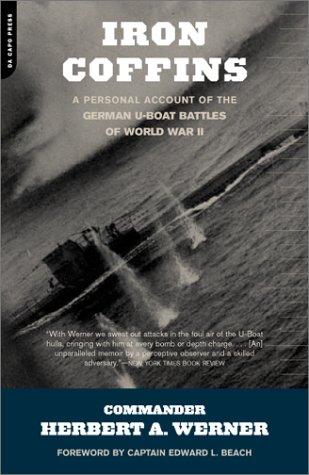
Iron Coffins: A Personal Account of the German U-boat Battles of World War II

Herbert A. Werner

★★★★★
Read Military history WWII Naval Biography Strategy / theory ISBN 9780306811609

Da Capo Press · June 2002

The Battle of the Atlantic was one of the most savage and strategically significant campaigns of World War II: 28,000 out of 39,000 men in the German U-boat force disappeared beneath the waves. Herbert A. Werner, one of the few surviving German U-boat commanders, served on five submarines from 1941 to 1945. From the Atlantic to the Mediterranean, from the English Channel to the North Sea, he takes the reader with him through the triumphant years of 1941 and 1942, when German U-boats nearly strangled England, to the apocalyptic final years of destruction, disillusionment, and defeat.

Kharkov 1942: Anatomy of a Military Disaster

David M. Glantz

★★★★★
Read Military history WWII Cold War Russia / USSR ISBN 9781885119544

Sarpedon Publishers · June 1998

Kharkov was one of the last German victories on the Russian Front; this is a detailed examination of Soviet command decisions and German battlefield innovations in an important but neglected battle. In this eagerly anticipated book, America's foremost expert in Russian military studies addresses this neglected. Sandwiched as it is between more famous battles, every military history reader knows "about" Kharkov, but there has never been a book that focused exclusively on that campaign. David M. Glantz has now filled the gap.

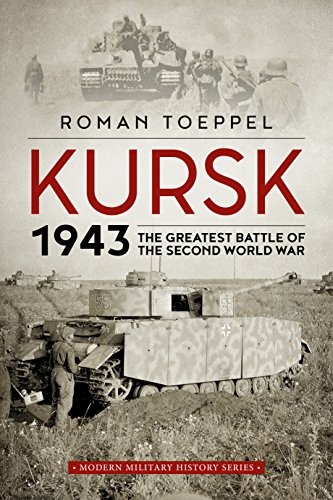
Kursk 1943: The Greatest Battle of the Second World War (Modern Military History)

Roman Töppel

★★★★★
Read Military history Technical warfare WWII Armor Russia / USSR ISBN 9781912390038

Helion and Company · Oct 09, 2018

The Battle of Kursk in the summer of 1943 was one of the greatest battles in military history involving more than 3 million soldiers, 10,000 tanks and 8,000 aircraft. While many books have been written on this allegedly most decisive battle of the Second World War, many legends live on, above all because of misleading information that recur in most publications - even in the most recent ones. Based on almost 20 years of research reassessing the primary sources, Roman Toeppel sheds light on the phase of decision-making, the preparations and the development of the battle in an engaging style that grips the reader's attention from the first page on. The author concentrates on little-known developments and events leading the reader to astonishing results. He also gives entirely new insights into the historiographic appraisal of this battle, putting thoroughly researched facts against erroneous popular beliefs, myths and legends that have been passed down among historians for generations.

Leningrad: Tragedy of a City Under Siege, 1941-44.

Anna Reid

★★★★★
Read Advanced intel Military history Logistics WWII Cold War Russia / USSR Logistics Biography ISBN 9781408822418

Bloomsbury Publishing PLC · Nov 07, 2012

On September 8, 1941, eleven weeks after Hitler launched Operation Barbarossa, his brutal surprise attack on the Soviet Union, Leningrad was surrounded. The siege was not lifted for two and a half years, by which time some three quarters of a million Leningraders had died of starvation. Anna Reid's Leningrad is a gripping, authoritative narrative history of this dramatic moment in the twentieth century, interwoven with indelible personal accounts of daily siege life drawn from diarists on both sides. They reveal the Nazis' deliberate decision to starve Leningrad into surrender and Hitler's messianic miscalculation, the incompetence and cruelty of the Soviet war leadership, the horrors experienced by soldiers on the front lines, and, above all, the terrible details of life in the blockaded city: the relentless search for food and water; the withering of emotions and family ties; looting, murder, and cannibalism- and at the same time, extraordinary bravery and self-sacrifice. Stripping away decades of Soviet propaganda, and drawing on newly available diaries and government records, Leningrad also tackles a raft of unanswered questions: Was the size of the death toll as much the fault of Stalin as of Hitler? Why didn't the Germans capture the city? Why didn't it collapse into anarchy? What decided who lived and who died? Impressive in its originality and literary style, Leningrad gives voice to the dead and will rival Anthony Beevor's classic Stalingrad in its impact.

Military Innovation in the Interwar Period

Williamson Murray

★★★★★
Read Advanced intel Military history WWII Strategy / theory ISBN 9780521637602

Cambridge University Press · 1998

This study of major military innovations in the 1920s and 1930s explores differences in innovating exploitation by the seven major military powers. This volume of comparative essays investigates how and why innovation occurred or did not occur, and explains much of the strategic and operative performance of the Axis and Allies in World War II.

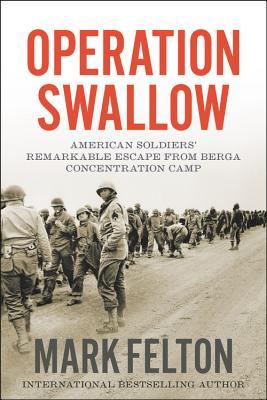
Operation Swallow: American Soldiers' Remarkable Escape from Berga Concentration Camp

Mark Felton

★★★★★
Read Military history WWII ISBN 9781546076445

Center Street · 2019

The true and heroic story of American POWs' daring escape from a Nazi concentration camp. In this little-known story from World War II, a group of American POW camp leaders risk everything to save hundreds of fellow servicemen from a diabolical Nazi concentration camp. Their story begins in the dark forests of the Ardennes during Christmas 1944 and ends at the Buchenwald Concentration Camp in the spring of 1945. This appalling chapter of US military history and uplifting Holocaust story deserves to be widely known and understood. Operation Swallow provides a historical, first person perspective of how American GIs stood up against their evil SS captors who were forcing them to work as slave laborers. A young GI is thrust into a leadership position and leads his fellow servicemen on a daring escape. It is a story filled with courage, sacrifice, torture, despair, and salvation. A compelling narrative-driven nonfiction book has not been written that takes the reader deep into the dark story of Operation 'Swallow' and Berga Concentration Camp--until now. Written from personal testimonies and official documents, Operation Swallow is a tale replete with high adventure, compelling characters, human drama, tragedy, and eventual salvation, from the pen of a master of the modern military narrative.

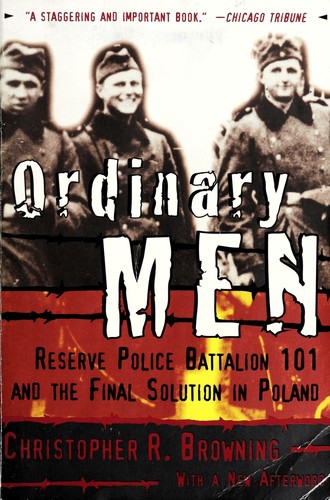
Ordinary Men: Reserve Police Battalion 101 and the Final Solution in Poland

Christopher R. Browning

★★★★★
Read Military history Logistics WWII Logistics Biography ISBN 0060995068

HarperPerennial · 1998

Christopher R. Browning’s shocking account of how a unit of average middle-aged Germans became the cold-blooded murderers of tens of thousands of Jews—now with a new afterword and additional photographs. Ordinary Men is the true story of Reserve Police Battalion 101 of the German Order Police, which was responsible for mass shootings as well as round-ups of Jewish people for deportation to Nazi death camps in Poland in 1942. Browning argues that most of the men of RPB 101 were not fanatical Nazis but, rather, ordinary middle-aged, working-class men who committed these atrocities out of a mixture of motives, including the group dynamics of conformity, deference to authority, role adaptation, and the altering of moral norms to justify their actions. Very quickly three groups emerged within the battalion: a core of eager killers, a plurality who carried out their duties reliably but without initiative, and a small minority who evaded participation in the acts of killing without diminishing the murderous efficiency of the battalion whatsoever. While this book discusses a specific Reserve Unit during WWII, the general argument Browning makes is that most people succumb to the pressures of a group setting and commit actions they would never do of their own volition.   Ordinary Men is a powerful, chilling, and important work, with themes and arguments that continue to resonate today.

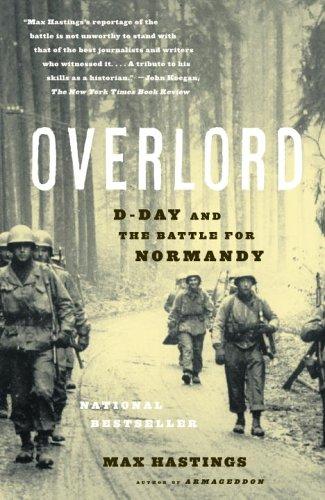
Overlord: D-Day and the Battle for Normandy

Max Hastings

★★★★★
Read Intel history Military history WWII ISBN 9780307275714

Vintage · January 3, 2006

On June 6, 1944, American and British troops staged the greatest amphibious landing in history to begin Operation Overlord, the battle to liberate Europe from the scourge of the Third Reich. With gut-wrenching realism and immediacy, Hastings reveals the terrible human cost that this battle exacted. Moving beyond just the storming of Omaha beach and D-Day, he explores the Allies’ push inward, with many British and American infantry units suffering near 100 percent casualties during the course of that awful summer. Far from a gauzy romanticized remembrance, Hastings details a grueling ten week battle to overpower the superbly trained, geographically entrenched German Wehrmacht. Uncompromising and powerful in its depiction of wartime, this is the definitive book on D-Day and the Battle of Normandy.

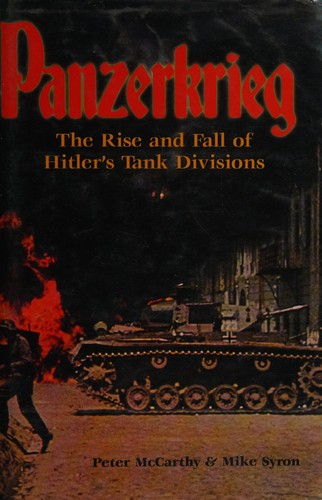
Panzerkrieg: The Rise and Fall of Hitler's Tank Divisions

Peter McCarthy

★★★★★
Read Advanced intel Intel history Logistics Technical warfare Military history WWII Cold War Armor Russia / USSR Logistics Biography ISBN 0786710098

Carroll & Graf Publishers · 2002

The image that defines the Nazis’ Blitzkrieg is that of the Panzerwaffe’s massed columns of tanks sweeping through Europe, all resistance smashed in their wake. The Panzers’ achievements in battle were largely responsible for Germany’s early successes in World War II, and once the tide had turned against the Reich, the Panzers became the backbone of its defense. But the dramatic story of Hitler’s tank divisions is more than one of mere mechanical efficiency. It hangs, too, on those who commanded and fought in them, and believed in their near invincibility. These are the men who come to life in this immensely readable narrative. Great generals like Guderian, Rommel, and Manstein, tank masters like Wittmann and Bake, and inspired commanders like Balck and Bayerlein dominate the story of Panzerkreig. Dispensing with jargon, but including explanatory maps, rare illustrations, and fascinating detail on uniforms, crew members, and the mechanical features of the machines, the authors give a comprehensive overview of all aspects of the subject, both human and technical. They have also benefited from new information available since the opening of Cold War archives. Emerging from the narrative is the whole vast canvas of the war, as it follows the titanic struggles that raged between France’s bocage country, North Africa’s desert wastes, and Russia’s limitless steppes. The development of German fighting vehicles and tactics is fully charted, and the many myths and misconceptions of the Panzerwaffe are exploded. Extensive research, maps, illustrations throughout, reference to the leading participants’ memoirs, and original new conclusions all contribute to this finely measured assessment of the evolution, exploits, and eventual destruction of this superlative fighting force.

No cover · Amazon

Panzerkrieg: Volume 1 - German Armoured Operations at Stalingrad

Jason D. Mark

★★★★★
Read Military history Advanced intel WWII Air power Armor Russia / USSR Intel history

For the first time ever, the operations of panzer formations at Stalingrad are examined in detail, from formation until demise. Stalingrad is perceived as a fierce man-versus-man struggle in the ruins of a major metropolis and the surrounding steppe; yet, 6. Armee possessed formidable armoured assets that helped it reach the Volga, defended its flanks and even supported assault groups within the claustrophobic confines of the city. In this first volume of a series dedicated to studying German armoured operations at Stalingrad, the combat histories of Panzer-Abteilungen 103, 129 and 160 will be examined in detail. These panzer battalions were drawn from panzer regiments on the quieter central sector of the Eastern Front. They were incorporated into motorized divisions for the 1942 summer campaign, and though most of their men thought they were headed to the Caucasus, all roads ultimately led to Stalingrad. As manpower levels dropped in their parent formations, the panzer battalions assumed a greater role in holding lengthy flanks while the main body of 6. Armee laid siege to Stalingrad. After encirclement in November 1942, the panzers assembled for a break-out operation, and when that failed to eventuate, they supported their struggling infantry brethren with plucky counterattacks and steadfast defense until fuel, ammunition and morale were depleted. Unprecedented access to Deutsche Dienststelle (WASt), a government agency that maintains records of former Wehrmacht personnel, has permitted the life and death of each battalion to be analysed in incredible detail. The narrative is enhanced by hundreds of rare photos drawn from official archives, private collections and the albums of veterans themselves. -280 x 216 Portrait format -568 Pages on high-quality gloss paper -Hardcover only -559 Photos -12 Aerial photos -50 Maps -12 Tables -3 appendices showing the daily panzer strengths of each battalion

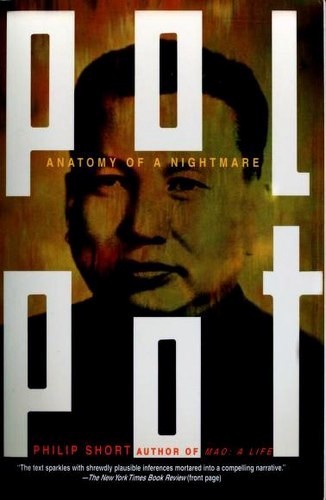
Pol Pot: Anatomy of a Nightmare

Philip Short

★★★★★
Read Military history Cold War Espionage China Biography ISBN 9780805080063

Henry Holt and Company · 2006

Philip Short observed Pol Pot at close quarters during the one and only official visit Pol ever made abroad, to China in 1975. He was struck by Pol Pot's charm and charisma, yet, soon after, the leader would emerge as the architect of one of the most radical and ruthless experiments in social engineering ever undertaken. His egalitarian utopia released a reign of terror that would result in one in every five Cambodians - more than a million people - perishing in the killing fields or from hunger. Why did it happen? How did an idealistic dream of justice and prosperity mutate into one of humanity's worst nightmares? To answer these questions, Short traveled through Cambodia, interviewing former Khmer Rouge leaders and sifting through previously closed archives around the world. Key figures, including Khlen Samphan and Ieng Sary, Pol Pot's brother-in-law and foreign minister, speak here for the first time. Philip Short's masterly narrative reveals how Pol Pot engineered his country's desolation, fashioning the definitive portrait of the man who headed one of the most enigmatic and terrifying regimes of modern times.

Red Sniper on the Eastern Front: The Memoirs of Joseph Pilyushin

Joseph Pilyushin

★★★★★
Read Biographies Technical warfare Military history WWII Russia / USSR Biography ISBN 9781848847170

Pen & Sword Books Limited · 2010

A gripping memoir of a Soviet sniper who fought against the Nazis during the siege of Leningrad and throughout World War II. Joseph Pilyushin, a top Red Army sniper in the ruthless fight against the Germans on the Eastern Front, was an exceptional soldier. His first-hand account of his wartime service gives a graphic insight into his lethal skill with a rifle and into the desperate fight put up by Soviet forces to defend Leningrad. Pilyushin, who lived in Leningrad with his family, was already 35 years-old when the war broke out and he was drafted. He started in the Red Army as a scout, but once he had demonstrated his marksmanship and steady nerve, he became a sniper. He served throughout the Leningrad siege, from the late 1941 when the Wehrmacht’s advance was halted just short of the city to its liberation during the Soviet offensive of 1944. His descriptions of grueling front-line life, of his fellow soldiers, and of his sniping missions are balanced by his vivid recollections of the protracted suffering of Leningrad’s imprisoned population and of the grief that was visited upon him and his family. His narrative will be fascinating reading for anyone eager to learn about the role and technique of the sniper during the Second World War. It is also a memorable eyewitness account of one man’s experience on the Eastern Front.

Relentless Strike: The Secret History of Joint Special Operations Command

Sean Naylor

★★★★★
Read Basic intel Advanced intel Military history Intel history Technical warfare GWOT Special ops Naval Air power Nuclear Middle East ISBN 9781250014542

St. Martin's Press · 2015

The New York Times Bestseller and Winner of the 2015 Army Historical Foundation Distinguished Writing Award for Unit History Since the attacks of September 11, one organization has been at the forefront of America's military response. Its efforts turned the tide against al-Qaida in Iraq, killed Bin Laden and Zarqawi, rescued Captain Phillips and captured Saddam Hussein. Its commander can direct cruise missile strikes from nuclear submarines and conduct special operations raids anywhere in the world. Relentless Strike tells the inside story of Joint Special Operations Command, the secret military organization that during the past decade has revolutionized counterterrorism, seamlessly fusing intelligence and operational skills to conduct missions that hit the headlines, and those that have remained in the shadows-until now. Because JSOC includes the military's most storied special operations units-Delta Force, SEAL Team 6, the 75th Ranger Regiment-as well as America's most secret aviation and intelligence units, this is their story, too. Relentless Strike reveals tension-drenched meetings in war rooms from the Pentagon to Iraq and special operations battles from the cabin of an MH-60 Black Hawk to the driver's seat of Delta Force's Pinzgauer vehicles as they approach their targets. Through exclusive interviews, reporter Sean Naylor uses his unique access to reveal how an organization designed in the 1980s for a very limited mission set transformed itself after 9/11 to become the military's premier weapon in the war against terrorism and how it continues to evolve today.

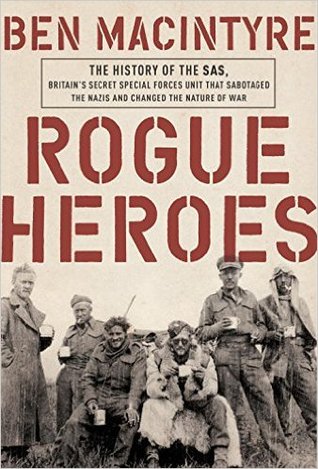
Rogue Heroes: The History of the SAS, Britain's Secret Special Forces Unit That Sabotaged the Nazis and Changed the Nature of War

Ben Macintyre

★★★★★
Read Basic intel Intel history Military history WWII Espionage Special ops Orthodox / theology ISBN 9781101904169

Crown · 2016

In the summer of 1941, at the height of the war in the Western Desert, a bored and eccentric young officer, David Stirling, came up with a plan that was radical and entirely against the rules: a small undercover unit that would inflict mayhem behind enemy lines. Despite intense opposition, Winston Churchill personally gave Stirling permission to recruit the toughest, brightest and most ruthless soldiers he could find. So began the most celebrated and mysterious military organisation in the world: the SAS. Now, 75 years later, the SAS has finally decided to tell its astonishing story. It has opened its secret archives for the first time, granting historian Ben Macintyre full access to a treasure trove of unseen reports, memos, diaries, letters, maps and photographs, as well as free rein to interview surviving Originals and those who knew them. The result is an exhilarating tale of fearlessness and heroism, recklessness and tragedy; of extraordinary men who were willing to take monumental risks. It is a story about the meaning of courage.

Silent Victory: The U.S. Submarine War Against Japan

Clay Blair Jr.

★★★★★
Read Military history Intel history WWII Espionage Naval Strategy / theory ISBN 155750217X

Naval Institute Press · 2001

The long-awaited publication of Silent Victory fills a major gap in the annals of World War II. Here for the first time is the definitive history of the submarine war against Japan--the only full-scale submarine war the United States ever fought--which has for the most part been shrouded in secrecy for three decades. Only recently have the codebreakers who played such a pivotal role in the submarine war been willing to talk about their work. And only recently have the private papers, diaries, and official reports of the submarine admirals and skippers been made available to historians. In preparing to write this book, Clay Blair, Jr. combed hundreds of thousands of pages of recently declassified documents and personal letters. In individual interviews he listened to scores of skippers, staff officers, and codebreakers speaking freely. He researched in depth the development of submarine and torpedo from prewar days down to the present time. The result is a revealing and immensely exciting book that sets the submarine war within the framework of history and the overall war in the Pacific. Silent Victory takes you into the submarine war at all levels--the highest strategy sessions in Washington, the terrifying moments in a submarine trapped on the bottom for hours as depth charges explode around it, the zany efforts of a torpedo crew coaxing an emaciated chicken to lay an egg. It tells of the jealous infighting of admirals vying for power . . . of "overcautious" skippers, trained in peacetime and ill suited for war, and the mutinies they provoked . . . of the shocking torpedo scandal and the toll it took . . . of the later breed of younger skippers whose daring was so effective against Japanese shipping that the war, as Blair argues, could have ended months earlier, saving thousands of lives. The complete saga that led to victory is here supplemented by ● 37 specially drawn maps showing submarine activity in the context of every important naval engagement in the Pacific ● 32 pages of photographs ● 12 appendixes, including a calendar of all submarine war patrols ● an index of over 2,000 entries. A work of great scholarship and scope, Silent Victory is a timeless contribution to the history of World War II.

Sledgehammers: Strengths and Flaws of Tiger Tank Battalions in World War II

Christopher W. Wilbeck

★★★★★
Read Technical warfare Military history WWII Armor Russia / USSR Intel history Strategy / theory ISBN 9780971765023

The Aberjona Press · March 2004

The Tiger and King Tiger tanks gained legendary status during World War II. Numerous tank commanders attained phenomenal tallies of kills and accomplished extraordinary feats during combat in these tanks, building the legend to near mythic proportions after the war. During WWII, the Germans created eleven Army and three Waffen-SS heavy tank battalions. These heavy tank battalions were employed in nearly every part of Europe against almost every enemy of Germany. As vast in breadth and scope as the employment of Tiger battalions themselves, Sledgehammers provides historical examples and analysis of heavy tank battalions’ actions in North Africa, Normandy, Italy, the Ardennes Offensive, and numerous battles on the Eastern Front including Operation ZITADELLE/the Battle of Kursk, Operation BAGRATION, the battle of the Cherkassy Pocket, late war attacks to relieve Budapest, and many other more minor engagements. Although a great deal has already been published about Tiger tanks’ technical details and some of the units which used them, until now, very little has been written concerning the organization and tactical employment of these tanks throughout the German armed forces and across the theaters in which they were employed. Sledgehammers provides an in-depth look at heavy tank battalions’ organizations and tactics, including the tactical doctrine by which these elite units were supposed to fight and how they were actually employed on the battlefield by their commanders and crews. Even given the Tiger’s reputation, many readers will be amazed by the fearsome casualties inflicted by the crews of many of these behemoth armored vehicles. It is safe to say that no other armored vehicle of the war wreaked as much havoc among enemy formations as Tigers. Many will, however, also find it equally stunning to learn of the Tigers’ many technical and tactical vulnerabilities. Through the systematic use of extremely detailed primary source and other impeccably reliable research, Sledgehammers demolishes several major myths about Tigers in World War II. Meticulously researched and written with the perspective and respect for Tigers' crews that only a professional tanker can bring to the subject, Sledgehammers synthesizes information to provide new and definitive insights into the strengths and flaws of World War II’s most feared and legendary tanks. Prologue by famed Tiger ace Otto Carius. Epilogue by Tiger killers Viktor Iskrov and Ray Holt. 35 original maps. 42 photos.

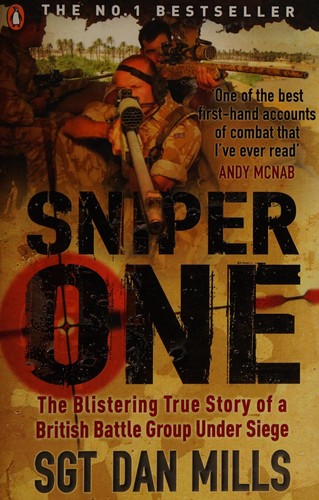
Sniper One: The Blistering True Story Of A British Battle Group Under Siege

Dan Mills

★★★★★
Read Biographies Intel history Technical warfare Advanced intel Military history GWOT Middle East Biography ISBN 9780141029016

Penguin · 2008

Sniper One is the gritty, awe-inspiring true story that takes you right into the heart of the Iraq war from Sunday Times No.1 bestseller Sgt. Dan Mills. 'One of the best first-hand accounts of combat that I've ever read' Andy McNab We all saw it at once. Half a dozen voices screamed 'Grenade!' simultaneously. Then everything went into slow motion. The grenade took an age to travel through its 20 metre arc. A dark, small oval-shaped package of misery the size of a peach ... April 2004: Dan Mills and his platoon of snipers fly into southern Iraq, part of an infantry battalion sent to win hearts and minds. They were soon fighting for their lives. Back home we were told they were peacekeeping. But there was no peace to keep. Because within days of arriving in theatre, Mills and his men were caught up in the longest, most sustained fire fight British troops had faced for over fifty years. This awe-inspiring account tells of total war in throat-burning winds and fifty-degree heat, blasted by mortars and surrounded by heavily armed militias. For six months, they fought isolated, besieged and under constant enemy fire. Their heroic stand a modern-day Rorke's Drift. ************** Dan Mills served for 24 years as an Infantry Soldier reaching the rank of Warrant Officer Class 2. During his long military career he served on operations in Northern Ireland, Bosnia, Kosovo, Iraq and Afghanistan. Dan was awarded a 'Mention In Despatches' for Gallantry for his services during The Iraq War. Since leaving the Army in 2010, he has forged a career as a writer and security consultant, amongst other things. Sniper One is his first book.

No cover · Amazon

Sniping in France: Winning the Sniping War in the Trenches

H. Hesketh-Prichard

★★★★★
Read Advanced intel Intel history Military history Technical warfare WWII

“Now, if any one cares to do a mathematical sum, and to work out the number of battalions we had in the line, they will be surprised at the figures, and when they multiply these figures by thirty and look at the month’s losses, they will find that in a war of attrition the sniper on this count alone justifies his existence and wipes out large numbers of the enemy.” During the initial stages of the First World War in 1914, Allied forces lost breathtaking numbers of men on the Western Front to Germany’s highly efficient and superior snipers. However, the passion of Major Hesketh-Prichard – hunter and excellent marksman – for the promotion and advancement of sniping practices led to the implementation of brand new sniping methods by the British Army. These new practices contributed to the reversal of fortune of the Allied forces, tipping the balance in their favour towards victory in the sniping war. This excellent book, as told in the inimitable style of Major Hesketh-Prichard, recounts the genesis, development, and advancement of sniping style and practice, intermingled with a charming autobiographical style. Truly a classic account of war, this is a must read for avid military enthusiasts. Major Hesketh-Prichard, born in India in 1876, led a vibrant life as an explorer and adventurer, big-game hunter turned animal rights activist, novelist and travel writer, excellent cricket player, and marksman. He contributed significantly to the advancement of sniping practice in the British Army during the First World War, and the measures he introduced are credited as saving the lives of thousands of Allied soldiers.

No cover · Amazon

Special Boat Squadron (Sea of Troubles Book 3)

Barrie Pitt

★★★★★
Read Military history Logistics Korea Espionage Logistics Orthodox / theology

'As much a thriller as it is a history book.' The Daily Mail Not by strength but by guile. Only since the Falklands campaign have the initials SBS become known to the public. Yet this clandestine formation of Britain’s armed forces has been in existence since the Second World War. Barrie Pitt, who himself served with the SBS, describes how the it came into being in 1941. How they fought with distinction in the Aegean, where one of their exploits inspired The Guns of Navarone. How they earned rapport in the Adriatic, in Greece and in Italy. How the SBS was reorganised in 1946 as part of the Royal Marines and has since played a role in Korea, Borneo and the Falklands. Equally interesting is the author’s report of the training and specialized skills required by the boat units, and the essential tasks facing them — infiltration from the sea, reconnaissance, sabotage, survival, resistance to interrogation, escape from captivity — and the expertise and determination to complete them. As Barrie Pitt's superb account of the formative years of this elite force shows, these qualities have been present from the very beginning. Barrie Pitt (1918-2006) was well known as a military historian and editor of Purnell’s History of the Second World War and History of the First World War. His publications include 'Coronel and Falkland', 'Churchill and the Generals' and 'The Crucible of War', a trilogy covering the North African campaign of the Second World War. He was born in Galway and later lived near Ilminster in Somerset.

No cover · Amazon

Stalingrad: How the Red Army Triumphed

Michael Jones

★★★★★
Read Intel history Logistics Military history WWII Cold War Russia / USSR Logistics

Michael K. Jones's new history of Stalingrad offers a radical reinterpretation of the most famous battle of the WW2. Combining eyewitness testimony of Red Army fighters with fresh archive material, the book gives a dramatic insight into the thinking of the Russian command and the mood of the ordinary soldiers. He focuses on the story of the Russian 62nd Army, which began the campaign in utter demoralization, yet turned the tables on the powerful German 6th Army. He explains the Red Army's extraordinary performance using battle psychology, emphasizing the vital role of leadership, morale and motivation in a triumph that turned the course of the war. Colonel-General Anatoly Mereshko fought throughout the battle as staff officer to the commander, Chuikov. Working with the author much of Mereshko's testimony is entirely new - and will astonish a western audience. It is backed up by accounts of other key veterans and the recently released war diary and combat journals. These show that the oft-repeated descriptions of Stalingrad's two critical days of fighting - 14 September 1942, when the Germans broke into the city, and 14 October, when they launched a massive attack on the factory district - disguise how desperate the plight of the defenders really was. In their place is a far more terrifying reality. Grasping this, we come to see Stalingrad as more than a victory of successful tactics - rather, as an astounding, improbable triumph of the human spirit.

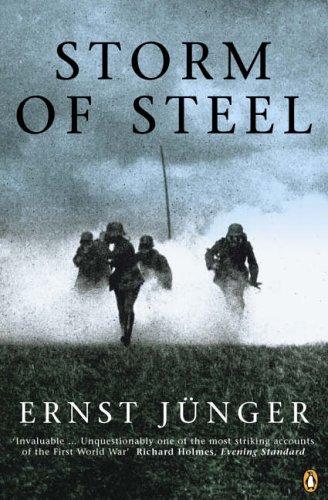
Storm of Steel

Ernst Jünger

★★★★★
Read Advanced intel Basic intel Military history WWI Biography ISBN 9780141186917

Penguin Books Ltd · June 3, 2004

A memoir of astonishing power, savagery, and ashen lyricism, 'Storm of Steel' illuminates not only the horrors but also the fascination of total war, seen through the eyes of an ordinary German soldier. Young, tough, patriotic, but also disturbingly self-aware, Jünger exulted in the Great War, which he saw not just as a great national conflict, but more importantly as a unique personal struggle. Leading raiding parties, defending trenches against murderous British incursions, simply enduring as shells tore his comrades apart, Jünger kept testing himself, braced for the death that will mark his failure. Published shortly after the war's end, 'Storm of Steel' was a worldwide bestseller and can now be rediscovered through Michael Hofmann's brilliant new translation.

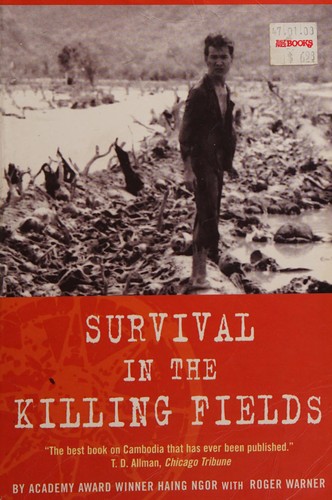
Survival in the Killing Fields

Haing Ngor

★★★★★
Read Military history WWII China Biography ISBN 0786713151

Carroll & Graf · 1987

Nothing has shaped my life as much as surviving the Pol Pot regime. I am a survivor of the Cambodian holocaust. That's who I am. He became famous through his academy award-winning performance as Dith Pran in the film The Killing Fields, but the key to Haing Ngor's screen success was the terrible truth of his own experiences in the rice paddies and labour camps of revolutionary Cambodia. Here, in a gripping memoir of life under the communist Khmer Rouge regime, he reveals the country's descent into a hell beyond our imaginings: a world of war slaves and senseless brutality, where family life simply ceases to be. But with the pain he also gives us hope and an illuminating example of how the best sort of love can actually be strengthened through the shared experience of a life-threatening ordeal. An eyewitness account of the real killing fields by an extraordinary survivor, this book is both a reminder of the horrors of war and a testament to the resilience of the human spirit.