S2 Search · Reading list

S2 Actual reading list

Books from S2 Actual on Goodreads, organized by his shelves and topic buckets (intel lists, military history, logistics, etc.). Metadata filled via Open Library.

Not official S2 Underground. Independent fan index — not affiliated with or endorsed by S2. Official hub: linktr.ee/S2_underground. S2 materials are CC BY-NC-SA 4.0.

S2 topic buckets (Goodreads)

Subjects & genres

100 books · Intel history · page 2 of 5

Silent Victory: The U.S. Submarine War Against Japan

Clay Blair Jr.

★★★★★
Read Military history Intel history WWII Espionage Naval Strategy / theory ISBN 155750217X

Naval Institute Press · 2001

The long-awaited publication of Silent Victory fills a major gap in the annals of World War II. Here for the first time is the definitive history of the submarine war against Japan--the only full-scale submarine war the United States ever fought--which has for the most part been shrouded in secrecy for three decades. Only recently have the codebreakers who played such a pivotal role in the submarine war been willing to talk about their work. And only recently have the private papers, diaries, and official reports of the submarine admirals and skippers been made available to historians. In preparing to write this book, Clay Blair, Jr. combed hundreds of thousands of pages of recently declassified documents and personal letters. In individual interviews he listened to scores of skippers, staff officers, and codebreakers speaking freely. He researched in depth the development of submarine and torpedo from prewar days down to the present time. The result is a revealing and immensely exciting book that sets the submarine war within the framework of history and the overall war in the Pacific. Silent Victory takes you into the submarine war at all levels--the highest strategy sessions in Washington, the terrifying moments in a submarine trapped on the bottom for hours as depth charges explode around it, the zany efforts of a torpedo crew coaxing an emaciated chicken to lay an egg. It tells of the jealous infighting of admirals vying for power . . . of "overcautious" skippers, trained in peacetime and ill suited for war, and the mutinies they provoked . . . of the shocking torpedo scandal and the toll it took . . . of the later breed of younger skippers whose daring was so effective against Japanese shipping that the war, as Blair argues, could have ended months earlier, saving thousands of lives. The complete saga that led to victory is here supplemented by ● 37 specially drawn maps showing submarine activity in the context of every important naval engagement in the Pacific ● 32 pages of photographs ● 12 appendixes, including a calendar of all submarine war patrols ● an index of over 2,000 entries. A work of great scholarship and scope, Silent Victory is a timeless contribution to the history of World War II.
Sniper One: The Blistering True Story Of A British Battle Group Under Siege

Dan Mills

★★★★★
Read Biographies Intel history Technical warfare Advanced intel Military history GWOT Middle East Biography ISBN 9780141029016

Penguin · 2008

Sniper One is the gritty, awe-inspiring true story that takes you right into the heart of the Iraq war from Sunday Times No.1 bestseller Sgt. Dan Mills. 'One of the best first-hand accounts of combat that I've ever read' Andy McNab We all saw it at once. Half a dozen voices screamed 'Grenade!' simultaneously. Then everything went into slow motion. The grenade took an age to travel through its 20 metre arc. A dark, small oval-shaped package of misery the size of a peach ... April 2004: Dan Mills and his platoon of snipers fly into southern Iraq, part of an infantry battalion sent to win hearts and minds. They were soon fighting for their lives. Back home we were told they were peacekeeping. But there was no peace to keep. Because within days of arriving in theatre, Mills and his men were caught up in the longest, most sustained fire fight British troops had faced for over fifty years. This awe-inspiring account tells of total war in throat-burning winds and fifty-degree heat, blasted by mortars and surrounded by heavily armed militias. For six months, they fought isolated, besieged and under constant enemy fire. Their heroic stand a modern-day Rorke's Drift. ************** Dan Mills served for 24 years as an Infantry Soldier reaching the rank of Warrant Officer Class 2. During his long military career he served on operations in Northern Ireland, Bosnia, Kosovo, Iraq and Afghanistan. Dan was awarded a 'Mention In Despatches' for Gallantry for his services during The Iraq War. Since leaving the Army in 2010, he has forged a career as a writer and security consultant, amongst other things. Sniper One is his first book.

No cover · Amazon

Sniping in France: Winning the Sniping War in the Trenches

H. Hesketh-Prichard

★★★★★
Read Advanced intel Intel history Military history Technical warfare WWII

“Now, if any one cares to do a mathematical sum, and to work out the number of battalions we had in the line, they will be surprised at the figures, and when they multiply these figures by thirty and look at the month’s losses, they will find that in a war of attrition the sniper on this count alone justifies his existence and wipes out large numbers of the enemy.” During the initial stages of the First World War in 1914, Allied forces lost breathtaking numbers of men on the Western Front to Germany’s highly efficient and superior snipers. However, the passion of Major Hesketh-Prichard – hunter and excellent marksman – for the promotion and advancement of sniping practices led to the implementation of brand new sniping methods by the British Army. These new practices contributed to the reversal of fortune of the Allied forces, tipping the balance in their favour towards victory in the sniping war. This excellent book, as told in the inimitable style of Major Hesketh-Prichard, recounts the genesis, development, and advancement of sniping style and practice, intermingled with a charming autobiographical style. Truly a classic account of war, this is a must read for avid military enthusiasts. Major Hesketh-Prichard, born in India in 1876, led a vibrant life as an explorer and adventurer, big-game hunter turned animal rights activist, novelist and travel writer, excellent cricket player, and marksman. He contributed significantly to the advancement of sniping practice in the British Army during the First World War, and the measures he introduced are credited as saving the lives of thousands of Allied soldiers.

No cover · Amazon

Stalingrad: How the Red Army Triumphed

Michael Jones

★★★★★
Read Intel history Logistics Military history WWII Cold War Russia / USSR Logistics

Michael K. Jones's new history of Stalingrad offers a radical reinterpretation of the most famous battle of the WW2. Combining eyewitness testimony of Red Army fighters with fresh archive material, the book gives a dramatic insight into the thinking of the Russian command and the mood of the ordinary soldiers. He focuses on the story of the Russian 62nd Army, which began the campaign in utter demoralization, yet turned the tables on the powerful German 6th Army. He explains the Red Army's extraordinary performance using battle psychology, emphasizing the vital role of leadership, morale and motivation in a triumph that turned the course of the war. Colonel-General Anatoly Mereshko fought throughout the battle as staff officer to the commander, Chuikov. Working with the author much of Mereshko's testimony is entirely new - and will astonish a western audience. It is backed up by accounts of other key veterans and the recently released war diary and combat journals. These show that the oft-repeated descriptions of Stalingrad's two critical days of fighting - 14 September 1942, when the Germans broke into the city, and 14 October, when they launched a massive attack on the factory district - disguise how desperate the plight of the defenders really was. In their place is a far more terrifying reality. Grasping this, we come to see Stalingrad as more than a victory of successful tactics - rather, as an astounding, improbable triumph of the human spirit.

Stasi: The Untold Story Of The East German Secret Police

John O. Koehler

★★★★★
Read Basic intel Intel history Cold War Espionage Special ops Russia / USSR ISBN 9780813337449

Westview Press · November 2000

In this gripping narrative, John Koehler details the widespread activities of East Germany’s Ministry for State Security, or “Stasi.” The Stasi, which infiltrated every walk of East German life, suppressed political opposition, and caused the imprisonment of hundreds of thousands of citizens, proved to be one of the most powerful secret police and espionage services in the world. Koehler methodically reviews the Stasi’s activities within East Germany and overseas, including its programs for internal repression, international espionage, terrorism and terrorist training, art theft, and special operations in Latin America and Africa.Koehler was both Berlin bureau chief of the Associated Press during the height of the Cold War and a U.S. Army Intelligence officer. His insider’s account is based on primary sources, such as U.S. intelligence files, Stasi documents made available only to the author, and extensive interviews with victims of political oppression, former Stasi officers, and West German government officials. Drawing from these sources, Koehler recounts tales that rival the most outlandish Hollywood spy thriller and, at the same time, offers the definitive contribution to our understanding of this still largely unwritten aspect of the history of the Cold War and modern Germany.

Tactics of the Crescent Moon: Militant Muslim Combat Methods

H. John Poole

★★★★★
Read Basic intel Intel history GWOT Guerrilla / COIN Middle East ISBN 9780963869579

Posterity Press · November 2004

This book focuses on how Iran and its various proxies fight. It is on the most prestigious pre-deployment reading lists for both the U.S. Army and the U.S. Marine Corps, because it fully details the Islamists' yet-to-be-defeated 4GW method. That method is best countered by "truly light" infantry tactics, but America has had only "line" infantry since 1943. Its members travel mostly by truck and fight mostly with supporting arms. That's because the Pentagon is still practicing a "higher-tech" version of 2GW (killing as many enemy as possible). How to operate the latest equipment takes up so much of the young infantryman's day that he never learns how to sneak up on an expert defender. He and his buddies don't become any less visible by donning advanced electronics, so their traditional small-unit maneuvers remain as predictable as before. All Posterity Press books should be viewed as instruments of long-overdue change.

No cover · Amazon

The Crucible of War Book 3: Montgomery and Alamein

Barrie Pitt

★★★★★
Read Advanced intel Intel history Military history Technical warfare Strategy / theory

The Crucible of War Book 3 ‘Masterly and lucid in its descriptions not only of the fighting and strategy, but of the political machinations’ Sunday Telegraph Throughout the first half of the Second World War, control of the inhospitable North African desert was strategically vital for the Allies. In the middle of 1942, the outcome hung in the balance. Rommel and his Afrika Korps had been fought to a standstill at the first battle of Alamein and were desperately short of fuel and equipment. But the British and Commonwealth forces were in little better shape. The next encounter between the two armies would however be decisive. Montgomery, the new Allied commander, set about rebuilding his weary army and establishing an overwhelming superiority in both men and material. The scene was set for a second, and bludgeoning, encounter at El Alamein in October. It was to prove Britain’s first decisive victory of the war. Montgomery and Alamein is the third volume of Barrie Pitt’s definitive history of the Desert War. The first and second volumes, Wavell’s Command and Auchinleck’s Command, are also published by Sharpe Books. Barrie Pitt is also the author of Zeebrugge, Coronel & Falkland the history of the Special Boat Squadron. Praise for the Crucible of War Trilogy: ‘Barrie Pitt tells this exciting history well. He has assembled a mass of information and organised it with admirable clarity. His narrative is scrupulously accurate in detail. The whole work will have great appeal for the general reader.’ Times Literary Supplement ‘The definitive work on the Desert War.’ Manchester Evening News ‘A magnificent book, Barrie Pitt has almost a novelist’s skill and perception of character.’ Daily Telegraph ‘Totally readable, Mr Pitt’s study depicts equally well the broad outlines of strategy, the confusions and hazards of the battlefield and the personalities of the generals or private soldiers fighting there.’ Oxford Times

The Desert War Trilogy

Alan Moorehead

★★★★★
Read Advanced intel Intel history Military history Logistics Armor Logistics ISBN 9781845133917

Quarto Publishing Group UK · 2009

The seminal account of the battle between Montgomery’s Eighth Army and Rommel’s Afrika Corps, amidst the endless harsh wastes of the Western Desert. In 1940, Alan Moorehead was sent to cover the North Africa campaign by the Daily Express, and he followed its dramatic course all the way to 1943. The three books he subsequently wrote about the Desert War – later collected as his ‘African Trilogy’ – were swiftly acclaimed as a classic account of the tussle between Montgomery’s Eighth Army and Rommel’s Afrika Corps, under the beating sun of the Egyptian Sahara's Western Desert. Moorehead was responsible for the celebrated insight that tank battles in the desert are like battles at sea, the lumbering tanks like ships lost in a vast ocean of sand. The New Statesman could not have put it better when it described his achievement with this riveting book: ‘There is something of genius in the breadth and penetration of his vision , which encompasses the whole panorama of war and then narrows it down to the particular: the soldier stubbing out his cigarette before going into action, the expression on a tank commander’s face as he is hit… The story of the African campaigns will go down in history as one of the great epics of mankind, largely thanks to Mr Moorehead’s account.’

The Face of Battle: A Study of Agincourt, Waterloo and the Somme

John Keegan

★★★★★
Read Military history Intel history WWI Strategy / theory ISBN 9781844137480

Pimlico · 2004

The Face of Battle is military history from the battlefield: a look at the direct experience of individuals at 'the point of maximum danger'. It examines the physical conditions of fighting, the particular emotions and behaviour generated by battle, as well as the motives that impel soldiers to stand and fight rather than run away. In his scrupulous reassessment of three battles, John Keegan vividly conveys their reality for the participants, whether facing the arrow cloud of Agincourt, the levelled muskets of Waterloo or the steel rain of the Somme.

The First World War

John Keegan

★★★★★
Read Intel history WWII WWI Armor Russia / USSR Economics ISBN 9780375700453

Vintage · 2000

The First World War created the modern world. A conflict of unprecedented ferocity, it abruptly ended the relative peace and prosperity of the Victorian era, unleashing such demons of the twentieth century as mechanized warfare and mass death. It also helped to usher in the ideas that have shaped our times--modernism in the arts, new approaches to psychology and medicine, radical thoughts about economics and society--and in so doing shattered the faith in rationalism and liberalism that had prevailed in Europe since the Enlightenment. With The First World War, John Keegan, one of our most eminent military historians, fulfills a lifelong ambition to write the definitive account of the Great War for our generation. Probing the mystery of how a civilization at the height of its achievement could have propelled itself into such a ruinous conflict, Keegan takes us behind the scenes of the negotiations among Europe's crowned heads (all of them related to one another by blood) and ministers, and their doomed efforts to defuse the crisis. He reveals how, by an astonishing failure of diplomacy and communication, a bilateral dispute grew to engulf an entire continent. But the heart of Keegan's superb narrative is, of course, his analysis of the military conflict. With unequalled authority and insight, he recreates the nightmarish engagements whose names have become legend--Verdun, the Somme and Gallipoli among them--and sheds new light on the strategies and tactics employed, particularly the contributions of geography and technology. No less central to Keegan's account is the human aspect. He acquaints us with the thoughts of the intriguing personalities who oversaw the tragically unnecessary catastrophe--from heads of state like Russia's hapless tsar, Nicholas II, to renowned warmakers such as Haig, Hindenburg and Joffre. But Keegan reserves his most affecting personal sympathy for those whose individual efforts history has not recorded--"the anonymous millions, indistinguishably drab, undifferentially deprived of any scrap of the glories that by tradition made the life of the man-at-arms tolerable." By the end of the war, three great empires--the Austro-Hungarian, the Russian and the Ottoman--had collapsed. But as Keegan shows, the devastation ex-tended over the entirety of Europe, and still profoundly informs the politics and culture of the continent today. His brilliant, panoramic account of this vast and terrible conflict is destined to take its place among the classics of world history. With 24 pages of photographs, 2 endpaper maps, and 15 maps in text

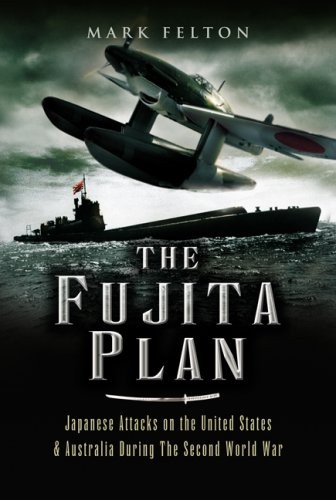
The Fujita Plan: Japanese Attacks on the United States and Australia during the Second World War

Mark Felton

★★★★★
Read Intel history WWII Espionage Naval Air power ISBN 1844154807

PEN & SWORD · Nov 14, 2006

After the staggering success of the Pearl Harbor surprise attack, the Japanese plotted to maintain the initiative and spread fear and panic among the civil population of the United States and Australia. With his usual skilled research the author has uncovered numerous plans. Some like the midget submarine attack on Sydney Harbour and the daring Seaplane air raids on Oregon were put into effect. Others never reached that stage due to either impracticality, bad luck or counter-espionage. The Fujita Plan throws fascinating new light on a little known aspect of the Second World War.

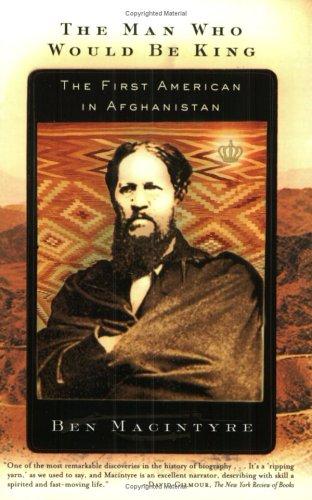
The Man Who Would Be King: The First American in Afghanistan

Ben Macintyre

★★★★★
Read Advanced intel Intel history Espionage GWOT Intel history Biography ISBN 9780374529574

Farrar, Straus and Giroux · April 14, 2005

The riveting story that inspired Kipling's classic tale and a John Huston movie The true story of Josiah Harlan, a Pennsylvania Quaker and the first American ever to enter Afghanistan, has never been told before. Soldier, spy, doctor, naturalist, traveler and writer, Josiah Harlan wanted to be a king, with all the imperialist hubris of his times. In an amazing twenty-year journey around Central Asia, he was variously employed as surgeon to the Maharaja of Punjab, revolutionary agent for the exiled Afghan King, and then commander-in-chief of the Afghan armies. In 1838, he set off in the footsteps of Alexander the Great across the Hindu Kush and forged his own kingdom, only to be ejected from Afghanistan a few months later by the invading British. Using a trove of newly-discovered documents, Harlan's own unpublished journals, and with a revised Preface detailing the unexpected discovery of Harlan's descendents, Ben Macintyre's The Man Who Would Be King tells the astonishing tale of the man who would be the first and last American king.

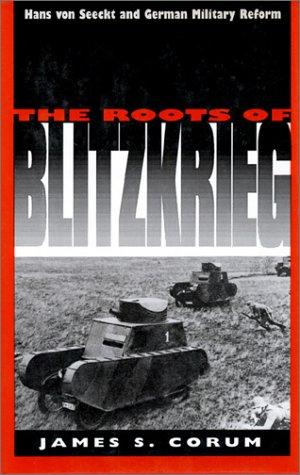
The Roots Of Blitzkrieg: Hans von Seeckt And German Military Reform

James S. Corum

★★★★★
Read Advanced intel Basic intel Military history Intel history Logistics WWII WWI Logistics Strategy / theory ISBN 9780700606283

University Press of Kansas · February 1994

Following Germany's defeat in World War I, the Germans signed the Versailles Treaty, superficially agreeing to limit their war powers. The Allies envisioned the future German army as a lightly armed border guard and international security force. The Germans had other plans. As early as 1919, James Corum contends, the tactical foundations were being laid for the Nazi Blitzkrieg. Between 1919 and 1933, German military leaders created and nurtured the Reichswehr, a new military organization built on the wreckage of the old Imperial Army. It was not being groomed for policing purposes. Focusing on Hans von Seeckt, General Staff Chief and Army Commander, Corum traces the crucial transformations in German military tactical doctrine, organization, and training that laid the foundations for fighting Germany's future wars. In doing so, he restores balance to prior assessment of von Seeckt's influence and demonstrates how the general, along with a few other "visionary" officers--including armor tactician Ernst Volckheim and air tactician Helmut Wilberg--collaborated to develop the core doctrine for what became the Blitzkrieg. The concepts of mobile war so essential to Germany's strength in World War II, Corum shows, were in place well before the tools became available. As an unforeseen consequence of the Versailles Treaty, the Germans were not saddled with a stockpile of outdated equipment as the Allies were. This, ironically, resulted in an advantage for the Germans, who were able to create doctrine first and design equipment to match it.

The Second World War

John Keegan

★★★★★
Read Intel history WWII Armor Strategy / theory ISBN 014011341X

Penguin Books · 1990

In this comprehensive history, John Keegan explores both the technical and the human impact of the greatest war of all time. He focuses on five crucial battles and offers new insights into the distinctive methods and motivations of modern warfare. In knowledgable, perceptive analysis of the airborne battle of Crete, the carrier battle of Midway, the tank battle of Falaise, the city battle of Berlin, and the amphibious battle of Okinawa, Keegan illuminates the strategic dilemmas faced by the leaders and the consequences of their decisions on the fighting men and the course of the war as a whole.

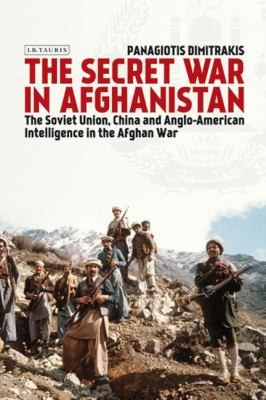
The Secret War in Afghanistan: The Soviet Union, China and Anglo-American Intelligence in the Afghan War (Library of Middle East History)

Panagiotis Dimitrakis

★★★★★
Read Basic intel Intel history Cold War Espionage GWOT China Russia / USSR Middle East Intel history ISBN 9781780764191

I.B.Tauris & Co Ltd · 2013

The Soviet invasion of Afghanistan, in support of a Marxist-Leninist government, and the subsequent nine-year conflict with the indigenous Afghan Mujahedeen was one of the bloodiest conflicts of the Cold War. Key details of the circumstances surrounding the invasion and its ultimate conclusion only months before the fall of the Berlin Wall in November 1989 have long remained unclear; it is a confidential narrative of clandestine correspondence, covert operations and failed intelligence. The Secret War in Afghanistan undertakes a full analysis of recently declassified intelligence archives in order to asses Anglo-American secret intelligence and diplomacy relating to the invasion of Afghanistan and unveil the Cold War realities behind the rhetoric. Rooted at every turn in close examination of the primary evidence, it outlines the secret operations of the CIA, MI6 and the KGB, and the full extent of the aid and intelligence from the West which armed and trained the Afghan fighters. Drawing from US, UK and Russian archives, Panagiotis Dimitrakis analyses the Chinese arms deals with the CIA, the multiple recorded intelligence failures of KGB intelligence and secret letters from the office of Margaret Thatcher to Jimmy Carter. In so doing, this study brings a new scholarly perspective to some of the most controversial events of Cold War history. Dimitrakis also outlines the full extent of China's involvement in arming the Mujahedeen, which led to the PRC effectively fighting the Soviet Union by proxy. This will be essential reading for scholars and students of the Cold War, American History and the Modern Middle East.

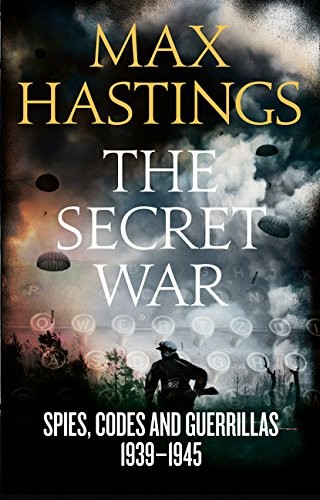
The Secret War: Spies, Codes and Guerrillas 1939-1945

Max Hastings

★★★★★
Read Basic intel Intel history WWII Espionage Guerrilla / COIN Russia / USSR ISBN 9780007503742

William Collins · Sep 10, 2015

Examining the espionage and intelligence stories in World War II, on a global basis, bringing together the British, American, German, Russian and Japanese histories. There were two Second World Wars: one fought on the battlefields, and another conducted by men and women few of whom ever fired a weapon in anger, but whose efforts vastly influenced the conflict. ‘The Secret War 1939-45’ examines that other war waged by British, American, German, Russian and Japanese intelligence-gathering personnel. Moving chronologically through the conflict, Max Hastings charts the successes and failures of allied and axis forces, espionage and counterespionage. Observing how the evolution of electronic communications dramatically increased the possibilities and significance of these secret battles, this is the story of intelligence beyond Bletchley to the FBI, Russia and the spies of axis dictatorships. For the first time since his best-selling ‘All Hell Let Loose’, Max Hastings returns to the Second World War, this time to chronicle its second, untold story.

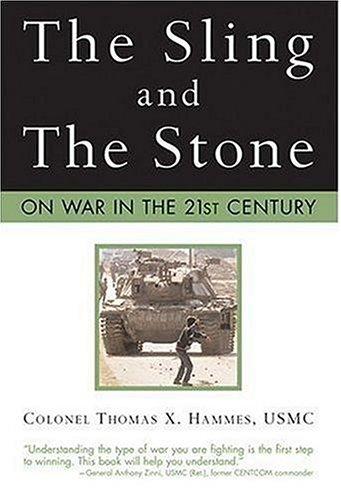
The Sling and the Stone: On War in the 21st Century

Thomas X. Hammes

★★★★★
Read Basic intel Advanced intel Military history Intel history Vietnam Cold War GWOT Guerrilla / COIN Russia / USSR Middle East Strategy / theory ISBN 9780760324073

Zenith Press · February 17, 2006

4GW (Fourth Generation Warfare) is the only kind of war America has ever lost. And we have done so three times - in Vietnam, Lebanon, and Somalia. This form of warfare has also defeated the French in Vietnam and Algeria, and the USSR in Afghanistan.As the only Goliath left in the world, we should be worried that the world's Davids have found a sling and stone that work." - Chapter 1, The Sling and the Stone: On War in the 21st Century. The War in Iraq. The War on Terror. These types of "asymmetrical" warfare are the conflicts of the 21st century - and show how difficult it is for the world's remaining superpower to battle insurgents and terrorists who will fight unconventionally in the face of superior military power. This change in military conflict may seem sudden.

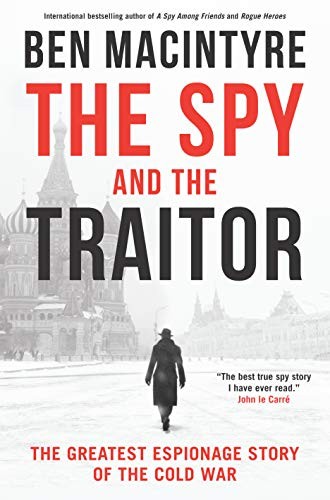
The Spy and the Traitor: The Greatest Espionage Story of the Cold War

Ben Macintyre

★★★★★
Read Basic intel Intel history Cold War Espionage Nuclear Russia / USSR Biography ISBN 9780771060335

Signal · Sep 18, 2018

If anyone could be considered a Russian counterpart to the infamous British double-agent Kim Philby, it was Oleg Gordievsky. The son of two KGB agents and the product of the best Soviet institutions, the savvy, sophisticated Gordievsky grew to see his nation’s communism as both criminal and philistine. He took his first posting for Russian intelligence in 1968 and eventually became the Soviet Union’s top man in London, but from 1973 on he was secretly working for MI6. For nearly a decade, as the Cold War reached its twilight, Gordievsky helped the West turn the tables on the KGB, exposing Russian spies and helping to foil countless intelligence plots, as the Soviet leadership grew increasingly paranoid at the United States’s nuclear first-strike capabilities and brought the world closer to the brink of war. Desperate to keep the circle of trust close, MI6 never revealed Gordievsky’s name to its counterparts in the CIA, which in turn grew obsessed with figuring out the identity of Britain’s obviously top-level source. Their obsession ultimately doomed Gordievsky: the CIA officer assigned to identify him was none other than Aldrich Ames, the man who would become infamous for secretly spying for the Soviets. Unfolding the delicious three-way gamesmanship between America, Britain, and the Soviet Union, and culminating in the gripping cinematic beat-by-beat of Gordievsky’s nail-biting escape from Moscow in 1985, Ben Macintyre has crafted an electrifying account of an international hero. Like the greatest novels of John le Carré, The Spy and the Traitor brings readers deep into a world of treachery and betrayal, where the lines bleed between the personal and the professional, and one man’s hatred of communism had the power to change the future of nations.

The Winter War: Russia's Invasion Of Finland, 1939-40

Robert Edwards

★★★★★
Read Advanced intel Basic intel Military history Intel history Logistics WWII Cold War Russia / USSR Logistics Economics ISBN 9781933648507

Pegasus Books · December 30, 2007

On November 30, 1939, the Soviet Union's Red Army invaded the young nation-state of Finland, in the full expectation of routing the small, ill-equipped Finnish army and annexing the former Russian territory by the end of the year. But Finland held out for 105 bitterly cold, fiercely combative days, until March 15, 1940, when a peace agreement ended the short, savage Winter War. At the stirring center of the story lie the resourcefulness and resolve of the Finnish people, who against all military odds—in want of ammunition, food, sleep, and troops—fought a blundering, ineptly commanded Red Army to a standstill. On March 15, they ceded to the Soviet 11 percent of their territory and 30 percent of their economic assets, but none of their national pride. The Russians meanwhile had markedly damaged their international standing and effectively ruined their military reputation-to such an extent, as this probing chapter in World War II history demonstrates, that Germany, with proud-blooded Finland as an ally, dared to launch its 1940 invasion of Russia. At the same time, though, the fiasco of the Winter War forced Stalin to acknowledge the shortcomings of the Red Army and to reform it: Germany would fall at Stalingrad in 1941. With authority, this skillfully narrated military history unfolds its story of the four-month Soviet-Finnish war and explores its consequences from London to Moscow, from Helsinki to Paris, to Washington, DC.

Tigers In The Mud: The Combat Career of German Panzer Commander Otto Carius

Otto Carius

★★★★★
Read Intel history Military history WWII Armor Intel history Biography ISBN 0811729117

Stackpole Books · 2003

WWII began with a metallic roar as the German Blitzkrieg raced across Europe, spearheaded by the most dreaded weapon of the 20th century: the Panzer. No German tank better represents that thundering power than the infamous Tiger, and Otto Carius was one of the most successful commanders to ever take a Tiger into battle, destroying well over 150 enemy tanks during his incredible career.

Vietnam: An Epic Tragedy, 1945-1975

Max Hastings

★★★★★
Read Intel history Military history Vietnam Special ops Guerrilla / COIN Biography ISBN 9780062405661

Harper · 2018

An absorbing and definitive modern history of the Vietnam War from the acclaimed New York Times bestselling author of The Secret War. Vietnam became the Western world’s most divisive modern conflict, precipitating a battlefield humiliation for France in 1954, then a vastly greater one for the United States in 1975. Max Hastings has spent the past three years interviewing scores of participants on both sides, as well as researching a multitude of American and Vietnamese documents and memoirs, to create an epic narrative of an epic struggle. He portrays the set pieces of Dienbienphu, the 1968 Tet offensive, the air blitz of North Vietnam, and also much less familiar miniatures such as the bloodbath at Daido, where a US Marine battalion was almost wiped out, together with extraordinary recollections of Ho Chi Minh’s warriors. Here are the vivid realities of strife amid jungle and paddies that killed two million people. Many writers treat the war as a US tragedy, yet Hastings sees it as overwhelmingly that of the Vietnamese people, of whom forty died for every American. US blunders and atrocities were matched by those committed by their enemies. While all the world has seen the image of a screaming, naked girl seared by napalm, it forgets countless eviscerations, beheadings, and murders carried out by the communists. The people of both former Vietnams paid a bitter price for the Northerners’ victory in privation and oppression. Here is testimony from Vietcong guerrillas, Southern paratroopers, Saigon bargirls, and Hanoi students alongside that of infantrymen from South Dakota, Marines from North Carolina, and Huey pilots from Arkansas. No past volume has blended a political and military narrative of the entire conflict with heart-stopping personal experiences, in the fashion that Max Hastings’ readers know so well. The author suggests that neither side deserved to win this struggle with so many lessons for the twenty-first century about the misuse of military might to confront intractable political and cultural challenges. He marshals testimony from warlords and peasants, statesmen and soldiers, to create an extraordinary record.

No cover · Amazon

Weaving the Tangled Web: Military Deception in Large-Scale Combat Operations (Large-Scale Combat Operations Series Book 1)

Christopher M. Rein

★★★★★
Read Basic intel Military history Intel history WWII Korea Cold War GWOT Guerrilla / COIN China Russia / USSR Middle East Intel history Strategy / theory

This book is from Army University Press and is Volume 1 in it's Large-Scale Combat Operations Series. It has footnotes, maps, and pictures, and was originally published in 2018. “Since the Soviet Union’s fall in 1989, the specter of large-scale ground combat against a peer adversary was remote. During the years following, the US Army found itself increasingly called upon to lead multinational operations in the lower to middle tiers of the range of military operations and conflict continuum. The events of 11 September 2001 led to more than 15 years of intense focus on counterterrorism, counterinsurgency, and stability operations in Iraq and Afghanistan. An entire generation of Army leaders and Soldiers were culturally imprinted by this experience. We emerged as an Army more capable in limited contingency operations than at any time in our nation’s history, but the geopolitical landscape continues to shift and the risk of great power conflict is no longer a remote possibility. “While our Army focused on limited contingency operations in the Middle East and Southwest Asia, other regional and peer adversaries scrutinized US military processes and methods and adapted their own accordingly. As technology has proliferated and become accessible in even the most remote corners of the world, the US military’s competitive advantage is being challenged across all of the warfighting domains. In the last decade, we have witnessed an emergent China, a revanchist and aggressive Russia, a menacing North Korea, and a cavalier Iranian regime. Each of these adversaries seeks to change the world order in their favor and contest US strategic interests abroad. The chance for war against a peer or regional near-peer adversary has increased exponentially, and we must rapidly shift our focus to successfully compete in all domains and across the full range of military operations." Includes: Introduction: Multi-Domain Deception (Christopher M. Rein, General Editor); Chapter 1: The Belfort Ruse the American Deception plan for the battle of st. Mihiel, 1918 (Mark E. Grotelueschen); Chapter 2: From Beersheba To Megiddo British Deception Operations During The Palestine Campaign, 1917-1918; (Major Brian J. Drohan); Chapter 3: Operation Bertram British Deception At El Alamein (Gary W. Linhart); Chapter 4: Operations Barclay, Cascade, And Mincemeat Allied Deception In The Mediterranean, 1943 (Gregory S. Hospodor); Chapter 5: Operation Kreml German Strategic Deception On The Eastern Front In 1942 (Alan P. Donohue); Chapter 6: Red Star Resurgent Soviet Deception Operations At Stalingrad, 1942-1943 (First Lieutenant Kyle B. Vautrinot); Chapter 7: Operation Bagration Maskirovka At Its Height, Summer 1944 (Curtis S. King); Chapter 8: Deceive, Divert, And Delay Operation Fortitude In Support Of D-Day (Scott C. Farquhar); Chapter 9: Chinese Deception And The 1950 Intervention In The Korean War (Joseph G.D. Babb); Chapter 10: From Maneuvers To War The Egyptian Deception Plan On The Eve Of The Yom-Kippur War (Tal Tovy); Chapter 11: Target San Carlos British Deception During The Repossession Of The Falkland Islands (Steven Paget); Chapter 12: Deception In The Desert Deceiving Iraq In Operation Desert Storm (Donald P. Wright); Conclusion: The Future Of Military Deception Operations (Conrad C. Crane)

World War II Battlefield Communications (Elite, 181)

Gordon L. Rottman

★★★★★
Read Intel history Military history Technical warfare WWII ISBN 9781846038471

Osprey · 2010

Osprey's examination of technological advances in communications during World War II (1939-1945). Perhaps the biggest difference in the fighting between the two World Wars lay in the invention of the man-portable radio that allowed for a greater degree of tactical coordination than ever before. Gordon L. Rottman provides an informative study of the use of small radios, field telephones, signal flares and ground-to-air signaling that revolutionized the battlefield.