S2 Search · Reading list

S2 Actual reading list

Books from S2 Actual on Goodreads, organized by his shelves and topic buckets (intel lists, military history, logistics, etc.). Metadata filled via Open Library.

Not official S2 Underground. Independent fan index — not affiliated with or endorsed by S2. Official hub: linktr.ee/S2_underground. S2 materials are CC BY-NC-SA 4.0.

S2 topic buckets (Goodreads)

Subjects & genres

137 books · Advanced intel · page 3 of 6

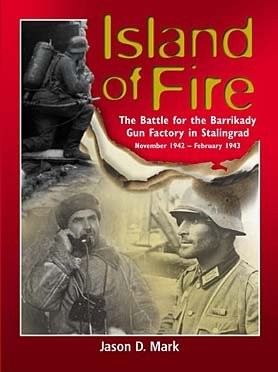
Island of Fire: The Battle for the Barrikady Gun Factory in Stalingrad

Jason D. Mark

★★★★
Read Military history Logistics Advanced intel WWII Russia / USSR Logistics ISBN 0975107631

Leaping Horseman Books · 2006

Stalingrad symbolises many the ideological clash between Nazism and Communism, the battle of wills between Hitler and Stalin, and the absolute fortitude of the Soviet people. In many people's minds, however, it represents the savagery, folly and utter waste of urban combat, a city where dozens of lives were readily exchanged for a ruined building. And nowhere did this senselessness manifest itself more than in the Barrikady Gun Factory and its housing settlement. The men of the German 305. Infanterie-Division had captured all of the factory's massive workhalls by the end of October 1942. The only obstacles standing between them and the Volga were a few battered houses and the remnants of the Soviet 138th Rifle Division. Five fresh pioneer battalions were brought in to help the Germans and the 'final' attack in Stalingrad (known erroneously as Operation 'Hubertus') was launched on 11 November, 1942. The push to the river cut off the Soviet troops and left a tiny bridgehead. Grim fighting raged around this fiery perimeter for three months. To the Soviet soldiers, this bridgehead was known as 'Lyudnikov's Island', or 'Ognenniy ostrov' - 'Island of Fire'. Painstakingly compiled from German and Russian sources such as war diaries, combat reports, published works, eyewitness accounts, letters and photos, this book presents an unbiased chronicle of the pitiless struggle from both perspectives.
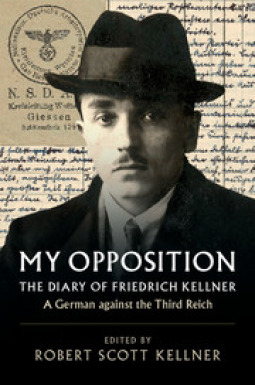
My Opposition: The Diary of Friedrich Kellner - A German against the Third Reich

Friedrich Kellner

★★★★
Read Advanced intel Logistics Military history WWII Logistics Biography ISBN 9781108418294

Cambridge University Press · 2018

This is a truly unique account of Nazi Germany at war and of one man's struggle against totalitarianism. A mid-level official in a provincial town, Friedrich Kellner kept a secret diary from 1939 to 1945, risking his life to record Germany's path to dictatorship and genocide and to protest his countrymen's complicity in the regime's brutalities. Just one month into the war he is aware that Jews are marked for extermination and later records how soldiers on leave spoke openly about the mass murder of Jews and the murder of POWs; he also documents the Gestapo's merciless rule at home from euthanasia campaigns against the handicapped and mentally ill to the execution of anyone found listening to foreign broadcasts. This essential testimony of everyday life under the Third Reich is accompanied by a foreword by Alan Steinweis and the remarkable story of how the diary was brought to light by Robert Scott Kellner, Friedrich's grandson.

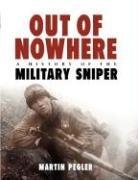
Out of Nowhere: A History of the Military Sniper

Martin Pegler

★★★★
Read Military history Technical warfare Advanced intel Basic intel Vietnam Russia / USSR US Civil War Revolution ISBN 9781846031403

Osprey Publishing · October 31, 2006

From the American Revolution to World War Two, the history of the military combat marksman is one of indifference, unpreparedness and cost cutting. Despite the proven effectiveness of the rifleman in battle, the sniper in the 20th century has been regarded as little more than a paid assassin, whose life if captured was forfeit. However, since the Vietnam War the undeniably effective use of such men in combat means that the value of the sniper has gradually become more appreciated by the military, and their prominence on the modern battlefield has increased significantly. In the 21st century they are now regarded as one of the most vital battlefield specialists. Illustrated throughout with colour and black and white photographs, this is a chronological study of snipers, detailing their evolution, training, weaponry and actions. There are also unique contributions from the men and women whose skill and extraordinary courage have made them the most greatly feared specialist in warfare. From the Foreword by Harry Furness, decorated Sniper-Sergeant, British Army Wold War II We will always need to deploy our new age warrior, that highly trained specialist, the military sniper.... Factual books on snipers are few and far between, so I find it refreshing and timely that this new book has been published which will provide the reader with the true facts about these unique soldiers; and readers of this excellent, deeply researched book will now be more knowledgeable about a rarely discussed subject. You have to dig deep to bypass the many half truths in order to reach any conclusion as to why manking continues to wage wars that kill off the cream of our young society, but it might be said that if it is the fate of a soldier to die in battle, then a sniper's swift killing bullet must be preferable to dying from devastating wounds. Chapter Heads The sniper in perspective. The rifleman emerges 1500-1854. The American Civil War and European wars 1854-1914. The First World War, the watershed 1914-16. The First World War, the fight back 1916-18. Russian sniping 1936-45. The German sniper and the war with Russia 1941-45. The war against Japan 1941-45. The war in Western Europe 1940-45. Limited wars 1945-85. Vietnam, America's nemesis. Into the 21st century.

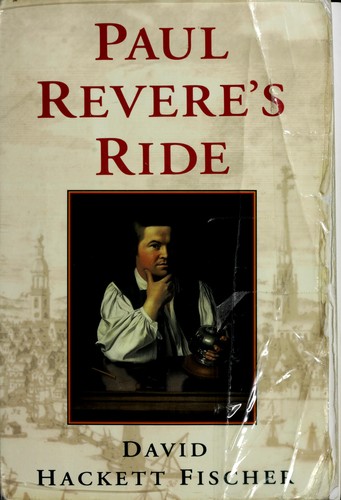
Paul Revere's Ride

David Hackett Fischer

★★★★
Read Basic intel Advanced intel Military history Intel history Logistics Technical warfare Espionage Cyber Logistics Revolution ISBN 0195098315

Oxford University Press · 1995

Paul Revere's midnight ride is a legendary event in American history - yet it has been largely ignored by scholars, and left to patriotic writers and debunkers. Now one of the foremost American historians offers the first serious study of this event - what led to it, what really happened, what followed - uncovering a truth more remarkable than the many myths it has inspired. In Paul Revere's Ride, David Hackett Fischer has created an exciting narrative that offers new insight into the coming of the American Revolution. From research in British and American archives, the author unravels a plot that no novelist would dare invent - a true story of high drama and deep suspense, of old-fashioned heroes and unvarnished villains, of a beautiful American spy who betrayed her aristocratic British husband, of violent mobs and marching armies, of brave men dying on their doorsteps, of high courage, desperate fear, and the destiny of nations. The narrative is constructed around two thematic lines. One story centers on the American patriot Paul Revere; the other, on British General Thomas Gage. Both were men of high principle who played larger roles than recent historiography has recognized. Thomas Gage was not the Tory tyrant of patriot legend, but an English Whig who believed in liberty and the rule of law. In 1774 and 1775, General Gage's advice shaped the fatal choices of British leaders, and his actions guided the course of American events. Paul Revere was more than a "simple artizan, " as his most recent biographer described him fifty years ago. The author presents new evidence that revolutionary Boston was a world of many circles - more complex than we have known. Paul Revere and his friend Joseph Warren ranged more widely through those circles than any other leaders. They became the linchpins of the Whig movement. On April 18th, 1775, Paul Revere played that role in a manner that has never been told before. He and William Dawes were not the only midnight riders to ca

Perfect Spy: The Incredible Double Life of Pham Xuan An - Time Magazine Reporter and Vietnamese Communist Agent

Larry Berman

★★★★
Read Advanced intel Biographies Intel history Vietnam Espionage Biography Strategy / theory ISBN 9780060888381

Collins · April 24, 2007

During the Vietnam War, Time reporter Pham Xuan An befriended everyone who was anyone in Saigon, including American journalists such as David Halberstam and Neil Sheehan, the CIA's William Colby, and the legendary Colonel Edward Lansdale—not to mention the most influential members of the South Vietnamese government and army. None of them ever guessed that he was also providing strategic intelligence to Hanoi, smuggling invisible ink messages into the jungle inside egg rolls. His early reports were so accurate that General Giap joked, "We are now in the U.S. war room." For more than twenty years, An lived a dangerous lie—and no one knew it because he was a master of both his jobs. After the war, An was named a Hero of the People's Army and was promoted to general—one of only two intelligence officers to ever achieve that rank. In Perfect Spy, Larry Berman, who An considered his official American biographer, chronicles the extraordinary life of one of the twentieth century's most fascinating spies. In doing so, he offers a new perspective on a war that continues to haunt us.

Phantom Soldier: The Enemy's Answer to U.S. Firepower

H. John Poole

★★★★
Read Advanced intel Military history WWII GWOT Air power Guerrilla / COIN Strategy / theory ISBN 9780963869555

Posterity Press · August 9, 2001

"Phantom Soldier" is now on the U.S. Army's most prestigious pre-deployment reading list for a reason. It won't please those who have come to believe that wars are won and casualties limited through technology, or that the victor's version of one is always correct. But, all U.S. security personnel should read it. Possibly the West's best treatise on Oriental warfare, it sheds new light on what Asian infantry can do: (1) alternate between guerrilla, mobile, and positional warfare; (2) use "ordinary forces" to engage and "extraordinary forces [infiltrators]" to defeat; and then (3) retreat to save lives. What occurred in history doesn't change, but one's perception of it does--as he comes to better understand his former foe. Here's what really happened at Guadalcanal, Iwo Jima, Chosin Reservoir, and Hue City. Those who believe this book's cover art to be fantasy have only to google the term "dac cong." Through how the NVA held their own without resupply, tanks, artillery, or air power, U.S. grunts could better survive the more lethal enemy weaponry of the 21st Century.

Red Famine: Stalin's War on Ukraine

Anne Applebaum

★★★★
Read Advanced intel Military history Cold War Russia / USSR ISBN 9780771009303

Signal · Oct 10, 2017

The momentous new book from the Pulitzer Prize-winning author of Gulag and Iron Curtain. In 1932-33, nearly four million Ukrainians died of starvation, having been deliberately deprived of food. It is one of the most devastating episodes in the history of the twentieth century. With unprecedented authority and detail, Red Famine investigates how this happened, who was responsible, and what the consequences were. It is the fullest account yet published of these terrible events. The book draws on a mass of archival material and first-hand testimony only available since the end of the Soviet Union, as well as the work of Ukrainian scholars all over the world. It includes accounts of the famine by those who survived it, describing what human beings can do when driven mad by hunger. It shows how the Soviet state ruthlessly used propaganda to turn neighbours against each other in order to expunge supposedly 'anti-revolutionary' elements. It also records the actions of extraordinary individuals who did all they could to relieve the suffering. The famine was rapidly followed by an attack on Ukraine's cultural and political leadership - and then by a denial that it had ever happened at all. Census reports were falsified and memory suppressed. Some western journalists shamelessly swallowed the Soviet line; others bravely rejected it, and were undermined and harassed. The Soviet authorities were determined not only that Ukraine should abandon its national aspirations, but that the country's true history should be buried along with its millions of victims. Red Famine, a triumph of scholarship and human sympathy, is a milestone in the recovery of those memories and that history. At a moment of crisis between Russia and Ukraine, it also shows how far the present is shaped by the past.

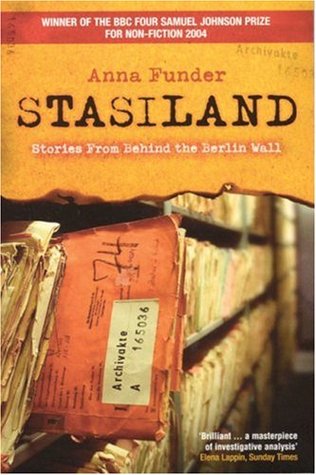
Stasiland: Stories from Behind the Berlin Wall

Anna Funder

★★★★
Read Advanced intel Intel history Military history Cold War ISBN 1862076553

GRANTA

Anna Funder’s Samuel Johnson Prize-winning Stasiland is an Australian classic, the definitive account of tyranny and resistance in the former East Germany. In 1989, the Berlin Wall fell; shortly afterwards the two Germanies reunited and East Germany ceased to exist. Anna Funder’s best-selling Stasiland brings us extraordinary tales of real lives in the former East Germany. She meets Miriam, who tried to escape to West Berlin as a 16-year-old; hears the heartbreaking story of Frau Paul, who was separated from her young baby by the Berlin Wall; and gets drunk with the legendary ‘Mik Jegger’ of the East, once declared by the authorities - to his face - ‘no longer to exist’. And she meets the Stasi men themselves, still proud of their surveillance methods. Funder’s powerful account of that brutal world has become a contemporary classic.

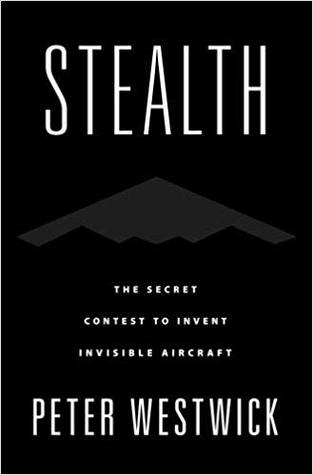
Stealth: The Secret Contest to Invent Invisible Aircraft

Peter Westwick

★★★★
Read Advanced intel Military history Intel history Cold War Russia / USSR Middle East Strategy / theory ISBN 9780190677442

Oxford University Press, Incorporated · 2020

The story behind the technology that revolutionized both aeronautics, and the course of history On a moonless night in January 1991, a dozen airplanes appeared in the skies over Baghdad. Or, rather, didn't appear. They arrived in the dark, their black outlines cloaking them from sight. More importantly, their odd, angular shapes, which made them look like flying origami, rendered them undetectable to Iraq's formidable air defenses. Stealth technology, developed during the decades before Desert Storm, had arrived. To American planners and strategists at the outset of the Cold War, this seemingly ultimate way to gain ascendance over the USSR was only a question. What if the United States could defend its airspace while at the same time send a plane through Soviet skies undetected? A craft with such capacity would have to be essentially invisible to radar - an apparently miraculous feat of physics and engineering. In Stealth, Peter Westwick unveils the process by which the impossible was achieved. At heart, Stealth is a tale of two aerospace companies, Lockheed and Northrop, and their fierce competition - with each other and with themselves - to obtain what was estimated one of the largest procurement contracts in history. Westwick's book fully explores the individual and collective ingenuity and determination required to make these planes and in the process provides a fresh view of the period leading up to the end of the Soviet Union. Taking into account the role of technology, as well as the art and science of physics and engineering, Westwick offers an engaging narrative, one that immerses readers in the race to produce a weapon that some thought might save the world, and which certainly changed it.

No cover · Amazon

Strategic Humanism: Lessons on Leadership from the Ancient Greeks

Claudia Hauer

★★★★
Read Advanced intel Strategy / theory

Strategic Humanism takes the reader through the works of Homer, Herodotus, Thucydides, and Aristotle, laying out in clear and accessible terms their thoughts on leadership, war, and their relationship to individuals, nations, culture, and technology. In so doing, the book traces the path of ancient Greek democracy from infancy to maturity, culminating in the Athenian demise. Throughout, Hauer holds up the political, cultural, literary, and philosophical milieu of ancient Greece as a kind of looking glass to our present era of rapid technological change and democratic malaise.

The John Boyd Roundtable: Debating Science, Strategy, and War

Mark Safranski

★★★★
Read Military history Advanced intel Strategy / theory ISBN 9781934840467

Nimble Books · 2008-09-16

A collection of thought-provoking essays about the work of the late Colonel John Boyd, a fighter pilot who was one of the most influential figures in American military strategy in the last third of the Twentieth Century. This book had its origins in an online roundtable hosted at Chicago Boyz, a popular libertarian and conservative group blog founded by Jonathan Glewirtz. The roundtable attracted the participation of an impressive group of reviewers from the blogosphere and from scientific, academic and military fields. Authors whose essays are included in this book include Daniel H. Abbott, Shane Deichman, Adam Elkus, "Lexington Green," Frank Hoffman, Dr. Frans Osinga, Dr. Chet Richards, Thomas Wade, and Dr. Frans Osinga, author of the leading scholarly work on Boyd. This book is essential reading for anyone interested in John Boyd and will provide important insights for anyone who is interested in military strategy and current affairs.

The Longest War: A History of the War on Terror and the Battles with Al Qaeda Since 9/11

Peter L. Bergen

★★★★
Read Advanced intel Military history Intel history Espionage GWOT Middle East Strategy / theory ISBN 9780743278935

Free Press · 2011

TEN YEARS HAVE PASSED since the shocking attacks on the World Trade Center, and after seven years of conflict, the last U.S. combat troops left Iraq—only to move into Afghanistan, where the ten-year-old fight the war on terror rages with no clear end in sight. In The Longest War Peter Bergen offers a comprehensive history of this war and its evolution, from the strategies devised in the wake of the 9/11 attacks to the fighting in Afghanistan, Pakistan, and beyond. Unlike any other book on this subject, here Bergen tells the story of this shifting war’s failures and successes from the perspectives of both the United States and al-Qaeda and its allies. He goes into the homes of al-Qaeda members, rooting into the source of their devotion to terrorist causes, and spends time in the offices of the major players shaping the U.S. strategic efforts in the region. At a time when many are frustrated or fatigued with what has become an enduring multigenerational conflict, this book will provide an illuminating narrative that not only traces the arc of the fight but projects its likely future. Weaving together internal documents from al-Qaeda and the U.S. offices of counterterrorism, first-person interviews with top-level jihadists and senior Washington officials, along with his own experiences on the ground in the Middle East, Bergen balances the accounts of each side, revealing how al-Qaeda has evolved since 9/11 and the specific ways the U.S. government has responded in the ongoing fight. Bergen also uncovers the strategic errors committed on both sides—the way that al-Qaeda’s bold attack on the United States on 9/11 actually undermined its objective and caused the collapse of the Taliban and the destruction of the organization’s safe haven in Afghanistan, and how al-Qaeda is actually losing the war of ideas in the Muslim world. The book also shows how the United States undermined its moral position in this war with its actions at Guantánamo and coercive interrogations—including the extraordinary rendition of Abu Omar, who was kidnapped by the CIA in Milan in 2003 and was tortured for four years in Egyptian prisons; his case represents the first and only time that CIA officials have been charged and convicted of the crime of kidnapping. In examining other strategic blunders the United States has committed, Bergen offers a scathing critique of the Clinton and Bush administrations’ inability to accurately assess and counter the al-Qaeda threat, Bush’s deeply misguided reasons for invading Iraq—including the story of how the invasion was launched based, in part, on the views of an obscure academic who put forth theories about Iraq’s involvement with al-Qaeda—and the Obama administration’s efforts in Afghanistan. At a critical moment in world history The Longest War provides the definitive account of the ongoing battle against terror.

The Mannerheim Line 1920–39: Finnish Fortifications of the Winter War (Fortress, 88)

Bair Irincheev

★★★★
Read Advanced intel Military history Logistics Technical warfare Cold War Armor Russia / USSR Logistics Intel history US Civil War ISBN 9781846033841

Osprey · 2009

In the wake of the bloody civil war that followed Finland's independence from Russia in 1917, the border between the two countries was established across the Karelian Isthmus, an area long fought over by Russia, Finland and Sweden in their attempts to dominate the northern tip of Europe. Neither the Soviets nor the Finnish were comfortable with such a divide, which provided an open route for a potential invader to Helsinki on the Finnish side, and was only 32km from the important military and industrial city of Petrograd in Russia. As such, both sides began an intensive period of fortification and defensive planning. As the Winter War broke out in November 1939, the complex and heavily defended Mannerheim Line suffered intense bombardment and armored assaults. The armistice of May 1940 saw Finland cede control of the entire Karelian Isthmus to the USSR however, and a propaganda war ensued; the Russians emphasizing the strength of the line, and the Finnish downplaying its importance, accentuating instead the heroism and bravery of the common Finnish soldier. Through a detailed analysis of the background, design and operational history of the Mannerheim Line, Bair Irincheev attempts to dispel such myths and provide an accurate assessment of its immense historical importance.

The Pol Pot Regime: Race, Power, and Genocide in Cambodia Under the Khmer Rouge, 1975-79

Ben Kiernan

★★★★
Read Military history Advanced intel ISBN 0300096496

Yale Nota Bene · 2002

Draws on interviews and archival material to document the extent of the atrocities committed by the Khmer Rouge in the late 1970s, which resulted in the deaths of one and a half million Cambodians.

The Sovereign Individual: Mastering the Transition to the Information Age

James Dale Davidson

★★★★
Read Advanced intel Logistics Technical warfare Cold War Russia / USSR Logistics Economics US Civil War ISBN 9780684832722

Touchstone · 1999-08-26

Two renowned investment advisors and authors of the bestseller The Great Reckoning bring to light both currents of disaster and the potential for prosperity and renewal in the face of radical changes in human history as we move into the next century. The Sovereign Individual details strategies necessary for adapting financially to the next phase of Western civilization. Few observers of the late twentieth century have their fingers so presciently on the pulse of the global political and economic realignment ushering in the new millennium as do James Dale Davidson and Lord William Rees-Mogg. Their bold prediction of disaster on Wall Street in Blood in the Streets was borne out by Black Tuesday. In their ensuing bestseller, The Great Reckoning, published just weeks before the coup attempt against Gorbachev, they analyzed the pending collapse of the Soviet Union and foretold the civil war in Yugoslavia and other events that have proved to be among the most searing developments of the past few years. In The Sovereign Individual, Davidson and Rees-Mogg explore the greatest economic and political transition in centuries—the shift from an industrial to an information-based society. This transition, which they have termed "the fourth stage of human society," will liberate individuals as never before, irrevocably altering the power of government. This outstanding book will replace false hopes and fictions with new understanding and clarified values.

No cover · Amazon

The Vampire Economy: Doing Business Under Fascism

Günter Reimann

★★★★
Read Logistics Advanced intel WWII Logistics Economics

Here is a study of the actual workings of business under national socialism. Written in 1939, Reimann discusses the effects of heavy regulation, inflation, price controls, trade interference, national economic planning, and attacks on private property, and what consequences they had for human rights and economic development. This is a subject rarely discussed and for reasons that are discomforting,: as much as the left hated the social and cultural agenda of the Nazis, the economic agenda fit straight into a pattern of statism that had emerged in Europe and the United States, and in this area, the world has not be de-Nazified. This books makes for alarming reading, as one discovers the extent to which the Nazi economic agenda of totalitarian control--without finally abolishing private property--has become the norm. The author is by no means an Austrian but his study provides historical understanding and frightening look at the consequences of state economic management.

The Volunteer: The True Story of the Resistance Hero who Infiltrated Auschwitz

Jack Fairweather

★★★★
Read Advanced intel Military history Logistics WWII Espionage Logistics Biography ISBN 9780753545164

WH Allen · Mar 21, 2019

How do you keep fighting in the face of unimaginable horror? This is untold story of one of the greatest heroes of the Second World War. In the Summer of 1940, after the Nazi occupation of Poland, an underground operative called Witold Pilecki accepted a mission to uncover the fate of thousands of people being interred at a new concentration camp on the border of the Reich. His mission was to report on Nazi crimes and raise a secret army to stage an uprising. The name of the detention centre -- Auschwitz. It was only after arriving at the camp that he started to discover the Nazi’s terrifying designs. Over the next two and half years, Witold forged an underground army that smuggled evidence of Nazi atrocities to the West, culminating in the mass murder of over a million Jews. His reports from the camp were to shape the Allies response to the Holocaust - yet his story was all but forgotten for decades. This is the first major account of his amazing journey, drawing on exclusive family papers and recently declassified files as well as unpublished accounts from the camp’s fighters to show how he saved hundreds of thousands of lives. The result is a enthralling story of resistance and heroism against the most horrific circumstances, and one man’s attempt to change the course of history.

The Wages of Destruction: The Making and Breaking of the Nazi Economy

Adam Tooze

★★★★
Read Advanced intel Logistics WWII Russia / USSR Logistics Intel history Economics ISBN 9780670038268

Viking · 2006

The idea that Nazi Germany was an unstoppable juggernaut, backed by an efficient, highly industrialized economy, has been central to all accounts of World War II. But what if this was not the case? What if the war had its roots in Germany's weakness, not its strength? This is the radical argument in this pathbreaking book, the first account of the Nazi era for the twenty-first century and our globalized world. There was no aspect of Nazi power untouched by economics, yet Adam Tooze is the first to place economics alongside race and politics at the heart of the story of the Third Reich. And America, in Tooze's view, is the true pivot for Hitler's epic challenge to a shift in the world order. Hitler intuitively understood how Germany's relative poverty in the 1930s was the result not just of global depression, but also of Germany's limited resources. He predicted the dawning of a globalized world in which Europe would be crushed by America's overwhelming power, against which he saw only one last chance: a German super-state dominating Europe. Doing what Europeans had done for three centuries, he sought to carve out an imperial hinterland through one last land grab to the east, to give him the self-sufficiency to prevail in the coming superpower competition. With the odds stacked against him, he launched his underresourced armies on their unprecedented and ultimately futile rampage across Europe. Hitler knew by the summer of 1939 that his efforts to prepare for a long war with the West were doomed to failure. Ideology drove him forward. Hitler became convinced that Jewish elements in Washington, London, and Paris were circling round him, and from 1938, the international "Jewish question: was synonymous with America in his mind. Even in the summer of 1940, at the moment of Germany's greatest triumphs, Hitler was still haunted by the looming threat of Anglo-American air and sea power, orchestrated by, he believed, the world Jewish conspiracy. Tooze also casts a stark new light on Albert Speer's role in sustaining the Third Reich to its bloody end, after the catastrophe of the Soviet invasion. Speer, Tooze proposes, was no apolitical agent of technocratic efficiency but a Hitler loyalist who would stop at nothing to continue a hopeless battle of attrition, at the cost of tens of millions of lives. The Wages of Destruction is a chilling work of originality and tremendous scholarship that will fundamentally change the way in which we view Nazi Germany and the Second World War.

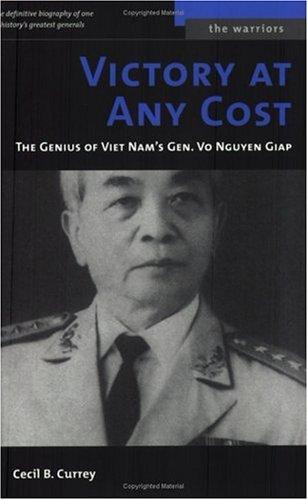
Victory at Any Cost: The Genius of Viet Nam's Gen. Vo Nguyen Giap

Cecil B. Currey

★★★★
Read Biographies Military history Intel history Technical warfare Advanced intel Vietnam Biography ISBN 9781574887426

Potomac Books Inc. · April 27, 2005

Many people do not understand why America lost the Viet Nam War. Author Cecil B. Currey makes one primary reason North Viet Nam's Senior Gen. Vo Nguyen Giap. Victory at Any Cost tells the full story of the man who fought three of the world's great powers—and beat them all.

War In The Shadows: The Guerrilla in History

Robert B. Asprey

★★★★
Read Intel history Advanced intel Vietnam Cold War Guerrilla / COIN Russia / USSR Middle East Strategy / theory Economics Revolution ISBN 9780595225934

Backinprint.com · May 2002

Ranging from Alexander the Great's battles with Asiatic Scythians, through the Russian Revolution, and on up to the turmoil in the Middle East and the battle in Northern Ireland, War in the Shadows is a book of monumental sweep and singular perspective. It also contains a comprehensive and hard-hitting strategic evaluation of the Vietnam War-one of the most significant analyses of "the war that won't go away." War in the Shadows tells the story of the countries currently torn by armed insurgencies and clarifies the causes of each conflict. It provides the broad viewpoint necessary for understanding them in the historical terms of guerilla warfare. With the collapse of the Soviet Union, the end of the Cold War, and a highly unstable "new world order," this brand of rebellion has never been more powerful and potentially disruptive. As the author states in his Foreword, "For a number of reasons guerilla warfare has evolved into an ideal instrument for the realization of social-political-economic aspirations of underprivileged peoples. This is so patently true as to allow one to suggest that we may be witnessing a transition to a new era in warfare, an era as radically different as those of which followed the writings of Sun Tzu, Machiavelli, Clausewitz, and Mahan." War in the Shadows is crucial to understanding the complex challenges of our new and dangerous era.

Air Force Advising and Assistance: Developing Airpower in Client States (Modern Military History)

Donald Stoker

★★★☆☆
Read Advanced intel Intel history GWOT Naval Air power Guerrilla / COIN Strategy / theory Economics ISBN 9781912390601

Helion and Company · Sep 20, 2018

The increased focus on counterinsurgency warfare and US nation building efforts after the attacks of 11 September 2001 reignited interest in military advising within military and other government organizations, private think tanks, and defense related contractors. Most studies on the subject, based on the chronological scope and numerical preponderance of ground advising missions, has quite naturally focused on these past efforts. Less attention has been given to air or naval advisory missions. This work seeks in part to help redress this current imbalance by examining a number of historical case studies dealing with air advisory efforts. By examining a number of historical case studies, this volume analyzes the challenges and opportunities inherent in aerial advisory efforts and offers insights into the methods by which such missions succeed or fail. Air advisory missions date almost to the first days of powered flight. Air advisory efforts have a number of unique elements based on the fundamental role of advanced technology and the extensive resource requirements associated with aviation operations. For example, air advisory efforts are profoundly influenced by the types of aircraft involved and the types of mission flown. Likewise, the issues of maintenance support and the infrastructure needed for these missions plays a key role in determining capabilities available to the host nation. In the case of infrastructure, airfields, fuelling depots, maintenance and repair facilities, and radar and communications equipment offer a few of the most obvious requirements to support flight operations. The early history of advisory efforts reveal issues that remain relevant today, including questions related to the nature of aerial technology to be shared, the type of training to be provided, and the potential economic benefits that might accrue to the donor nation as a result of the sale of aviation technology to the host country. In many respects, air advisory efforts raise a number of profound strategic questions for the donor nation. Among others, these questions relate to the type of technology to be shared, the nature of training to be given, the role of foreign advisors in operations, the issue of infrastructure development and auxiliary training programs, the preparation of foreign advisors for their duties, and perhaps most significantly the development of the type of capabilities required to address the host nation’s security environment. Via a series of historical case studies, this volume explores these questions and others.