S2 Search · Reading list

S2 Actual reading list

Books from S2 Actual on Goodreads, organized by his shelves and topic buckets (intel lists, military history, logistics, etc.). Metadata filled via Open Library.

Not official S2 Underground. Independent fan index — not affiliated with or endorsed by S2. Official hub: linktr.ee/S2_underground. S2 materials are CC BY-NC-SA 4.0.

S2 topic buckets (Goodreads)

Subjects & genres

137 books · Advanced intel · page 4 of 6

No cover · Amazon

Extreme Privacy: What It Takes to Disappear

Michael Bazzell

★★★☆☆
Read Advanced intel Privacy

Completely rewritten Second Edition (2020) presents the definitive 565-page privacy manual. Michael Bazzell has helped hundreds of celebrities, billionaires, and everyday citizens completely disappear from public view. He is now known in Hollywood as the guy that “fixes” things. His previous books about privacy were mostly REACTIVE and he focused on ways to hide information, clean up an online presence, and sanitize public records to avoid unwanted exposure. This textbook is PROACTIVE. It is about starting over. It is the complete guide that he would give to any new client in an extreme situation. It leaves nothing out, and provides explicit details of every step he takes to make someone completely disappear, including document templates and a chronological order of events. The information shared in this volume is based on real experiences with his actual clients, and is unlike any content ever released in his other books.

No cover · Amazon

Extreme Privacy: What It Takes to Disappear in America

Michael Bazzell

★★★☆☆
Read Advanced intel Privacy

2019 release to replace all previous privacy & security books by Michael Bazzell. For the past five years, Michael Bazzell has been helping celebrities, billionaires, and everyday citizens disappear completely from public view. He is now known in Hollywood as the guy that “fixes” things. His previous books about privacy were mostly REACTIVE and he focused on ways to hide information, clean up an online presence, and sanitize public records to avoid unwanted exposure. This 370-page textbook is PROACTIVE. It is about starting over. It is the complete guide that he would give to any new client in an extreme situation. It leaves nothing out, and provides explicit details of every step he takes to make someone completely disappear, including document templates and a chronological order of events. The information shared in this book is based on real experiences with his actual clients, and is unlike any content ever released in his other books. The stories are all true, with the exception of changed names, locations, and minor details in order to protect the privacy of those described.
No cover · Amazon

Hiding from the Internet: Eliminating Personal Online Information

Michael Bazzell

★★★☆☆
Read Privacy Advanced intel Cyber

This book will serve as a reference guide for anyone that values privacy. Each technique is explained in simple steps. It is written in a hands-on style that encourages the reader to execute the tutorials as they go. I provide personal experiences from my journey to disappear from public view. Much of the content of this book has never been discussed in any publication. Always thinking like a hacker, I identify new ways to force companies to remove you from their data collection systems. This book exposes loopholes that create unique opportunities for privacy seekers. Among other techniques, you will learn Remove your personal information from public databases and people search websites Create free anonymous mail addresses, email addresses, and telephone numbers Control your privacy settings on social networks and remove sensitive data Provide disinformation to conceal true private details Apply proper security to your computers using free resources Force data brokers to stop sharing your information with private and public organizations Prevent marketing companies from monitoring your browsing and shopping habits Remove your landline and cellular telephone numbers from online websites Use a credit freeze to eliminate the worry of financial identity theft and fraud Change your future habits to promote complete privacy and anonymity Conduct a complete background check to verify proper information removal

No cover · Amazon

Military Deception: Hiding The Real - Showing The Fake - Denial Operations, Propaganda, Disinformation, Joint Doctrine, Soviet Maskirovka, Desert Storm Persian Gulf War Examples

U.S. Government

★★★☆☆
Read Advanced intel Military history Intel history Technical warfare WWII Russia / USSR Middle East Strategy / theory

Professionally converted for accurate flowing-text e-book format reproduction, this book discusses military deception techniques and history. "Military deception" is an umbrella term that includes both denial and deception. Denial hides the real and deception shows the fake. Denial and deception are operations; propaganda and disinformation are the products. Joint doctrine says that military deception, as applied by a joint force commander (JFC), targets an adversary's decision-making process. Ultimately, the intent is to shape the adversary's behavior in the JFC's favor or to cause an adversary to form an inaccurate impression of the battlespace. Consequently, planning for deception operations depends on intelligence and security for success. Obviously, a commander wants to conceal deception efforts from the enemy, but often he'll conceal all or some of his efforts from his own troops to prevent confusion and/or compromise of the plan. During the early years of Soviet involvement in World War II, mishandling of information by soldiers and planners resulted in the compromise of many maskirovka (or deception) operations. As a result, the Soviets implemented aggressive security measures to protect their deception plans. Specifically, Soviet commanders restricted the number of planners and documents involved in the deception operations and communicated to subordinates only what they needed to know, when they needed to know it. The general enjoyed his breakfast while reading his morning paper and listening to the international news channel. Hearing the Balkans mentioned—his area of responsibility—he looked up as a foreign correspondent began to comment on the aftermath of an Allied bombing mission from the day before. The gruesome details suddenly made the general's scrambled eggs a bit less appealing. The graphic pictures showed what appeared to be the remnants of an orphanage. There in the rubble lay a bloodstained, tattered doll. Those images left him wondering about the carnage that lay beneath the collapsed brick and mortar. Had his staff miscalculated and inadvertently struck an orphanage? A similar misstep had occurred a few weeks ago when another bombing mission resulted in civilian casualties in a marketplace. As the general bemoaned the potential ramifications of accidentally bombing an orphanage, a memory surfaced. Years of flying high-performance aircraft had sharpened his senses, and something about the scene seemed familiar. Could that be the same bloodstained doll he had seen in photographs of the earlier marketplace mishap? The general had been briefed on the enemy's rather low-tech yet successful use of deception. Was he, along with the rest of the world, a target of military deception? As he pondered this, his pager went off. This fictitious example illustrates both how easy it is to manipulate the media in deception operations and how a thorough understanding of deception can help prevent a military leader from falling victim to it. The U.S. military is transforming itself with technological advancements in warfighting capability. Weapon systems, force structure and training have all improved. The amount and kind of information available to the warfighter is also improving. But even a technologically advanced nation like the United States is susceptible to deception. Analysis of friendly and enemy deception techniques in Operations DESERT STORM and ALLIED FORCE shows the main U.S. vulnerabilities to include its insatiable appetite for "news," the lack of deception-detection expertise in the military, and the tendency to believe that technological advancements make a nation deception-proof. Therefore, the key to mitigating the U.S. vulnerabilities to deception lies in educating the media about the military and common deception practices, giving the military intensive deception-detection training, and abandoning the notion that technolo

No cover · Amazon

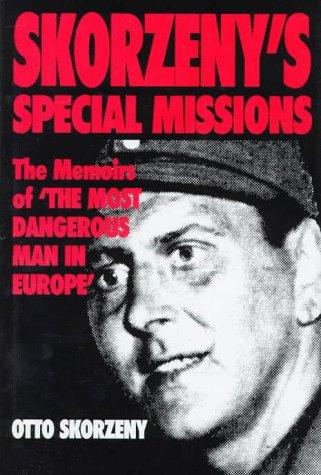
My Commando Operations: The Memoirs of Hitler's Most Daring Commando

Otto Skorzeny

★★★☆☆
Read Advanced intel Biographies Intel history Military history WWII Special ops Russia / USSR Intel history Biography

The memoirs of the legendary Skorzeny appear here in its first unabridged English edition. Skorzeny's fame began with the successful raid to free Benito Mussolini from the Gran Sasso, Italy in 1943. His elite commandos surprised Italian guards in a daring daytime raid. Hitler presented Skorzeny with the Knight's Cross for this operation. Not only is this raid explained in minute detail, many of Skorzeny's previously unknown operations in all European and Russian theatres of World War II are given in detailed accounts. Operation Griffin - the innovative use of German Kommandos dressed as American soldiers working behind enemy lines - during the Ardennes Offensive in 1944 is given in-depth coverage, as is Skorzeny's rememberances on the Malmedy massacre. Skorzeny also offers his insights into the mysterious Rudolf Hess mission to England in May 1941, and offers a behind the scenes look at German and Russian secret military intelligence, and the workings of Canaris and Gehlen. ***This 1997 Schiffer edition has the same ISBN (0887407188. 9780887407185) as the 1995 edition from the same publisher, though the dust-jacket is completely different.***

Nazi Economics: Ideology, Theory, and Policy

Avraham Barkai

★★★☆☆
Read Advanced intel Logistics WWII Middle East Logistics Economics ISBN 0300044666

Yale University Press · 1990

This respected Israeli scholar argues that fundamental ideological and political goals of Nazi leaders made them receptive to revolutionary economic theories such as those of J. M. Keynes. He examines how the economic system of the Third Reich was based on an anti-liberal philosophy that proved extraordinarily effective in bringing about the 'German Economic Miracle' by 1937.

PAVN: People's Army of Vietnam

Douglas Pike

★★★☆☆
Read Advanced intel Military history Vietnam Cold War China Russia / USSR ISBN 0306804328

Da Capo Press · 1991

From the original 34-man Armed Propaganda Team of the 1930s, headed by Vo Nguyen Giap and managed by Ho Chi Minh, the People's Army of Vietnam has grown into the third largest military force in the world, exceeded only by the armies of the USSR and China. When viewed in terms of military capability and success, it is a phenomenon. Since its inception, the PAVN has taken on two major powers - France and the United States - and won decisive victories. It is this phenomenon that Douglas Pike describes in this work. At the same time, there also appears a picture of the use of force in politics, the nature of organizations and the limits of both technology and ideology. The book is aimed at those interested in the inner workings of the army that won the Vietnam War.

Russia's War: A History of the Soviet Effort, 1941-1945

Richard Overy

★★★☆☆
Read Advanced intel Military history Logistics WWII Cold War Russia / USSR Logistics ISBN 0140271694

Penguin Books · 1998

A penetrating and compassionate book on the most gigantic military struggle in world history.--The New York Times Book Review An extraordinary tale... Overy's engrossing book provides extensive details of teh slaughter, brutality, bitterness and destruction on the massive front from the White Sea to the flank of Asia.--Chicago Tribune The Russian war effort to defeat invading Axis powers, an effort that assembled the largest military force in recorded history and that cost the lives of more than 25 million Soviet soldiers and civilians, was the decisive factor for securing an Allied victory. Now with access to the wealth of film archives and interview material from Russia used to produce the ten-hour television documentary Russia's War, Richard Overy tackles the many persuasive questions surrounding this conflict. Was Stalin a military genius? Was the defense of Mother Russia a product of something greater than numbers of tanks and planes--of something deep within the Russian soul?

Social Engineering

Christopher Hadnagy

★★★☆☆
Read Privacy Advanced intel Cyber ISBN 9780470639535

Wiley · 2011

The first book to reveal and dissect the technical aspect ofmany social engineering maneuvers From elicitation, pretexting, influence and manipulation allaspects of social engineering are picked apart, discussed andexplained by using real world examples, personal experience and thescience behind them to unraveled the mystery in social engineering. Kevin Mitnick--one of the most famous social engineers inthe world--popularized the term "social engineering." He explained that it is much easier to tricksomeone into revealing a password for a system than to exert theeffort of hacking into the system. Mitnick claims that this socialengineering tactic was the single-most effective method in hisarsenal. This indispensable book examines a variety of maneuversthat are aimed at deceiving unsuspecting victims, while it alsoaddresses ways to prevent social engineering threats. Examines social engineering, the science of influencing atarget to perform a desired task or divulge information Arms you with invaluable information about the many methods oftrickery that hackers use in order to gather information with theintent of executing identity theft, fraud, or gaining computersystem access Reveals vital steps for preventing social engineeringthreats Social Engineering: The Art of Human Hacking does itspart to prepare you against nefarious hackers--now you can doyour part by putting to good use the critical information withinits pages.

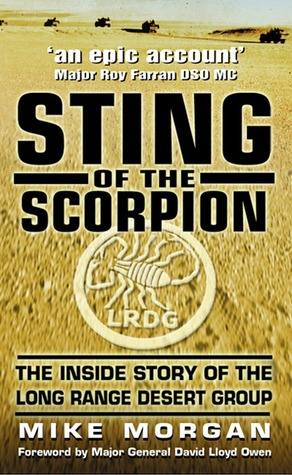
Sting of the Scorpion: The Inside Story of the Long Range Desert Group

Mike Morgan

★★★☆☆
Read Advanced intel Military history Logistics WWII Special ops Logistics ISBN 0750937041

Sutton Pub. · 2003

The Long Range Desert Group was Britain's original Special Force in the Western Desert long before the SAS burst onto the scene. Sting of the Scorpion is the exclusive, authorised, inside story of the tough LRDG raiders of the Second World War, drawn from the unpublished records of the famous force. The unit won unrivalled mastery of the North African desert in their wide-ranging and heavily armed trucks, earning grudging praise even from Rommel, the Desert Fox himself, for their skilful reconnaissance, punishing raids and powers of evasion.

Stopped at Stalingrad: The Luftwaffe and Hitler's Defeat in the East, 1942-1943 (Modern War Studies)

Joel S.A. Hayward

★★★☆☆
Read Intel history Military history Advanced intel Logistics WWII Cold War Air power Russia / USSR Logistics Strategy / theory ISBN 9780700611461

University Press of Kansas · September 2001

By the time Hitler declared war on the Soviet Union in 1941, he knew that his military machine was running out of fuel. In response, he launched Operation Blau, a campaign designed to protect Nazi oilfields in Rumania while securing new ones in the Caucasus. All that stood in the way was Stalingrad. Most accounts of the Battle of Stalingrad have focused on the dismal fate of the German Army. Joel Hayward now chronicles Luftwaffe operations during that campaign, focusing on Hitler's use of the air force as a tactical rather than strategic weapon in close support of ground forces. He vividly details the Luftwaffe's key role as flying artillery, showing that the army relied on Luftwaffe support to a far greater degree than has been previously revealed and that its successes in the East occurred largely because of the effectiveness of that support. Hayward analyzes this major German offensive from the standpoint of cooperation between ground and air forces to attain mutually agreed objectives. He draws on diaries of both key commanders and regular airmen to recreate crucial battles and convey the drama of Hitler's frustrations and reckless leadership. Ultimately, Hayward shows, the poorly conceived strategies of Hitler, Goering, and others in Berlin doomed the efforts of air commander Wolfram von Richthofen, a courageous and resolute leader attempting to come to grips with an increasingly impossible situation. Stopped at Stalingrad is a dynamic case study in combined arms warfare that fills in many of the gaps left by other studies of the eastern war. By reconsidering the campaign in the light of a wider body of documentary sources and analyzing many previously ignored events, Hayward provides military historians and general readers a much deeper and more complete understanding of the Battle of Stalingrad and its impact on World War II.

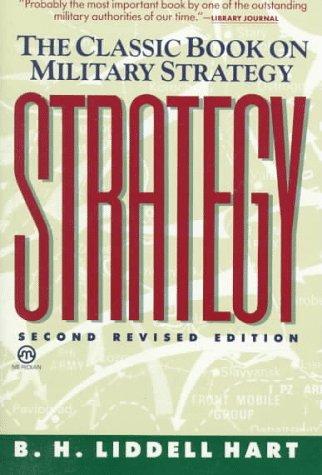
Strategy

B.H. Liddell Hart

★★★☆☆
Read Military history Advanced intel Guerrilla / COIN Strategy / theory ISBN 0452010713

Meridian · 1991

"The most important book by one of the outstanding military authorities of our time." – Library Journal   This is the classic book on war as we know it. During his long life, Basil H. Liddell Hart was considered one of the world's foremost military thinkers--a man generally regarded as the "Clausewitz of the 20th century." Strategy is a seminal work of military history and theory, a perfect companion to Sun-tzu’s The Art of War and Carl von Clauswitz’s On War. Liddell Hart stressed movement, flexibility, and surprise. He saw that in most military campaigns dislocation of the enemy's psychological and physical balance is prelude to victory. This dislocation results from a strategic indirect approach. Reflect for a moment on the results of direct confrontation (trench war in WW I) versus indirect dislocation (Blitzkreig in WW II). Liddell Hart is also tonic for business and political planning: just change the vocabulary and his concepts fit.

The Agricola and The Germania

Tacitus

★★★☆☆
Read Advanced intel Military history Biography ISBN 0140442413

Penguin Books · 1975

The Agricola is both a portrait of Julius Agricola - the most famous governor of Roman Britain and Tacitus' well-loved and respected father-in-law - and the first detailed account of Britain that has come down to us. It offers fascinating descriptions of the geography, climate and peoples of the country, and a succinct account of the early stages of the Roman occupation, nearly fatally undermined by Boudicca's revolt in AD 61 but consolidated by campaigns that took Agricola as far as Anglesey and northern Scotland. The warlike German tribes are the focus of Tacitus' attention in the Germania, which, like the Agricola, often compares the behaviour of 'barbarian' peoples favourably with the decadence and corruption of Imperial Rome.

The Muqaddimah: An Introduction to History

Ibn Khaldun

★★★☆☆
Read Advanced intel Military history Middle East Biography Economics ISBN 9789953432540

Commission internationale pour la traduction des chefs-d'oeuvre · 1858

كتاب في التاريخ وعلم الإجتماع، هذا الكتاب مقدمة لكتاب في التاريخ، أراد فيه ابن خلدون أن يشرح علم التاريخ وأحوال المجتمعات وسياستها وأسباب نشوئها، فإن كان علم الإجتماع يعود لمؤسس فلا شك أنه يعود لابن خلدون، وتعتبر المقدمة مرجعا مهما لكل باحث في التاريخ أو علم الإجتماع أو باحث في أسباب نشوء الأمم أو جغرافية وحدود كثير من الدول في تلك الفترة، سواء كان الباحث عربي أو أجنبي

No cover · Amazon

Fry The Brain: The Art of Urban Sniping and its Role in Modern Guerrilla Warfare (Volume 0)

John West

★★☆☆☆
Read Advanced intel Technical warfare Guerrilla / COIN

Fry The Brain is a detailed, original study of urban guerrilla sniping and its employment in modern unconventional warfare. Fry The Brain strives to educate the interested reader in all aspects of modern urban guerrilla sniping. As such, Fry The Brain is a unique, relevant work that is a must read for all students of contemporary guerrilla warfare.

Mein Kampf

Adolf Hitler

★★☆☆☆
Read Advanced intel Military history Biographies WWII WWI Biography ISBN 0395078016

Houghton Mifflin · 1971

Mi lucha, con título original en alemán Mein Kampf, es un libro escrito por Adolf Hitler en el que plasmó su ideología y el manifiesto de la política del nacionalsocialismo entremezclado con una serie de elementos autobiográficos. El libro es un documento interesante ya que describe cómo y por qué Hitler, el dictador de la Alemania nazi de 1933 a 1945, se volvió antisemita, además de detallar sus planes futuros para Alemania. Mein Kampf fue publicado en 1925, tras la etapa en prisión de Hitler tras su golpe de Estado fallido en Múnich en 1923. A grandes rasgos, expone el programa ideológico de Hitler, en el cual identifica a los judíos y a los «bolcheviques» como racial e ideológicamente inferiores y un peligro para la nación. Por el contrario, establece a los «arios» y a los nacionalsocialistas como racialmente superiores y políticamente progresistas. El gran objetivo de Hitler era la unificación de los pueblos alemanes en una sola Gran Alemania y la expulsión de los judíos de la nación. Desde Elejandría, aunque sabemos que es una obra polémica y controvertida, optamos por mantener este libro en el catálogo ya que es un documento histórico y creemos que la historia hay que conocerla para que no se vuelva a repetir.

Rhodesian SAS Combat Manual

Rhodesian Forces

★★☆☆☆
Read Basic intel Advanced intel Intel history Military history Logistics Special ops Guerrilla / COIN Logistics ISBN 9798610200842

Independently Published · 2020

The "Rhodesian SAS Combat Manual" is a significant historical look of the small unit tactics employed by the elite unit during the Rhodesian Bush War. Not only is it a glimpse back at how this unit operated, but a lot of the material is still relevant today fighting counter-insurgencies. This book covers tactical follow-ups, ambush tactics, infiltration methods and combat tracking and more!

The Doctrine of Fascism

Benito Mussolini

★★☆☆☆
Read Advanced intel Military history Biographies Strategy / theory ISBN 9780865274631

Howard Fertig · September 2006

“Democracy is a kingless regime infested by many kings who are sometimes more exclusive, tyrannical and destructive than one, even if he be a tyrant.” 'The Doctrine of Fascism' (Originally known as 'La dottrina del fascismo') is an essay written by Giovanni Gentile, with credit given to Benito Mussolini as a co-author. It was first published in the Enciclopedia Italiana of 1932, as the first section of a lengthy entry on "Fascismo" (Fascism). The entire entry on Fascism spans pages 847-884 of the Enciclopedia Italiana, and includes numerous photographs and graphic images. Today, it is considered the most complete articulation of Mussolini's political views. A key concept of the Mussolini essay was that fascism was a rejection of previous models: "Granted that the 19th century was the century of socialism, liberalism, democracy, this does not mean that the 20th century must also be the century of socialism, liberalism, democracy. Political doctrines pass; nations remain. We are free to believe that this is the century of authority, a century tending to the 'right', a Fascist century. If the 19th century was the century of the individual, we are free to believe that this is the 'collective' century, and therefore the century of the State." Regardless of one's political inclinations, this essay is of great curiosity to any reader with intellectual interests, and a must-read for those who seek to buttress or demolish its unwavering premises.

No cover · Amazon

Behind the battle: Intelligence in the war with Germany, 1939-45

Ralph Bennett

unrated
Read Advanced intel Intel history WWII Espionage Naval Air power Intel history

By the end of 1942, Ultra had become the richest and most reliable of the many different sources of intelligence, however, the relation between their individual contributions requires analysis. Ralph Bennett's study aims to present a succinct survey and analysis of the military intelligence available to Britain and her allies during World War II. When war began, Britain was as ill-prepared in intelligence as in armaments. Civilian scientists had discovered the principle of radar in the mid-1930s, but everything else had to be learned from scratch in the heat of emergency. In 1939, all three armed services lacked staff trained to appraise and distribute intelligence. Because it had so often been unreliable in the past, field commanders were reluctant to accept it and had to learn new ways. First signs of improvement came in mid-1941, when Ultra targeted naval vessels and bomber aircraft onto so many of Rommel's supply ships that the Afrika Korps almost withered on the vine. From then on intelligence played an increasingly indispensable part in final victory. Ultra won the Battle of the Atlantic, driving the U-boats back to coastal waters by June 1943. A lower grade code gave Montgomery the vital first news of the whereabouts of the German tanks as he planned the breakthrough at Alamein. Only "Bomber" Harris refused to give intelligence the credit it deserved, for reasons investigated in "Behind the Battle".

Blood Year: The Unraveling of Western Counterterrorism

David Kilcullen

unrated
Read Advanced intel Cold War GWOT Russia / USSR Middle East Strategy / theory US Civil War ISBN 9780190600549

Oxford University Press · 2016

2014 has the potential to go down as a crucial year in modern world history. A resurgent and bellicose Russia took over Crimea and fueled a civil war in Eastern Ukraine. Post-Saddam Iraq, in many respects a creature of the United States because of the war that began in 2003, lost a third of its territory to an army of hyper-violent millennialists. The peace process in Israel seemed to completely collapse. Finally, after coalescing in Syria as a territorial entity, the Islamic State swept into northern Iraq and through northeastern Syria, attracting legions of recruits from Europe and the Middle East. In short, the post-Cold War security order that the US had constructed after 1991 seemed to be coming apart at the seams. David Kilcullen was one of the architects of America's strategy in the late phases of the second Gulf War, and also spent time in Afghanistan and other hotspots. In Blood Year, he provides a wide-angle view of the current situation in the Middle East and analyzes how America and the West ended up in such dire circumstances. Whereas in 2008 it appeared that the U.S. might pull a modest stalemate from the jaws of defeat in Iraq, six years later the situation had reversed. After America pulled out of Iraq completely in 2011, the Shi'ite president cut Sunnis out of the power structure and allowed Iranian influence to grow. And from the debris of Assad's Syria arose an extremist Sunni organization even more radical than Al Qaeda. Unlike Al Qaeda, ISIS was intent on establishing its own state, and within a remarkably short time they did. Interestingly, Kilcullen highlights how embittered former Iraqi Ba'athist military officers were key contributors to ISIS's military successes. Kilcullen lays much of the blame on Bush's initial decision to invade Iraq (which had negative secondary effects in Afghanistan), but also takes Obama to task for simply withdrawing and adopting a "leading from behind" strategy. As events have proven, Kilcullen contends, withdrawal was a fundamentally misguided plan. The U.S. had uncorked the genie, and it had a responsibility to at least attempt to keep it under control. Instead, the U.S. is at a point where administration officials state that the losses of Ramadi and Palmyra are manageable setbacks. Kilcullen argues that the U.S. needs to re-engage in the region, whether it wants to or not, because it is largely responsible for the situation that is now unfolding. Blood Year is an essential read for anyone interested in understanding not only why the region that the U.S. invaded a dozen years ago has collapsed into utter chaos, but also what it can do to alleviate the grim situation.