S2 Search · Reading list

S2 Actual reading list

Books from S2 Actual on Goodreads, organized by his shelves and topic buckets (intel lists, military history, logistics, etc.). Metadata filled via Open Library.

Not official S2 Underground. Independent fan index — not affiliated with or endorsed by S2. Official hub: linktr.ee/S2_underground. S2 materials are CC BY-NC-SA 4.0.

S2 topic buckets (Goodreads)

Subjects & genres

415 books · All shelves · page 4 of 18

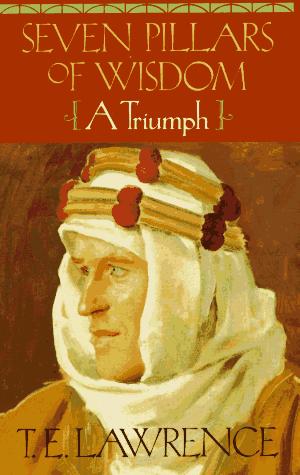
Seven Pillars of Wisdom: A Triumph

T.E. Lawrence

★★★★★
Read Intel history Basic intel WWI Espionage Middle East Biography ISBN 0385418957

Anchor Books · 1991

In his classic book, T.E. Lawrence—forever known as Lawrence of Arabia—recounts his role in the origin of the modern Arab world. At first a shy Oxford scholar and archaeologist with a facility for languages, he joined and went on to lead the Arab revolt against the Ottoman Turks while the rest of the world was enmeshed in World War I. With its richly detailed evocation of the land and the people Lawrence passionately believed in, its incisive portraits of key players, from Faisal ibn Hussein, the future Hashemite king of Syria and Iraq, to General Sir Edmund Allenby and other members of the British imperial forces, The Seven Pillars of Wisdom is an indispensible primary historical source. It helps us to understand today’s Middle East, while giving us thrilling accounts of military exploits (including the liberation of Aqaba and Damascus), clandestine activities, and human foibles.

Silent Victory: The U.S. Submarine War Against Japan

Clay Blair Jr.

★★★★★
Read Military history Intel history WWII Espionage Naval Strategy / theory ISBN 155750217X

Naval Institute Press · 2001

The long-awaited publication of Silent Victory fills a major gap in the annals of World War II. Here for the first time is the definitive history of the submarine war against Japan--the only full-scale submarine war the United States ever fought--which has for the most part been shrouded in secrecy for three decades. Only recently have the codebreakers who played such a pivotal role in the submarine war been willing to talk about their work. And only recently have the private papers, diaries, and official reports of the submarine admirals and skippers been made available to historians. In preparing to write this book, Clay Blair, Jr. combed hundreds of thousands of pages of recently declassified documents and personal letters. In individual interviews he listened to scores of skippers, staff officers, and codebreakers speaking freely. He researched in depth the development of submarine and torpedo from prewar days down to the present time. The result is a revealing and immensely exciting book that sets the submarine war within the framework of history and the overall war in the Pacific. Silent Victory takes you into the submarine war at all levels--the highest strategy sessions in Washington, the terrifying moments in a submarine trapped on the bottom for hours as depth charges explode around it, the zany efforts of a torpedo crew coaxing an emaciated chicken to lay an egg. It tells of the jealous infighting of admirals vying for power . . . of "overcautious" skippers, trained in peacetime and ill suited for war, and the mutinies they provoked . . . of the shocking torpedo scandal and the toll it took . . . of the later breed of younger skippers whose daring was so effective against Japanese shipping that the war, as Blair argues, could have ended months earlier, saving thousands of lives. The complete saga that led to victory is here supplemented by ● 37 specially drawn maps showing submarine activity in the context of every important naval engagement in the Pacific ● 32 pages of photographs ● 12 appendixes, including a calendar of all submarine war patrols ● an index of over 2,000 entries. A work of great scholarship and scope, Silent Victory is a timeless contribution to the history of World War II.

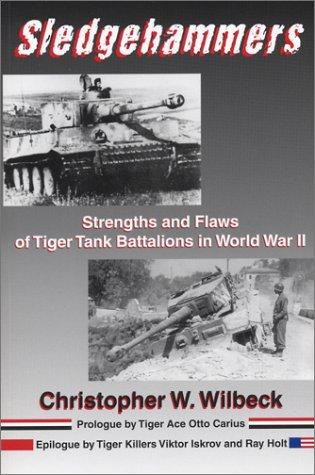
Sledgehammers: Strengths and Flaws of Tiger Tank Battalions in World War II

Christopher W. Wilbeck

★★★★★
Read Technical warfare Military history WWII Armor Russia / USSR Intel history Strategy / theory ISBN 9780971765023

The Aberjona Press · March 2004

The Tiger and King Tiger tanks gained legendary status during World War II. Numerous tank commanders attained phenomenal tallies of kills and accomplished extraordinary feats during combat in these tanks, building the legend to near mythic proportions after the war. During WWII, the Germans created eleven Army and three Waffen-SS heavy tank battalions. These heavy tank battalions were employed in nearly every part of Europe against almost every enemy of Germany. As vast in breadth and scope as the employment of Tiger battalions themselves, Sledgehammers provides historical examples and analysis of heavy tank battalions’ actions in North Africa, Normandy, Italy, the Ardennes Offensive, and numerous battles on the Eastern Front including Operation ZITADELLE/the Battle of Kursk, Operation BAGRATION, the battle of the Cherkassy Pocket, late war attacks to relieve Budapest, and many other more minor engagements. Although a great deal has already been published about Tiger tanks’ technical details and some of the units which used them, until now, very little has been written concerning the organization and tactical employment of these tanks throughout the German armed forces and across the theaters in which they were employed. Sledgehammers provides an in-depth look at heavy tank battalions’ organizations and tactics, including the tactical doctrine by which these elite units were supposed to fight and how they were actually employed on the battlefield by their commanders and crews. Even given the Tiger’s reputation, many readers will be amazed by the fearsome casualties inflicted by the crews of many of these behemoth armored vehicles. It is safe to say that no other armored vehicle of the war wreaked as much havoc among enemy formations as Tigers. Many will, however, also find it equally stunning to learn of the Tigers’ many technical and tactical vulnerabilities. Through the systematic use of extremely detailed primary source and other impeccably reliable research, Sledgehammers demolishes several major myths about Tigers in World War II. Meticulously researched and written with the perspective and respect for Tigers' crews that only a professional tanker can bring to the subject, Sledgehammers synthesizes information to provide new and definitive insights into the strengths and flaws of World War II’s most feared and legendary tanks. Prologue by famed Tiger ace Otto Carius. Epilogue by Tiger killers Viktor Iskrov and Ray Holt. 35 original maps. 42 photos.

Small Steps into the Kingdom

Spyridon Bailey

★★★★★
Read Orthodox / theology ISBN 9781786973924

FeedARead.com · 2016

Father Spyridon explores the richness of Orthodox faith and practice to reveal a tradition that is both ancient and alive. He demonstrates how Orthodoxy is the continuing self-revelation of God to man and how the way we live can enable us to receive God's grace. This is a book that will encourage the faithful, inspire those on the verge of conversion, and challenge those outside of Orthodoxy to look again at the Orthodox claim to being the one, true Church of Christ.

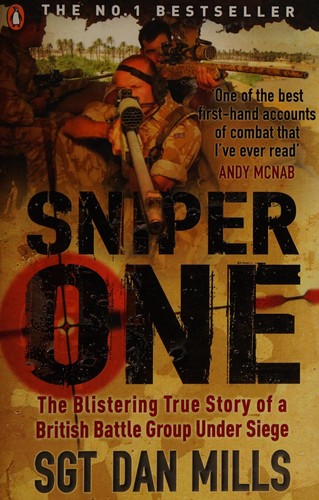
Sniper One: The Blistering True Story Of A British Battle Group Under Siege

Dan Mills

★★★★★
Read Biographies Intel history Technical warfare Advanced intel Military history GWOT Middle East Biography ISBN 9780141029016

Penguin · 2008

Sniper One is the gritty, awe-inspiring true story that takes you right into the heart of the Iraq war from Sunday Times No.1 bestseller Sgt. Dan Mills. 'One of the best first-hand accounts of combat that I've ever read' Andy McNab We all saw it at once. Half a dozen voices screamed 'Grenade!' simultaneously. Then everything went into slow motion. The grenade took an age to travel through its 20 metre arc. A dark, small oval-shaped package of misery the size of a peach ... April 2004: Dan Mills and his platoon of snipers fly into southern Iraq, part of an infantry battalion sent to win hearts and minds. They were soon fighting for their lives. Back home we were told they were peacekeeping. But there was no peace to keep. Because within days of arriving in theatre, Mills and his men were caught up in the longest, most sustained fire fight British troops had faced for over fifty years. This awe-inspiring account tells of total war in throat-burning winds and fifty-degree heat, blasted by mortars and surrounded by heavily armed militias. For six months, they fought isolated, besieged and under constant enemy fire. Their heroic stand a modern-day Rorke's Drift. ************** Dan Mills served for 24 years as an Infantry Soldier reaching the rank of Warrant Officer Class 2. During his long military career he served on operations in Northern Ireland, Bosnia, Kosovo, Iraq and Afghanistan. Dan was awarded a 'Mention In Despatches' for Gallantry for his services during The Iraq War. Since leaving the Army in 2010, he has forged a career as a writer and security consultant, amongst other things. Sniper One is his first book.

No cover · Amazon

Sniping in France: Winning the Sniping War in the Trenches

H. Hesketh-Prichard

★★★★★
Read Advanced intel Intel history Military history Technical warfare WWII

“Now, if any one cares to do a mathematical sum, and to work out the number of battalions we had in the line, they will be surprised at the figures, and when they multiply these figures by thirty and look at the month’s losses, they will find that in a war of attrition the sniper on this count alone justifies his existence and wipes out large numbers of the enemy.” During the initial stages of the First World War in 1914, Allied forces lost breathtaking numbers of men on the Western Front to Germany’s highly efficient and superior snipers. However, the passion of Major Hesketh-Prichard – hunter and excellent marksman – for the promotion and advancement of sniping practices led to the implementation of brand new sniping methods by the British Army. These new practices contributed to the reversal of fortune of the Allied forces, tipping the balance in their favour towards victory in the sniping war. This excellent book, as told in the inimitable style of Major Hesketh-Prichard, recounts the genesis, development, and advancement of sniping style and practice, intermingled with a charming autobiographical style. Truly a classic account of war, this is a must read for avid military enthusiasts. Major Hesketh-Prichard, born in India in 1876, led a vibrant life as an explorer and adventurer, big-game hunter turned animal rights activist, novelist and travel writer, excellent cricket player, and marksman. He contributed significantly to the advancement of sniping practice in the British Army during the First World War, and the measures he introduced are credited as saving the lives of thousands of Allied soldiers.

No cover · Amazon

Special Boat Squadron (Sea of Troubles Book 3)

Barrie Pitt

★★★★★
Read Military history Logistics Korea Espionage Logistics Orthodox / theology

'As much a thriller as it is a history book.' The Daily Mail Not by strength but by guile. Only since the Falklands campaign have the initials SBS become known to the public. Yet this clandestine formation of Britain’s armed forces has been in existence since the Second World War. Barrie Pitt, who himself served with the SBS, describes how the it came into being in 1941. How they fought with distinction in the Aegean, where one of their exploits inspired The Guns of Navarone. How they earned rapport in the Adriatic, in Greece and in Italy. How the SBS was reorganised in 1946 as part of the Royal Marines and has since played a role in Korea, Borneo and the Falklands. Equally interesting is the author’s report of the training and specialized skills required by the boat units, and the essential tasks facing them — infiltration from the sea, reconnaissance, sabotage, survival, resistance to interrogation, escape from captivity — and the expertise and determination to complete them. As Barrie Pitt's superb account of the formative years of this elite force shows, these qualities have been present from the very beginning. Barrie Pitt (1918-2006) was well known as a military historian and editor of Purnell’s History of the Second World War and History of the First World War. His publications include 'Coronel and Falkland', 'Churchill and the Generals' and 'The Crucible of War', a trilogy covering the North African campaign of the Second World War. He was born in Galway and later lived near Ilminster in Somerset.

No cover · Amazon

Stalingrad: How the Red Army Triumphed

Michael Jones

★★★★★
Read Intel history Logistics Military history WWII Cold War Russia / USSR Logistics

Michael K. Jones's new history of Stalingrad offers a radical reinterpretation of the most famous battle of the WW2. Combining eyewitness testimony of Red Army fighters with fresh archive material, the book gives a dramatic insight into the thinking of the Russian command and the mood of the ordinary soldiers. He focuses on the story of the Russian 62nd Army, which began the campaign in utter demoralization, yet turned the tables on the powerful German 6th Army. He explains the Red Army's extraordinary performance using battle psychology, emphasizing the vital role of leadership, morale and motivation in a triumph that turned the course of the war. Colonel-General Anatoly Mereshko fought throughout the battle as staff officer to the commander, Chuikov. Working with the author much of Mereshko's testimony is entirely new - and will astonish a western audience. It is backed up by accounts of other key veterans and the recently released war diary and combat journals. These show that the oft-repeated descriptions of Stalingrad's two critical days of fighting - 14 September 1942, when the Germans broke into the city, and 14 October, when they launched a massive attack on the factory district - disguise how desperate the plight of the defenders really was. In their place is a far more terrifying reality. Grasping this, we come to see Stalingrad as more than a victory of successful tactics - rather, as an astounding, improbable triumph of the human spirit.

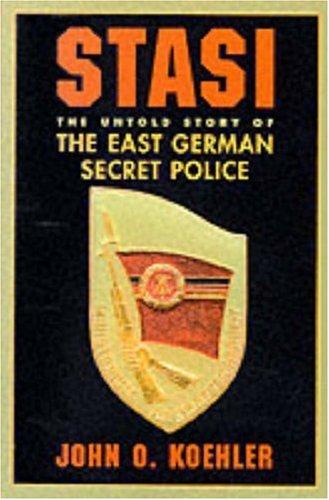
Stasi: The Untold Story Of The East German Secret Police

John O. Koehler

★★★★★
Read Basic intel Intel history Cold War Espionage Special ops Russia / USSR ISBN 9780813337449

Westview Press · November 2000

In this gripping narrative, John Koehler details the widespread activities of East Germany’s Ministry for State Security, or “Stasi.” The Stasi, which infiltrated every walk of East German life, suppressed political opposition, and caused the imprisonment of hundreds of thousands of citizens, proved to be one of the most powerful secret police and espionage services in the world. Koehler methodically reviews the Stasi’s activities within East Germany and overseas, including its programs for internal repression, international espionage, terrorism and terrorist training, art theft, and special operations in Latin America and Africa.Koehler was both Berlin bureau chief of the Associated Press during the height of the Cold War and a U.S. Army Intelligence officer. His insider’s account is based on primary sources, such as U.S. intelligence files, Stasi documents made available only to the author, and extensive interviews with victims of political oppression, former Stasi officers, and West German government officials. Drawing from these sources, Koehler recounts tales that rival the most outlandish Hollywood spy thriller and, at the same time, offers the definitive contribution to our understanding of this still largely unwritten aspect of the history of the Cold War and modern Germany.

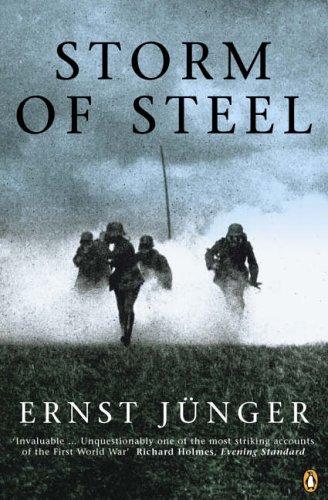
Storm of Steel

Ernst Jünger

★★★★★
Read Advanced intel Basic intel Military history WWI Biography ISBN 9780141186917

Penguin Books Ltd · June 3, 2004

A memoir of astonishing power, savagery, and ashen lyricism, 'Storm of Steel' illuminates not only the horrors but also the fascination of total war, seen through the eyes of an ordinary German soldier. Young, tough, patriotic, but also disturbingly self-aware, Jünger exulted in the Great War, which he saw not just as a great national conflict, but more importantly as a unique personal struggle. Leading raiding parties, defending trenches against murderous British incursions, simply enduring as shells tore his comrades apart, Jünger kept testing himself, braced for the death that will mark his failure. Published shortly after the war's end, 'Storm of Steel' was a worldwide bestseller and can now be rediscovered through Michael Hofmann's brilliant new translation.

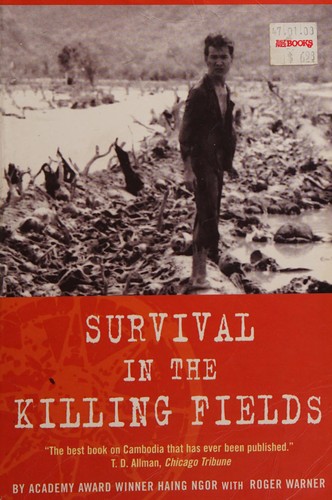
Survival in the Killing Fields

Haing Ngor

★★★★★
Read Military history WWII China Biography ISBN 0786713151

Carroll & Graf · 1987

Nothing has shaped my life as much as surviving the Pol Pot regime. I am a survivor of the Cambodian holocaust. That's who I am. He became famous through his academy award-winning performance as Dith Pran in the film The Killing Fields, but the key to Haing Ngor's screen success was the terrible truth of his own experiences in the rice paddies and labour camps of revolutionary Cambodia. Here, in a gripping memoir of life under the communist Khmer Rouge regime, he reveals the country's descent into a hell beyond our imaginings: a world of war slaves and senseless brutality, where family life simply ceases to be. But with the pain he also gives us hope and an illuminating example of how the best sort of love can actually be strengthened through the shared experience of a life-threatening ordeal. An eyewitness account of the real killing fields by an extraordinary survivor, this book is both a reminder of the horrors of war and a testament to the resilience of the human spirit.

Tactics of the Crescent Moon: Militant Muslim Combat Methods

H. John Poole

★★★★★
Read Basic intel Intel history GWOT Guerrilla / COIN Middle East ISBN 9780963869579

Posterity Press · November 2004

This book focuses on how Iran and its various proxies fight. It is on the most prestigious pre-deployment reading lists for both the U.S. Army and the U.S. Marine Corps, because it fully details the Islamists' yet-to-be-defeated 4GW method. That method is best countered by "truly light" infantry tactics, but America has had only "line" infantry since 1943. Its members travel mostly by truck and fight mostly with supporting arms. That's because the Pentagon is still practicing a "higher-tech" version of 2GW (killing as many enemy as possible). How to operate the latest equipment takes up so much of the young infantryman's day that he never learns how to sneak up on an expert defender. He and his buddies don't become any less visible by donning advanced electronics, so their traditional small-unit maneuvers remain as predictable as before. All Posterity Press books should be viewed as instruments of long-overdue change.

Tequila Junction: 4th-Generation Counterinsurgency

H. John Poole

★★★★★
Read Advanced intel GWOT Special ops Guerrilla / COIN ISBN 9780963869517

Posterity Press · 2008

Don't recognize this drug-funded Maoist army ? Its operatives have been busy in at least nine Latin American countries. Bringing an end to America's white-heroin deluge may take temporarily reinforcing -- with a lone U.S. infantry squad -- a few police outposts in Colombia, Panama, and Mexico. After briefly noting the extent of criminal, Communist, and Islamist subversion throughout the region, this book shows the Unconventional Warfare (UW) techniques that 14 isolated GIs might need to vie with many times their number of drug runners and revolutionaries. Among the "how-to" chapters (1) "Best 4GW Defense Is Locally Tailored;" (2) "Deep Interdiction;" (3) "Buffer Zones"; and (4) "Working a Heavily Populated Area." well illustrated, full of tiny element maneuvers, and quite exciting to read. One even shows how to blanket an area with secretly occupied fire team zones. Such an advanced UW concept would also work in other parts of the world. According to Australian Army Journal, "Poole's methods in Tequila Junction are an example of a decentralised approach to counterinsurgency that may provide a tactical level solution ... [to] keep the insurgents off balance in Uruzgan [Afghanistan]." As a final bonus , this book's appendix shows a fully tested way for any U.S. infantry or special operations company to develop its own state-of-the-art techniques for any intensity of combat.

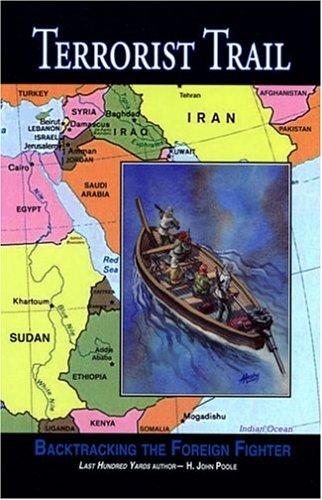
Terrorist Trail: Backtracking the Foreign Fighter

H. John Poole

★★★★★
Read Basic intel GWOT Guerrilla / COIN Middle East Strategy / theory ISBN 9780963869593

Posterity Press (NC); Illustrate · September 20, 2006

This book is about covertly penetrating the enemy heartland along the ground. At the height of the Iraq War, it was selling to Marines in the Euphrates Valley at a rate of 200 per month. That's because it helped them to seize the initiative. First, it describes the West's most effective counter-guerrilla force. This was not the British in Malaysia, but Rhodesia's Selous Scouts. Their ability to operate safely as tiny teams deep in enemy territory is the model to which all U.S. special operators should aspire. Never fond of apartheid, they regularly converted former foes into loyal members. Then, it shows how to follow enemy footprints in urban terrain. Finally, it provides a spellbinding history of "terrorism" in Africa--the most recent arena for Islamist and Communist expansion.

The American Civil War: A Military History

John Keegan

★★★★★
Read Strategy / theory Economics US Civil War ISBN 9780091794835

Hutchinson · 2009

In this magesterial history and national bestseller, John Keegan shares his original and perceptive insights into the psychology, ideology, demographics, and economics of the American Civil War. Illuminated by Keegan’s knowledge of military history he provides a fascinating look at how command and the slow evolution of its strategic logic influenced the course of the war. Above all, The American Civil War gives an intriguing account of how the scope of the conflict combined with American geography to present a uniquely complex and challenging battle space. Irresistibly written and incisive in its analysis, this is an indispensable account of America’s greatest conflict.

No cover · Amazon

The Ancient Path

Spyridon Bailey

★★★★★
Read Orthodox / theology

Modern culture has lost touch with authentic Christianity. In order to discover the truth of the Gospels the Orthodox priest Father Spyridon guides the reader through reflections on how to rediscover that ancient path to Christ. Together with quotations from the Church Fathers he highlights how far from the teachings of Christ and the Apostles so much of what passes for Christianity has become. Dealing with issues such as the saints, the family, sex, theosis, repentance, wealth and others, he demonstrates that the faith of the Early Church is alive in our world and to be found in Orthodoxy. A challenging read, The Ancient Path pulls no punches in its call for Christians to return to the authentic path of faith and encourages us all to see the dangers of modern ife.Please note - the page numbers in the contents page refer to the paperback version.

The Art of Prayer: An Orthodox Anthology

Kallistos Ware

★★★★★
Read Russia / USSR Orthodox / theology ISBN 9780571191659

Faber & Faber · July 31, 1997

A spiritual anthology drawn from the Greek and Russian traditions, concerned in particular with the most frequently used and best loved of all Orthodox prayers--the Jesus Prayer. Texts are taken chiefly from the letters of Bishop Theopan the Recluse, along with many other writers.

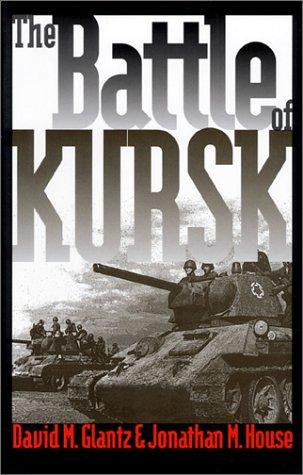
The Battle of Kursk (Modern War Studies)

David M. Glantz

★★★★★
Read Military history WWII Armor Russia / USSR ISBN 0700609784

University Press of Kansas · 1999

Immense in scope, ferocious in nature, and epic in consequence, the Battle of Kursk witnessed (at Prokhorovka) one of the largest tank engagements in world history and led to staggering losses-including nearly 200,000 Soviet and 50,000 German casualties-within the first ten days of fighting. Going well beyond all previous accounts, David Glantz and Jonathan House now offer the definitive work on arguably the greatest battle of World War II. Drawing on both German and Soviet sources, Glantz and House separate myth from fact to show what really happened at Kursk and how it affected the outcome of the war. Their access to newly released Soviet archival material adds unprecedented detail to what is known about this legendary conflict, enabling them to reconstruct events from both perspectives and describe combat down to the tactical level. The Battle of Kursk takes readers behind Soviet lines for the first time to discover what the Red Army knew about the plans for Hitler's offensive (Operation Citadel), relive tank warfare and hand-to-hand combat, and learn how the tide of battle turned. Its vivid portrayals of fighting in all critical sectors place the famous tank battle in its proper context. Prokhorovka here is not a well-organized set piece but a confused series of engagements and hasty attacks, with each side committing its forces piecemeal. Glantz and House's fresh interpretations demolish many of the myths that suggest Hitler might have triumphed if Operation Citadel had been conducted differently. Their account is the first to provide accurate figures of combat strengths and losses, and it includes 32 maps that clarify troop and tank movements. Shrouded in obscurity and speculation for more than half a century, the Battle of Kursk finally gets its due in this dramatic retelling of the confrontation that marked the turning point of the war on the Eastern Front and brought Hitler's blitzkrieg to a crashing halt.

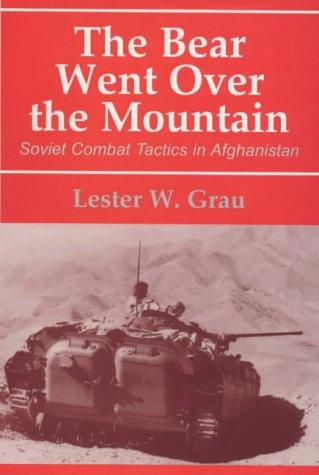
The Bear Went Over the Mountain: Soviet Combat Tactics in Afghanistan

Lester W. Grau

★★★★★
Read Basic intel Cold War GWOT Guerrilla / COIN Russia / USSR ISBN 0714648574

Frank Cass · 1998

This collection of vignettes was written by Soviet junior officers describing their experiences fighting the Mujahideen guerillas. It is not a history of the Soviet-Afghan war, but snapshots of combat as seen by young platoon leaders, company commanders, battalion commanders and military advisers.

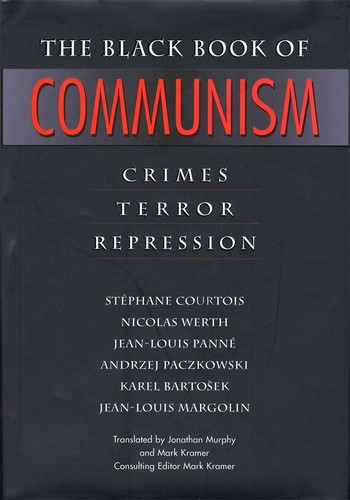
The Black Book of Communism: Crimes, Terror, Repression

Stéphane Courtois

★★★★★
Read Military history Advanced intel Vietnam Korea Cold War GWOT Guerrilla / COIN China Russia / USSR Orthodox / theology ISBN 0674076087

Harvard University Press · 1999

Already famous throughout Europe, this international bestseller plumbs recently opened archives in the former Soviet bloc to reveal the actual, practical accomplishments of Communism around the terror, torture, famine, mass deportations, and massacres. Astonishing in the sheer detail it amasses, the book is the first comprehensive attempt to catalogue and analyze the crimes of Communism over seventy years. "Revolutions, like trees, must be judged by their fruit," Ignazio Silone wrote, and this is the standard the authors apply to the Communist experience―in the China of "the Great Helmsman," Kim Il Sung's Korea, Vietnam under "Uncle Ho" and Cuba under Castro, Ethiopia under Mengistu, Angola under Neto, and Afghanistan under Najibullah. The authors, all distinguished scholars based in Europe, document Communist crimes against humanity, but also crimes against national and universal culture, from Stalin's destruction of hundreds of churches in Moscow to Ceausescu's leveling of the historic heart of Bucharest to the widescale devastation visited on Chinese culture by Mao's Red Guards. As the death toll mounts―as many as 25 million in the former Soviet Union, 65 million in China, 1.7 million in Cambodia, and on and on―the authors systematically show how and why, wherever the millenarian ideology of Communism was established, it quickly led to crime, terror, and repression. An extraordinary accounting, this book amply documents the unparalleled position and significance of Communism in the hierarchy of violence that is the history of the twentieth century.

No cover · Amazon

The Bridge Busters : The First Dambusters and the Race to Save Britain

Mark Felton

★★★★★
Read Military history WWII Air power

August 1940. Britain faces German invasion. A race is on to wreck Hitler's plans led by RAF Bomber Command's No. 5 Group, commanded by the famous 'Bomber' Harris. Two aqueducts, huge water bridges on the Dortmund-Ems Canal, along which the Germans are bringing invasion barges and supplies to the Channel coast, are identified as crucial to stopping Hitler. Can they be destroyed? A motley collection of daredevil British and Australian airmen are ordered to try, including Guy Gibson of later Dambusters fame. They are in a race against time, for every day that the aqueducts remain standing, the Germans gather to invade. At the same time, the British race to develop a new kind of bomb that can be dropped on the aqueducts, and scientists face almost insurmountable technical and obstacles. By mid-August 1940 eleven aircrews, flying old, slow and poorly armed Hampden bombers, have completed training for the raid. On the night of 12 August they launch from Lincolnshire, split into an attacking and diversionary force. They face desperate odds against a huge concentration of German flak guns, enemy night fighters and searchlights, and must fly suicidally low, slow and level to release the new bombs. In a raid with many similarities in personnel, target and weapon to the much more famous Dambusters Raid of 1943, the plucky band of outnumbered and outgunned airmen press home their assault on the aqueducts. If they fail, the Germans will probably be landing on the coast of southern England within a few weeks, but if they succeed, they may change the course of history and help to save their country from invasion and occupation. This is the untold and completely forgotten story of 'The Bridge Busters', the first Dambusters and their suicide mission just before the Battle of Britain began.

No cover · Amazon

The Complete Works of St. John Chrysostom (36 Books)

John Chrysostom

★★★★★
Read Orthodox / theology

St. John Chrysostom was born in Antioch in the year 349 AD. His father died soon after his birth and he was raised by his deeply pious mother. Under her influence St. John became devout as well, and took to studying scripture under the guidance of the bishop of Antioch who would later be the one to baptize him. St. John was drawn to become a monk, and when he mother died he withdrew to the wilderness. There he wrote a number of works on the ascetic life. After a number of years he went to a cave to live in complete silence. He lasted for two years until his health declined and he was forced to come back into the world. He was ordained a priest in 386, and eventually earned the name, 'Chrysostom' (Golden-Mouthed) for his brilliant sermons. He was known for his love of scripture, and many of his sermons were compiled into commentaries. In 397 he was chosen to be the bishop of Constantinople, which was perhaps the most important Christian office of its day. Although an extremely busy position, he nevertheless continued his literary output in the form of sermons, which he delivered in the great church, Hagia Sofia. Unfortunately his often fiery sermons did not sit well with the royal court. He was banished from the city once by the empress. Then a second time the empress had him removed and forcibly walked to a remote location. St. John did not survive the journey and died on Sept. 17, 407. St. John Chrysostom left a tremendous mark on the Christian church. His liturgy is celebrated by Eastern Orthodox Christians almost every Sunday, and his homilies are considered by many to be the best every produced. This collection brings together the full range of his extant works in the English language. The following works are provided: 1. Homilies on the Gospel of St. Matthew 2. Homilies on Acts 3. Homilies on Romans 4. Homilies on First Corinthians 5. Homilies on Second Corinthians 6. Homilies on Ephesians 7. Homilies on Philippians 8. Homilies on Colossians 9. Homilies on First Thessalonians 10. Homilies on Second Thessalonians 11. Homilies on First Timothy 12. Homilies on Second Timothy 13. Homilies on Titus 14. Homilies on Philemon 15. Commentary on Galatians 16. Homilies on the Gospel of John 17. Homilies on the Epistle to the Hebrews 18. Homilies on the Statues 19. No One Can Harm the Man Who Does Not Injure Himself 20. Two Letters to Theodore After His Fall 21. Letter to a Young Widow 22. Homily on St. Ignatius 23. Homily on St. Babylas 24. Homily Concerning "Lowliness of Mind" 25. Instructions to Catechumens 26. Three Homilies on the Power of Satan 27. Homily on the Passage "Father, if it be possible . . ." 28. Homily on the Paralytic Lowered Through the Roof 29. Homily on the Passage "If your enemy hunger, feed him." 30. Homily Against Publishing the Errors of the Brethren 31. First Homily on Eutropius 32. Second Homily on Eutropius (After His Captivity) 33. Four Letters to Olympias 34. Letter to Some Priests of Antioch 35. Correspondence with Pope Innocent I 36. On the Priesthood

No cover · Amazon

The Crucible of War Book 3: Montgomery and Alamein

Barrie Pitt

★★★★★
Read Advanced intel Intel history Military history Technical warfare Strategy / theory

The Crucible of War Book 3 ‘Masterly and lucid in its descriptions not only of the fighting and strategy, but of the political machinations’ Sunday Telegraph Throughout the first half of the Second World War, control of the inhospitable North African desert was strategically vital for the Allies. In the middle of 1942, the outcome hung in the balance. Rommel and his Afrika Korps had been fought to a standstill at the first battle of Alamein and were desperately short of fuel and equipment. But the British and Commonwealth forces were in little better shape. The next encounter between the two armies would however be decisive. Montgomery, the new Allied commander, set about rebuilding his weary army and establishing an overwhelming superiority in both men and material. The scene was set for a second, and bludgeoning, encounter at El Alamein in October. It was to prove Britain’s first decisive victory of the war. Montgomery and Alamein is the third volume of Barrie Pitt’s definitive history of the Desert War. The first and second volumes, Wavell’s Command and Auchinleck’s Command, are also published by Sharpe Books. Barrie Pitt is also the author of Zeebrugge, Coronel & Falkland the history of the Special Boat Squadron. Praise for the Crucible of War Trilogy: ‘Barrie Pitt tells this exciting history well. He has assembled a mass of information and organised it with admirable clarity. His narrative is scrupulously accurate in detail. The whole work will have great appeal for the general reader.’ Times Literary Supplement ‘The definitive work on the Desert War.’ Manchester Evening News ‘A magnificent book, Barrie Pitt has almost a novelist’s skill and perception of character.’ Daily Telegraph ‘Totally readable, Mr Pitt’s study depicts equally well the broad outlines of strategy, the confusions and hazards of the battlefield and the personalities of the generals or private soldiers fighting there.’ Oxford Times