S2 Search · Reading list

S2 Actual reading list

Books from S2 Actual on Goodreads, organized by his shelves and topic buckets (intel lists, military history, logistics, etc.). Metadata filled via Open Library.

Not official S2 Underground. Independent fan index — not affiliated with or endorsed by S2. Official hub: linktr.ee/S2_underground. S2 materials are CC BY-NC-SA 4.0.

S2 topic buckets (Goodreads)

Subjects & genres

210 books · Military history · page 4 of 9

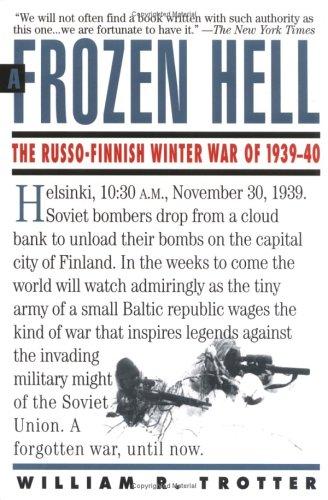
A Frozen Hell: The Russo-Finnish Winter War of 1939-1940

William R. Trotter

★★★★
Read Advanced intel Military history Technical warfare Cold War Guerrilla / COIN Russia / USSR ISBN 9781565122499

Algonquin Books of Chapel Hill, a division of Workman Publishing · January 2000

In 1939, tiny Finland waged war - the kind of war that spawns legends - against the mighty Soviet Union, and yet their epic struggle has been largely ignored. Guerrillas on skis, heroic single-handed attacks on tanks, unfathomable endurance, and the charismatic leadership of one of this century's true military geniuses - these are the elements of both the Finnish victory and a gripping tale of war.
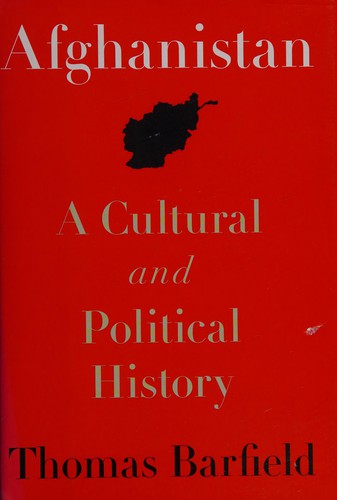
Afghanistan: A Cultural and Political History (Princeton Studies in Muslim Politics)

Thomas Barfield

★★★★
Read Advanced intel Military history Intel history GWOT Guerrilla / COIN Russia / USSR US Civil War ISBN 9780691145686

Princeton University Press · 2010

Afghanistan traces the historic struggles and the changing nature of political authority in this volatile region of the world, from the Mughal Empire in the sixteenth century to the Taliban resurgence today. Thomas Barfield introduces readers to the bewildering diversity of tribal and ethnic groups in Afghanistan, explaining what unites them as Afghans despite the regional, cultural, and political differences that divide them. He shows how governing these peoples was relatively easy when power was concentrated in a small dynastic elite, but how this delicate political order broke down in the nineteenth and twentieth centuries when Afghanistan's rulers mobilized rural militias to expel first the British and later the Soviets. Armed insurgency proved remarkably successful against the foreign occupiers, but it also undermined the Afghan government's authority and rendered the country ever more difficult to govern as time passed. Barfield vividly describes how Afghanistan's armed factions plunged the country into a civil war, giving rise to clerical rule by the Taliban and Afghanistan's isolation from the world. He examines why the American invasion in the wake of September 11 toppled the Taliban so quickly, and how this easy victory lulled the United States into falsely believing that a viable state could be built just as easily. Afghanistan is essential reading for anyone who wants to understand how a land conquered and ruled by foreign dynasties for more than a thousand years became the graveyard of empires for the British and Soviets, and what the United States must do to avoid a similar fate.

No cover · Amazon

Barren SEAD: USAF Defense Suppression Doctrine, 1953-1972

James L. Young Jr.

★★★★
Read Basic intel Military history Intel history Technical warfare Vietnam Cold War Special ops Naval Air power Cyber Biography Strategy / theory

Since 1972, the United States Air Force has argued that its operations against North Vietnam were unsuccessful primarily through a combination of civilian interference and poor strategic choices. Often citing the “success” of Operation Linebacker II as an example of what might have been had its leaders been given free rein, for almost fifty years the Air Force has maintained that its proper employment is the key to winning America’s wars. In Barren SEAD, award winning historian James L. Young Jr. propagates a different Instead of being a sign of what the Air Force was capable of, Linebacker II was a bitter failure that starkly outlined the USAF’s limitations. Furthermore, the meddling of the Johnson and Nixon Administrations played a minor role in this outcome. The USAF's defeat was not brought about by civilian meddling, but resulted from Air Force leaders’ refusal to develop a Suppression of Enemy Air Defenses (SEAD) doctrine from 1953-1972. Relying primarily on Air Force archival documents, memoirs, and contemporary doctrinal publications, Dr. Young illustrates just how dangerous the Air Force’s inability to nurture its SEAD capability was during this period of the Cold War. James L. Young Jr. holds a doctorate in U.S. History from Kansas State University and is a graduate of the United States Military Academy. Barren SEAD is his first non-fiction book. Previously he has won the United States Naval Institute's 2016 Cyberwarfare Essay Contest, runner up in the 2011 James Adams Cold War Essay Contest, and has had an essay selected by the U.S. Naval Heritage Command for its professional reading list. Dr. Young's other professional articles can be found in Armor Magazine, The Journal of Military History, and Proceedings. For those who prefer fiction, Dr. Young also writes alternate history (Usurper's War series / Phases of Mars anthologies) and military science fiction (Vergassy Universe).

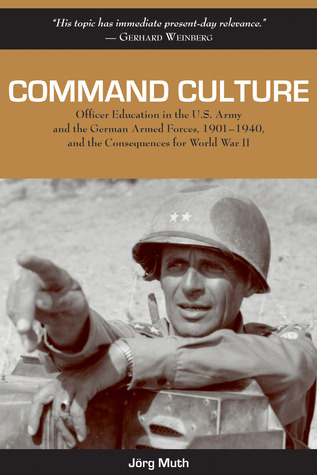
Command Culture: Officer Education in the U.S. Army and the German Armed Forces, 1901-1940, and the Consequences for World War II

Jörg Muth

★★★★
Read Advanced intel Military history WWII Special ops ISBN 9781574413038

University of North Texas Press · 2011

Selected by General Raymond Odierno, 38th Army Chief of Staff, for the U.S. Army Chief of Staff's Professional Reading List, for "The Army Profession," March 2012. Selected by General James F. Amos, Commandant of the U.S. Marine Corps, as required reading for all senior enlisted men and all Majors and Lieutenant-Colonels, January 2013.Selected by Major General H.R. McMaster at the Maneuver Center of Excellence, Fort Benning, for the Leader Development Study Program, December 2013.   Winner of the Army Historical Foundation Distinguished Writing Award, 2012.   In Command Culture, Jörg Muth examines the different paths the United States Army and the German Armed Forces traveled to select, educate, and promote their officers in the crucial time before World War II. Muth demonstrates that the military education system in Germany represented an organized effort where each school and examination provided the stepping stone for the next. But in the United States, there existed no communication about teaching contents or didactical matters among the various schools and academies, and they existed in a self chosen insular environment. American officers who finally made their way through an erratic selection process and past West Point to the important Command and General Staff School at Fort Leavenworth, Kansas, found themselves usually deeply disappointed, because they were faced again with a rather below average faculty who forced them after every exercise to accept the approved “school solution.” Command Culture explores the paradox that in Germany officers came from a closed authoritarian society but received an extremely open minded military education, whereas their counterparts in the United States came from one of the most democratic societies but received an outdated military education that harnessed their minds and limited their initiative. On the other hand, German officer candidates learned that in war everything is possible and a war of extermination acceptable. For American officers, raised in a democracy, certain boundaries could never be crossed. This work for the first time clearly explains the lack of audacity of many high ranking American officers during World War II, as well as the reason why so many German officers became perpetrators or accomplices of war crimes and atrocities or remained bystanders without speaking up. Those American officers who became outstanding leaders in World War II did so not so much because of their military education, but despite it.

Cry Havoc: How the Arms Race Drove the World to War, 1931-1941

Joseph A. Maiolo

★★★★
Read Advanced intel Military history Logistics WWII Nuclear Russia / USSR Logistics ISBN 9780465011148

Basic Books · 2010

Did the arms race of the 1930s cause the Second World War? In Cry Havoc , historian Joseph Maiolo shows, in rich and fascinating detail, how the deadly game of the arms race was played out in the decade prior to the outbreak of the Second World War. In this exhaustively researched account, he explores how nations reacted to the moves of their rivals, revealing the thinking of those making the key decisions—Hitler, Mussolini, Chamberlain, Stalin, Roosevelt—and the dilemmas of democratic leaders who seemed to be faced with a choice between defending their nations and preserving their democratic way of life. An unparalleled account of an era of extreme political tension, Cry Havoc shows how the interwar arms race shaped the outcome of World War II before the shooting even began.

Destiny in the Desert: The Story Behind El Alamein - the Battle That Turned the Tide

Jonathan Dimbleby

★★★★
Read Logistics Intel history Military history Economics WWII Russia / USSR Logistics Strategy / theory Economics Orthodox / theology ISBN 9781846684449

Profile Books Ltd · 2012

This is a unique single-volume history of the road to El Alamein - 'the end of the beginning' - and the bloody battle that followed...It was the British victory at the Battle of El Alamein in November 1942 that inspired one of Churchill's most famous aphorisms: 'it is not the end nor is it the beginning of the end, but it is the end of the beginning'. And yet the true significance of this iconic episode remains unrecognised. In this thrilling historical account, Jonathan Dimbleby describes the political and strategic realities that lay behind the battle, charting the nail-biting months that led to the victory at El Alamein in November 1942. It is a story of high drama, played out both in the war capitals of London, Washington, Berlin, Rome and Moscow, and at the front, in the command posts and foxholes in the desert. "El Alamein" is about politicians and generals, diplomats, civil servants and soldiers. It is about forceful characters and the tensions and rivalries between them. Drawing on official records and the personal insights of those involved at every level, Dimbleby creates a vivid portrait of a struggle which for Churchill marked the turn of the tide - and which for the soldiers on the ground involved fighting and dying in a foreign land.

No cover · Amazon

Enduring the Whirlwind: The German Army and the Russo-German War 1941-1943 (Wolverhampton Military Studies Book 21)

Gregory Liedtke

★★★★
Read Advanced intel Military history Logistics WWII Cold War Russia / USSR Logistics

Despite the best efforts of a number of historians, many aspects of the ferocious struggle between Nazi Germany and the Soviet Union during the Second World War remain obscure or shrouded in myth. One of the most persistent of these is the notion - largely created by many former members of its own officer corps in the immediate postwar period - that the German Army was a paragon of military professionalism and operational proficiency whose defeat on the Eastern Front was solely attributable to the amateurish meddling of a crazed former Corporal and the overwhelming numerical superiority of the Red Army. A key pillar upon which the argument of German numerical-weakness vis-à-vis the Red Army has been constructed is the assertion that Germany was simply incapable of providing its army with the necessary quantities of men and equipment needed to replace its losses. In consequence, as their losses outstripped the availability of replacements, German field formations became progressively weaker until they were incapable of securing their objectives or, eventually, of holding back the swelling might of the Red Army. This work seeks to address the notion of German numerical-weakness in terms of Germany's ability to replace its losses and regenerate its military strength, and assess just how accurate this argument was during the crucial first half of the Russo-German War (June 1941-June 1943). Employing a host of primary documents and secondary literature, it traces the development and many challenges of the German Army from the prewar period until the invasion of the Soviet Union in June 1941. It continues on to chart the first two years of the struggle between Germany and the Soviet Union, with a particular emphasis upon the scale of German personnel and equipment losses, and how well these were replaced. It also includes extensive examinations into the host of mitigating factors that both dictated the course of Germany's campaign in the East and its replacement and regeneration capabilities. In contrast to most accounts of the conflict, this study finds that numerical-weakness being the primary factor in the defeat of the Ostheer - specifically as it relates to the strength and condition of the German units involved - has been overemphasized and frequently exaggerated. In fact, Germany was actually able to regenerate its forces to a remarkable degree with a steady flow of fresh men and equipment, and German field divisions on the Eastern Front were usually far stronger than the accepted narratives of the war would have one believe.

Enemy at the Gates: The Battle for Stalingrad

William Craig

★★★★
Read Military history Logistics WWII Cold War Russia / USSR Logistics Intel history Orthodox / theology ISBN 9780760746776

Barnes & Noble Books · 2003

Stalingrad, the bloodiest battle in the history of warfare, cost the lives of nearly two million men and women. It signaled the beginning of the end for the Third Reich of Adolf Hitler; it foretold the Russian juggernaut that would destroy Berlin and make the Soviet Union a superpower. As Winston Churchill characterized the result of the conflict at Stalingrad: " the hinge of fate had turned." William Craig, author and historian, has painstakingly recreated the details of this great battle: from the hot summer of August 1942, when the German armies smashed their way across southern Russia toward the Volga River, through the struggle for Stalingrad-a city Hitler had never meant to capture and Stalin never meant to defend-on to the destruction of the supposedly invincible German Sixth Army and the terror of the Russian prison camps in frozen Siberia. Craig has interviewed hundreds of survivors of the battle-both Russian and German soldiers and civilians-and has woven their incredible experiences into the fabric of hitherto unknown documents. The resulting mosaic is epic in scope, and the human tragedy that unfolds is awesome.

Finland at War: The Continuation and Lapland Wars 1941–45 (General Military)

Vesa Nenye

★★★★
Read Military history Technical warfare WWII Cold War Russia / USSR ISBN 9781472815262

Bloomsbury Publishing Plc · 2016

Having foiled the Soviet invasion of the Winter War, the Finns found themselves embroiled in an ongoing conflict to maintain their borders as the Soviets recovered from the initial advances made by the Germans during the Barbarossa campaign. Yet as the red tide of Soviet forces pushed back the German army, the Finnish forces--despite their lack of equipment, obsolete machinery and miniscule manpower--held firm against the Soviets throughout the continuation of the war, ensuring their post-war independence on the Western side of the Iron curtain. But that was not the end of hostilities for the exhausted Finnish nation as they turned their attentions to the Nazi forces embedded within their territory, calling up brigades populated with teenagers to force German forces inexorably back. Featuring some incredible, never-before-seen photographs and firsthand accounts, this is the history of one of the most incredible moments in modern military history.

Finland's War Of Choice: The Troubled German-Finnish Coalition in World War II

Henrik O. Lunde

★★★★
Read Advanced intel Military history Logistics WWII Cold War Russia / USSR Logistics ISBN 9781935149484

Casemate Publishers and Book Distributors · 2011

This book describes the odd coalition between Germany and Finland in World War II, and their joint military operations from 1941 to 1945. This is a topic often missing in English, though in stark contrast to the numerous books on the shorter and less bloody Winter War. That conflict represented a gallant fight of a democratic "David" against a totalitarian "Goliath" that caught the imagination of the world. The story of Finland fighting alongside a "Goliath" of its own has not brought pride to that nation and was a period many Finns would rather forget. The prologue of this book brings the reader up to speed by briefly examining the difficult history of Finland, from its separation from the Soviet Union in 1917 to its isolation after being bludgeoned in 1939-40. It then examines both Finnish and German motives for forming a coalition against the USSR, and how--as logical as a common enemy would seem--the lack of true planning and preparation would doom the alliance.

No cover · Amazon

Harvest of Despair: Life and Death in Ukraine under Nazi Rule

Karel C. Berkhoff

★★★★
Read Advanced intel Military history Logistics WWII Guerrilla / COIN Russia / USSR Logistics Revolution

"If I find a Ukrainian who is worthy of sitting at the same table with me, I must have him shot," declared Nazi commissar Erich Koch. To the Nazi leaders, the Ukrainians were Untermenschen—subhumans. But the rich land was deemed prime territory for Lebensraum expansion. Once the Germans rid the country of Jews, Roma, and Bolsheviks, the Ukrainians would be used to harvest the land for the master race. Karel Berkhoff provides a searing portrait of life in the Third Reich's largest colony. Under the Nazis, a blend of German nationalism, anti-Semitism, and racist notions about the Slavs produced a reign of terror and genocide. But it is impossible to understand fully Ukraine's response to this assault without addressing the impact of decades of repressive Soviet rule. Berkhoff shows how a pervasive Soviet mentality worked against solidarity, which helps explain why the vast majority of the population did not resist the Germans. He also challenges standard views of wartime eastern Europe by treating in a more nuanced way issues of collaboration and local anti-Semitism. Berkhoff offers a multifaceted discussion that includes the brutal nature of the Nazi administration; the genocide of the Jews and Roma; the deliberate starving of Kiev; mass deportations within and beyond Ukraine; the role of ethnic Germans; religion and national culture; partisans and the German response; and the desperate struggle to stay alive. Harvest of Despair is a gripping depiction of ordinary people trying to survive extraordinary events.

How to Feed a Dictator: Saddam Hussein, Idi Amin, Enver Hoxha, Fidel Castro, and Pol Pot Through the Eyes of Their Cooks

Witold Szabłowski

★★★★
Read Military history Middle East Intel history Biography Economics ISBN 9780143129752

Penguin Publishing Group · 2020

Anthony Bourdain meets Kapuściński in this chilling look from within the kitchen at the appetites of five of the twentieth century’s most infamous dictators, by the acclaimed author of Dancing Bears. What was Pol Pot eating while two million Cambodians were dying of hunger? Did Idi Amin really eat human flesh? And why was Fidel Castro obsessed with one particular cow? Traveling across four continents, from the ruins of Iraq to the savannahs of Kenya, Witold Szabłowski tracked down the personal chefs of five dictators known for the oppression and massacre of their own citizens—Iraq’s Saddam Hussein, Uganda’s Idi Amin, Albania’s Enver Hoxha, Cuba’s Fidel Castro, and Cambodia’s Pol Pot—and listened to their stories over sweet-and-sour soup, goat-meat pilaf, bottles of rum, and games of gin rummy. Dishy, deliciously readable, and dead serious, How to Feed a Dictator provides a knife’s-edge view of life under tyranny.

No cover · Amazon

I Am Juden: Undercover in the SS

Stephen Uzzell

★★★★
Read Military history WWII Russia / USSR Intel history

An alternative cover edition for this ASIN can be found here. "An auspicious debut... One of the more impressive books based on the horrors of WW2. I AM JUDEN is an extraordinary reading experience... Stephen Uzzell has woven facts with the skill of a documentarian and enhanced those facts with the burnish of a thriller. Highly recommended." The San Francisco Review of Books Inspired by the life of forgotten hero Haim Michael Klar, I Am Juden is the triumphant, epic tale of one man's incredible courage and resistance during the twentieth century's darkest days. Jozef Siegler leads a perilous double life as an SS officer in Krakow and ultimately Auschwitz. His life is a tightrope walk through the Holocaust unlike any other. Nazi by day and resistance agent by night, any false move would result in certain death and exposure of the Jewish underground. Kiel, Germany, 1938. Jozef Siegler has been a pacifist since his father died fighting in the anti-Jewish pogroms of the Russian Empire. Jozef now leads a quiet life as a university professor, but his days of innocence are numbered. With the final tightening of the Nuremberg Race Laws, he loses his job and flees Germany with his younger sister Shoshana. Aided by their Aryan looks and gift for languages, they are recruited into the Jewish resistance to transport orphans across the border into neutral Lithuania. But war soon envelops the continent. Brother and sister become separated. Jozef's quest to find Shoshana begins. Constantly on the move, never certain who to trust, it is his inventive ingenuity, the kindness of strangers, and the most hair-raising strokes of luck that ensure his survival. When Jozef stumbles upon the dead body of SS Oberfuhrer Harry Mohnke, he faces the biggest decision of his life. If he can bring himself to wear the hated uniform and impersonate a Nazi, how many lives could he save ? Fans of Schindler's List, All The Light We Cannot See and The Tattooist of Auschwitz are gripped by this riveting saga of history, suspense and heroism.

Island of Fire: The Battle for the Barrikady Gun Factory in Stalingrad

Jason D. Mark

★★★★
Read Military history Logistics Advanced intel WWII Russia / USSR Logistics ISBN 0975107631

Leaping Horseman Books · 2006

Stalingrad symbolises many the ideological clash between Nazism and Communism, the battle of wills between Hitler and Stalin, and the absolute fortitude of the Soviet people. In many people's minds, however, it represents the savagery, folly and utter waste of urban combat, a city where dozens of lives were readily exchanged for a ruined building. And nowhere did this senselessness manifest itself more than in the Barrikady Gun Factory and its housing settlement. The men of the German 305. Infanterie-Division had captured all of the factory's massive workhalls by the end of October 1942. The only obstacles standing between them and the Volga were a few battered houses and the remnants of the Soviet 138th Rifle Division. Five fresh pioneer battalions were brought in to help the Germans and the 'final' attack in Stalingrad (known erroneously as Operation 'Hubertus') was launched on 11 November, 1942. The push to the river cut off the Soviet troops and left a tiny bridgehead. Grim fighting raged around this fiery perimeter for three months. To the Soviet soldiers, this bridgehead was known as 'Lyudnikov's Island', or 'Ognenniy ostrov' - 'Island of Fire'. Painstakingly compiled from German and Russian sources such as war diaries, combat reports, published works, eyewitness accounts, letters and photos, this book presents an unbiased chronicle of the pitiless struggle from both perspectives.

No cover · Amazon

Kontakt. Polskie specsłużby w Afganistanie

Kafir

★★★★
Read Biographies Military history

Wygrane medialne bitwy. Przegrana po cichu wojna. Procedury przygotowane przez amatorów zza biurek i żółtodzioby na misji. Brak helikopterów, tłumaczy języka, toalety z których nie da się korzystać. Nieznajomość realiów Afganistanu – ludzi, zwyczajów, warunków terenowych. Mit o opanowanym kraju i rebeliantach kryjących się po górach. Niszczenie WSI oraz partactwo i nielojalność Amerykanów. Jak w takich warunkach zadbać o bezpieczeństwo bazy położonej w samym centrum rozpętanego przez talibów piekła? Jak zdobyć informatorów wśród sterroryzowanej ludności miejscowej i uratować życie kolegów? Polski wywiad, jak zawsze, poradzi sobie w każdej sytuacji. Wstrząsająca książka, napisana brutalnym, męskim językiem. Nieocenzurowane świadectwo wojny, którą politycy chcieli przedstawić nam jako wielki sukces. Jesteś gotowy na brudną prawdę o polskiej interwencji w Afganistanie? Prawda może być naprawdę bolesna… Ta książka powstała na podstawie moich wspomnień z Afganistanu.Mogę tylko dodać, że polski żołnierz, mimo rażących braków w nowoczesnym uzbrojeniu, stanął na wysokości zadania i wypełnił je z należytą starannością, płacąc za to najwyższą cenę. - Od autora

Lost Victories: The War Memoirs of Hitler's Most Brilliant General

Erich von Manstein

★★★★
Read Biographies Military history WWII Biography Strategy / theory ISBN 0760320543

Zenith Press · 2004

Originally published in Germany in 1955, and in England and the United States in 1958, this classic memoir of WWII by a man who was an acknowledged military genius and probably Germany's top WWII general, is now made available again. Field Marshal Erich von Manstein described his book as a personal narrative of a soldier, discussing only those matters that had direct bearing on events in the military field. The essential thing, as he wrote, is to "know how the main personalities thought and reacted to events." This is what he tells us in this book. His account is detailed, yet dispassionate and objective. "Nothing is certain in war, when all is said and done," But in Manstein's record, at least, we can see clearly what forces were in action. In retrospect, perhaps his book takes on an even greater significance.

Mussolini

Nicholas Farrell

★★★★
Read Biographies Military history WWII Russia / USSR Intel history Biography Orthodox / theology ISBN 9781731426970

Independently Published · 2003

‘The question of whether Italians had to pay too much in terms of loss of liberty has been answered by Farrell in a passionate and thought-provoking way...This highly spirited, opinionated and rather remarkable book.’ – Andrew Roberts, Daily Telegraph In his own time, the fascist dictator Benito Mussolini was one of the most admired figures of his age. Winston Churchill called him ‘the Roman Genius’ and Pope Pius XI said he was ‘sent by providence’ to save Italy. Yet Mussolini has gone down in history as nothing more than a grotesque buffoon. Drawing on freshly discovered material - including correspondence previously unavailable outside academia - this a revelatory biography of the Italian fascist leader and dictator puts him in a fresh light. How did Mussolini manage to take power and hold on to it for two decades? And how did he successfully curtail democracy without using mass murder to stay in command? Farrell answers these questions and more, focusing particularly on Mussolini's fatal error: his alliance with Hitler, whom he despised. Anyone interested in history, politics, and World War II will encounter an intriguing and startling picture of one of the 20th century's key figures. ‘A fascinating and at times wilfully revisionist work...Farrell’s account of Mussolini’s last days — his betrayal and his pitiful death — is masterly and surprisingly moving...In many ways a fine, thought-provoking book.’ – Glasgow Herald ‘What [Farrell] shows is what so many liberals want to suppress: that just because a dictator is Right-wing does not mean that he is as bad as Hitler, and that no dictator so far, apart from Hitler, was as bad as Stalin, for whom many a liberal was an apologist. Farrell has written much the most plausible biography of Mussolini.’ – Daily Telegraph ‘Nicholas Farrell has produced a fascinating biography of Mussolini which is bound to be controversial...It is inevitable that Farrell will have the adjective “revisionist” attached to his name, although surely the alternative to “revisionist” history is plagiarism?...Farrell’s greatest contribution is to ground [Mussolini] in his context as a very Italian phenomenon...The questions Mussolini was trying to answer are, Farrell makes clear, as pertinent now as they were then...this mammoth but highly readable work.’ – Spectator Nicholas Farrell read history at Cambridge University (Gonville and Caius College) and was for many years on the staff of the Sunday Telegraph.

My Opposition: The Diary of Friedrich Kellner - A German against the Third Reich

Friedrich Kellner

★★★★
Read Advanced intel Logistics Military history WWII Logistics Biography ISBN 9781108418294

Cambridge University Press · 2018

This is a truly unique account of Nazi Germany at war and of one man's struggle against totalitarianism. A mid-level official in a provincial town, Friedrich Kellner kept a secret diary from 1939 to 1945, risking his life to record Germany's path to dictatorship and genocide and to protest his countrymen's complicity in the regime's brutalities. Just one month into the war he is aware that Jews are marked for extermination and later records how soldiers on leave spoke openly about the mass murder of Jews and the murder of POWs; he also documents the Gestapo's merciless rule at home from euthanasia campaigns against the handicapped and mentally ill to the execution of anyone found listening to foreign broadcasts. This essential testimony of everyday life under the Third Reich is accompanied by a foreword by Alan Steinweis and the remarkable story of how the diary was brought to light by Robert Scott Kellner, Friedrich's grandson.

One Bullet Away: The Making of a Marine Officer

Nathaniel Fick

★★★★
Read Basic intel Military history Vietnam GWOT Middle East Biography ISBN 9780618773435

Mariner Books · September 7, 2006

If the Marines are “the few, the proud,” Recon Marines are the fewest and the proudest. Nathaniel Fick’s career begins with a hellish summer at Quantico, after his junior year at Dartmouth. He leads a platoon in Afghanistan just after 9/11 and advances to the pinnacle—Recon— two years later, on the eve of war with Iraq. His vast skill set puts him in front of the front lines, leading twenty-two Marines into the deadliest conflict since Vietnam. He vows to bring all his men home safely, and to do so he’ll need more than his top-flight education. Fick unveils the process that makes Marine officers such legendary leaders and shares his hard-won insights into the differences between military ideals and military practice, which can mock those ideals. In this deeply thoughtful account of what it’s like to fight on today’s front lines, Fick reveals the crushing pressure on young leaders in combat. Split-second decisions might have national consequences or horrible immediate repercussions, but hesitation isn’t an option. One Bullet Away never shrinks from blunt truths, but ultimately it is an inspiring account of mastering the art of war.

Operation Barbarossa and Germany's Defeat in the East

David Stahel

★★★★
Read Military history WWII Cold War Armor Russia / USSR ISBN 9780521768474

Cambridge University Press · 2009

Operation Barbarossa, the German invasion of the Soviet Union, began the largest and most costly campaign in military history. Its failure was a key turning point of the Second World War. The operation was planned as a Blitzkrieg to win Germany its Lebensraum in the East, and the summer of 1941 is well-known for the German army's unprecedented victories and advances. Yet the German Blitzkrieg depended almost entirely upon the motorised Panzer groups, particularly those of Army Group Centre. Using previously unpublished archival records, David Stahel presents a new history of Germany's summer campaign from the perspective of the two largest and most powerful Panzer groups on the Eastern front. Stahel's research provides a fundamental reassessment of Germany's war against the Soviet Union, highlighting the prodigious internal problems of the vital Panzer forces and revealing that their demise in the earliest phase of the war undermined the whole German invasion.

Out of Nowhere: A History of the Military Sniper

Martin Pegler

★★★★
Read Military history Technical warfare Advanced intel Basic intel Vietnam Russia / USSR US Civil War Revolution ISBN 9781846031403

Osprey Publishing · October 31, 2006

From the American Revolution to World War Two, the history of the military combat marksman is one of indifference, unpreparedness and cost cutting. Despite the proven effectiveness of the rifleman in battle, the sniper in the 20th century has been regarded as little more than a paid assassin, whose life if captured was forfeit. However, since the Vietnam War the undeniably effective use of such men in combat means that the value of the sniper has gradually become more appreciated by the military, and their prominence on the modern battlefield has increased significantly. In the 21st century they are now regarded as one of the most vital battlefield specialists. Illustrated throughout with colour and black and white photographs, this is a chronological study of snipers, detailing their evolution, training, weaponry and actions. There are also unique contributions from the men and women whose skill and extraordinary courage have made them the most greatly feared specialist in warfare. From the Foreword by Harry Furness, decorated Sniper-Sergeant, British Army Wold War II We will always need to deploy our new age warrior, that highly trained specialist, the military sniper.... Factual books on snipers are few and far between, so I find it refreshing and timely that this new book has been published which will provide the reader with the true facts about these unique soldiers; and readers of this excellent, deeply researched book will now be more knowledgeable about a rarely discussed subject. You have to dig deep to bypass the many half truths in order to reach any conclusion as to why manking continues to wage wars that kill off the cream of our young society, but it might be said that if it is the fate of a soldier to die in battle, then a sniper's swift killing bullet must be preferable to dying from devastating wounds. Chapter Heads The sniper in perspective. The rifleman emerges 1500-1854. The American Civil War and European wars 1854-1914. The First World War, the watershed 1914-16. The First World War, the fight back 1916-18. Russian sniping 1936-45. The German sniper and the war with Russia 1941-45. The war against Japan 1941-45. The war in Western Europe 1940-45. Limited wars 1945-85. Vietnam, America's nemesis. Into the 21st century.

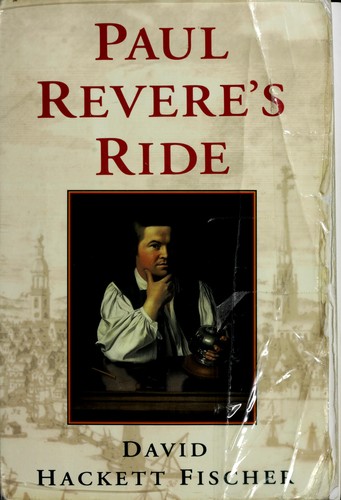
Paul Revere's Ride

David Hackett Fischer

★★★★
Read Basic intel Advanced intel Military history Intel history Logistics Technical warfare Espionage Cyber Logistics Revolution ISBN 0195098315

Oxford University Press · 1995

Paul Revere's midnight ride is a legendary event in American history - yet it has been largely ignored by scholars, and left to patriotic writers and debunkers. Now one of the foremost American historians offers the first serious study of this event - what led to it, what really happened, what followed - uncovering a truth more remarkable than the many myths it has inspired. In Paul Revere's Ride, David Hackett Fischer has created an exciting narrative that offers new insight into the coming of the American Revolution. From research in British and American archives, the author unravels a plot that no novelist would dare invent - a true story of high drama and deep suspense, of old-fashioned heroes and unvarnished villains, of a beautiful American spy who betrayed her aristocratic British husband, of violent mobs and marching armies, of brave men dying on their doorsteps, of high courage, desperate fear, and the destiny of nations. The narrative is constructed around two thematic lines. One story centers on the American patriot Paul Revere; the other, on British General Thomas Gage. Both were men of high principle who played larger roles than recent historiography has recognized. Thomas Gage was not the Tory tyrant of patriot legend, but an English Whig who believed in liberty and the rule of law. In 1774 and 1775, General Gage's advice shaped the fatal choices of British leaders, and his actions guided the course of American events. Paul Revere was more than a "simple artizan, " as his most recent biographer described him fifty years ago. The author presents new evidence that revolutionary Boston was a world of many circles - more complex than we have known. Paul Revere and his friend Joseph Warren ranged more widely through those circles than any other leaders. They became the linchpins of the Whig movement. On April 18th, 1775, Paul Revere played that role in a manner that has never been told before. He and William Dawes were not the only midnight riders to ca