S2 Search · Reading list

S2 Actual reading list

Books from S2 Actual on Goodreads, organized by his shelves and topic buckets (intel lists, military history, logistics, etc.). Metadata filled via Open Library.

Not official S2 Underground. Independent fan index — not affiliated with or endorsed by S2. Official hub: linktr.ee/S2_underground. S2 materials are CC BY-NC-SA 4.0.

S2 topic buckets (Goodreads)

Subjects & genres

415 books · All shelves · page 5 of 18

No cover · Amazon

The Crucible of War: The Complete Volumes

Barrie Pitt

★★★★★
Read Advanced intel WWII Middle East Strategy / theory

‘The definitive work on the Desert War.’ Manchester Evening News WAVELL’S Volume 1 of The Crucible of War trilogy covers General Wavell’s command, a period that began triumphantly with the rout of the Italian Army and ended in catastrophe with the devastating entry of Rommel into the conflict. On 11th June 1940, Mussolini declared war on Britain and France. From their colony in Libya, the Italians began invading Egypt in an attempt to expand their African Empire. Thus began the Desert War – a battle to secure critical Middle East oil supplies which would last for three years. Commander-in-Chief of the Middle East was General Sir Archibald Wavell. By 1940, and with limited resources, he was responsible for all British land forces in Egypt, the Sudan, Palestine, Transjordan and Cyprus, as well as the Army formations in British Somaliland, Aden, Iraq and along the shores of the Persian Gulf. Attack was the only form of defence and under field commander General Richard O’Connor, an immensely successful and exhilarating campaign was carried out against Marshal Graziani’s forces. The Italians were pushed back hundreds of miles and 130,000 prisoners were taken. By February 1941 nearly all Axis forces had been expelled from North Africa. It was a remarkable triumph in one of the most dramatic theatres of the Second World War. AUCHINLECK’S Volume Two of The Crucible of War trilogy covers General Auchinleck’s command — a period of disaster and defeat for the British Army, driven back towards Cairo by the Africa Korps under the tactical genius of Rommel. The book ends however with the replacing of Auchinleck by Montgomery in August 1942. Auchinleck's Command is essential reading for anyone interested in WW2, the British Army (it's strengths and weaknesses) and military leadership. MONTGOMERY AND Throughout the first half of the Second World War, control of the inhospitable North African desert was strategically vital for the Allies. In the middle of 1942, the outcome hung in the balance. Rommel and his Afrika Korps had been fought to a standstill at the first battle of Alamein and were desperately short of fuel and equipment. The next encounter between the two armies would be decisive. The scene was set for a second, and bludgeoning, encounter at El Alamein in October. It was to prove Britain’s first decisive victory of the war. Praise for the Crucible of War ‘Barrie Pitt tells this exciting history well. He has assembled a mass of information and organised it with admirable clarity. His narrative is scrupulously accurate in detail. The whole work will have great appeal for the general reader.’ Times Literary Supplement ‘Masterly and lucid in its descriptions not only of the fighting and strategy, but of the political machinations’ Sunday Telegraph ‘A magnificent book, Barrie Pitt has almost a novelist’s skill and perception of character.’ Daily Telegraph ‘Comes as close as any work yet published to being a definitive account of the battles between German and Allied armies in the Sahara.’ Financial Times Barrie Pitt (1918-2006) was well known as a military historian and editor of Purnell’s History of the Second Wor
The Desert War Trilogy

Alan Moorehead

★★★★★
Read Advanced intel Intel history Military history Logistics Armor Logistics ISBN 9781845133917

Quarto Publishing Group UK · 2009

The seminal account of the battle between Montgomery’s Eighth Army and Rommel’s Afrika Corps, amidst the endless harsh wastes of the Western Desert. In 1940, Alan Moorehead was sent to cover the North Africa campaign by the Daily Express, and he followed its dramatic course all the way to 1943. The three books he subsequently wrote about the Desert War – later collected as his ‘African Trilogy’ – were swiftly acclaimed as a classic account of the tussle between Montgomery’s Eighth Army and Rommel’s Afrika Corps, under the beating sun of the Egyptian Sahara's Western Desert. Moorehead was responsible for the celebrated insight that tank battles in the desert are like battles at sea, the lumbering tanks like ships lost in a vast ocean of sand. The New Statesman could not have put it better when it described his achievement with this riveting book: ‘There is something of genius in the breadth and penetration of his vision , which encompasses the whole panorama of war and then narrows it down to the particular: the soldier stubbing out his cigarette before going into action, the expression on a tank commander’s face as he is hit… The story of the African campaigns will go down in history as one of the great epics of mankind, largely thanks to Mr Moorehead’s account.’

No cover · Amazon

The Diary of a U-boat Commander

R.N. Etienne

★★★★★
Read Military history Naval

The M.S. of this amazing diary of a German U-Boat Commander has fallen into our hands under somewhat unusual and mysterious circumstances, the name of the writer being withheld for reasons which will be readily apparent to all who read his astounding experiences. It is, however, a story so thrilling and sensational that we have no hesitation in offering it as it stands to the public, kept so long in ignorance by the necessary evil of a rigid censorship. A particularly human and intriguing touch is given to the book by the Author's very frank account of his mad infatuation for a beautiful girl of his own country who was inextricably involved in his incredible exploits and adventures on the high seas.

No cover · Amazon

The Emperor's Handbook

Marcus Aurelius

★★★★★
Read Advanced intel Military history

"Do not act as if thou were going to live ten thousand years. Death hangs over thee. While thoug livest, while it is in thy power, be good." Meditations contains the private wisdom of Marcus Aurelius, Roman Emperor from AD 161 to 180, and a great philosopher. His Meditations were never intended for publication. They were his personal thoughts and spiritual reflections, which he wrote down and referred to in order to help him manage the challenges of governing the Roman Empire while maintaining a peaceful private life. His philosophy articulated the need for inner peace and moral certainty in a world filled with chaos and suffering. The insights found in Meditations are just as helpful today as when Marcus Aurelius first wrote them nearly two millennia ago.

The Face of Battle: A Study of Agincourt, Waterloo and the Somme

John Keegan

★★★★★
Read Military history Intel history WWI Strategy / theory ISBN 9781844137480

Pimlico · 2004

The Face of Battle is military history from the battlefield: a look at the direct experience of individuals at 'the point of maximum danger'. It examines the physical conditions of fighting, the particular emotions and behaviour generated by battle, as well as the motives that impel soldiers to stand and fight rather than run away. In his scrupulous reassessment of three battles, John Keegan vividly conveys their reality for the participants, whether facing the arrow cloud of Agincourt, the levelled muskets of Waterloo or the steel rain of the Somme.

The Fall of Berlin 1945

Antony Beevor

★★★★★
Read Military history WWII Russia / USSR ISBN 9783570003695

ISIS Audio Books · 2002

"A tale drenched in drama and blood, heroism and cowardice, loyalty and betrayal."--Jonathan Yardley, The Washington Post The Red Army had much to avenge when it finally reached the frontiers of the Third Reich in January 1945. Frenzied by their terrible experiences with Wehrmacht and SS brutality, they wreaked havoc--tanks crushing refugee columns, mass rape, pillage, and unimaginable destruction. Hundreds of thousands of women and children froze to death or were massacred; more than seven million fled westward from the fury of the Red Army. It was the most terrifying example of fire and sword ever known. Antony Beevor, renowned author of D-Day and The Battle of Arnhem, has reconstructed the experiences of those millions caught up in the nightmare of the Third Reich's final collapse. The Fall of Berlin is a terrible story of pride, stupidity, fanaticism, revenge, and savagery, yet it is also one of astonishing endurance, self-sacrifice, and survival against all odds.

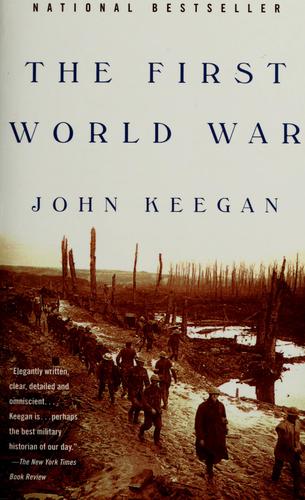
The First World War

John Keegan

★★★★★
Read Intel history WWII WWI Armor Russia / USSR Economics ISBN 9780375700453

Vintage · 2000

The First World War created the modern world. A conflict of unprecedented ferocity, it abruptly ended the relative peace and prosperity of the Victorian era, unleashing such demons of the twentieth century as mechanized warfare and mass death. It also helped to usher in the ideas that have shaped our times--modernism in the arts, new approaches to psychology and medicine, radical thoughts about economics and society--and in so doing shattered the faith in rationalism and liberalism that had prevailed in Europe since the Enlightenment. With The First World War, John Keegan, one of our most eminent military historians, fulfills a lifelong ambition to write the definitive account of the Great War for our generation. Probing the mystery of how a civilization at the height of its achievement could have propelled itself into such a ruinous conflict, Keegan takes us behind the scenes of the negotiations among Europe's crowned heads (all of them related to one another by blood) and ministers, and their doomed efforts to defuse the crisis. He reveals how, by an astonishing failure of diplomacy and communication, a bilateral dispute grew to engulf an entire continent. But the heart of Keegan's superb narrative is, of course, his analysis of the military conflict. With unequalled authority and insight, he recreates the nightmarish engagements whose names have become legend--Verdun, the Somme and Gallipoli among them--and sheds new light on the strategies and tactics employed, particularly the contributions of geography and technology. No less central to Keegan's account is the human aspect. He acquaints us with the thoughts of the intriguing personalities who oversaw the tragically unnecessary catastrophe--from heads of state like Russia's hapless tsar, Nicholas II, to renowned warmakers such as Haig, Hindenburg and Joffre. But Keegan reserves his most affecting personal sympathy for those whose individual efforts history has not recorded--"the anonymous millions, indistinguishably drab, undifferentially deprived of any scrap of the glories that by tradition made the life of the man-at-arms tolerable." By the end of the war, three great empires--the Austro-Hungarian, the Russian and the Ottoman--had collapsed. But as Keegan shows, the devastation ex-tended over the entirety of Europe, and still profoundly informs the politics and culture of the continent today. His brilliant, panoramic account of this vast and terrible conflict is destined to take its place among the classics of world history. With 24 pages of photographs, 2 endpaper maps, and 15 maps in text

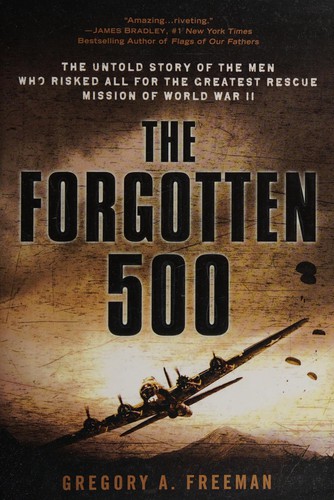
The Forgotten 500: The Untold Story of the Men Who Risked All For the Greatest Rescue Mission of World War II

Gregory A. Freeman

★★★★★
Read WWII Air power Intel history Biography ISBN 9780451222121

Nal Caliber · 2007

Draws on recently declassified documents and exclusive interviews to recount the dramatic story of a World War II rescue mission in 1944 during which the OSS embarked on a daring scheme to recover more than five hundred airmen trapped behind enemy lines in Yugoslavia. 40,000 first printing.

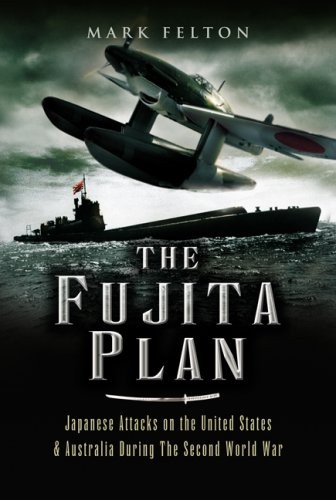
The Fujita Plan: Japanese Attacks on the United States and Australia during the Second World War

Mark Felton

★★★★★
Read Intel history WWII Espionage Naval Air power ISBN 1844154807

PEN & SWORD · Nov 14, 2006

After the staggering success of the Pearl Harbor surprise attack, the Japanese plotted to maintain the initiative and spread fear and panic among the civil population of the United States and Australia. With his usual skilled research the author has uncovered numerous plans. Some like the midget submarine attack on Sydney Harbour and the daring Seaplane air raids on Oregon were put into effect. Others never reached that stage due to either impracticality, bad luck or counter-espionage. The Fujita Plan throws fascinating new light on a little known aspect of the Second World War.

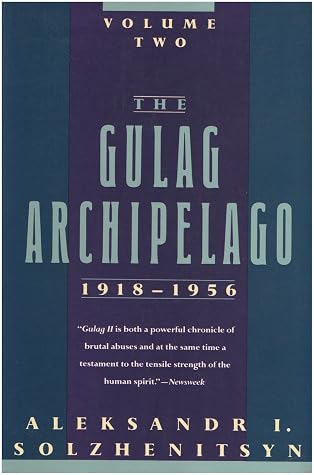
The Gulag Archipelago 1918–1956 (Abridged)

Aleksandr Solzhenitsyn

★★★★★
Read Military history WWII Cold War Russia / USSR Biography ISBN 0060007761

Perennial · 2002

Drawing on his own incarceration and exile, as well as on evidence from more than 200 fellow prisoners and Soviet archives, Aleksandr I. Solzhenitsyn reveals the entire apparatus of Soviet repression—the state within the state that ruled all-powerfully. Through truly Shakespearean portraits of its victims—men, women, and children—we encounter secret police operations, labor camps and prisons; the uprooting or extermination of whole populations, the welcome that awaited Russian soldiers who had been German prisoners of war. Yet we also witness the astounding moral courage of the incorruptible, who, defenseless, endured great brutality and degradation. The Gulag Archipelago 1918–1956—a grisly indictment of a regime, fashioned here into a veritable literary miracle—has now been updated with a new introduction that includes the fall of the Soviet Union and Solzhenitsyn's move back to Russia.

The Gulag Archipelago, 1918-1956: An Experiment in Literary Investigation, Books III-IV

Aleksandr Solzhenitsyn

★★★★★
Read Cold War Russia / USSR ISBN 006092103X

HarperPerennial · 1992

Drawing on his own incarceration and exile, as well as on evidence from more than 200 fellow prisoners and Soviet archives, Aleksandr I. Solzhenitsyn reveals the entire apparatus of Soviet repression -- the state within the state that ruled all-powerfully. Through truly Shakespearean portraits of its victims -- men, women, and children -- we encounter secret police operations, labor camps and prisons; the uprooting or extermination of whole populations, the "welcome" that awaited Russian soldiers who had been German prisoners of war. Yet we also witness the astounding moral courage of the incorruptible, who, defenseless, endured great brutality and degradation. The Gulag Archipelago 1918-1956 -- a grisly indictment of a regime, fashioned here into a veritable literary miracle -- has now been updated with a new introduction that includes the fall of the Soviet Union and Solzhenitsyn's move back to Russia.

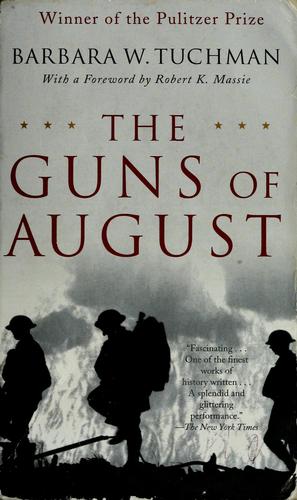
The Guns of August

Barbara W. Tuchman

★★★★★
Read WWII WWI Orthodox / theology ISBN 9788490061626

Little, Brown Book Group Limited · 1962

The Pulitzer Prize-winning classic about the outbreak of World War I. Selected by the Modern Library as one of the 100 best nonfiction books of all time. In this landmark, Pulitzer Prize–winning account, renowned historian Barbara W. Tuchman re-creates the first month of World War I: thirty days in the summer of 1914 that determined the course of the conflict, the century, and ultimately our present world. Beginning with the funeral of Edward VII, Tuchman traces each step that led to the inevitable clash. And inevitable it was, with all sides plotting their war for a generation. Dizzyingly comprehensive and spectacularly portrayed with her famous talent for evoking the characters of the war’s key players, Tuchman’s magnum opus is a classic for the ages. Praise for The Guns of August “A brilliant piece of military history which proves up to the hilt the force of Winston Churchill’s statement that the first month of World War I was ‘a drama never surpassed.’”—Newsweek “More dramatic than fiction . . . a magnificent narrative—beautifully organized, elegantly phrased, skillfully paced and sustained.”—Chicago Tribune “A fine demonstration that with sufficient art rather specialized history can be raised to the level of literature.”—The New York Times “[The Guns of August] has a vitality that transcends its narrative virtues, which are considerable, and its feel for characterizations, which is excellent.” —The Wall Street Journal

No cover · Amazon

The Handbook of 5GW: A Fifth Generation of War?

Daniel H. Abbott

★★★★★
Read Advanced intel Basic intel Technical warfare

The successful application of the Fifth Generation of Warfare (5GW) is "indistinguishable from magic" (Rees 2009, following in the spirit of Clarke's Law, propounded by the author of 2001: A Space Odyssey) "any sufficiently advanced technology is indistinguishable from magic"). The Fifth-Generation warrior hides in the shadows, or in the static. So, then, how can analysts and researchers study and discuss 5GW? Other questions also demand answers. What is the xGW framework, which many theorists use to describe 5GW? What alternatives to the xGW framework exist? What 5GWs have been observed? What are the source documents for the xGW framework? What is the universe of discourse that the xGW framework emerged from? Why bother trying to understand 5GW? This handbook attempts to provide systematic answers to these questions in several major sections, each of which is written by many contributors. While this handbook records many different voices of 5GW research, it speaks with one voice on the need to understand 5GW, the fifth gradient of warfare. This Kindle version includes all images and figures from the printed book; some images will not display well on grayscale devices.

No cover · Amazon

The Hitchhiker's Guide to the Galaxy (Hitchhiker's Guide to the Galaxy, #1)

Douglas Adams

★★★★★
Read

Seconds before the Earth is demolished to make way for a galactic freeway, Arthur Dent is plucked off the planet by his friend Ford Prefect, a researcher for the revised edition of The Hitchhiker's Guide to the Galaxy who, for the last fifteen years, has been posing as an out-of-work actor. Together this dynamic pair begin a journey through space aided by quotes from The Hitchhiker's Guide ("A towel is about the most massively useful thing an interstellar hitchhiker can have") and a galaxy-full of fellow travelers: Zaphod Beeblebrox—the two-headed, three-armed ex-hippie and totally out-to-lunch president of the galaxy; Trillian, Zaphod's girlfriend (formally Tricia McMillan), whom Arthur tried to pick up at a cocktail party once upon a time zone; Marvin, a paranoid, brilliant, and chronically depressed robot; Veet Voojagig, a former graduate student who is obsessed with the disappearance of all the ballpoint pens he bought over the years. Where are these pens? Why are we born? Why do we die? Why do we spend so much time between wearing digital watches? For all the answers stick your thumb to the stars. And don't forget to bring a towel!

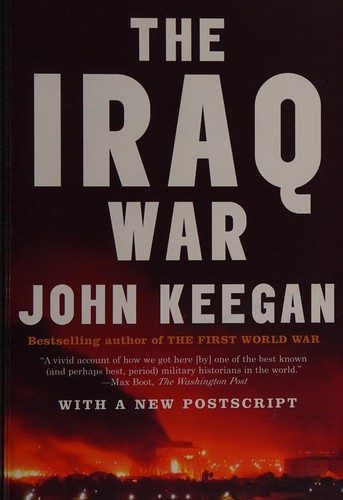
The Iraq War

John Keegan

★★★★★
Read Basic intel GWOT Middle East Strategy / theory ISBN 1400079209

Vintage Books · 2005

The 2003 Iraq war remains among the most mysterious armed conflicts of modernity. In The Iraq War , John Keegan offers a sharp and lucid appraisal of the military campaign, explaining just how the coalition forces defeated an Iraqi army twice its size and addressing such questions as whether Saddam Hussein ever possessed weapons of mass destruction and how it is possible to fight a war that is not, by any conventional measure, a war at all. Drawing on exclusive interviews with Donald Rumsfeld and General Tommy Franks, Keegan retraces the steps that led to the showdown in Iraq, from the highlights of Hussein’s murderous rule to the diplomatic crossfire that preceded the invasion. His account of the combat in the desert is unparalleled in its grasp of strategy and tactics. The result is an urgently needed and up-to-date book that adds immeasurably to our understanding of those twenty-one days of war and their long, uncertain aftermath.

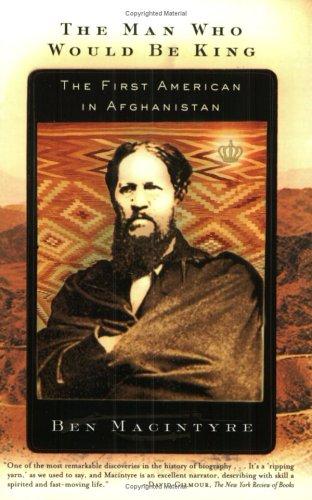
The Man Who Would Be King: The First American in Afghanistan

Ben Macintyre

★★★★★
Read Advanced intel Intel history Espionage GWOT Intel history Biography ISBN 9780374529574

Farrar, Straus and Giroux · April 14, 2005

The riveting story that inspired Kipling's classic tale and a John Huston movie The true story of Josiah Harlan, a Pennsylvania Quaker and the first American ever to enter Afghanistan, has never been told before. Soldier, spy, doctor, naturalist, traveler and writer, Josiah Harlan wanted to be a king, with all the imperialist hubris of his times. In an amazing twenty-year journey around Central Asia, he was variously employed as surgeon to the Maharaja of Punjab, revolutionary agent for the exiled Afghan King, and then commander-in-chief of the Afghan armies. In 1838, he set off in the footsteps of Alexander the Great across the Hindu Kush and forged his own kingdom, only to be ejected from Afghanistan a few months later by the invading British. Using a trove of newly-discovered documents, Harlan's own unpublished journals, and with a revised Preface detailing the unexpected discovery of Harlan's descendents, Ben Macintyre's The Man Who Would Be King tells the astonishing tale of the man who would be the first and last American king.

The Myth of the Robber Barons: A New Look at the Rise of Big Business in America

Burton W. Folsom Jr.

★★★★★
Read Logistics Logistics Intel history Economics ISBN 0963020307

Young America's Foundation · 1991

The Myth of the Robber Barons describes the role of key entrepreneurs in the economic growth of the United States from 1850 to 1910. The entrepreneurs studied are Cornelius Vanderbilt, John D. Rockefeller, James J. Hill, Andrew Mellon, Charles Schwab, and the Scranton family. Most historians argue that these men, and others like them, were Robber Barons. The story, however, is more complicated. The author, Burton Folsom, divides the entrepreneurs into two groups market entrepreneurs and political entrepreneurs. The market entrepreneurs, such as Hill, Vanderbilt, and Rockefeller, succeeded by producing a quality product at a competitive price. The political entrepreneurs such as Edward Collins in steamships and in railroads the leaders of the Union Pacific Railroad were men who used the power of government to succeed. They tried to gain subsidies, or in some way use government to stop competitors. The market entrepreneurs helped lead to the rise of the U. S. as a major economic power. By 1910, the U. S. dominated the world in oil, steel, and railroads led by Rockefeller, Schwab (and Carnegie), and Hill. The political entrepreneurs, by contrast, were a drain on the taxpayers and a thorn in the side of the market entrepreneurs. Interestingly, the political entrepreneurs often failed without help from government they could not produce competitive products. The author describes this clash of the market entrepreneurs and the political entrepreneurs. In the Mellon chapter, the author describes how Andrew Mellon an entrepreneur in oil and aluminum became Secretary of Treasury under Coolidge. In office, Mellon was the first American to practice supply-side economics. He supported cuts on income tax rates for all groups. The rate cut on the wealthiest Americans, from 73 percent to 25 percent, freed up investment capital and led to American economic growth during the 1920s. Also, the amount of revenue into the federal treasury increased sharply after tax rates were cut. The Myth of the Robber Barons has separate chapters on Vanderbilt, Hill, Schwab, Mellon, and the Scrantons. The author also has a conclusion, in which he looks at the textbook bias on the subject of Robber Barons and the rise of the U. S. in the late 1800s. This chapter explores three leading college texts in U. S. history and shows how they misread American history and disparage market entrepreneurs instead of the political entrepreneurs. This book is in its fifth edition, and is widely adopted in college and high school classrooms across the U. S.

The Napoleon of Crime: The Life and Times of Adam Worth, Master Thief

Ben Macintyre

★★★★★
Read Biography ISBN 9780385319935

Delta · July 6, 1998

He is the Napoleon of crime, Watson. He is the organizer of half that is evil and of nearly all that is undetected in this great city. He is a genius, a philosopher, an abstract thinker. . . . --Sherlock Holmes on Professor Moriarty in The Final Problem The Victorian era's most infamous thief, Adam Worth was the original Napoleon of crime. Suave, cunning Worth learned early that the best way to succeed was to steal. And steal he did. Following a strict code of honor, Worth won the respect of Victorian society. He also aroused its fear by becoming a chilling phantom, mingling undetected with the upper classes, whose valuables he brazenly stole. His most celebrated heist: Gainsborough's grand portrait of the Duchess of Devonshire--ancestor of Diana, Princess of Wales--a painting Worth adored and often slept with for twenty years. With a brilliant gang that included "Piano" Charley, a jewel thief, train robber, and playboy, and "the Scratch" Becker, master forger, Worth secretly ran operations from New York to London, Paris, and South Africa--until betrayal and a Pinkerton man finally brought him down. In a decadent age, Worth was an icon. His biography is a grand, dazzling tour into the gaslit underworld of the last century. . . and into the doomed genius of a criminal mastermind.

The Odyssey

Homer

★★★★★
Read ISBN 9780143039952

Penguin Classics · October 31, 2006

Sing to me of the man, Muse, the man of twists and turns driven time and again off course, once he had plundered the hallowed heights of Troy. So begins Robert Fagles' magnificent translation of the Odyssey. If the Iliad is the world's greatest war epic, then the Odyssey is literature's grandest evocation of everyman's journey though life. Odysseus' reliance on his wit and wiliness for survival in his encounters with divine and natural forces, during his ten-year voyage home to Ithaca after the Trojan War, is at once a timeless human story and an individual test of moral endurance. In the myths and legends that are retold here, Fagles has captured the energy and poetry of Homer's original in a bold, contemporary idiom, and given us an Odyssey to read aloud, to savor, and to treasure for its sheer lyrical mastery. Renowned classicist Bernard Knox's superb Introduction and textual commentary provide new insights and background information for the general reader and scholar alike, intensifying the strength of Fagles' translation. This is an Odyssey to delight both the classicist and the public at large, and to captivate a new generation of Homer's students. -- Robert Fagles, winner of the PEN/Ralph Manheim Medal for Translation and a 1996 Academy Award in Literature from the American Academy of Arts and Letters, presents us with Homer's best-loved and most accessible poem in a stunning new modern-verse translation.

The Orthodox Way

Kallistos Ware

★★★★★
Read Russia / USSR Strategy / theory Orthodox / theology ISBN 0913836583

St. Vladimir's Seminary Press · 1995

This book is a general account of the doctrine, worship and life of Orthodox Christians by the author of the now classic THE ORTHODOX CHURCH. It raises the basic issues of theology: God as hidden yet revealed; the problem of evil; the nature of salvation; the meaning of faith; prayer; death and what lies beyond. In so doing, it helps to fill the need for a modern Orthodox catechism. Yet this book is not a mere manual, a dry-as-dust repository of information. Throughout the book, Father Ware shows the meaning of Orthodox doctrine for the life of the individual Christian. Doctrinal issues are seen not as abstract propositions for thological debate but as affecting the whole of life. A wealth of texts drawn from theologians and spiritual writers of all ages accompanies Father Ware's presentation. They too reveal Orthodoxy not just as a system of beliefs, practices and customs but indeed as the Way.

The Persian Expedition

Xenophon

★★★★★
Read Middle East Biography Strategy / theory ISBN 0140440070

Penguin Books · 1972

In The Persian Expedition, Xenophon, a young Athenian noble who sought his destiny abroad, provides an enthralling eyewitness account of the attempt by a Greek mercenary army - the Ten Thousand - to help Prince Cyrus overthrow his brother and take the Persian throne. When the Greeks were then betrayed by their Persian employers, they were forced to march home through hundreds of miles of difficult terrain - adrift in a hostile country and under constant attack from the unforgiving Persians and warlike tribes. In this outstanding description of endurance and individual bravery, Xenophon, one of those chosen to lead the retreating army, provides a vivid narrative of the campaign and its aftermath, and his account remains one of the best pictures we have of Greeks confronting a 'barbarian' world.

The Roots Of Blitzkrieg: Hans von Seeckt And German Military Reform

James S. Corum

★★★★★
Read Advanced intel Basic intel Military history Intel history Logistics WWII WWI Logistics Strategy / theory ISBN 9780700606283

University Press of Kansas · February 1994

Following Germany's defeat in World War I, the Germans signed the Versailles Treaty, superficially agreeing to limit their war powers. The Allies envisioned the future German army as a lightly armed border guard and international security force. The Germans had other plans. As early as 1919, James Corum contends, the tactical foundations were being laid for the Nazi Blitzkrieg. Between 1919 and 1933, German military leaders created and nurtured the Reichswehr, a new military organization built on the wreckage of the old Imperial Army. It was not being groomed for policing purposes. Focusing on Hans von Seeckt, General Staff Chief and Army Commander, Corum traces the crucial transformations in German military tactical doctrine, organization, and training that laid the foundations for fighting Germany's future wars. In doing so, he restores balance to prior assessment of von Seeckt's influence and demonstrates how the general, along with a few other "visionary" officers--including armor tactician Ernst Volckheim and air tactician Helmut Wilberg--collaborated to develop the core doctrine for what became the Blitzkrieg. The concepts of mobile war so essential to Germany's strength in World War II, Corum shows, were in place well before the tools became available. As an unforeseen consequence of the Versailles Treaty, the Germans were not saddled with a stockpile of outdated equipment as the Allies were. This, ironically, resulted in an advantage for the Germans, who were able to create doctrine first and design equipment to match it.

The Second World War

John Keegan

★★★★★
Read Intel history WWII Armor Strategy / theory ISBN 014011341X

Penguin Books · 1990

In this comprehensive history, John Keegan explores both the technical and the human impact of the greatest war of all time. He focuses on five crucial battles and offers new insights into the distinctive methods and motivations of modern warfare. In knowledgable, perceptive analysis of the airborne battle of Crete, the carrier battle of Midway, the tank battle of Falaise, the city battle of Berlin, and the amphibious battle of Okinawa, Keegan illuminates the strategic dilemmas faced by the leaders and the consequences of their decisions on the fighting men and the course of the war as a whole.