S2 Search · Reading list

S2 Actual reading list

Books from S2 Actual on Goodreads, organized by his shelves and topic buckets (intel lists, military history, logistics, etc.). Metadata filled via Open Library.

Not official S2 Underground. Independent fan index — not affiliated with or endorsed by S2. Official hub: linktr.ee/S2_underground. S2 materials are CC BY-NC-SA 4.0.

S2 topic buckets (Goodreads)

Subjects & genres

210 books · Military history · page 5 of 9

Penalty Strike (Stackpole Military History Series)

Alexander V. Pyl'cyn

★★★★
Read Military history WWII Cold War Russia / USSR Biography ISBN 9780811735995

Stackpole Books · 2009

- Extremely rare (possibly the only) book-length account of a Soviet penal unit in World War II - Gritty, intense style conveys the brutality of war on the Eastern Front Composed of convicts--soldiers who conducted "unauthorized retreats," former Soviet POWs deemed untrustworthy, and Gulag prisoners--the Red Army's penal units received the most difficult, dangerous assignments, such as breaking through the enemy's defenses. So punishing was life in these units that officers in regular formations threatened to send recalcitrant troops to penal battalions. Alexander Pyl'cyn led his penal unit through the Soviets' massive offensive in the summer of 1944, the Vistula-Oder operation into eastern Germany, and the bitter assault on Berlin in 1945. He survived the war, but 80 percent of his men did not.

Phantom Soldier: The Enemy's Answer to U.S. Firepower

H. John Poole

★★★★
Read Advanced intel Military history WWII GWOT Air power Guerrilla / COIN Strategy / theory ISBN 9780963869555

Posterity Press · August 9, 2001

"Phantom Soldier" is now on the U.S. Army's most prestigious pre-deployment reading list for a reason. It won't please those who have come to believe that wars are won and casualties limited through technology, or that the victor's version of one is always correct. But, all U.S. security personnel should read it. Possibly the West's best treatise on Oriental warfare, it sheds new light on what Asian infantry can do: (1) alternate between guerrilla, mobile, and positional warfare; (2) use "ordinary forces" to engage and "extraordinary forces [infiltrators]" to defeat; and then (3) retreat to save lives. What occurred in history doesn't change, but one's perception of it does--as he comes to better understand his former foe. Here's what really happened at Guadalcanal, Iwo Jima, Chosin Reservoir, and Hue City. Those who believe this book's cover art to be fantasy have only to google the term "dac cong." Through how the NVA held their own without resupply, tanks, artillery, or air power, U.S. grunts could better survive the more lethal enemy weaponry of the 21st Century.

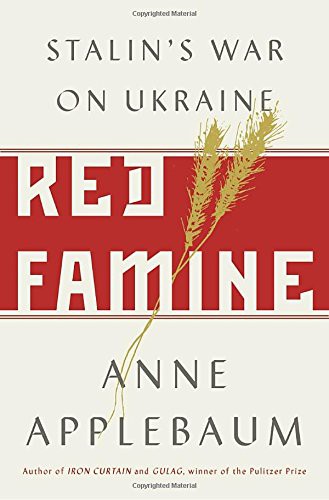
Red Famine: Stalin's War on Ukraine

Anne Applebaum

★★★★
Read Advanced intel Military history Cold War Russia / USSR ISBN 9780771009303

Signal · Oct 10, 2017

The momentous new book from the Pulitzer Prize-winning author of Gulag and Iron Curtain. In 1932-33, nearly four million Ukrainians died of starvation, having been deliberately deprived of food. It is one of the most devastating episodes in the history of the twentieth century. With unprecedented authority and detail, Red Famine investigates how this happened, who was responsible, and what the consequences were. It is the fullest account yet published of these terrible events. The book draws on a mass of archival material and first-hand testimony only available since the end of the Soviet Union, as well as the work of Ukrainian scholars all over the world. It includes accounts of the famine by those who survived it, describing what human beings can do when driven mad by hunger. It shows how the Soviet state ruthlessly used propaganda to turn neighbours against each other in order to expunge supposedly 'anti-revolutionary' elements. It also records the actions of extraordinary individuals who did all they could to relieve the suffering. The famine was rapidly followed by an attack on Ukraine's cultural and political leadership - and then by a denial that it had ever happened at all. Census reports were falsified and memory suppressed. Some western journalists shamelessly swallowed the Soviet line; others bravely rejected it, and were undermined and harassed. The Soviet authorities were determined not only that Ukraine should abandon its national aspirations, but that the country's true history should be buried along with its millions of victims. Red Famine, a triumph of scholarship and human sympathy, is a milestone in the recovery of those memories and that history. At a moment of crisis between Russia and Ukraine, it also shows how far the present is shaped by the past.

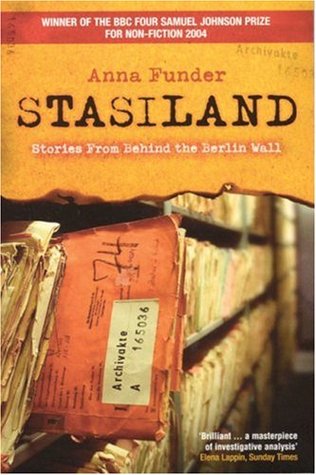
Stasiland: Stories from Behind the Berlin Wall

Anna Funder

★★★★
Read Advanced intel Intel history Military history Cold War ISBN 1862076553

GRANTA

Anna Funder’s Samuel Johnson Prize-winning Stasiland is an Australian classic, the definitive account of tyranny and resistance in the former East Germany. In 1989, the Berlin Wall fell; shortly afterwards the two Germanies reunited and East Germany ceased to exist. Anna Funder’s best-selling Stasiland brings us extraordinary tales of real lives in the former East Germany. She meets Miriam, who tried to escape to West Berlin as a 16-year-old; hears the heartbreaking story of Frau Paul, who was separated from her young baby by the Berlin Wall; and gets drunk with the legendary ‘Mik Jegger’ of the East, once declared by the authorities - to his face - ‘no longer to exist’. And she meets the Stasi men themselves, still proud of their surveillance methods. Funder’s powerful account of that brutal world has become a contemporary classic.

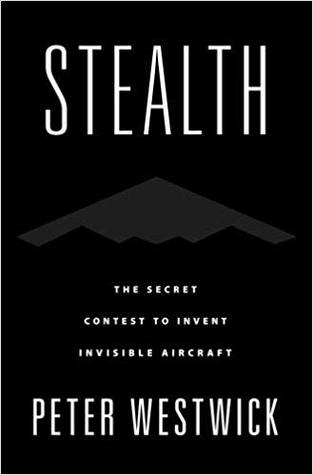
Stealth: The Secret Contest to Invent Invisible Aircraft

Peter Westwick

★★★★
Read Advanced intel Military history Intel history Cold War Russia / USSR Middle East Strategy / theory ISBN 9780190677442

Oxford University Press, Incorporated · 2020

The story behind the technology that revolutionized both aeronautics, and the course of history On a moonless night in January 1991, a dozen airplanes appeared in the skies over Baghdad. Or, rather, didn't appear. They arrived in the dark, their black outlines cloaking them from sight. More importantly, their odd, angular shapes, which made them look like flying origami, rendered them undetectable to Iraq's formidable air defenses. Stealth technology, developed during the decades before Desert Storm, had arrived. To American planners and strategists at the outset of the Cold War, this seemingly ultimate way to gain ascendance over the USSR was only a question. What if the United States could defend its airspace while at the same time send a plane through Soviet skies undetected? A craft with such capacity would have to be essentially invisible to radar - an apparently miraculous feat of physics and engineering. In Stealth, Peter Westwick unveils the process by which the impossible was achieved. At heart, Stealth is a tale of two aerospace companies, Lockheed and Northrop, and their fierce competition - with each other and with themselves - to obtain what was estimated one of the largest procurement contracts in history. Westwick's book fully explores the individual and collective ingenuity and determination required to make these planes and in the process provides a fresh view of the period leading up to the end of the Soviet Union. Taking into account the role of technology, as well as the art and science of physics and engineering, Westwick offers an engaging narrative, one that immerses readers in the race to produce a weapon that some thought might save the world, and which certainly changed it.

The Art of War

Sun Tzu

★★★★
Read Basic intel Military history Intel history China Strategy / theory ISBN 9781533142467

Pearson Education Asia · 1900

Twenty-Five Hundred years ago, Sun Tzu wrote this classic book of military strategy based on Chinese warfare and military thought. Since that time, all levels of military have used the teaching on Sun Tzu to warfare and civilization have adapted these teachings for use in politics, business and everyday life. The Art of War is a book which should be used to gain advantage of opponents in the boardroom and battlefield alike.

No cover · Amazon

The Crucible of War Book 1: Wavell's Command

Barrie Pitt

★★★★
Read Military history Logistics WWII Middle East Logistics Intel history Strategy / theory Orthodox / theology

The Crucible of War: Book 1 ‘The definitive work on the Desert War.’ Manchester Evening News Wavell’s Command is the first of the three volumes of The Crucible of War. Volume 1 of The Crucible of War trilogy covers General Wavell’s command, a period that began triumphantly with the rout of the Italian Army and ended in catastrophe with the devastating entry of Rommel into the conflict. On 11th June 1940, Mussolini declared war on Britain and France. From their colony in Libya, the Italians began invading Egypt in an attempt to expand their African Empire. Thus began the Desert War – a battle to secure critical Middle East oil supplies which would last for three years. Commander-in-Chief of the Middle East was General Sir Archibald Wavell. By 1940, and with limited resources, he was responsible for all British land forces in Egypt, the Sudan, Palestine, Transjordan and Cyprus, as well as the Army formations in British Somaliland, Aden, Iraq and along the shores of the Persian Gulf. The area for which he had accepted military command thus included nine different countries in two continents. In December 1940 in Libya, Wavell’s Western Desert Force of 36,000 men attacked the Italians across desolate and inhospitable terrain in order to keep Egypt from falling to the Axis and shield access to the Red Sea, the Persian Gulf and possibly even India from Hitler. Attack was the only form of defense and under field commander General Richard O’Connor, an immensely successful and exhilarating campaign was carried out against Marshal Graziani’s forces. The Italians were pushed back hundreds of miles and 130,000 prisoners were taken. By February 1941 nearly all Axis forces had been expelled from North Africa. It was a remarkable triumph in one of the most dramatic theatres of the Second World War which paved the way for later victories, but not immediately – as Rommel’s Afrika Korps meant Wavell, with a now weakened Western Desert Force, was ordered to send men to Greece, despite his conviction that victory was close. The tide of war was about to turn once more. PRAISE FOR THE CRUCIBLE OF WAR TRILOGY: ‘A magnificent book, Barrie Pitt has almost a novelist’s skill and perception of character.’ Daily Telegraph ‘Totally readable, Mr Pitt’s study depicts equally well the broad outlines of strategy, the confusions and hazards of the battlefield and the personalities of the generals or private soldiers fighting there.’ Oxford Times Barrie Pitt (1918-2006) was well known as a military historian and editor of Purnell’s History of the Second World War and History of the First World War. His publications include Coronel and Falkland, Churchill and the Generals and The Crucible of War, a trilogy covering the North African campaign of the Second World War. He was born in Galway and later lived near Ilminster in Somerset.

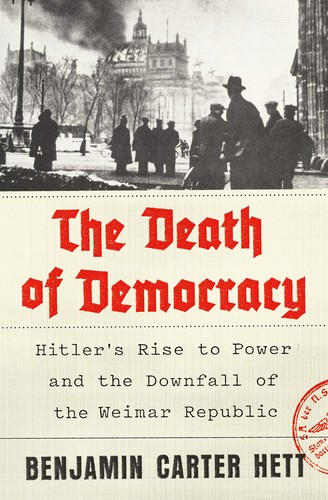
The Death of Democracy: Hitler's Rise to Power and the Downfall of the Weimar Republic

Benjamin Carter Hett

★★★★
Read Military history Economics WWII Guerrilla / COIN Strategy / theory Economics ISBN 9781250162502

Henry Holt and Co. · 2018

A riveting account of how the Nazi Party came to power and how the failures of the Weimar Republic and the shortsightedness of German politicians allowed it to happen Why did democracy fall apart so quickly and completely in Germany in the 1930s? How did a democratic government allow Adolf Hitler to seize power? In The Death of Democracy, Benjamin Carter Hett answers these questions, and the story he tells has disturbing resonances for our own time. To say that Hitler was elected is too simple. He would never have come to power if Germany’s leading politicians had not responded to a spate of populist insurgencies by trying to co-opt him, a strategy that backed them into a corner from which the only way out was to bring the Nazis in. Hett lays bare the misguided confidence of conservative politicians who believed that Hitler and his followers would willingly support them, not recognizing that their efforts to use the Nazis actually played into Hitler’s hands. They had willingly given him the tools to turn Germany into a vicious dictatorship. Benjamin Carter Hett is a leading scholar of twentieth-century Germany and a gifted storyteller whose portraits of these feckless politicians show how fragile democracy can be when those in power do not respect it. He offers a powerful lesson for today, when democracy once again finds itself embattled and the siren song of strongmen sounds ever louder.

The Decline and Fall of the Roman Empire

Edward Gibbon

★★★★
Read Military history Orthodox / theology ISBN 9781579125226

J.M. Dent · 1800

The History of the Decline and Fall of the Roman Empire (sometimes shortened to Fall of the Roman Empire) is a book of history written by the English historian Edward Gibbon. It traces the trajectory of Western civilization (as well as the Islamic and Mongolian conquests) from the height of the Roman Empire to the fall of Byzantium. The work covers the history of the Roman Empire, Europe, and the Catholic Church from 98 to 1590 and discusses the decline of the Roman Empire in the East and West. Because of its relative objectivity and heavy use of primary sources, unusual at the time, its methodology became a model for later historians. This led to Gibbon being called the first "modern historian of ancient Rome" This version includes working footnotes unobtrusively placed at the back of the book with active links for easy navigation, maps from the original book, modern maps, and links to audiobook of all volumes.

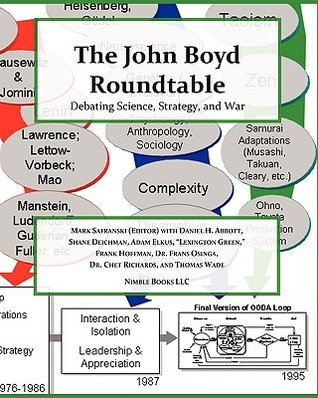
The John Boyd Roundtable: Debating Science, Strategy, and War

Mark Safranski

★★★★
Read Military history Advanced intel Strategy / theory ISBN 9781934840467

Nimble Books · 2008-09-16

A collection of thought-provoking essays about the work of the late Colonel John Boyd, a fighter pilot who was one of the most influential figures in American military strategy in the last third of the Twentieth Century. This book had its origins in an online roundtable hosted at Chicago Boyz, a popular libertarian and conservative group blog founded by Jonathan Glewirtz. The roundtable attracted the participation of an impressive group of reviewers from the blogosphere and from scientific, academic and military fields. Authors whose essays are included in this book include Daniel H. Abbott, Shane Deichman, Adam Elkus, "Lexington Green," Frank Hoffman, Dr. Frans Osinga, Dr. Chet Richards, Thomas Wade, and Dr. Frans Osinga, author of the leading scholarly work on Boyd. This book is essential reading for anyone interested in John Boyd and will provide important insights for anyone who is interested in military strategy and current affairs.

The Longest War: A History of the War on Terror and the Battles with Al Qaeda Since 9/11

Peter L. Bergen

★★★★
Read Advanced intel Military history Intel history Espionage GWOT Middle East Strategy / theory ISBN 9780743278935

Free Press · 2011

TEN YEARS HAVE PASSED since the shocking attacks on the World Trade Center, and after seven years of conflict, the last U.S. combat troops left Iraq—only to move into Afghanistan, where the ten-year-old fight the war on terror rages with no clear end in sight. In The Longest War Peter Bergen offers a comprehensive history of this war and its evolution, from the strategies devised in the wake of the 9/11 attacks to the fighting in Afghanistan, Pakistan, and beyond. Unlike any other book on this subject, here Bergen tells the story of this shifting war’s failures and successes from the perspectives of both the United States and al-Qaeda and its allies. He goes into the homes of al-Qaeda members, rooting into the source of their devotion to terrorist causes, and spends time in the offices of the major players shaping the U.S. strategic efforts in the region. At a time when many are frustrated or fatigued with what has become an enduring multigenerational conflict, this book will provide an illuminating narrative that not only traces the arc of the fight but projects its likely future. Weaving together internal documents from al-Qaeda and the U.S. offices of counterterrorism, first-person interviews with top-level jihadists and senior Washington officials, along with his own experiences on the ground in the Middle East, Bergen balances the accounts of each side, revealing how al-Qaeda has evolved since 9/11 and the specific ways the U.S. government has responded in the ongoing fight. Bergen also uncovers the strategic errors committed on both sides—the way that al-Qaeda’s bold attack on the United States on 9/11 actually undermined its objective and caused the collapse of the Taliban and the destruction of the organization’s safe haven in Afghanistan, and how al-Qaeda is actually losing the war of ideas in the Muslim world. The book also shows how the United States undermined its moral position in this war with its actions at Guantánamo and coercive interrogations—including the extraordinary rendition of Abu Omar, who was kidnapped by the CIA in Milan in 2003 and was tortured for four years in Egyptian prisons; his case represents the first and only time that CIA officials have been charged and convicted of the crime of kidnapping. In examining other strategic blunders the United States has committed, Bergen offers a scathing critique of the Clinton and Bush administrations’ inability to accurately assess and counter the al-Qaeda threat, Bush’s deeply misguided reasons for invading Iraq—including the story of how the invasion was launched based, in part, on the views of an obscure academic who put forth theories about Iraq’s involvement with al-Qaeda—and the Obama administration’s efforts in Afghanistan. At a critical moment in world history The Longest War provides the definitive account of the ongoing battle against terror.

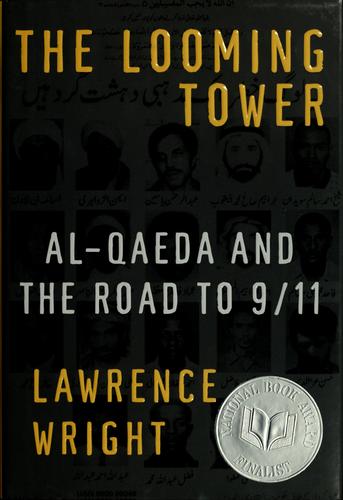
The Looming Tower: Al-Qaeda and the Road to 9/11

Lawrence Wright

★★★★
Read Military history Intel history Basic intel Espionage GWOT Middle East ISBN 037541486X

Knopf · 2006

A sweeping narrative history of the events leading to 9/11, a groundbreaking look at the people and ideas, the terrorist plans and the Western intelligence failures that culminated in the assault on America. Lawrence Wright's remarkable book is based on five years of research and hundreds of interviews that he conducted in Egypt, Saudi Arabia, Pakistan, Afghanistan, Sudan, England, France, Germany, Spain, and the United States. The Looming Tower achieves an unprecedented level of intimacy and insight by telling the story through the interweaving lives of four men: the two leaders of al-Qaeda, Osama bin Laden and Ayman al-Zawahiri; the FBI's counterterrorism chief, John O'Neill; and the former head of Saudi intelligence, Prince Turki al-Faisal. As these lives unfold, we see revealed: the crosscurrents of modern Islam that helped to radicalize Zawahiri and bin Laden . . . the birth of al-Qaeda and its unsteady development into an organization capable of the American embassy bombings in Kenya and Tanzania and the attack on the USS Cole . . . O'Neill's heroic efforts to track al-Qaeda before 9/11, and his tragic death in the World Trade towers . . . Prince Turki's transformation from bin Laden's ally to his enemy . . . the failures of the FBI, CIA, and NSA to share intelligence that might have prevented the 9/11 attacks. The Looming Tower broadens and deepens our knowledge of these signal events by taking us behind the scenes. Here is Sayyid Qutb, founder of the modern Islamist movement, lonely and despairing as he meets Western culture up close in 1940s America; the privileged childhoods of bin Laden and Zawahiri; family life in the al-Qaeda compounds of Sudan and Afghanistan; O'Neill's high-wire act in balancing his all-consuming career with his equally entangling personal life--he was living with three women, each of them unaware of the others' existence--and the nitty-gritty of turf battles among U.S. intelligence agencies. Brilliantly conceived and written, The Looming Tower draws all elements of the story into a galvanizing narrative that adds immeasurably to our understanding of how we arrived at September 11, 2001. The richness of its new information, and the depth of its perceptions, can help us deal more wisely and effectively with the continuing terrorist threat.

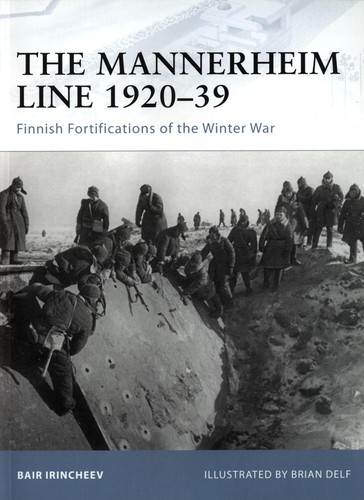
The Mannerheim Line 1920–39: Finnish Fortifications of the Winter War (Fortress, 88)

Bair Irincheev

★★★★
Read Advanced intel Military history Logistics Technical warfare Cold War Armor Russia / USSR Logistics Intel history US Civil War ISBN 9781846033841

Osprey · 2009

In the wake of the bloody civil war that followed Finland's independence from Russia in 1917, the border between the two countries was established across the Karelian Isthmus, an area long fought over by Russia, Finland and Sweden in their attempts to dominate the northern tip of Europe. Neither the Soviets nor the Finnish were comfortable with such a divide, which provided an open route for a potential invader to Helsinki on the Finnish side, and was only 32km from the important military and industrial city of Petrograd in Russia. As such, both sides began an intensive period of fortification and defensive planning. As the Winter War broke out in November 1939, the complex and heavily defended Mannerheim Line suffered intense bombardment and armored assaults. The armistice of May 1940 saw Finland cede control of the entire Karelian Isthmus to the USSR however, and a propaganda war ensued; the Russians emphasizing the strength of the line, and the Finnish downplaying its importance, accentuating instead the heroism and bravery of the common Finnish soldier. Through a detailed analysis of the background, design and operational history of the Mannerheim Line, Bair Irincheev attempts to dispel such myths and provide an accurate assessment of its immense historical importance.

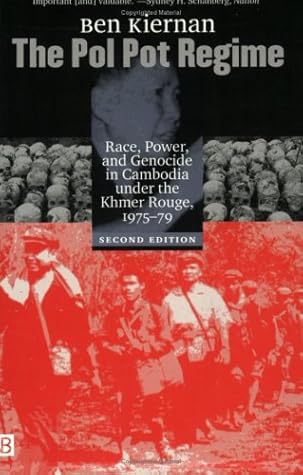
The Pol Pot Regime: Race, Power, and Genocide in Cambodia Under the Khmer Rouge, 1975-79

Ben Kiernan

★★★★
Read Military history Advanced intel ISBN 0300096496

Yale Nota Bene · 2002

Draws on interviews and archival material to document the extent of the atrocities committed by the Khmer Rouge in the late 1970s, which resulted in the deaths of one and a half million Cambodians.

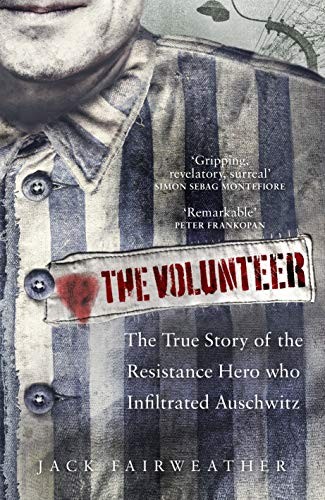
The Volunteer: The True Story of the Resistance Hero who Infiltrated Auschwitz

Jack Fairweather

★★★★
Read Advanced intel Military history Logistics WWII Espionage Logistics Biography ISBN 9780753545164

WH Allen · Mar 21, 2019

How do you keep fighting in the face of unimaginable horror? This is untold story of one of the greatest heroes of the Second World War. In the Summer of 1940, after the Nazi occupation of Poland, an underground operative called Witold Pilecki accepted a mission to uncover the fate of thousands of people being interred at a new concentration camp on the border of the Reich. His mission was to report on Nazi crimes and raise a secret army to stage an uprising. The name of the detention centre -- Auschwitz. It was only after arriving at the camp that he started to discover the Nazi’s terrifying designs. Over the next two and half years, Witold forged an underground army that smuggled evidence of Nazi atrocities to the West, culminating in the mass murder of over a million Jews. His reports from the camp were to shape the Allies response to the Holocaust - yet his story was all but forgotten for decades. This is the first major account of his amazing journey, drawing on exclusive family papers and recently declassified files as well as unpublished accounts from the camp’s fighters to show how he saved hundreds of thousands of lives. The result is a enthralling story of resistance and heroism against the most horrific circumstances, and one man’s attempt to change the course of history.

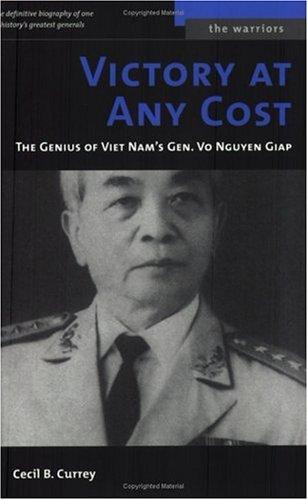
Victory at Any Cost: The Genius of Viet Nam's Gen. Vo Nguyen Giap

Cecil B. Currey

★★★★
Read Biographies Military history Intel history Technical warfare Advanced intel Vietnam Biography ISBN 9781574887426

Potomac Books Inc. · April 27, 2005

Many people do not understand why America lost the Viet Nam War. Author Cecil B. Currey makes one primary reason North Viet Nam's Senior Gen. Vo Nguyen Giap. Victory at Any Cost tells the full story of the man who fought three of the world's great powers—and beat them all.

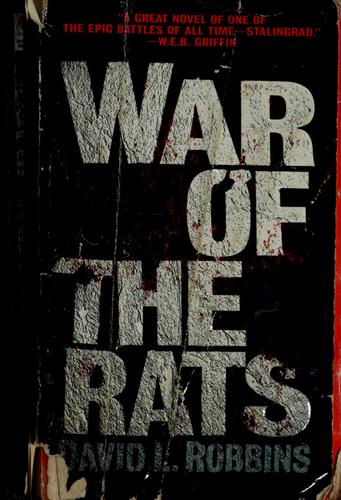
War of the Rats (WWII, #1)

David L. Robbins

★★★★
Read Biographies Military history Technical warfare WWII Cold War Russia / USSR ISBN 9780553581355

Bantam · 2000

For six months in 1942, Stalingrad is the center of a titanic struggle between the Russian and German armies—the bloodiest campaign in mankind's long history of warfare. The outcome is pivotal. If Hitler's forces are not stopped, Russia will fall. And with it, the world.... German soldiers call the battle Rattenkrieg, War of the Rats . The combat is horrific, as soldiers die in the smoking cellars and trenches of a ruined city. Through this twisted carnage stalk two men—one Russian, one German—each the top sniper in his respective army. These two marksmen are equally matched in both skill and tenacity. Each man has his own to find his counterpart—and kill him. But an American woman trapped in Russia complicates this extraordinary duel. Joining the Russian sniper's cadre, she soon becomes one of his most talented assassins—and perhaps his greatest weakness. Based on a true story, this is the harrowing tale of two adversaries enmeshed in their own private war—and whose fortunes will help decide the fate of the world.

We Were One: Shoulder to Shoulder with the Marines Who Took Fallujah

Patrick K. O'Donnell

★★★★
Read Military history WWII GWOT Air power Guerrilla / COIN Middle East Biography ISBN 9780306814693

Da Capo Press · October 30, 2006

The platoon included four pairs of best friends. Each of the four would lose a best friend forever.Five months after being deployed to Iraq, Lima Company’s 1st Platoon found itself in Fallujah, embroiled in some of the most intense house-to-house, hand-to-hand combat since World War II. Civilians were used as human shields or as bait to lure soldiers into buildings rigged with explosives; suicide bombers approached from every corner hoping to die and take Americans with them; radical insurgents, high on adrenaline, fought to the death. The Marines of the 1st Platoon (part of 3rd Battalion, 1st Marine Regiment) were among the first to fight in Fallujah, and they bore the brunt of this epic battle. When it was over, the platoon had suffered thirty-five casualties, including four dead.This is their story.Award-winning author and historian Patrick O’Donnell stood shoulder-to-shoulder with this modern band of brothers as they marched and fought through the streets of Fallujah, and he stayed with them as the casualties mounted. O’Donnell captures not only the sights, sounds, and smells of the gritty street combat, but also the human drama of young men in a close-knit platoon fighting for their lives-and the lives of their buddies. We Were One chronicles the 1st Platoon’s story, from its formation at Camp Pendleton in California to its near destruction in the smoldering ruins of Fallujah.We Were One is an unforgettable portrait of the new “Greatest Generation.”With 16 pages of extraordinary photographs from the front lines of the Battle for Fallujah.

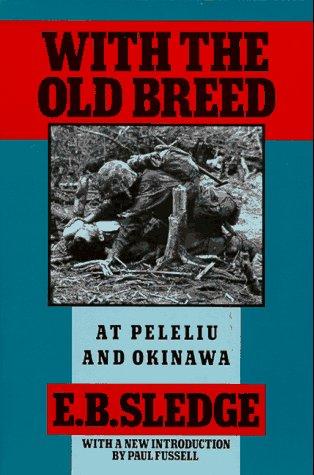
With the Old Breed: At Peleliu and Okinawa

Eugene B. Sledge

★★★★
Read Military history Biographies WWII Biography ISBN 0195067142

Oxford University Press · 1990

In his own book, Wartime, Paul Fussell called With the Old Breed "one of the finest memoirs to emerge from any war." John Keegan referred to it in The Second World War as "one of the most arresting documents in war literature." And Studs Terkel was so fascinated with the story he interviewed its author for his book, "The Good War." What has made E.B. Sledge's memoir of his experience fighting in the South Pacific during World War II so devastatingly powerful is its sheer honest simplicity and compassion. Now including a new introduction by Paul Fussell, With the Old Breed presents a stirring, personal account of the vitality and bravery of the Marines in the battles at Peleliu and Okinawa. Born in Mobile, Alabama in 1923 and raised on riding, hunting, fishing, and a respect for history and legendary heroes such as George Washington and Daniel Boone, Eugene Bondurant Sledge (later called "Sledgehammer" by his Marine Corps buddies) joined the Marines the year after the bombing of Pearl Harbor and from 1943 to 1946 endured the events recorded in this book. In those years, he passed, often painfully, from innocence to experience. Sledge enlisted out of patriotism, idealism, and youthful courage, but once he landed on the beach at Peleliu, it was purely a struggle for survival. Based on the notes he kept on slips of paper tucked secretly away in his New Testament, he simply and directly recalls those long months, mincing no words and sparing no pain. The reality of battle meant unbearable heat, deafening gunfire, unimaginable brutality and cruelty, the stench of death, and, above all, constant fear. Sledge still has nightmares about "the bloody, muddy month of May on Okinawa." But, as he also tellingly reveals, the bonds of friendship formed then will never be severed. Sledge's honesty and compassion for the other marines, even complete strangers, sets him apart as a memoirist of war. Read as sobering history or as high adventure, With the Old Breed is a moving chronicle of action and courage.

No cover · Amazon

World War 1: A History From Beginning to End

Henry Freeman

★★★★
Read Military history WWI Armor

World War IWorld War 1 was one of the bloodiest wars in modern history. At its end, it had claimed over seventeen million lives. It led to the collapse of nations, the abdication of monarchies and ended empires. Entire divisions of men perished in the pursuit of mere miles of uninhabitable wasteland –– towns were pulverized and millions displaced. It became a horrendous war of attrition, each side competing to kill as many of their foe as possible.Inside you will read about... ✓ 1914 - Blood is spilled ✓ 1915 - The dawn of the industrialized war ✓ 1916 - Unrelenting bloodshed ✓ 1917 - Revolution, revelation and catastrophe ✓ 1918 - The great war at an endIt became the first industrialized war in history and introduced revolutionary technology into the fray. The airplane, the tank and the machine gun first saw action collectively during the conflict. It was also the first war in which poison gas was used to choke young men out of their trenches.This book is a timeline account of the important events that shaped the First World War. It details the events and causes that led the world to war. This book covers the milestone moments, important battles, and how the outcome changed the world forever.

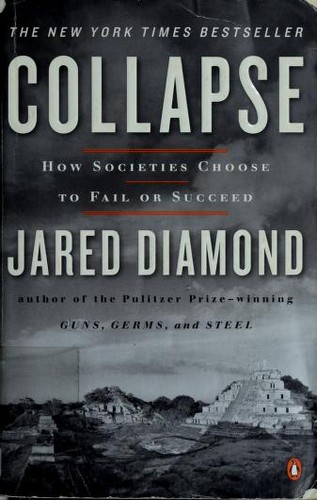
Collapse: How Societies Choose to Fail or Succeed

Jared Diamond

★★★☆☆
Read Basic intel Military history China ISBN 0143036556

Penguin Books · 2006

Brilliant, illuminating, and immensely absorbing, Collapse is destined to take its place as one of the essential books of our time, raising the urgent question: How can our world best avoid committing ecological suicide? In his million-copy bestseller Guns, Germs, and Steel, Jared Diamond examined how and why Western civilizations developed the technologies and immunities that allowed them to dominate much of the world. Now in this brilliant companion volume, Diamond probes the other side of the equation: What caused some of the great civilizations of the past to collapse into ruin, and what can we learn from their fates? As in Guns, Germs, and Steel, Diamond weaves an all-encompassing global thesis through a series of fascinating historical-cultural narratives. Moving from the Polynesian cultures on Easter Island to the flourishing American civilizations of the Anasazi and the Maya and finally to the doomed Viking colony on Greenland, Diamond traces the fundamental pattern of catastrophe. Environmental damage, climate change, rapid population growth, and unwise political choices were all factors in the demise of these societies, but other societies found solutions and persisted. Similar problems face us today and have already brought disaster to Rwanda and Haiti, even as China and Australia are trying to cope in innovative ways. Despite our own society's apparently inexhaustible wealth and unrivaled political power, ominous warning signs have begun to emerge even in ecologically robust areas like Montana. Brilliant, illuminating, and immensely absorbing, Collapse is destined to take its place as one of the essential books of our time, raising the urgent question: How can our world best avoid committing ecological suicide?

No cover · Amazon

Extreme Ownership: How U.S. Navy SEALs Lead and Win

Jocko Willink

★★★☆☆
Read Basic intel Military history Special ops Naval Middle East Intel history

The #1 New York Times bestseller Sent to the most violent battlefield in Iraq, Jocko Willink and Leif Babin’s SEAL task unit faced a seemingly impossible help U.S. forces secure Ramadi, a city deemed “all but lost.” In gripping firsthand accounts of heroism, tragic loss, and hard-won victories in SEAL Team Three’s Task Unit Bruiser, they learned that leadership―at every level―is the most important factor in whether a team succeeds or fails.Willink and Babin returned home from deployment and instituted SEAL leadership training that helped forge the next generation of SEAL leaders. After departing the SEAL Teams, they launched Echelon Front, a company that teaches these same leadership principles to businesses and organizations. From promising startups to Fortune 500 companies, Babin and Willink have helped scores of clients across a broad range of industries build their own high-performance teams and dominate their battlefields. Now, detailing the mind-set and principles that enable SEAL units to accomplish the most difficult missions in combat, Extreme Ownership shows how to apply them to any team, family or organization. Each chapter focuses on a specific topic such as Cover and Move, Decentralized Command, and Leading Up the Chain, explaining what they are, why they are important, and how to implement them in any leadership environment. A compelling narrative with powerful instruction and direct application, Extreme Ownership revolutionizes business management and challenges leaders everywhere to fulfill their ultimate lead and win.

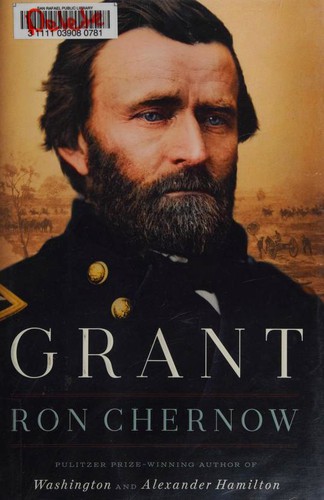
Grant

Ron Chernow

★★★☆☆
Read Military history Biography Strategy / theory US Civil War ISBN 9780143110637

Books on Tape · 2017

Ulysses S. Grant's life has typically been misunderstood. All too often he is caricatured as a chronic loser and inept businessman, fond of drinking to excess; or as the triumphant but brutal Union general of the Civil War; or as a credulous and hapless president whose tenure came to symbolize the worst excesses of the Gilded Age. These stereotypes don't come close to capturing adequately his spirit and the sheer magnitude of his monumental accomplishments. A biographer at the height of his powers, Chernow has produced a portrait of Grant that is a masterpiece, the first to provide a complete understanding of the general and president whose fortunes rose and fell with dizzying speed and frequency. Before the Civil War, Grant was flailing. His business ventures had been dismal, and despite distinguished service in the Mexican War, he ended up resigning from the army in disgrace amid recurring accusations of drunkenness. But in the Civil War, Grant began to realize his remarkable potential, soaring through the ranks of the Union army, prevailing at the Battle of Shiloh and in the Vicksburg campaign and ultimately defeating the legendary Confederate general Robert E. Lee after a series of unbelievably bloody battles in Virginia. Along the way Grant endeared himself to President Lincoln and became his most trusted general and the strategic genius of the war effort. His military fame translated into a two-term presidency, but one plagued by corruption scandals involving his closest staff. All the while Grant himself remained more or less above reproach. But, more importantly, he never failed to seek freedom and justice for black Americans, working to crush the Ku Klux Klan and earning the admiration of Frederick Douglass, who called him 'the vigilant, firm, impartial, and wise protector of my race." After his presidency, he was again brought low by a trusted colleague, this time a dashing young swindler on Wall Street, but he resuscitated his image by working with Mark Twain to publish his memoirs, which are recognized as a masterpiece of the genre. With his famous lucidity, breadth, and meticulousness, Chernow finds the threads that bind these disparate stories together, shedding new light on the man whom Walt Whitman described as "nothing heroic... and yet the greatest hero." His probing portrait of Grant's lifelong struggle with alcoholism transforms our understanding of the man at the deepest level. This is America's greatest biographer, bringing movingly to life one of America's finest but most underappreciated presidents. The definitive biography, Grant is a grand synthesis of painstaking research and literary brilliance that makes sense of all sides of Grant's life, explaining how this simple Midwesterner could at once be so ordinary and so extraordinary.