
Hitler: The Policies of Seduction
Rainer Zitelmann
★★★☆☆London House · 1999
Presents convincing evidence that it was Hitler's political strategies and arguments, which built his unprecedented support among the German people.
S2 Search · Reading list
Books from S2 Actual on Goodreads, organized by his shelves and topic buckets (intel lists, military history, logistics, etc.). Metadata filled via Open Library.
S2 topic buckets (Goodreads)
Subjects & genres
210 books · Military history · page 6 of 9
Rainer Zitelmann
★★★☆☆London House · 1999
Presents convincing evidence that it was Hitler's political strategies and arguments, which built his unprecedented support among the German people.

Tim Weiner
★★★☆☆Doubleday · 2007
For the last sixty years, the CIA has managed to maintain a formidable reputation in spite of its terrible record, burying its blunders in top-secret archives. Its mission was to know the world. When it did not succeed, it set out to change the world. Its failures have handed us, in the words of President Eisenhower, “a legacy of ashes.” Now Pulitzer Prize–winning author Tim Weiner offers the first definitive history of the CIA—and everything is on the record. LEGACY OF ASHES is based on more than 50,000 documents, primarily from the archives of the CIA itself, and hundreds of interviews with CIA veterans, including ten Directors of Central Intelligence. It takes the CIA from its creation after World War II, through its battles in the cold war and the war on terror, to its near-collapse after September 11th, 2001. Tim Weiner’s past work on the CIA and American intelligence was hailed as “impressively reported” and “immensely entertaining” in The New York Times. The Wall Street Journal called it “truly extraordinary . . . the best book ever written on a case of espionage.” Here is the hidden history of the CIA: why eleven presidents and three generations of CIA officers have been unable to understand the world; why nearly every CIA director has left the agency in worse shape than he found it; and how these failures have profoundly jeopardized our national security.

John Gooch
★★★☆☆Routledge · June 1, 2007
First published in 2007. Routledge is an imprint of Taylor & Francis, an informa company.
U.S. Government
★★★☆☆Professionally converted for accurate flowing-text e-book format reproduction, this book discusses military deception techniques and history. "Military deception" is an umbrella term that includes both denial and deception. Denial hides the real and deception shows the fake. Denial and deception are operations; propaganda and disinformation are the products. Joint doctrine says that military deception, as applied by a joint force commander (JFC), targets an adversary's decision-making process. Ultimately, the intent is to shape the adversary's behavior in the JFC's favor or to cause an adversary to form an inaccurate impression of the battlespace. Consequently, planning for deception operations depends on intelligence and security for success. Obviously, a commander wants to conceal deception efforts from the enemy, but often he'll conceal all or some of his efforts from his own troops to prevent confusion and/or compromise of the plan. During the early years of Soviet involvement in World War II, mishandling of information by soldiers and planners resulted in the compromise of many maskirovka (or deception) operations. As a result, the Soviets implemented aggressive security measures to protect their deception plans. Specifically, Soviet commanders restricted the number of planners and documents involved in the deception operations and communicated to subordinates only what they needed to know, when they needed to know it. The general enjoyed his breakfast while reading his morning paper and listening to the international news channel. Hearing the Balkans mentioned—his area of responsibility—he looked up as a foreign correspondent began to comment on the aftermath of an Allied bombing mission from the day before. The gruesome details suddenly made the general's scrambled eggs a bit less appealing. The graphic pictures showed what appeared to be the remnants of an orphanage. There in the rubble lay a bloodstained, tattered doll. Those images left him wondering about the carnage that lay beneath the collapsed brick and mortar. Had his staff miscalculated and inadvertently struck an orphanage? A similar misstep had occurred a few weeks ago when another bombing mission resulted in civilian casualties in a marketplace. As the general bemoaned the potential ramifications of accidentally bombing an orphanage, a memory surfaced. Years of flying high-performance aircraft had sharpened his senses, and something about the scene seemed familiar. Could that be the same bloodstained doll he had seen in photographs of the earlier marketplace mishap? The general had been briefed on the enemy's rather low-tech yet successful use of deception. Was he, along with the rest of the world, a target of military deception? As he pondered this, his pager went off. This fictitious example illustrates both how easy it is to manipulate the media in deception operations and how a thorough understanding of deception can help prevent a military leader from falling victim to it. The U.S. military is transforming itself with technological advancements in warfighting capability. Weapon systems, force structure and training have all improved. The amount and kind of information available to the warfighter is also improving. But even a technologically advanced nation like the United States is susceptible to deception. Analysis of friendly and enemy deception techniques in Operations DESERT STORM and ALLIED FORCE shows the main U.S. vulnerabilities to include its insatiable appetite for "news," the lack of deception-detection expertise in the military, and the tendency to believe that technological advancements make a nation deception-proof. Therefore, the key to mitigating the U.S. vulnerabilities to deception lies in educating the media about the military and common deception practices, giving the military intensive deception-detection training, and abandoning the notion that technolo
Otto Skorzeny
★★★☆☆The memoirs of the legendary Skorzeny appear here in its first unabridged English edition. Skorzeny's fame began with the successful raid to free Benito Mussolini from the Gran Sasso, Italy in 1943. His elite commandos surprised Italian guards in a daring daytime raid. Hitler presented Skorzeny with the Knight's Cross for this operation. Not only is this raid explained in minute detail, many of Skorzeny's previously unknown operations in all European and Russian theatres of World War II are given in detailed accounts. Operation Griffin - the innovative use of German Kommandos dressed as American soldiers working behind enemy lines - during the Ardennes Offensive in 1944 is given in-depth coverage, as is Skorzeny's rememberances on the Malmedy massacre. Skorzeny also offers his insights into the mysterious Rudolf Hess mission to England in May 1941, and offers a behind the scenes look at German and Russian secret military intelligence, and the workings of Canaris and Gehlen. ***This 1997 Schiffer edition has the same ISBN (0887407188. 9780887407185) as the 1995 edition from the same publisher, though the dust-jacket is completely different.***

Douglas Pike
★★★☆☆Da Capo Press · 1991
From the original 34-man Armed Propaganda Team of the 1930s, headed by Vo Nguyen Giap and managed by Ho Chi Minh, the People's Army of Vietnam has grown into the third largest military force in the world, exceeded only by the armies of the USSR and China. When viewed in terms of military capability and success, it is a phenomenon. Since its inception, the PAVN has taken on two major powers - France and the United States - and won decisive victories. It is this phenomenon that Douglas Pike describes in this work. At the same time, there also appears a picture of the use of force in politics, the nature of organizations and the limits of both technology and ideology. The book is aimed at those interested in the inner workings of the army that won the Vietnam War.
Richard Overy
★★★☆☆Penguin Books · 1998
A penetrating and compassionate book on the most gigantic military struggle in world history.--The New York Times Book Review An extraordinary tale... Overy's engrossing book provides extensive details of teh slaughter, brutality, bitterness and destruction on the massive front from the White Sea to the flank of Asia.--Chicago Tribune The Russian war effort to defeat invading Axis powers, an effort that assembled the largest military force in recorded history and that cost the lives of more than 25 million Soviet soldiers and civilians, was the decisive factor for securing an Allied victory. Now with access to the wealth of film archives and interview material from Russia used to produce the ten-hour television documentary Russia's War, Richard Overy tackles the many persuasive questions surrounding this conflict. Was Stalin a military genius? Was the defense of Mother Russia a product of something greater than numbers of tanks and planes--of something deep within the Russian soul?
Selco Begovic
★★★☆☆There are many books out there on all the different aspects of preparedness and survival that can provide you with information, checklists, and theoretical solutions to potential problems. But no matter how much you read or how well-researched the books you choose are, there’s only so much you can take away from these tomes. Getting your information from someone who has survived a "sh*t hit the fan" crisis will take your preparedness to an entirely different level. Meet Selco, a legend in the preparedness world. He survived in a city that was under siege for more than a year. He had no power, no running water, no stores for supplies, and every day, he ran the risk of meeting a violent death, whether by shells, sniper fire, or a person intent on hurting others. This book is a collection of memories from the darkest days of the Balkan War, where each moment could have been his last. This isn’t a cheerful and uplifting guide to survival. There’s no misplaced optimism. There’s only Selco, the darkness he faced, and the grim reality of an SHTF scenario most of us can’t even fathom. But if you can grasp it all before it happens, you’ll be much further ahead than those who are frozen in shock. ***Please note that Selco's first language is not English. These stories have been lightly edited for clarity, but they still retain the "accent."
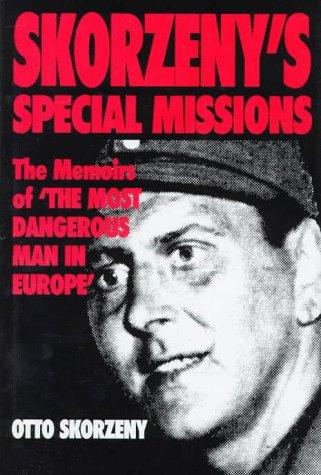
Otto Skorzeny
★★★☆☆Greenhill Books · 1997
Book by Skorzeny, Otto
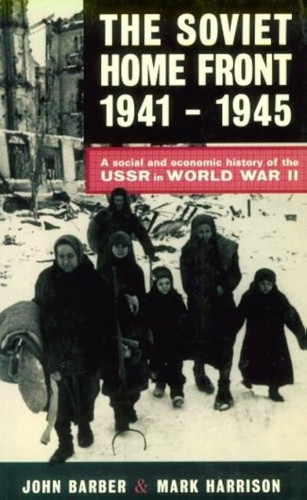
Antony Beevor
★★★☆☆Longman · 1991
The Battle of Stalingrad was not only the psychological turning point of World War II: it also changed the face of modern warfare. Historians and reviewers worldwide have hailed Antony Beevor's magisterial Stalingrad as the definitive account of World War II's most harrowing battle. In August 1942, Hitler's huge Sixth Army reached the city that bore Stalin's name. In the five-month siege that followed, the Russians fought to hold Stalingrad at any cost; then, in an astonishing reversal, encircled and trapped their Nazi enemy. This battle for the ruins of a city cost more than a million lives. Stalingrad conveys the experience of soldiers on both sides, fighting in inhuman conditions, and of civilians trapped on an urban battlefield. Antony Beevor has interviewed survivors and discovered completely new material in a wide range of German and Soviet archives, including prisoner interrogations and reports of desertions and executions. As a story of cruelty, courage, and human suffering, Stalingrad is unprecedented and unforgettable.
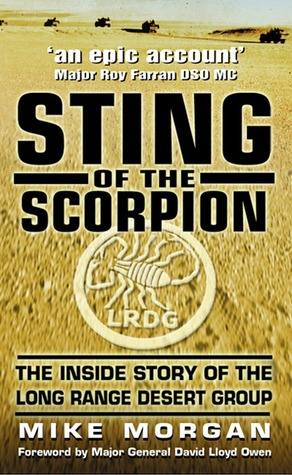
Mike Morgan
★★★☆☆Sutton Pub. · 2003
The Long Range Desert Group was Britain's original Special Force in the Western Desert long before the SAS burst onto the scene. Sting of the Scorpion is the exclusive, authorised, inside story of the tough LRDG raiders of the Second World War, drawn from the unpublished records of the famous force. The unit won unrivalled mastery of the North African desert in their wide-ranging and heavily armed trucks, earning grudging praise even from Rommel, the Desert Fox himself, for their skilful reconnaissance, punishing raids and powers of evasion.
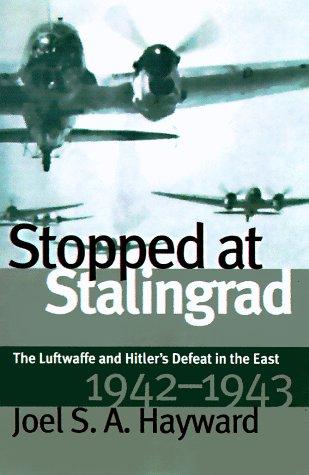
Joel S.A. Hayward
★★★☆☆University Press of Kansas · September 2001
By the time Hitler declared war on the Soviet Union in 1941, he knew that his military machine was running out of fuel. In response, he launched Operation Blau, a campaign designed to protect Nazi oilfields in Rumania while securing new ones in the Caucasus. All that stood in the way was Stalingrad. Most accounts of the Battle of Stalingrad have focused on the dismal fate of the German Army. Joel Hayward now chronicles Luftwaffe operations during that campaign, focusing on Hitler's use of the air force as a tactical rather than strategic weapon in close support of ground forces. He vividly details the Luftwaffe's key role as flying artillery, showing that the army relied on Luftwaffe support to a far greater degree than has been previously revealed and that its successes in the East occurred largely because of the effectiveness of that support. Hayward analyzes this major German offensive from the standpoint of cooperation between ground and air forces to attain mutually agreed objectives. He draws on diaries of both key commanders and regular airmen to recreate crucial battles and convey the drama of Hitler's frustrations and reckless leadership. Ultimately, Hayward shows, the poorly conceived strategies of Hitler, Goering, and others in Berlin doomed the efforts of air commander Wolfram von Richthofen, a courageous and resolute leader attempting to come to grips with an increasingly impossible situation. Stopped at Stalingrad is a dynamic case study in combined arms warfare that fills in many of the gaps left by other studies of the eastern war. By reconsidering the campaign in the light of a wider body of documentary sources and analyzing many previously ignored events, Hayward provides military historians and general readers a much deeper and more complete understanding of the Battle of Stalingrad and its impact on World War II.
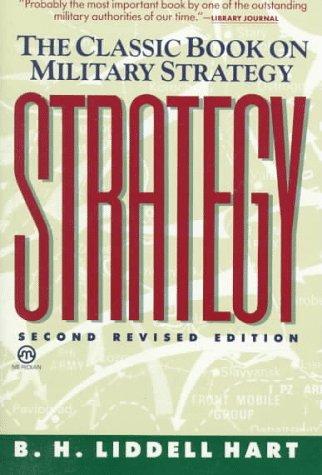
B.H. Liddell Hart
★★★☆☆Meridian · 1991
"The most important book by one of the outstanding military authorities of our time." – Library Journal This is the classic book on war as we know it. During his long life, Basil H. Liddell Hart was considered one of the world's foremost military thinkers--a man generally regarded as the "Clausewitz of the 20th century." Strategy is a seminal work of military history and theory, a perfect companion to Sun-tzu’s The Art of War and Carl von Clauswitz’s On War. Liddell Hart stressed movement, flexibility, and surprise. He saw that in most military campaigns dislocation of the enemy's psychological and physical balance is prelude to victory. This dislocation results from a strategic indirect approach. Reflect for a moment on the results of direct confrontation (trench war in WW I) versus indirect dislocation (Blitzkreig in WW II). Liddell Hart is also tonic for business and political planning: just change the vocabulary and his concepts fit.
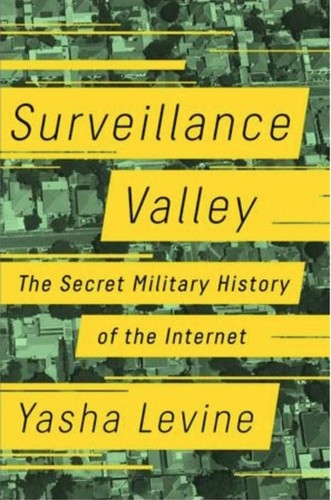
Yasha Levine
★★★☆☆PublicAffairs · 2018
The internet is the most effective weapon the government has ever built. In this fascinating book, investigative reporter Yasha Levine uncovers the secret origins of the internet, tracing it back to a Pentagon counterinsurgency surveillance project. A visionary intelligence officer, William Godel, realized that the key to winning the war in Vietnam was not outgunning the enemy, but using new information technology to understand their motives and anticipate their movements. This idea--using computers to spy on people and groups perceived as a threat, both at home and abroad--drove ARPA to develop the internet in the 1960s, and continues to be at the heart of the modern internet we all know and use today. As Levine shows, surveillance wasn't something that suddenly appeared on the internet; it was woven into the fabric of the technology. But this isn't just a story about the NSA or other domestic programs run by the government. As the book spins forward in time, Levine examines the private surveillance business that powers tech-industry giants like Google, Facebook, and Amazon, revealing how these companies spy on their users for profit, all while doing double duty as military and intelligence contractors. Levine shows that the military and Silicon Valley are effectively inseparable: a military-digital complex that permeates everything connected to the internet, even coopting and weaponizing the antigovernment privacy movement that sprang up in the wake of Edward Snowden. With deep research, skilled storytelling, and provocative arguments, Surveillance Valley will change the way you think about the news--and the device on which you read it.
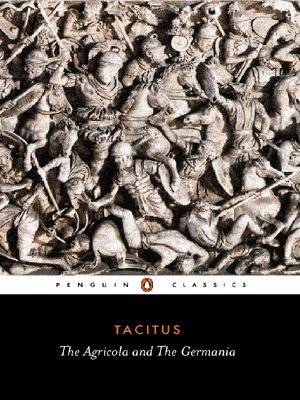
Tacitus
★★★☆☆Penguin Books · 1975
The Agricola is both a portrait of Julius Agricola - the most famous governor of Roman Britain and Tacitus' well-loved and respected father-in-law - and the first detailed account of Britain that has come down to us. It offers fascinating descriptions of the geography, climate and peoples of the country, and a succinct account of the early stages of the Roman occupation, nearly fatally undermined by Boudicca's revolt in AD 61 but consolidated by campaigns that took Agricola as far as Anglesey and northern Scotland. The warlike German tribes are the focus of Tacitus' attention in the Germania, which, like the Agricola, often compares the behaviour of 'barbarian' peoples favourably with the decadence and corruption of Imperial Rome.
Rick Atkinson
★★★☆☆Henry Holt and Company · 2007
In the second volume of his epic trilogy about the liberation of Europe in World War II, Pulitzer Prize winner Rick Atkinson tells the harrowing story of the campaigns in Sicily and Italy In An Army at Dawn―winner of the Pulitzer Prize―Rick Atkinson provided an authoritative history of the Allied triumph in North Africa during World War II. Now, in The Day of Battle, he follows the strengthening American and British armies as they invade Sicily in July 1943 and then, mile by bloody mile, fight their way north toward Rome. The decision to invade the so-called soft underbelly of Europe was controversial, but once under way, the commitment to liberate Italy from the Nazis never wavered. The battles at Salerno, Anzio, the Rapido River, and Monte Cassino were particularly lethal, yet as the months passed, the Allied forces continued to drive the Germans up the Italian peninsula. And with the liberation of Rome in June 1944, ultimate victory at last began to seem inevitable. Drawing on a wide array of primary source material, written with great drama and flair, The Day of Battle is a masterly account of one of history's most compelling military campaigns.
Ibn Khaldun
★★★☆☆Commission internationale pour la traduction des chefs-d'oeuvre · 1858
كتاب في التاريخ وعلم الإجتماع، هذا الكتاب مقدمة لكتاب في التاريخ، أراد فيه ابن خلدون أن يشرح علم التاريخ وأحوال المجتمعات وسياستها وأسباب نشوئها، فإن كان علم الإجتماع يعود لمؤسس فلا شك أنه يعود لابن خلدون، وتعتبر المقدمة مرجعا مهما لكل باحث في التاريخ أو علم الإجتماع أو باحث في أسباب نشوء الأمم أو جغرافية وحدود كثير من الدول في تلك الفترة، سواء كان الباحث عربي أو أجنبي

H. John Poole
★★★☆☆Posterity Press · 2003
This book is not just fun reading for determined riflemen, but vital self-defense info. for all security ranks and jobs. The Pentagon lost on the ground 40 years ago, and its squad tactics haven't changed much. Herein lie more advanced techniques for every category of short-range combat. They will permit better small-unit maneuvers (and fewer losses) for every intensity of combat. As Western ordnance turned more lethal, Eastern armies came to rely on tiny semi-autonomous elements. Most provide every rifleman with guerrilla training. Until the Pentagon follows suit, its own infantry enlistees will have less field skill, initiative, and decision-making experience than their Communist counterparts. In any close encounter, they will die unnecessarily and their commanders too often fail to win.

Heinz Werner Schmidt
★★★☆☆White Lion Publrs. · Sep 17, 1973
A first-hand account offering a perspective on Rommel's African campaign. Schmidt was close to Rommel throughout the two years of the campaign and provides details of the military action alongside personal perspectives of fellow-officers.
Werner Haupt
★★☆☆☆Schiffer Pub. · 1998
After long years of studying sources and literature, Werner Haupt presents the military history of one of the larger theaters of World War II. The completion of the history of “Army Group South” is the result of the author’s utilization of all available German and Russian literature, as well as those combat diaries and documents of the committed troop units that are available in German archives. In addition, the author was assisted in clearing up several questions by the advice of former members of the army group – from commanders to drivers. This third and final volume of a three volume set by Werner Haupt includes a volume each on Army Group North, Army Group Center, and now Army Group South. The author served in the German Army as a soldier and officer in the northern sector of the Eastern Front during the Second World War. He is also the author of Assault on Moscow 1941 (available from Schiffer Publishing Ltd.).
Norman M. Wade
★★☆☆☆Guide to Designing, Planning & Conducting Military Operations Plan, Design, Prepare, Execute, and Assess The Essentials of Warfighting Designed for all levels of Soldiers, Sailors, Airmen, Marines & Civilians
Vasily Chuikov
★★☆☆☆Panther · 1970
1970. No Edition Remarks. 384 pages. Paperback book with pictorial cover. Pages and binding are presentable with no major defects. Minor issues present such as mild cracking, inscriptions, inserts, light foxing, tanning and thumb marking. Overall a good condition item. Paper cover has mild edge-wear with light rubbing and creasing. Some light marking and tanning.
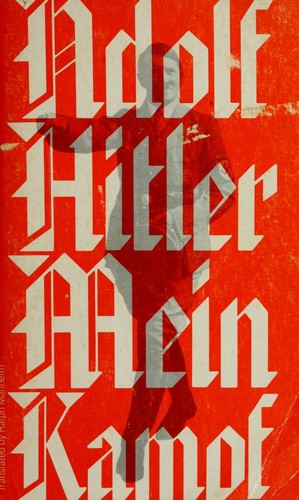
Adolf Hitler
★★☆☆☆Houghton Mifflin · 1971
Mi lucha, con título original en alemán Mein Kampf, es un libro escrito por Adolf Hitler en el que plasmó su ideología y el manifiesto de la política del nacionalsocialismo entremezclado con una serie de elementos autobiográficos. El libro es un documento interesante ya que describe cómo y por qué Hitler, el dictador de la Alemania nazi de 1933 a 1945, se volvió antisemita, además de detallar sus planes futuros para Alemania. Mein Kampf fue publicado en 1925, tras la etapa en prisión de Hitler tras su golpe de Estado fallido en Múnich en 1923. A grandes rasgos, expone el programa ideológico de Hitler, en el cual identifica a los judíos y a los «bolcheviques» como racial e ideológicamente inferiores y un peligro para la nación. Por el contrario, establece a los «arios» y a los nacionalsocialistas como racialmente superiores y políticamente progresistas. El gran objetivo de Hitler era la unificación de los pueblos alemanes en una sola Gran Alemania y la expulsión de los judíos de la nación. Desde Elejandría, aunque sabemos que es una obra polémica y controvertida, optamos por mantener este libro en el catálogo ya que es un documento histórico y creemos que la historia hay que conocerla para que no se vuelva a repetir.

Rhodesian Forces
★★☆☆☆Independently Published · 2020
The "Rhodesian SAS Combat Manual" is a significant historical look of the small unit tactics employed by the elite unit during the Rhodesian Bush War. Not only is it a glimpse back at how this unit operated, but a lot of the material is still relevant today fighting counter-insurgencies. This book covers tactical follow-ups, ambush tactics, infiltration methods and combat tracking and more!