S2 Search · Reading list

S2 Actual reading list

Books from S2 Actual on Goodreads, organized by his shelves and topic buckets (intel lists, military history, logistics, etc.). Metadata filled via Open Library.

Not official S2 Underground. Independent fan index — not affiliated with or endorsed by S2. Official hub: linktr.ee/S2_underground. S2 materials are CC BY-NC-SA 4.0.

S2 topic buckets (Goodreads)

Subjects & genres

415 books · All shelves · page 7 of 18

Between Silk and Cyanide: A Codemaker's War, 1941-1945

Leo Marks

★★★★
Read Advanced intel Cryptography WWII Espionage Special ops Intel history Biography ISBN 9780684867809

Free Press · September 12, 2000

In 1942, Leo Marks left his father's famous bookshop, 84 Charing Cross Road, and went off to fight the war. He was twenty-two. Soon recognized as a cryptographer of genius, he became head of communications at the Special Operations Executive (SOE), where he revolutionized the codemaking techniques of the Allies and trained some of the most famous agents dropped into occupied Europe, including "the White Rabbit" and Violette Szabo. As a top codemaker, Marks had a unique perspective on one of the most fascinating and, until now, little-known aspects of the Second World War. Writing with the narrative flair and vivid characterization of his famous screenplays, Marks gives free rein to his keen sense of the absurd and his wry wit, resulting in a thrilling and poignant memoir that celebrates individual courage and endeavor, without losing sight of the human cost and horror of war.
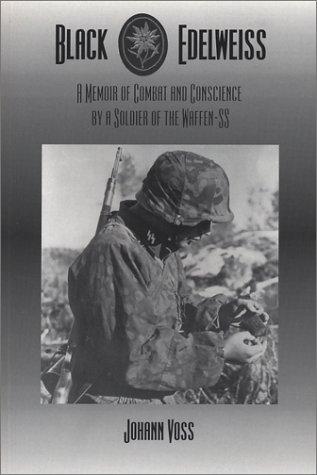
Black Edelweiss: A Memoir of Combat and Conscience by a Soldier of the Waffen-Ss

Johann Voss

★★★★
Read WWII Russia / USSR Intel history Biography ISBN 9780966638981

The Aberjona Press · July 2002

Black Edelweiss: A Memoir of Combat and Conscience by a Soldier of the Waffen-SS is a book by Johann Voss (a pseudonym) detailing the experiences of a soldier in the Waffen-SS. Voss served in SS-Gebirgsjäger-Regiment 11 "Reinhard Heydrich", part of the 6th SS Mountain Division Nord. Written in English, the book is mainly an account of his combat service against the Soviets in northern Karelia and Finland during the Second World War, with a shorter section describing combat against American forces in the Vosges and in the Saar-Moselle triangle in 1945. Voss also recalls his experiences of being a POW in the United States from 1945-1946, when he wrote his memoirs.

Bomber Command (Zenith Military Classics)

Max Hastings

★★★★
Read WWII Air power Strategy / theory ISBN 9780760345207

Zenith Press · 2013

Bomber Command’s air offensive against the cities of Nazi Germany was one of the most epic campaigns of World War II. More than 56,000 British and Commonwealth aircrew and 600,000 Germans died in the course of the RAF’s attempt to win the war by bombing. The struggle in the air began meekly in 1939 with only a few Whitleys, Hampdens, and Wellingtons flying blindly through the night on their ill-conceived bombing runs. It ended six years later with 1,600 Lancasters, Halifaxes, and Mosquitoes, equipped with the best of British wartime technology, razing whole German cities in a single night. Bomber Command, through fits and starts, grew into an effective fighting force. In Bomber Command, originally published to critical acclaim in the U.K., famed British military historian Sir Max Hastings offers a captivating analysis of the strategy and decision-making behind one of World War II’s most violent episodes. With firsthand descriptions of the experiences of aircrew from 1939 to 1945—based on one hundred interviews with veterans—and a harrowing narrative of the experiences of Germans on the ground during the September 1944 bombing of Darmstadt, Bomber Command is widely recognized as a classic account of one of the bloodiest campaigns in World War II history. Now back in print in the U.S., this book is an essential addition to any history reader’s bookshelf.

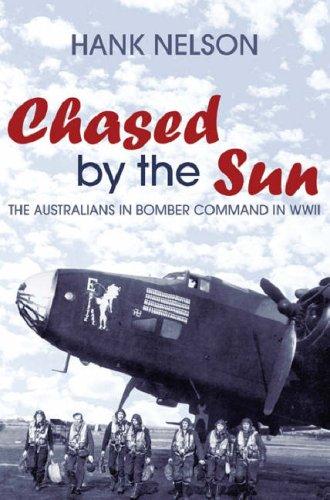
Chased by the Sun: The Australians in Bomber Command in World War II

Hank Nelson

★★★★
Read WWII Air power Biography ISBN 9781741148473

Allen & Unwin · September 1, 2006

The remarkable story of more than 4000 Australian airmen who died over the skies of Europe while serving with the British Bomber Command in World War II is explored in this fascinating military history. Many of these airmen remain forgotten in their homeland—despite their selfless bravery contributing to the defeat of the Nazi regime. This book brings to light the experiences of Australians who served with the British bomber squadrons and their extraordinary contributions to the Allied war effort.

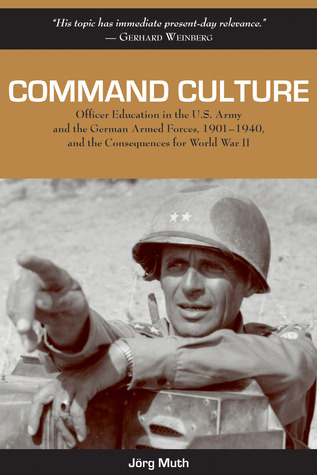
Command Culture: Officer Education in the U.S. Army and the German Armed Forces, 1901-1940, and the Consequences for World War II

Jörg Muth

★★★★
Read Advanced intel Military history WWII Special ops ISBN 9781574413038

University of North Texas Press · 2011

Selected by General Raymond Odierno, 38th Army Chief of Staff, for the U.S. Army Chief of Staff's Professional Reading List, for "The Army Profession," March 2012. Selected by General James F. Amos, Commandant of the U.S. Marine Corps, as required reading for all senior enlisted men and all Majors and Lieutenant-Colonels, January 2013.Selected by Major General H.R. McMaster at the Maneuver Center of Excellence, Fort Benning, for the Leader Development Study Program, December 2013.   Winner of the Army Historical Foundation Distinguished Writing Award, 2012.   In Command Culture, Jörg Muth examines the different paths the United States Army and the German Armed Forces traveled to select, educate, and promote their officers in the crucial time before World War II. Muth demonstrates that the military education system in Germany represented an organized effort where each school and examination provided the stepping stone for the next. But in the United States, there existed no communication about teaching contents or didactical matters among the various schools and academies, and they existed in a self chosen insular environment. American officers who finally made their way through an erratic selection process and past West Point to the important Command and General Staff School at Fort Leavenworth, Kansas, found themselves usually deeply disappointed, because they were faced again with a rather below average faculty who forced them after every exercise to accept the approved “school solution.” Command Culture explores the paradox that in Germany officers came from a closed authoritarian society but received an extremely open minded military education, whereas their counterparts in the United States came from one of the most democratic societies but received an outdated military education that harnessed their minds and limited their initiative. On the other hand, German officer candidates learned that in war everything is possible and a war of extermination acceptable. For American officers, raised in a democracy, certain boundaries could never be crossed. This work for the first time clearly explains the lack of audacity of many high ranking American officers during World War II, as well as the reason why so many German officers became perpetrators or accomplices of war crimes and atrocities or remained bystanders without speaking up. Those American officers who became outstanding leaders in World War II did so not so much because of their military education, but despite it.

Counterinsurgency Warfare: Theory and Practice (PSI Classics of the Counterinsurgency Era)

David Galula

★★★★
Read Basic intel Vietnam GWOT Guerrilla / COIN Middle East Strategy / theory ISBN 9780275993030

Praeger Security International Paperback · August 30, 2006

This volume in the Praeger Security International (PSI) series Classics of the Counterinsurgency Era defines the laws of insurgency and outlines the strategy and tactics to combat such threats. Drawn from the observations of a French officer, David Galula, who witnessed guerrilla warfare on three continents, the book remains relevant today as American policymakers, military analysts, and members of the public look to the counterinsurgency era of the 1960s for lessons to apply to the current situation in Iraq and Afghanistan. With a new foreword by John A. Nagl, author of Counterinsurgency Lessons from Malaya and Vietnam (Praeger, 2002).

Cry Havoc: How the Arms Race Drove the World to War, 1931-1941

Joseph A. Maiolo

★★★★
Read Advanced intel Military history Logistics WWII Nuclear Russia / USSR Logistics ISBN 9780465011148

Basic Books · 2010

Did the arms race of the 1930s cause the Second World War? In Cry Havoc , historian Joseph Maiolo shows, in rich and fascinating detail, how the deadly game of the arms race was played out in the decade prior to the outbreak of the Second World War. In this exhaustively researched account, he explores how nations reacted to the moves of their rivals, revealing the thinking of those making the key decisions—Hitler, Mussolini, Chamberlain, Stalin, Roosevelt—and the dilemmas of democratic leaders who seemed to be faced with a choice between defending their nations and preserving their democratic way of life. An unparalleled account of an era of extreme political tension, Cry Havoc shows how the interwar arms race shaped the outcome of World War II before the shooting even began.

Destiny in the Desert: The Story Behind El Alamein - the Battle That Turned the Tide

Jonathan Dimbleby

★★★★
Read Logistics Intel history Military history Economics WWII Russia / USSR Logistics Strategy / theory Economics Orthodox / theology ISBN 9781846684449

Profile Books Ltd · 2012

This is a unique single-volume history of the road to El Alamein - 'the end of the beginning' - and the bloody battle that followed...It was the British victory at the Battle of El Alamein in November 1942 that inspired one of Churchill's most famous aphorisms: 'it is not the end nor is it the beginning of the end, but it is the end of the beginning'. And yet the true significance of this iconic episode remains unrecognised. In this thrilling historical account, Jonathan Dimbleby describes the political and strategic realities that lay behind the battle, charting the nail-biting months that led to the victory at El Alamein in November 1942. It is a story of high drama, played out both in the war capitals of London, Washington, Berlin, Rome and Moscow, and at the front, in the command posts and foxholes in the desert. "El Alamein" is about politicians and generals, diplomats, civil servants and soldiers. It is about forceful characters and the tensions and rivalries between them. Drawing on official records and the personal insights of those involved at every level, Dimbleby creates a vivid portrait of a struggle which for Churchill marked the turn of the tide - and which for the soldiers on the ground involved fighting and dying in a foreign land.

Economics in One Lesson

Henry Hazlitt

★★★★
Read Basic intel Logistics Economics Logistics Intel history Economics Orthodox / theology ISBN 9780870004278

Blackstone Audiobooks · 1946

A million copy seller, Henry Hazlitt’s Economics in One Lesson is a classic economic primer. But it is also much more, having become a fundamental influence on modern “libertarian” economics of the type espoused by Ron Paul and others. Considered among the leading economic thinkers of the “Austrian School,” which includes Carl Menger, Ludwig von Mises, Friedrich (F.A.) Hayek, and others, Henry Hazlitt (1894-1993), was a libertarian philosopher, an economist, and a journalist. He was the founding vice-president of the Foundation for Economic Education and an early editor of The Freeman magazine, an influential libertarian publication.  Hazlitt wrote Economics in One Lesson, his seminal work, in 1946. Concise and instructive, it is also deceptively prescient and far-reaching in its efforts to dissemble economic fallacies that are so prevalent they have almost become a new orthodoxy. Many current economic commentators across the political spectrum have credited Hazlitt with foreseeing the collapse of the global economy which occurred more than 50 years after the initial publication of Economics in One Lesson. Hazlitt’s focus on non-governmental solutions, strong — and strongly reasoned — anti-deficit position, and general emphasis on free markets, economic liberty of individuals, and the dangers of government intervention make Economics in One Lesson, every bit as relevant and valuable today as it has been since publication.

No cover · Amazon

Enduring the Whirlwind: The German Army and the Russo-German War 1941-1943 (Wolverhampton Military Studies Book 21)

Gregory Liedtke

★★★★
Read Advanced intel Military history Logistics WWII Cold War Russia / USSR Logistics

Despite the best efforts of a number of historians, many aspects of the ferocious struggle between Nazi Germany and the Soviet Union during the Second World War remain obscure or shrouded in myth. One of the most persistent of these is the notion - largely created by many former members of its own officer corps in the immediate postwar period - that the German Army was a paragon of military professionalism and operational proficiency whose defeat on the Eastern Front was solely attributable to the amateurish meddling of a crazed former Corporal and the overwhelming numerical superiority of the Red Army. A key pillar upon which the argument of German numerical-weakness vis-à-vis the Red Army has been constructed is the assertion that Germany was simply incapable of providing its army with the necessary quantities of men and equipment needed to replace its losses. In consequence, as their losses outstripped the availability of replacements, German field formations became progressively weaker until they were incapable of securing their objectives or, eventually, of holding back the swelling might of the Red Army. This work seeks to address the notion of German numerical-weakness in terms of Germany's ability to replace its losses and regenerate its military strength, and assess just how accurate this argument was during the crucial first half of the Russo-German War (June 1941-June 1943). Employing a host of primary documents and secondary literature, it traces the development and many challenges of the German Army from the prewar period until the invasion of the Soviet Union in June 1941. It continues on to chart the first two years of the struggle between Germany and the Soviet Union, with a particular emphasis upon the scale of German personnel and equipment losses, and how well these were replaced. It also includes extensive examinations into the host of mitigating factors that both dictated the course of Germany's campaign in the East and its replacement and regeneration capabilities. In contrast to most accounts of the conflict, this study finds that numerical-weakness being the primary factor in the defeat of the Ostheer - specifically as it relates to the strength and condition of the German units involved - has been overemphasized and frequently exaggerated. In fact, Germany was actually able to regenerate its forces to a remarkable degree with a steady flow of fresh men and equipment, and German field divisions on the Eastern Front were usually far stronger than the accepted narratives of the war would have one believe.

Enemy at the Gates: The Battle for Stalingrad

William Craig

★★★★
Read Military history Logistics WWII Cold War Russia / USSR Logistics Intel history Orthodox / theology ISBN 9780760746776

Barnes & Noble Books · 2003

Stalingrad, the bloodiest battle in the history of warfare, cost the lives of nearly two million men and women. It signaled the beginning of the end for the Third Reich of Adolf Hitler; it foretold the Russian juggernaut that would destroy Berlin and make the Soviet Union a superpower. As Winston Churchill characterized the result of the conflict at Stalingrad: " the hinge of fate had turned." William Craig, author and historian, has painstakingly recreated the details of this great battle: from the hot summer of August 1942, when the German armies smashed their way across southern Russia toward the Volga River, through the struggle for Stalingrad-a city Hitler had never meant to capture and Stalin never meant to defend-on to the destruction of the supposedly invincible German Sixth Army and the terror of the Russian prison camps in frozen Siberia. Craig has interviewed hundreds of survivors of the battle-both Russian and German soldiers and civilians-and has woven their incredible experiences into the fabric of hitherto unknown documents. The resulting mosaic is epic in scope, and the human tragedy that unfolds is awesome.

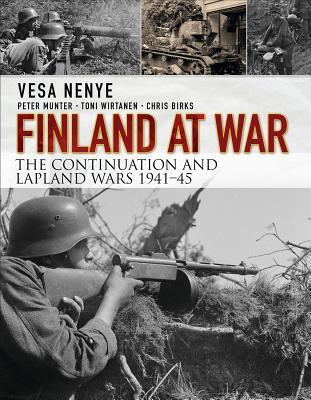
Finland at War: The Continuation and Lapland Wars 1941–45 (General Military)

Vesa Nenye

★★★★
Read Military history Technical warfare WWII Cold War Russia / USSR ISBN 9781472815262

Bloomsbury Publishing Plc · 2016

Having foiled the Soviet invasion of the Winter War, the Finns found themselves embroiled in an ongoing conflict to maintain their borders as the Soviets recovered from the initial advances made by the Germans during the Barbarossa campaign. Yet as the red tide of Soviet forces pushed back the German army, the Finnish forces--despite their lack of equipment, obsolete machinery and miniscule manpower--held firm against the Soviets throughout the continuation of the war, ensuring their post-war independence on the Western side of the Iron curtain. But that was not the end of hostilities for the exhausted Finnish nation as they turned their attentions to the Nazi forces embedded within their territory, calling up brigades populated with teenagers to force German forces inexorably back. Featuring some incredible, never-before-seen photographs and firsthand accounts, this is the history of one of the most incredible moments in modern military history.

Finland's War Of Choice: The Troubled German-Finnish Coalition in World War II

Henrik O. Lunde

★★★★
Read Advanced intel Military history Logistics WWII Cold War Russia / USSR Logistics ISBN 9781935149484

Casemate Publishers and Book Distributors · 2011

This book describes the odd coalition between Germany and Finland in World War II, and their joint military operations from 1941 to 1945. This is a topic often missing in English, though in stark contrast to the numerous books on the shorter and less bloody Winter War. That conflict represented a gallant fight of a democratic "David" against a totalitarian "Goliath" that caught the imagination of the world. The story of Finland fighting alongside a "Goliath" of its own has not brought pride to that nation and was a period many Finns would rather forget. The prologue of this book brings the reader up to speed by briefly examining the difficult history of Finland, from its separation from the Soviet Union in 1917 to its isolation after being bludgeoned in 1939-40. It then examines both Finnish and German motives for forming a coalition against the USSR, and how--as logical as a common enemy would seem--the lack of true planning and preparation would doom the alliance.

Flags of Our Fathers

James D. Bradley

★★★★
Read WWII Biography ISBN 9780553384154

Bantam · August 29, 2006

In this unforgettable chronicle of perhaps the most famous moment in American military history, James Bradley has captured the glory, the triumph, the heartbreak, and the legacy of the six men who raised the flag at Iwo Jima. Here is the true story behind the immortal photograph that has come to symbolize the courage and indomitable will of America. In February 1945, American Marines plunged into the surf at Iwo Jima—and into history. Through a hail of machine-gun and mortar fire that left the beaches strewn with comrades, they battled to the island's highest peak. And after climbing through a landscape of hell itself, they raised a flag. Now the son of one of the flagraisers has written a powerful account of six very different young men who came together in a moment that will live forever. To his family, John Bradley never spoke of the photograph or the war. But after his death at age seventy, his family discovered closed boxes of letters and photos. In Flags of Our Fathers, James Bradley draws on those documents to retrace the lives of his father and the men of Easy Company. Following these men's paths to Iwo Jima, James Bradley has written a classic story of the heroic battle for the Pacific's most crucial island—an island riddled with Japanese tunnels and 22,000 fanatic defenders who would fight to the last man. But perhaps the most interesting part of the story is what happened after the victory. The men in the photo—three were killed during the battle—were proclaimed heroes and flown home, to become reluctant symbols. For two of them, the adulation was shattering. Only James Bradley's father truly survived, displaying no copy of the famous photograph in his home, telling his son only: "The real heroes of Iwo Jima were the guys who didn't come back." Few books ever have captured the complexity and furor of war and its aftermath as well as Flags of Our Fathers. A penetrating, epic look at a generation at war, this is history told with keen insight, enormous honesty, and the passion of a son paying homage to his father. It is the story of the difference between truth and myth, the meaning of being a hero, and the essence of the human experience of war. From the Hardcover edition.

No cover · Amazon

Ghost on the Throne: The Death of Alexander the Great and the War for Crown and Empire

James Romm

★★★★
Read Advanced intel Intel history

Alexander the Great, perhaps the most commanding leader in history, united his empire and his army by the titanic force of his will. His death at the age of thirty-two spelled the end of that unity. The story of Alexander's conquest of the Persian empire is known to many readers, but the dramatic and consequential saga of the empire's collapse remains virtually untold. It is a tale of loss that begins with the greatest loss of all, the death of the Macedonian king who had held the empire together. With his demise, it was as if the sun had disappeared from the solar system, as if planets and moons began to spin crazily in new directions, crashing into one another with unimaginable force. Alexander bequeathed his power, legend has it, 'to the strongest,' leaving behind a mentally damaged half brother and a posthumously born son as his only heirs. In a strange compromise, both figures, Philip III and Alexander IV, were elevated to the kingship, quickly becoming prizes, pawns, fought over by a half-dozen Macedonian generals. Each successor could confer legitimacy on whichever general controlled him. At the book's center is the monarch's most vigorous defender; Alexander's former Greek secretary, now transformed into a general himself. He was a man both fascinating and entertaining, a man full of tricks and connivances, like the enthroned ghost of Alexander that gives the book its title, and becomes the determining factor in the precarious fortunes of the royal family. James Romm, brilliant classicist and storyteller, tells the galvanizing saga of the men who followed Alexander and found themselves incapable of preserving his empire. The result was the undoing of a world, formerly united in a single empire, now ripped apart into a nightmare of warring nation-states struggling for domination, the template of our own times.

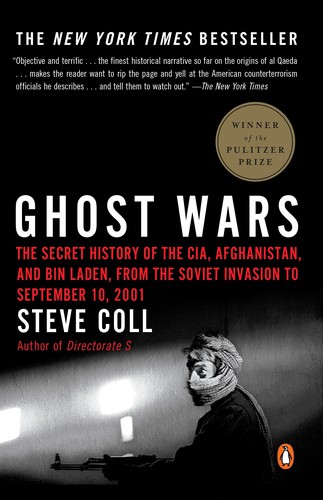
Ghost Wars: The Secret History of the CIA, Afghanistan, and Bin Laden from the Soviet Invasion to September 10, 2001

Steve Coll

★★★★
Read Basic intel Intel history Espionage GWOT Russia / USSR Middle East Intel history ISBN 0143034669

Penguin Books · 2005

The news-breaking book that has sent shockwaves through the Bush White House, Ghost Wars is the most accurate and revealing account yet of the CIA's secret involvement in al-Qaeda's evolution. It won the Pulitzer Prize in 2005.Prize-winning journalist Steve Coll has spent years reporting from the Middle East, accessed previously classified government files and interviewed senior US officials and foreign spymasters. Here he gives the full inside story of the CIA's covert funding of an Islamic jihad against Soviet forces in Afghanistan, explores how this sowed the seeds of Bin Laden's rise, traces how he built his global network and brings to life the dramatic battles within the US government over national security. Above all, he lays bare American intelligence's continual failure to grasp the rising threat of terrorism in the years leading to 9/11 - and its devastating consequences.

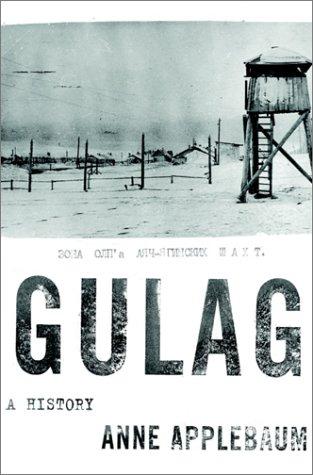
Gulag: A History

Anne Applebaum

★★★★
Read WWII Cold War Russia / USSR Biography Economics Revolution ISBN 0767900561

Doubleday · 2003

The Gulag—the vast array of Soviet concentration camps—was a system of repression and punishment whose rationalized evil and institutionalized inhumanity were rivaled only by the Holocaust. The Gulag entered the world's historical consciousness in 1972, with the publication of Alexander Solzhenitsyn's epic oral history of the Soviet camps, The Gulag Archipelago. Since the collapse of the Soviet Union, dozens of memoirs and new studies covering aspects of that system have been published in Russia and the West. Using these new resources as well as her own original historical research, Anne Applebaum has now undertaken, for the first time, a fully documented history of the Soviet camp system, from its origins in the Russian Revolution to its collapse in the era of glasnost. It is an epic feat of investigation and moral reckoning that places the Gulag where it belongs: at the center of our understanding of the troubled history of the twentieth century. Anne Applebaum first lays out the chronological history of the camps and the logic behind their creation, enlargement, and maintenance. The Gulag was first put in place in 1918 after the Russian Revolution. In 1929, Stalin personally decided to expand the camp system, both to use forced labor to accelerate Soviet industrialization and to exploit the natural resources of the country's barely habitable far northern regions. By the end of the 1930s, labor camps could be found in all twelve of the Soviet Union's time zones. The system continued to expand throughout the war years, reaching its height only in the early 1950s. From 1929 until the death of Stalin in 1953, some 18 million people passed through this massive system. Of these 18 million, it is estimated that 4.5 million never returned. But the Gulag was not just an economic institution. It also became, over time, a country within a country, almost a separate civilization, with its own laws, customs, literature, folklore, slang, and morality. Topic by topic, Anne Applebaum also examines how life was lived within this shadow country: how prisoners worked, how they ate, where they lived, how they died, how they survived. She examines their guards and their jailers, the horrors of transportation in empty cattle cars, the strange nature of Soviet arrests and trials, the impact of World War II, the relations between different national and religious groups, and the escapes, as well as the extraordinary rebellions that took place in the 1950s. She concludes by examining the disturbing question why the Gulag has remained relatively obscure, in the historical memory of both the former Soviet Union and the West. Gulag: A History will immediately be recognized as a landmark work of historical scholarship and an indelible contribution to the complex, ongoing, necessary quest for truth.

No cover · Amazon

Harvest of Despair: Life and Death in Ukraine under Nazi Rule

Karel C. Berkhoff

★★★★
Read Advanced intel Military history Logistics WWII Guerrilla / COIN Russia / USSR Logistics Revolution

"If I find a Ukrainian who is worthy of sitting at the same table with me, I must have him shot," declared Nazi commissar Erich Koch. To the Nazi leaders, the Ukrainians were Untermenschen—subhumans. But the rich land was deemed prime territory for Lebensraum expansion. Once the Germans rid the country of Jews, Roma, and Bolsheviks, the Ukrainians would be used to harvest the land for the master race. Karel Berkhoff provides a searing portrait of life in the Third Reich's largest colony. Under the Nazis, a blend of German nationalism, anti-Semitism, and racist notions about the Slavs produced a reign of terror and genocide. But it is impossible to understand fully Ukraine's response to this assault without addressing the impact of decades of repressive Soviet rule. Berkhoff shows how a pervasive Soviet mentality worked against solidarity, which helps explain why the vast majority of the population did not resist the Germans. He also challenges standard views of wartime eastern Europe by treating in a more nuanced way issues of collaboration and local anti-Semitism. Berkhoff offers a multifaceted discussion that includes the brutal nature of the Nazi administration; the genocide of the Jews and Roma; the deliberate starving of Kiev; mass deportations within and beyond Ukraine; the role of ethnic Germans; religion and national culture; partisans and the German response; and the desperate struggle to stay alive. Harvest of Despair is a gripping depiction of ordinary people trying to survive extraordinary events.

Hitler's War

David Irving

★★★★
Read WWII WWI Biography Economics ISBN 9780333357910

Macmillan · 1977

Beginning in 1933 with Hitler's economic and military rebuilding of Germany following World War I, and concluding in 1945 with the events surrounding his alleged Hitler's War is an insider's view of the events from the point of view of the man who held Europe in thrall for more than a decade. 16 pages of photographs.

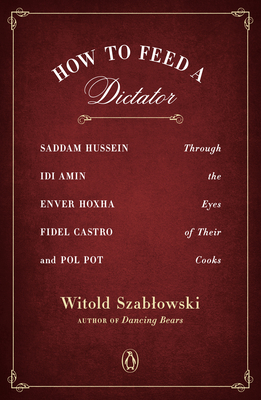
How to Feed a Dictator: Saddam Hussein, Idi Amin, Enver Hoxha, Fidel Castro, and Pol Pot Through the Eyes of Their Cooks

Witold Szabłowski

★★★★
Read Military history Middle East Intel history Biography Economics ISBN 9780143129752

Penguin Publishing Group · 2020

Anthony Bourdain meets Kapuściński in this chilling look from within the kitchen at the appetites of five of the twentieth century’s most infamous dictators, by the acclaimed author of Dancing Bears. What was Pol Pot eating while two million Cambodians were dying of hunger? Did Idi Amin really eat human flesh? And why was Fidel Castro obsessed with one particular cow? Traveling across four continents, from the ruins of Iraq to the savannahs of Kenya, Witold Szabłowski tracked down the personal chefs of five dictators known for the oppression and massacre of their own citizens—Iraq’s Saddam Hussein, Uganda’s Idi Amin, Albania’s Enver Hoxha, Cuba’s Fidel Castro, and Cambodia’s Pol Pot—and listened to their stories over sweet-and-sour soup, goat-meat pilaf, bottles of rum, and games of gin rummy. Dishy, deliciously readable, and dead serious, How to Feed a Dictator provides a knife’s-edge view of life under tyranny.

No cover · Amazon

I Am Juden: Undercover in the SS

Stephen Uzzell

★★★★
Read Military history WWII Russia / USSR Intel history

An alternative cover edition for this ASIN can be found here. "An auspicious debut... One of the more impressive books based on the horrors of WW2. I AM JUDEN is an extraordinary reading experience... Stephen Uzzell has woven facts with the skill of a documentarian and enhanced those facts with the burnish of a thriller. Highly recommended." The San Francisco Review of Books Inspired by the life of forgotten hero Haim Michael Klar, I Am Juden is the triumphant, epic tale of one man's incredible courage and resistance during the twentieth century's darkest days. Jozef Siegler leads a perilous double life as an SS officer in Krakow and ultimately Auschwitz. His life is a tightrope walk through the Holocaust unlike any other. Nazi by day and resistance agent by night, any false move would result in certain death and exposure of the Jewish underground. Kiel, Germany, 1938. Jozef Siegler has been a pacifist since his father died fighting in the anti-Jewish pogroms of the Russian Empire. Jozef now leads a quiet life as a university professor, but his days of innocence are numbered. With the final tightening of the Nuremberg Race Laws, he loses his job and flees Germany with his younger sister Shoshana. Aided by their Aryan looks and gift for languages, they are recruited into the Jewish resistance to transport orphans across the border into neutral Lithuania. But war soon envelops the continent. Brother and sister become separated. Jozef's quest to find Shoshana begins. Constantly on the move, never certain who to trust, it is his inventive ingenuity, the kindness of strangers, and the most hair-raising strokes of luck that ensure his survival. When Jozef stumbles upon the dead body of SS Oberfuhrer Harry Mohnke, he faces the biggest decision of his life. If he can bring himself to wear the hated uniform and impersonate a Nazi, how many lives could he save ? Fans of Schindler's List, All The Light We Cannot See and The Tattooist of Auschwitz are gripped by this riveting saga of history, suspense and heroism.

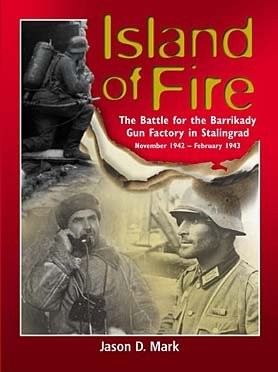
Island of Fire: The Battle for the Barrikady Gun Factory in Stalingrad

Jason D. Mark

★★★★
Read Military history Logistics Advanced intel WWII Russia / USSR Logistics ISBN 0975107631

Leaping Horseman Books · 2006

Stalingrad symbolises many the ideological clash between Nazism and Communism, the battle of wills between Hitler and Stalin, and the absolute fortitude of the Soviet people. In many people's minds, however, it represents the savagery, folly and utter waste of urban combat, a city where dozens of lives were readily exchanged for a ruined building. And nowhere did this senselessness manifest itself more than in the Barrikady Gun Factory and its housing settlement. The men of the German 305. Infanterie-Division had captured all of the factory's massive workhalls by the end of October 1942. The only obstacles standing between them and the Volga were a few battered houses and the remnants of the Soviet 138th Rifle Division. Five fresh pioneer battalions were brought in to help the Germans and the 'final' attack in Stalingrad (known erroneously as Operation 'Hubertus') was launched on 11 November, 1942. The push to the river cut off the Soviet troops and left a tiny bridgehead. Grim fighting raged around this fiery perimeter for three months. To the Soviet soldiers, this bridgehead was known as 'Lyudnikov's Island', or 'Ognenniy ostrov' - 'Island of Fire'. Painstakingly compiled from German and Russian sources such as war diaries, combat reports, published works, eyewitness accounts, letters and photos, this book presents an unbiased chronicle of the pitiless struggle from both perspectives.