The Battle For Stalingrad
Vasily Chuikov
★★☆☆☆THE STORY OF WORLD WAR II'S GREATEST BATTLE AS TOLD BY THE RUSSIAN COMMANDER AT STALINGRAD.
S2 Search · Reading list
Books from S2 Actual on Goodreads, organized by his shelves and topic buckets (intel lists, military history, logistics, etc.). Metadata filled via Open Library.
S2 topic buckets (Goodreads)
Subjects & genres
210 books · Military history · page 7 of 9
Vasily Chuikov
★★☆☆☆THE STORY OF WORLD WAR II'S GREATEST BATTLE AS TOLD BY THE RUSSIAN COMMANDER AT STALINGRAD.

Benito Mussolini
★★☆☆☆Howard Fertig · September 2006
“Democracy is a kingless regime infested by many kings who are sometimes more exclusive, tyrannical and destructive than one, even if he be a tyrant.” 'The Doctrine of Fascism' (Originally known as 'La dottrina del fascismo') is an essay written by Giovanni Gentile, with credit given to Benito Mussolini as a co-author. It was first published in the Enciclopedia Italiana of 1932, as the first section of a lengthy entry on "Fascismo" (Fascism). The entire entry on Fascism spans pages 847-884 of the Enciclopedia Italiana, and includes numerous photographs and graphic images. Today, it is considered the most complete articulation of Mussolini's political views. A key concept of the Mussolini essay was that fascism was a rejection of previous models: "Granted that the 19th century was the century of socialism, liberalism, democracy, this does not mean that the 20th century must also be the century of socialism, liberalism, democracy. Political doctrines pass; nations remain. We are free to believe that this is the century of authority, a century tending to the 'right', a Fascist century. If the 19th century was the century of the individual, we are free to believe that this is the 'collective' century, and therefore the century of the State." Regardless of one's political inclinations, this essay is of great curiosity to any reader with intellectual interests, and a must-read for those who seek to buttress or demolish its unwavering premises.
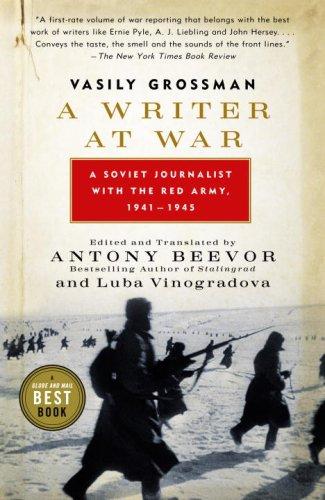
Vasily Grossman
unratedVintage Canada · March 13, 2007
Edited and translated from the Russian by Antony Beevor and Luba Vinogradova Knopf Canada is proud to present a masterpiece of the Second World War, never before published in English, from one of the great Russian writers of the 20th century – a vivid eyewitness account of the Eastern Front and “the ruthless truth of war.” When the Germans invaded Russia in 1941, Vasily Grossman became a special correspondent for the Red Star, the Red Army’s newspaper. A Writer at War – based on the notebooks in which Grossman gathered raw material for his articles – depicts the crushing conditions on the Eastern Front, and the lives and deaths of soldiers and civilians alike. It also includes some of the earliest reportage on the Holocaust. In the three years he spent on assignment, Grossman witnessed some of the most savage fighting of the war: the appalling defeats of the Red Army, the brutal street fighting in Stalingrad, the Battle of Kursk (the largest tank engagement in history), the defense of Moscow, the battles in Ukraine, and much more. Historian Antony Beevor has taken Grossman’s raw notebooks, and fashioned them into a narrative providing one of the most even-handed descriptions – at once unflinching and sensitive – we have ever had of what he called “the ruthless truth of war.” From the Hardcover edition.
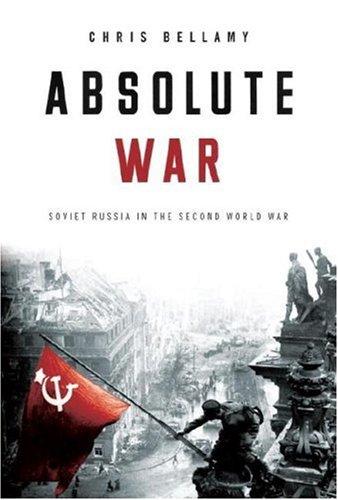
Christopher Bellamy
unratedKnopf · October 30, 2007
The battle on the Eastern Front between 1941 and 1945 was arguably the single most decisive factor of World War II, fixing the course of world history over the next half century. Now, drawing on sources newly available since the collapse of the Soviet Union and the reunification of Germany, historian and journalist Chris Bellamy presents the first full account of this deadly conflict. Bellamy outlines the lead-up to the war—in which the fragile alliance between Hitler and Stalin was unceremoniously broken—and takes us headlong into the hostilities. He presents a shocking picture of battle in which the traditional restraints of “civilized” warfare were shed. He makes clear how the Soviets quickly rallied against Hitler, choosing homegrown despotism over foreign domination in a struggle that the Russian people call the Great Patriotic War. Bellamy charts the early gains of the German army, whose advances into Soviet territory were brought to a halt in Moscow in the winter of 1941, and whose defeat was sealed in the Battle of Stalingrad, the most merciless campaign of the bloodiest front. He shows how Soviet men—and women—joined to fight a war whose casualties were later steeply underestimated by their government, and how even the true death toll, at 27 million, does not take into account the millions of lives on both sides that lay shattered in the aftermath. Finally, Bellamy examines the far-reaching consequences of the battle’s outcome—the reverberations of which are still felt today—and argues that the cost of victory was ultimately too much for the Soviet Union to bear. A magisterial study, and an essential addition to our understanding of contemporary world history.

Noel Malcolm
unratedNew York University Press · October 1, 1996
The most comprehensive narrative history of Bosnia available in English This updated edition of Noel Malcolm's highly-acclaimed A Short History provides the reader with the most comprehensive narrative history of Bosnia in the English language. Malcolm examines the different religious and ethnic inhabitants of Bosnia, a land of vast cultural upheaval where the empires of Rome, Charlemagne, the Ottomans, and the Austro-Hungarians overlapped. Clarifying the various myths that have clouded the modern understanding of Bosnia's past, Malcolm brings to light the true causes of the country's destruction. This expanded edition of Bosnia includes a new epilogue by the author examining the failed Vance-Owen peace plan, the tenuous resolution of the Dayton Accords, and the efforts of the United Nations to keep the uneasy peace. What went wrong in the country where Christians and Muslims mingled and tolerated each other for over five centuries? It was a land with a vibrant political and cultural history, unlike any other in Europe, where great powers and religions-the empires of Rome, Charlemagne, the Ottomans; the faiths of Roman Catholicism, Eastern Orthodoxy, Judaism, and Islam overlapped and combined. In this first English-language history of Bosnia, Noel Malcolm provides a narrative chronicle of the country from its beginnings to its tragic end. Clarifying the various myths that have clouded the modern understanding of Bosnia's past, Malcolm brings to light the true causes of the country's the political strategy of the Serbian leadership, the conflict between the city and the countryside, the fatal inaction and miscalculations of Western politicians. Putting the Bosnia war into perspective, this volume celebrates the complex history of a country whose past, as well as its future, has been all but erased. At last, here is the guide for the general reader seeking a comprehensive and accessible account of the war in the former Yugoslavia.
John R. Walker
unratedAfter the end of World War II, General George Patton declared that artillery had won the war. Yet howitzers did not achieve victory on their own. Crucial to the success of these big guns were forward observers, artillerymen on the front lines who directed the artillery fire. Until now, the vital role of forward observers in ground combat has received little scholarly attention. In Bracketing the Enemy, John R. Walker remedies this oversight by offering the first full-length history of forward observer teams during World War II. As early as the U.S. Civil War, artillery fire could reach as far as two miles, but without an “FO” (forward observer) to report where the first shot had landed in relation to the target, and to direct subsequent fire by outlining or “bracketing” the targeted range, many of the advantages of longer-range fire were wasted. During World War II, FOs accompanied infantrymen on the front lines. Now, for the first time, gun crews could bring deadly accurate fire on enemy positions immediately as advancing riflemen encountered these enemy strongpoints. According to Walker, this transition from direct to indirect fire was one of the most important innovations to have occurred in ground combat in centuries. Using the 37th Division in the Pacific Theater and the 87th in Europe as case studies, Walker presents a vivid picture of the dangers involved in FO duty and shows how vitally important forward observers were to the success of ground operations in a variety of scenarios. FO personnel not only performed a vital support function as artillerymen but often transcended their combat role by fighting as infantrymen, sometimes even leading soldiers into battle. And yet, although forward observers lived, fought, and bled with the infantry, they were ineligible to wear the Combat Infantryman’s Badge awarded to the riflemen they supported. Forward observers are thus among the unsung heroes of World War II. Bracketing the Enemy signals a long-overdue recognition of their distinguished service.

Louis Allen
unratedPhoenix Press · 2000
Charting the whole Burma war, this book flows like a novel from the high command to the sharp end setting out a myriad of facts and considerations in a clear and coherent narrative. Ranging far beyond pure military history the story is multi-layered, combining objective analysis with a sensitive account of human reaction in the face of bitter, cruel warfare, disease and an inhospitable terrain. Military events are painstakingly detailed, and set in their political and cultural context. Equal attention is paid to both sides of the conflict and the insights made into Japanese plans and responses make the book uniquely informative, exciting and moving. 'If one had to select one book about the Burma War, this fine work is the best' Dekho, magazine of the Burma Star Association 'There will be few more thorough chronicles of World War Two's most dreaded front than Louis Allen's The Longest War' The Listener

David P. Barrett
unratedPeter Lang Publishing · November 1, 2000
This book is a collection of eleven articles written by scholars of international repute that specializes in the history of China during her long war against Japan from 1937 to 1945. The topics addressed include political, economic, social, and diplomatic issues related to wartime China based on materials newly opened for research. They give strong evidence that the Sino-Japanese War was of a complexity and magnitude that must be understood in terms that go far beyond those solely of its military dimensions.
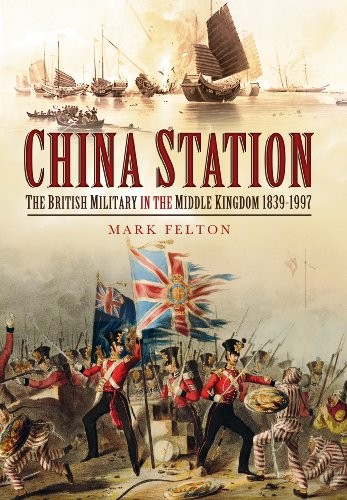
Mark Felton
unratedPen and Sword Military · Oct 19, 2013
The author, who lives in Shanghai, sets out to demonstrate that the British military has been at the forefront of many of the great changes that have swept China over the last two centuries. The author, who lives in Shanghai, sets out to demonstrate that the British military has been at the forefront of many of the great changes that have swept China over the last two centuries. He devotes chapters to the various wars, military adventures and rebellions that regularly punctuated Sino/British relationships since the 1st Opium War 1839-1842. This classic example of Imperial intervention saw the establishment of Hong Kong and Shanghai as key trading centers. The Second Opium War and the Taiping and Boxer Rebellions saw the advancement of British influence despite determined but unsuccessful efforts by the Chinese to loosen the grip of Western domination. The Royal Navy's might ensured that, by gunboat diplomacy, trading rights and new posts were established and great fortunes made. But in the 1940s the British grossly underestimated Japanese military might and intentions with disastrous results. After the Second World War the British returned to find that the Americans had supplanted them. The Communists victory in the Civil War sealed British and Western fates and, while Hong Kong remained under British control until 1997, the end of British rule was almost inevitable. But the handover was a masterly piece of pragmatic capitalism and the former Colony remains an economic powerhouse with strong British influence.
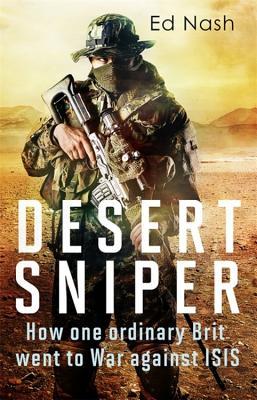
Ed Nash
unratedLittle, Brown Book Group Limited · 2018
What makes an ordinary but highly educated Englishman, with no previous military training, decide to travel and fight in one of the most brutal conflicts on the planet? Desert Sniper is an extraordinary, true account of one man's journey from well-meaning volunteer to battle-scarred combat sniper, placing himself daily in the line of fire to fight one of the greatest evils of this new century. Ed Nash has travelled across the globe, and is working with refugees in Burma, when he first becomes aware of the terrible atrocities being committed under ISIS's newly established 'Caliphate', covering vast tracts of Iraq and Syria. In June 2015, he chooses to undertake the hazardous journey, via Northern Iraq, to Syria, to join ill-equipped and poorly trained but battle-hardened Kurdish forces as they attempt to halt Daesh's relentless advance. Nash is an articulate, insightful and refreshingly honest companion as he unpacks the shifting complexities of the political and military situation in which he finds himself. As one of a motley band of foreign volunteer fighters - veterans of other conflicts, adventurers and misfits, from many different countries - we follow him through his rudimentary training and early combat operations as he and his companions slowly gain the trust and respect of their Kurdish colleagues. Nash shows us the realities of the war on the ground in Syria in fascinating detail; the privations of the ordinary Kurdish soldiers, the terrible price paid by civilians caught in the cross-fire, the ever-present danger of lethal suicide bombers and occasional moments of striking beauty in amongst the carnage. A modern classic in the making, Desert Sniper will prove to be one of the most unforgettable accounts to emerge from the war against ISIS.
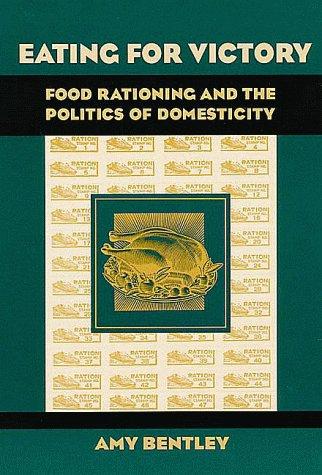
Amy Bentley
unratedUniversity of Illinois Press · 1998
Victory gardens, ration books. While men fought overseas, women fought the war at home, by going to work and, more subtly, by feeding their families. Mandatory food rationing during World War II challenged, for the first time, the image of the United States as a land of plenty and collapsed the boundaries between women's public and private lives by declaring home production and consumption to be political activities. In this fascinating cultural history, Amy Bentley examines the food-related propaganda surrounding rationing. She also explores the dual message purveyed by government and the media that while mandatory rationing was necessary (enabling enough food to be sent to the U.S. military and Allies overseas), women, black and white, were also "required" to provide their families with nutritious food. Eating for Victory explores the role of the Wartime Homemaker (media counterpart to the more familiar Rosie the Riveter) as a pivotal component not only of World War II but of the development of the United States into a superpower.

Christian Wolmar
unratedAtlantic · 2007
Now in paperback, Fire and Steam tells the dramatic story of the people and events that shaped the world’s first railway network, one of the most impressive engineering achievements in history. The opening of the pioneering Liverpool and Manchester Railway in 1830 marked the beginning of the railways’ vital role in changing the face of Britain. Fire and Steam celebrates the vision and determination of the ambitious Victorian pioneers who developed this revolutionary transport system and the navvies who cut through the land to enable a country-wide network to emerge. The rise of the steam train allowed goods and people to circulate around Britain as never before, stimulating the growth of towns and industry, as well many of the facets of modern life, from fish and chips to professional football. From the early days of steam to electrification, via the railways’ magnificent contribution in two world wars, the checkered history of British Rail, and the buoyant future of the train, Fire and Steam examines the social and economical importance of the railway and how it helped to form the Britain of today.
Paul H. Kratoska
unratedSt. Martins's Press · 1998
The Japanese occupation of Southeast Asia between 1941 and 1945 brought with it severe food shortages, largely arising from organizational failures and inadequate transportation. The nine essays in this volume examine the situation in food exporting countries such as Burma, Thailand and Vietnam, in food deficit areas such as Malaya, the Philippines and Java, and in Sarawak which was largely self sufficient. Two essays examine in detail the famine that struck the Tonkin area of northern Vietnam in 1945.

John Arquilla
unratedUniv.P.of America · 1996
Special operations, though most commonly associated with the period from the Second World War to the present, have played a key role throughout the history of conflict from the Trojan War to the great arms struggles of the 20th century. This volume introduces the reader to the broad sweep of the history of special operations, and also includes several excerpts from the classic literature on the subject. Contents: Origins: Robert Graves, 'The Wooden Horse', 'The Sack of Troy'; Raiding in the Age of Sail: G.M. Thomson, 'The Damage Done by this Corsair', 'The Wind Commands Me Away'; Ian Grimble, 'The Imp,^Rrieuse'; The Early American Tradition: Kenneth Roberts, 'The Raid on St. Francis'; Fred Cook, 'Struggle for the South'; R.E. Dupuy and W.H. Baumer, 'Wars With the Barbary Pirates'; 19th Century Colonial Warfare; Leo Tolstoy, The Raid; Wyatt Blassingame, 'How the Legion Began', 'The Legion Fights in Algeria'; The Civil War: Archer Hines, 'Military Means, Political Ends'; Bruce Catton, 'Total War and an Election'; World War I: Lowell Thomas, 'Trapped by a G-Ship..'; T.E. Lawrence, 'The Raid Upon the Bridges'; World War II in Western Europe and North Africa: Cajus Bekker, 'The Coup de Main at Eben Emael', 'The Blood-Bath of Crete'; Paul Carell, 'A British Commando Attempt to Capture Rommel', 'The British Raid on Tobruk', 'Brandenburgers in Action Behind the Front'; John Lodwick, Raiders from the Sea, Chapters 16-18; The Pacific War: Walter Lord, 'A Very Private War';Ronald Spector, 'The Road to Myitkyina'; Milton E. Miles, 'Chinese Pirates and the SACO Dragon'; Algeria, Round II: Jean Lart,^Rguy, 'The Leap of Leucadia'; The Ultimate Rescue: Chaim Herzog, 'Entebbe'; Bibliography; Index.
Evan Wright
unratedAnother nameless town, another target for First Recon. It's only five in the afternoon, but a sandtorm has plunged everything into a hellish twilight of murky, red dust. On rooftops, in alleyways lurk militiamen with machine guns, AK rifles and the odd rocket-propelled grenade. Artillery bombardment has shattered the town's sewers and rubble is piled up in lagoons of human excrement. It stinks. Welcome to Iraq... Within hours of 9/11, America's war on terrorism fell to those like the 23 Marines of the First Recon Battalion, the first generation dispatched into open-ed combat since Vietnam. They were a new breed of American warrior unrecognizable to their forebears-soldiers raised on hip hop, Internet porn, Marilyn Manson, video games and The Real World, a band of born-again Christians, dopers, Buddhists, and New Agers who gleaned their precepts from kung fu movies and Oprah Winfrey. Cocky, brave, headstrong, wary, and mostly unprepared for the physical, emotional, and moral horrors ahead, the "First Suicide Battalion" would spearhead the blitzkrieg on Iraq, and fight against the hardest resistance Saddam had to offer. Generation Kill is the funny, frightening, and profane firsthand account of these remarkable men, of the personal toll of victory, and of the randomness, brutality, and camaraderie of a new American war.
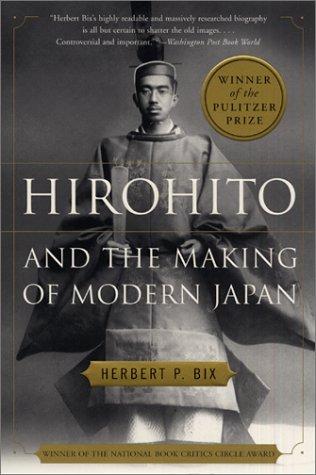
Herbert P. Bix
unratedHarper Perennial · September 4, 2001
Winner of the Pulitzer PrizeIn this groundbreaking biography of the Japanese emperor Hirohito, Herbert P. Bix offers the first complete, unvarnished look at the enigmatic leader whose sixty-three-year reign ushered Japan into the modern world. Never before has the full life of this controversial figure been revealed with such clarity and vividness. Bix shows what it was like to be trained from birth for a lone position at the apex of the nation's political hierarchy and as a revered symbol of divine status. Influenced by an unusual combination of the Japanese imperial tradition and a modern scientific worldview, the young emperor gradually evolves into his preeminent role, aligning himself with the growing ultranationalist movement, perpetuating a cult of religious emperor worship, resisting attempts to curb his power, and all the while burnishing his image as a reluctant, passive monarch. Here we see Hirohito as he truly was: a man of strong will and real authority. Supported by a vast array of previously untapped primary documents, Hirohito and the Making of Modern Japan is perhaps most illuminating in lifting the veil on the mythology surrounding the emperor's impact on the world stage. Focusing closely on Hirohito's interactions with his advisers and successive Japanese governments, Bix sheds new light on the causes of the China War in 1937 and the start of the Asia-Pacific War in 1941. And while conventional wisdom has had it that the nation's increasing foreign aggression was driven and maintained not by the emperor but by an elite group of Japanese militarists, the reality, as witnessed here, is quite different. Bix documents in detail the strong, decisive role Hirohito played in wartime operations, from the takeover of Manchuria in 1931 through the attack on Pearl Harbor and ultimately the fateful decision in 1945 to accede to an unconditional surrender. In fact, the emperor stubbornly prolonged the war effort and then used the horrifying bombings of Hiroshima and Nagasaki, together with the Soviet entrance into the war, as his exit strategy from a no-win situation. From the moment of capitulation, we see how American and Japanese leaders moved to justify the retention of Hirohito as emperor by whitewashing his wartime role and reshaping the historical consciousness of the Japanese people. The key to this strategy was Hirohito's alliance with General MacArthur, who helped him maintain his stature and shed his militaristic image, while MacArthur used the emperor as a figurehead to assist him in converting Japan into a peaceful nation. Their partnership ensured that the emperor's image would loom large over the postwar years and later decades, as Japan began to make its way in the modern age and struggled -- as it still does -- to come to terms with its past. Until the very end of a career that embodied the conflicting aims of Japan's development as a nation, Hirohito remained preoccupied with politics and with his place in history. Hirohito and the Making of Modern Japan provides the definitive account of his rich life and legacy. Meticulously researched and utterly engaging, this book is proof that the history of twentieth-century Japan cannot be understood apart from the life of its most remarkable and enduring leader.
Norman Cameron
unratedEnigma Books · 2000
This is a new edition of a major document from World War II with additional, previously unavailable texts assembled from the stenographic record of Hitler’s informal conversations ordered by Martin Bormann. These texts remain the classic collection of Hitler’s nighttime monologues with his entourage, covering mostly nonmilitary subjects and long-range plans. Hitler lets his thoughts wander, never failing to provide an opinion on every subject. Additional documents from various archives make this the most complete English-language edition in print.
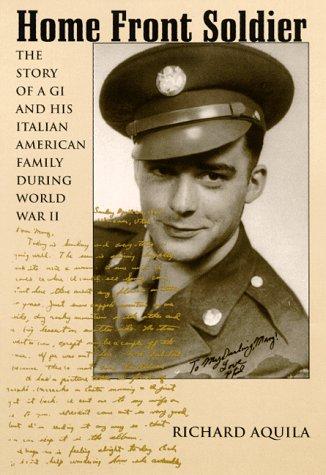
Richard Aquila
unratedState University of New York Press · 1999
While other collections of letters and memoirs from World War II have dealt with upper-class individuals, officers, or college-educated people, Home Front Soldier is the first to explore the life of an ordinary, working-class, first-generation American. This gripping story of a young soldier, Philip L. Aquila, and his Italian American family during the Second World War includes a detailed introduction, providing historical context to the more than 500 letters that this sergeant wrote to his family back home in Buffalo, New York. Like an epistolary novel, the letters offer an intimate personal history of how a large immigrant family with four sons in the military coped with the daily traumas of World War II. Each of the major and minor plots relates to larger questions in American social history of the 1930s and 1940s, offering fresh insights about family history, gender relations, ethnic and immigration history, and everyday life on the home front. The book also fills a gap in military history by providing detailed information about soldiers stationed in the United States during the war.
Martha Osnos
unratedWiley · 1979
A translation from the Polish of a manuscript smuggled out of the Warsaw Ghetto that details studies performed by resident Jewish physicians on patients suffering from starvation. Topics include: clinical changes in adults and children, metabolic adaptations, circulatory changes, changes in the eye and in vision, changes in the blood and bone marrow, and pathologic anatomy.
Mark Bowden
unratedIn the early hours of January 31, 1968, the North Vietnamese launched over one hundred attacks across South Vietnam in what would become known as the Tet Offensive. The lynchpin of Tet was the capture of Hue, Vietnam?s intellectual and cultural capital, by 10,000 National Liberation Front troops who descended from hidden camps and surged across the city of 140,000. Within hours the entire city was in their hands save for two small military outposts. American commanders refused to believe the size and scope of the Front?s presence, ordering small companies of marines against thousands of entrenched enemy troops. After several futile and deadly days, Lieutenant Colonel Ernie Cheatham would finally come up with a strategy to retake the city, block by block and building by building, in some of the most intense urban combat since World War II. With unprecedented access to war archives in the U.S. and Vietnam and interviews with participants from both sides, Bowden narrates each stage of this crucial battle through multiple viewpoints. Played out over 24 days and ultimately costing 10,000 lives, the Battle of Hue was by far the bloodiest of the entire war. When it ended, the American debate was never again about winning, only about how to leave. Hue 1968 is a gripping and moving account of this pivotal moment.
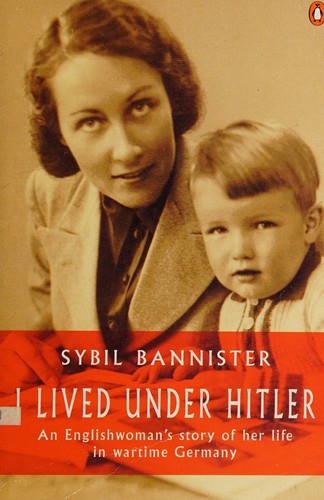
Sybil Bannister
unratedPenguin · 1995
In 1933 Sybil Bannister, a young British woman, set up home in Danzig with her new husband, a German medical student. This is an account of the hardship of her war experience. Her marriage broke up, she was separated from her son, and endured Hamburg's bombing raids and the Wuppertal firestorm.

Max Boot
unratedLiveright Pub. Corporation · 2012
As fitting for the twenty-first century as von Clausewitz’s On War was in its own time, Invisible Armies is a complete global history of guerrilla uprisings through the ages. Beginning with the first insurgencies in the ancient world―when Alexander the Great discovered that fleet nomads were harder to defeat than massive conventional armies―Max Boot, best-selling author and military advisor in Iraq and Afghanistan, masterfully guides us from the Jewish rebellion against the Roman Empire up through the horrors of the French-Indochina War and the shadowy, post-9/11 battlefields of today. Relying on a diverse cast of unforgettable characters―not only Mao and Che but also the legendary Italian nationalist Giuseppe Garibaldi, the archaeologist-turned–military commander T. E. Lawrence, and the “Quiet American” Edward Lansdale, among others―Boot explodes everything we thought we knew about unconventional combat. The result is both an enthralling read and our most important work on nontraditional warfare. 70 illustrations; 8 maps
Michael A. Barnhart
unratedCornell University Press · 1991
The roots of Japan's aggressive, expansionist foreign policy have often been traced to its concern over acute economic vulnerability. Historian Michael Barnhart tests this assumption by examining the events leading up to World War II in the context of Japan's quest for economic security. Drawing on a wide array of Japanese and American sources, this is the first English-language book on the war's origins to be based on research in archives on both sides of the Pacific. Barnhart focuses on the critical years from 1938 to 1941 as he investigates the development of Japan's drive for national economic self-sufficiency and independence and the way in which this drive shaped its internal and external policies. He also explores American economic pressure on Tokyo and assesses its impact on Japan's foreign policy and domestic economy. He concludes that Japan's internal political dynamics, especially the bitter rivalry between its army and navy, played a far greater role in propelling the nation into war with the United States than did its economic condition or even pressure from Washington. Japan Prepares for Total War sheds new light on prewar Japan and confirms the opinions of those in Washington who advocated economic pressure against Japan. At a time of growing interest in U.S.-Japanese economic relations, this book will be stimulating and provocative reading for scholars and students of international relations and American and Asian history.

Mark Felton
unratedPen & Sword Military · 2009
Japan's military and secret police, the Kempetai, carried out a reign of terror against captive Asian nations, Allied POWs, and Japanese citizens throughout World War II. This history explains the origins, command structure, and role of the Kempetai apparatus, revealing their criminal and collaborationist networks. It examines biological and chemical experiments on live subjects, the gulags for POWs, and slave labor, including the so-called "comfort women," as well as their campaign of revenge after the 1942 Doolittle raid on Tokyo. Calling their actions genocide on a grand scale, the author backs up his text with firsthand testimonies from survivors.