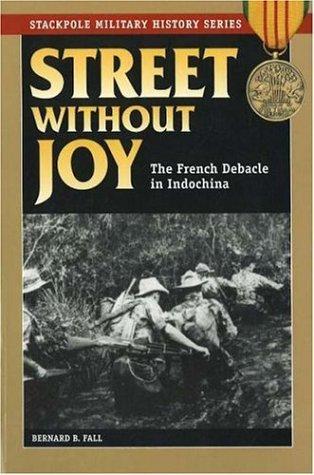
Street Without Joy
Bernard B. Fall
★★★★☆Stackpole Books · 1994
This classic account of the French War in Vietnam, Laos, and Cambodia is back in hardcover. Includes an introduction by George C. Herring.
S2 Search · Reading list
Books from S2 Actual on Goodreads, organized by his shelves and topic buckets (intel lists, military history, logistics, etc.). Metadata filled via Open Library.
S2 topic buckets (Goodreads)
Subjects & genres
415 books · All shelves · page 9 of 18
Bernard B. Fall
★★★★☆Stackpole Books · 1994
This classic account of the French War in Vietnam, Laos, and Cambodia is back in hardcover. Includes an introduction by George C. Herring.

Martin van Creveld
★★★★☆Cambridge University Press · 2004
Drawing on a very wide range of unpublished and previously unexploited sources, Martin van Creveld examines the "nuts and bolts" of war. He considers the formidable problems of movement and supply, transportation and administration, often mentioned (but rarely explored) by the vast majority of books on military history. By concentrating on logistics rather than on the more traditional tactics and strategy, van Creveld is also able to offer an original reinterpretation of military history. First Edition Hb (1977): 0-521-21730-X FIrst Edition Pb (1979): 0-521-29793-1

Evgeni Bessonov
★★★★☆Stackpole Books · 2003
Tank Rider is the atmospheric memoir of Evgeni Bessonov telling of his years of service in the vanguard of the Red Army and daily encounters with the German foe. He brings large-scale battles alive, recounts the sniping and skirmishing which tried and tested soldiers on both sides and narrates the overwhelming tragedy and horror of apocalyptic warfare on the Eastern Front.
Sun Tzu
★★★★☆Pearson Education Asia · 1900
Twenty-Five Hundred years ago, Sun Tzu wrote this classic book of military strategy based on Chinese warfare and military thought. Since that time, all levels of military have used the teaching on Sun Tzu to warfare and civilization have adapted these teachings for use in politics, business and everyday life. The Art of War is a book which should be used to gain advantage of opponents in the boardroom and battlefield alike.

Fyodor Dostoevsky
★★★★☆Farrar, Straus and Giroux · June 14, 2002
The Brothers Karamazov is a murder mystery, a courtroom drama, and an exploration of erotic rivalry in a series of triangular love affairs involving the “wicked and sentimental” Fyodor Pavlovich Karamazov and his three sons―the impulsive and sensual Dmitri; the coldly rational Ivan; and the healthy, red-cheeked young novice Alyosha. Through the gripping events of their story, Dostoevsky portrays the whole of Russian life, is social and spiritual striving, in what was both the golden age and a tragic turning point in Russian culture. This award-winning translation by Richard Pevear and Larissa Volokhonsky remains true to the verbal inventiveness of Dostoevsky’s prose, preserving the multiple voices, the humor, and the surprising modernity of the original. It is an achievement worthy of Dostoevsky’s last and greatest novel.

Jean Raspail
★★★★☆Social Contract Press · 1987
By the year 2000 there will on present projections be seven billion people swarming on the surface of the Earth. And only nine hundred million of them will be white. What will happen when the teeming billions of the so-called Third World—driven by unbearable hunger and despair, the inevitable consequences of insensate over-population—descend locust-like on the lush lands of the complacent white nations? Jean Raspail has the rare imagination and courage necessary to face this terrifying question head-on. Readers of whatever color and political persuasion will find in The Camp of the Saints (already a bestseller in France and America) a hypnotically readable novel of compelling power that will disturb, provoke and horrify them by turns. And so powerful is its impact that once you have read it you will need brain surgery to forget it.
Barrie Pitt
★★★★☆The Crucible of War: Book 1 ‘The definitive work on the Desert War.’ Manchester Evening News Wavell’s Command is the first of the three volumes of The Crucible of War. Volume 1 of The Crucible of War trilogy covers General Wavell’s command, a period that began triumphantly with the rout of the Italian Army and ended in catastrophe with the devastating entry of Rommel into the conflict. On 11th June 1940, Mussolini declared war on Britain and France. From their colony in Libya, the Italians began invading Egypt in an attempt to expand their African Empire. Thus began the Desert War – a battle to secure critical Middle East oil supplies which would last for three years. Commander-in-Chief of the Middle East was General Sir Archibald Wavell. By 1940, and with limited resources, he was responsible for all British land forces in Egypt, the Sudan, Palestine, Transjordan and Cyprus, as well as the Army formations in British Somaliland, Aden, Iraq and along the shores of the Persian Gulf. The area for which he had accepted military command thus included nine different countries in two continents. In December 1940 in Libya, Wavell’s Western Desert Force of 36,000 men attacked the Italians across desolate and inhospitable terrain in order to keep Egypt from falling to the Axis and shield access to the Red Sea, the Persian Gulf and possibly even India from Hitler. Attack was the only form of defense and under field commander General Richard O’Connor, an immensely successful and exhilarating campaign was carried out against Marshal Graziani’s forces. The Italians were pushed back hundreds of miles and 130,000 prisoners were taken. By February 1941 nearly all Axis forces had been expelled from North Africa. It was a remarkable triumph in one of the most dramatic theatres of the Second World War which paved the way for later victories, but not immediately – as Rommel’s Afrika Korps meant Wavell, with a now weakened Western Desert Force, was ordered to send men to Greece, despite his conviction that victory was close. The tide of war was about to turn once more. PRAISE FOR THE CRUCIBLE OF WAR TRILOGY: ‘A magnificent book, Barrie Pitt has almost a novelist’s skill and perception of character.’ Daily Telegraph ‘Totally readable, Mr Pitt’s study depicts equally well the broad outlines of strategy, the confusions and hazards of the battlefield and the personalities of the generals or private soldiers fighting there.’ Oxford Times Barrie Pitt (1918-2006) was well known as a military historian and editor of Purnell’s History of the Second World War and History of the First World War. His publications include Coronel and Falkland, Churchill and the Generals and The Crucible of War, a trilogy covering the North African campaign of the Second World War. He was born in Galway and later lived near Ilminster in Somerset.
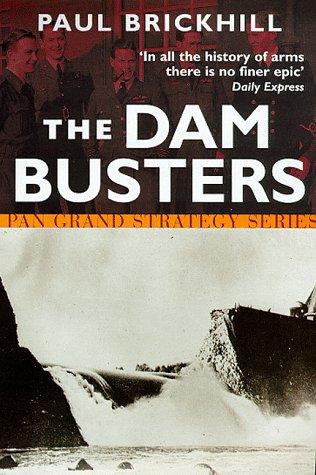
Paul Brickhill
★★★★☆Pan Books · January 22, 1999
On 17 May 1943, nearly 350 million tons of water crashed into the valleys of the Ruhr when the Lancaster bombers of 617 Squadron breached the giant Moehne and Eder Dams with colossal ‘blockbuster’ bombs. The Dam Busters tells the story of the raid and the squadron of fearless airmen who carried it through. Again and again, the crews of 617 Squadron Bomber Command used their flying skills, their tremendous courage and Barnes Wallis’ highly accurate bouncing bombs to deal devastating blows to Nazi Germany. One of the most daring true stories to emerge from the Second World War, Paul Brickhill’s The Dam Busters inspired the famous 1955 film starring Michael Redgrave and Richard Todd.
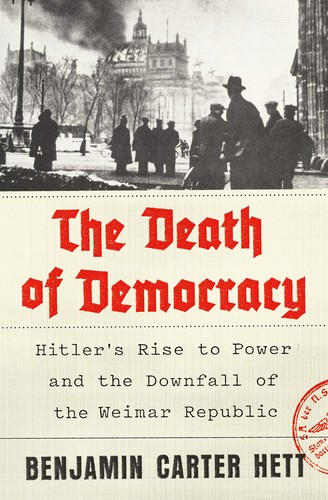
Benjamin Carter Hett
★★★★☆Henry Holt and Co. · 2018
A riveting account of how the Nazi Party came to power and how the failures of the Weimar Republic and the shortsightedness of German politicians allowed it to happen Why did democracy fall apart so quickly and completely in Germany in the 1930s? How did a democratic government allow Adolf Hitler to seize power? In The Death of Democracy, Benjamin Carter Hett answers these questions, and the story he tells has disturbing resonances for our own time. To say that Hitler was elected is too simple. He would never have come to power if Germany’s leading politicians had not responded to a spate of populist insurgencies by trying to co-opt him, a strategy that backed them into a corner from which the only way out was to bring the Nazis in. Hett lays bare the misguided confidence of conservative politicians who believed that Hitler and his followers would willingly support them, not recognizing that their efforts to use the Nazis actually played into Hitler’s hands. They had willingly given him the tools to turn Germany into a vicious dictatorship. Benjamin Carter Hett is a leading scholar of twentieth-century Germany and a gifted storyteller whose portraits of these feckless politicians show how fragile democracy can be when those in power do not respect it. He offers a powerful lesson for today, when democracy once again finds itself embattled and the siren song of strongmen sounds ever louder.
Edward Gibbon
★★★★☆J.M. Dent · 1800
The History of the Decline and Fall of the Roman Empire (sometimes shortened to Fall of the Roman Empire) is a book of history written by the English historian Edward Gibbon. It traces the trajectory of Western civilization (as well as the Islamic and Mongolian conquests) from the height of the Roman Empire to the fall of Byzantium. The work covers the history of the Roman Empire, Europe, and the Catholic Church from 98 to 1590 and discusses the decline of the Roman Empire in the East and West. Because of its relative objectivity and heavy use of primary sources, unusual at the time, its methodology became a model for later historians. This led to Gibbon being called the first "modern historian of ancient Rome" This version includes working footnotes unobtrusively placed at the back of the book with active links for easy navigation, maps from the original book, modern maps, and links to audiobook of all volumes.
Anne Frank
★★★★☆Penguin · 1998
Discovered in the attic where she spent the final years of her life, Anne Frank’s Diary has become a timeless classic; a powerful reminder of the horrors of war and a moving testament to the resilience of the human spirit. In 1942, as the Nazis occupied Holland, thirteen-year-old Anne Frank and her Jewish family fled their home in Amsterdam and went into hiding. For the next two years, until they were betrayed to the Gestapo, the Franks and another family lived in the cramped “Secret Annexe” of an old office building. Cut off from the outside world, they endured hunger, boredom, the strain of close quarters, and the constant fear of discovery and death. Through it all, Anne documented her experiences in a diary filled with vivid observations. At times thoughtful, poignant, and even unexpectedly funny, her writing offers a remarkable window into the strength and vulnerability of the human spirit. It’s both a compelling self-portrait of a bright, spirited young woman and a heartbreaking glimpse of a life that should have been far longer.
Mark Safranski
★★★★☆Nimble Books · 2008-09-16
A collection of thought-provoking essays about the work of the late Colonel John Boyd, a fighter pilot who was one of the most influential figures in American military strategy in the last third of the Twentieth Century. This book had its origins in an online roundtable hosted at Chicago Boyz, a popular libertarian and conservative group blog founded by Jonathan Glewirtz. The roundtable attracted the participation of an impressive group of reviewers from the blogosphere and from scientific, academic and military fields. Authors whose essays are included in this book include Daniel H. Abbott, Shane Deichman, Adam Elkus, "Lexington Green," Frank Hoffman, Dr. Frans Osinga, Dr. Chet Richards, Thomas Wade, and Dr. Frans Osinga, author of the leading scholarly work on Boyd. This book is essential reading for anyone interested in John Boyd and will provide important insights for anyone who is interested in military strategy and current affairs.
Peter L. Bergen
★★★★☆Free Press · 2011
TEN YEARS HAVE PASSED since the shocking attacks on the World Trade Center, and after seven years of conflict, the last U.S. combat troops left Iraq—only to move into Afghanistan, where the ten-year-old fight the war on terror rages with no clear end in sight. In The Longest War Peter Bergen offers a comprehensive history of this war and its evolution, from the strategies devised in the wake of the 9/11 attacks to the fighting in Afghanistan, Pakistan, and beyond. Unlike any other book on this subject, here Bergen tells the story of this shifting war’s failures and successes from the perspectives of both the United States and al-Qaeda and its allies. He goes into the homes of al-Qaeda members, rooting into the source of their devotion to terrorist causes, and spends time in the offices of the major players shaping the U.S. strategic efforts in the region. At a time when many are frustrated or fatigued with what has become an enduring multigenerational conflict, this book will provide an illuminating narrative that not only traces the arc of the fight but projects its likely future. Weaving together internal documents from al-Qaeda and the U.S. offices of counterterrorism, first-person interviews with top-level jihadists and senior Washington officials, along with his own experiences on the ground in the Middle East, Bergen balances the accounts of each side, revealing how al-Qaeda has evolved since 9/11 and the specific ways the U.S. government has responded in the ongoing fight. Bergen also uncovers the strategic errors committed on both sides—the way that al-Qaeda’s bold attack on the United States on 9/11 actually undermined its objective and caused the collapse of the Taliban and the destruction of the organization’s safe haven in Afghanistan, and how al-Qaeda is actually losing the war of ideas in the Muslim world. The book also shows how the United States undermined its moral position in this war with its actions at Guantánamo and coercive interrogations—including the extraordinary rendition of Abu Omar, who was kidnapped by the CIA in Milan in 2003 and was tortured for four years in Egyptian prisons; his case represents the first and only time that CIA officials have been charged and convicted of the crime of kidnapping. In examining other strategic blunders the United States has committed, Bergen offers a scathing critique of the Clinton and Bush administrations’ inability to accurately assess and counter the al-Qaeda threat, Bush’s deeply misguided reasons for invading Iraq—including the story of how the invasion was launched based, in part, on the views of an obscure academic who put forth theories about Iraq’s involvement with al-Qaeda—and the Obama administration’s efforts in Afghanistan. At a critical moment in world history The Longest War provides the definitive account of the ongoing battle against terror.
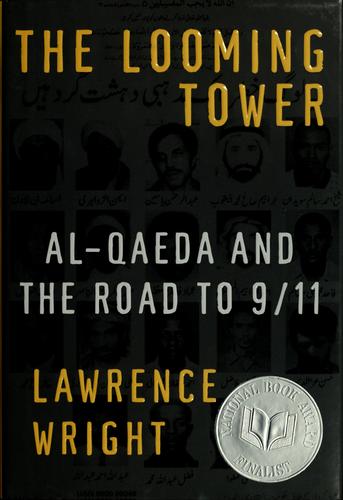
Lawrence Wright
★★★★☆Knopf · 2006
A sweeping narrative history of the events leading to 9/11, a groundbreaking look at the people and ideas, the terrorist plans and the Western intelligence failures that culminated in the assault on America. Lawrence Wright's remarkable book is based on five years of research and hundreds of interviews that he conducted in Egypt, Saudi Arabia, Pakistan, Afghanistan, Sudan, England, France, Germany, Spain, and the United States. The Looming Tower achieves an unprecedented level of intimacy and insight by telling the story through the interweaving lives of four men: the two leaders of al-Qaeda, Osama bin Laden and Ayman al-Zawahiri; the FBI's counterterrorism chief, John O'Neill; and the former head of Saudi intelligence, Prince Turki al-Faisal. As these lives unfold, we see revealed: the crosscurrents of modern Islam that helped to radicalize Zawahiri and bin Laden . . . the birth of al-Qaeda and its unsteady development into an organization capable of the American embassy bombings in Kenya and Tanzania and the attack on the USS Cole . . . O'Neill's heroic efforts to track al-Qaeda before 9/11, and his tragic death in the World Trade towers . . . Prince Turki's transformation from bin Laden's ally to his enemy . . . the failures of the FBI, CIA, and NSA to share intelligence that might have prevented the 9/11 attacks. The Looming Tower broadens and deepens our knowledge of these signal events by taking us behind the scenes. Here is Sayyid Qutb, founder of the modern Islamist movement, lonely and despairing as he meets Western culture up close in 1940s America; the privileged childhoods of bin Laden and Zawahiri; family life in the al-Qaeda compounds of Sudan and Afghanistan; O'Neill's high-wire act in balancing his all-consuming career with his equally entangling personal life--he was living with three women, each of them unaware of the others' existence--and the nitty-gritty of turf battles among U.S. intelligence agencies. Brilliantly conceived and written, The Looming Tower draws all elements of the story into a galvanizing narrative that adds immeasurably to our understanding of how we arrived at September 11, 2001. The richness of its new information, and the depth of its perceptions, can help us deal more wisely and effectively with the continuing terrorist threat.
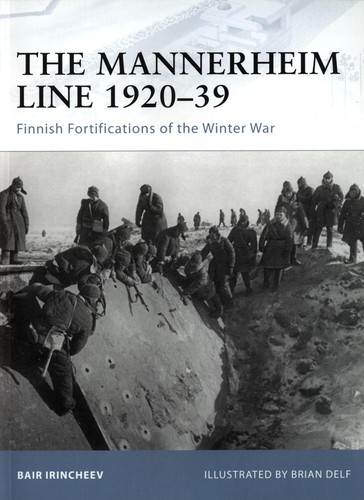
Bair Irincheev
★★★★☆Osprey · 2009
In the wake of the bloody civil war that followed Finland's independence from Russia in 1917, the border between the two countries was established across the Karelian Isthmus, an area long fought over by Russia, Finland and Sweden in their attempts to dominate the northern tip of Europe. Neither the Soviets nor the Finnish were comfortable with such a divide, which provided an open route for a potential invader to Helsinki on the Finnish side, and was only 32km from the important military and industrial city of Petrograd in Russia. As such, both sides began an intensive period of fortification and defensive planning. As the Winter War broke out in November 1939, the complex and heavily defended Mannerheim Line suffered intense bombardment and armored assaults. The armistice of May 1940 saw Finland cede control of the entire Karelian Isthmus to the USSR however, and a propaganda war ensued; the Russians emphasizing the strength of the line, and the Finnish downplaying its importance, accentuating instead the heroism and bravery of the common Finnish soldier. Through a detailed analysis of the background, design and operational history of the Mannerheim Line, Bair Irincheev attempts to dispel such myths and provide an accurate assessment of its immense historical importance.
Ernest Hemingway
★★★★☆Scribner · 1996
Librarian's note: An alternate cover edition can be found here The last novel Ernest Hemingway saw published, The Old Man and the Sea has proved itself to be one of the most enduring works of American fiction. It is the story of an old Cuban fisherman, down on his luck, and his supreme ordeal: a relentless, agonizing battle with a giant marlin far out in the Gulf Stream. Using the simple, powerful language of a fable, Hemingway takes the timeless themes of courage in the face of defeat and personal triumph won from loss and transforms them into a magnificent twentieth-century classic. Written in 1952, this hugely successful novel confirmed his power and presence in the literary world and played a large part in his winning the 1954 Nobel Prize for Literature.
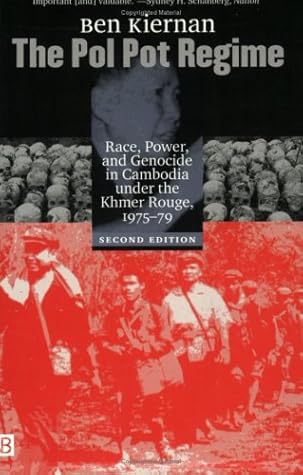
Ben Kiernan
★★★★☆Yale Nota Bene · 2002
Draws on interviews and archival material to document the extent of the atrocities committed by the Khmer Rouge in the late 1970s, which resulted in the deaths of one and a half million Cambodians.
William L. Shirer
★★★★☆Simon & Schuster · Nov 15, 1990
Hitler boasted that The Third Reich would last a thousand years. It lasted only 12. But those 12 years contained some of the most catastrophic events Western civilization has ever known.No other powerful empire ever bequeathed such mountains of evidence about its birth and destruction as the Third Reich. When the bitter war was over, and before the Nazis could destroy their files, the Allied demand for unconditional surrender produced an almost hour-by-hour record of the nightmare empire built by Adolph Hitler. This record included the testimony of Nazi leaders and of concentration camp inmates, the diaries of officials, transcripts of secret conferences, army orders, private letters—all the vast paperwork behind Hitler's drive to conquer the world.The famed foreign correspondent and historian William L. Shirer, who had watched and reported on the Nazis since 1925, spent five and a half years sifting through this massive documentation. The result is a monumental study that has been widely acclaimed as the definitive record of one of the most frightening chapters in the history of mankind.This worldwide bestseller has been acclaimed as the definitive book on Nazi Germany; it is a classic work.The accounts of how the United States got involved and how Hitler used Mussolini and Japan are astonishing, and the coverage of the war-from Germany's early successes to her eventual defeat-is must reading
James Dale Davidson
★★★★☆Touchstone · 1999-08-26
Two renowned investment advisors and authors of the bestseller The Great Reckoning bring to light both currents of disaster and the potential for prosperity and renewal in the face of radical changes in human history as we move into the next century. The Sovereign Individual details strategies necessary for adapting financially to the next phase of Western civilization. Few observers of the late twentieth century have their fingers so presciently on the pulse of the global political and economic realignment ushering in the new millennium as do James Dale Davidson and Lord William Rees-Mogg. Their bold prediction of disaster on Wall Street in Blood in the Streets was borne out by Black Tuesday. In their ensuing bestseller, The Great Reckoning, published just weeks before the coup attempt against Gorbachev, they analyzed the pending collapse of the Soviet Union and foretold the civil war in Yugoslavia and other events that have proved to be among the most searing developments of the past few years. In The Sovereign Individual, Davidson and Rees-Mogg explore the greatest economic and political transition in centuries—the shift from an industrial to an information-based society. This transition, which they have termed "the fourth stage of human society," will liberate individuals as never before, irrevocably altering the power of government. This outstanding book will replace false hopes and fictions with new understanding and clarified values.
Günter Reimann
★★★★☆Here is a study of the actual workings of business under national socialism. Written in 1939, Reimann discusses the effects of heavy regulation, inflation, price controls, trade interference, national economic planning, and attacks on private property, and what consequences they had for human rights and economic development. This is a subject rarely discussed and for reasons that are discomforting,: as much as the left hated the social and cultural agenda of the Nazis, the economic agenda fit straight into a pattern of statism that had emerged in Europe and the United States, and in this area, the world has not be de-Nazified. This books makes for alarming reading, as one discovers the extent to which the Nazi economic agenda of totalitarian control--without finally abolishing private property--has become the norm. The author is by no means an Austrian but his study provides historical understanding and frightening look at the consequences of state economic management.
Jack Fairweather
★★★★☆WH Allen · Mar 21, 2019
How do you keep fighting in the face of unimaginable horror? This is untold story of one of the greatest heroes of the Second World War. In the Summer of 1940, after the Nazi occupation of Poland, an underground operative called Witold Pilecki accepted a mission to uncover the fate of thousands of people being interred at a new concentration camp on the border of the Reich. His mission was to report on Nazi crimes and raise a secret army to stage an uprising. The name of the detention centre -- Auschwitz. It was only after arriving at the camp that he started to discover the Nazi’s terrifying designs. Over the next two and half years, Witold forged an underground army that smuggled evidence of Nazi atrocities to the West, culminating in the mass murder of over a million Jews. His reports from the camp were to shape the Allies response to the Holocaust - yet his story was all but forgotten for decades. This is the first major account of his amazing journey, drawing on exclusive family papers and recently declassified files as well as unpublished accounts from the camp’s fighters to show how he saved hundreds of thousands of lives. The result is a enthralling story of resistance and heroism against the most horrific circumstances, and one man’s attempt to change the course of history.

Adam Tooze
★★★★☆Viking · 2006
The idea that Nazi Germany was an unstoppable juggernaut, backed by an efficient, highly industrialized economy, has been central to all accounts of World War II. But what if this was not the case? What if the war had its roots in Germany's weakness, not its strength? This is the radical argument in this pathbreaking book, the first account of the Nazi era for the twenty-first century and our globalized world. There was no aspect of Nazi power untouched by economics, yet Adam Tooze is the first to place economics alongside race and politics at the heart of the story of the Third Reich. And America, in Tooze's view, is the true pivot for Hitler's epic challenge to a shift in the world order. Hitler intuitively understood how Germany's relative poverty in the 1930s was the result not just of global depression, but also of Germany's limited resources. He predicted the dawning of a globalized world in which Europe would be crushed by America's overwhelming power, against which he saw only one last chance: a German super-state dominating Europe. Doing what Europeans had done for three centuries, he sought to carve out an imperial hinterland through one last land grab to the east, to give him the self-sufficiency to prevail in the coming superpower competition. With the odds stacked against him, he launched his underresourced armies on their unprecedented and ultimately futile rampage across Europe. Hitler knew by the summer of 1939 that his efforts to prepare for a long war with the West were doomed to failure. Ideology drove him forward. Hitler became convinced that Jewish elements in Washington, London, and Paris were circling round him, and from 1938, the international "Jewish question: was synonymous with America in his mind. Even in the summer of 1940, at the moment of Germany's greatest triumphs, Hitler was still haunted by the looming threat of Anglo-American air and sea power, orchestrated by, he believed, the world Jewish conspiracy. Tooze also casts a stark new light on Albert Speer's role in sustaining the Third Reich to its bloody end, after the catastrophe of the Soviet invasion. Speer, Tooze proposes, was no apolitical agent of technocratic efficiency but a Hitler loyalist who would stop at nothing to continue a hopeless battle of attrition, at the cost of tens of millions of lives. The Wages of Destruction is a chilling work of originality and tremendous scholarship that will fundamentally change the way in which we view Nazi Germany and the Second World War.
John le Carré
★★★★☆A modern classic in which John le Carré expertly creates a total vision of a secret world, Tinker, Tailor, Soldier, Spy begins George Smiley's chess match of wills and wits with Karla, his Soviet counterpart. It is now beyond a doubt that a mole, implanted decades ago by Moscow Centre, has burrowed his way into the highest echelons of British Intelligence. His treachery has already blown some of its most vital operations and its best networks. It is clear that the double agent is one of its own kind. But which one? George Smiley is assigned to identify him. And once identified, the traitor must be destroyed.
Jonathan M. House
★★★★☆University Press of the Pacific · July 2002
Book by House, Jonathan M.