ATP 2-33.4, page 132
Intelligence Analysis
Army Techniques Publication: Intelligence Analysis
2014 public edition (Archive.org)
Searchable page text (OCR / PDF)
Appendix B
B-8
ATP 2-33.4
18 August 2014
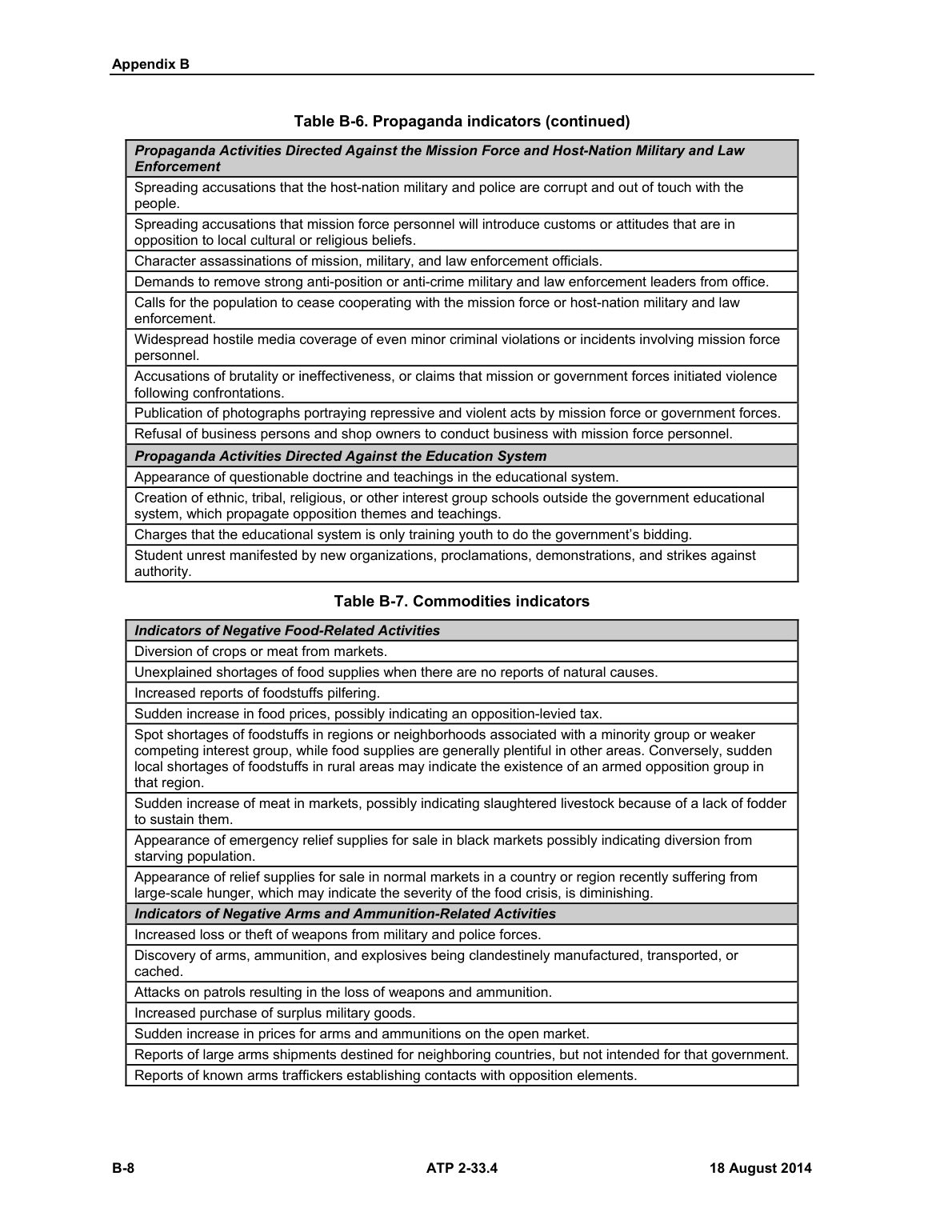
Table B-6. Propaganda indicators (continued)
Propaganda Activities Directed Against the Mission Force and Host-Nation Military and Law
Enforcement
Spreading accusations that the host-nation military and police are corrupt and out of touch with the
people.
Spreading accusations that mission force personnel will introduce customs or attitudes that are in
opposition to local cultural or religious beliefs.
Character assassinations of mission, military, and law enforcement officials.
Demands to remove strong anti-position or anti-crime military and law enforcement leaders from office.
Calls for the population to cease cooperating with the mission force or host-nation military and law
enforcement.
Widespread hostile media coverage of even minor criminal violations or incidents involving mission force
personnel.
Accusations of brutality or ineffectiveness, or claims that mission or government forces initiated violence
following confrontations.
Publication of photographs portraying repressive and violent acts by mission force or government forces.
Refusal of business persons and shop owners to conduct business with mission force personnel.
Propaganda Activities Directed Against the Education System
Appearance of questionable doctrine and teachings in the educational system.
Creation of ethnic, tribal, religious, or other interest group schools outside the government educational
system, which propagate opposition themes and teachings.
Charges that the educational system is only training youth to do the government’s bidding.
Student unrest manifested by new organizations, proclamations, demonstrations, and strikes against
authority.
Table B-7. Commodities indicators
Indicators of Negative Food-Related Activities
Diversion of crops or meat from markets.
Unexplained shortages of food supplies when there are no reports of natural causes.
Increased reports of foodstuffs pilfering.
Sudden increase in food prices, possibly indicating an opposition-levied tax.
Spot shortages of foodstuffs in regions or neighborhoods associated with a minority group or weaker
competing interest group, while food supplies are generally plentiful in other areas. Conversely, sudden
local shortages of foodstuffs in rural areas may indicate the existence of an armed opposition group in
that region.
Sudden increase of meat in markets, possibly indicating slaughtered livestock because of a lack of fodder
to sustain them.
Appearance of emergency relief supplies for sale in black markets possibly indicating diversion from
starving population.
Appearance of relief supplies for sale in normal markets in a country or region recently suffering from
large-scale hunger, which may indicate the severity of the food crisis, is diminishing.
Indicators of Negative Arms and Ammunition-Related Activities
Increased loss or theft of weapons from military and police forces.
Discovery of arms, ammunition, and explosives being clandestinely manufactured, transported, or
cached.
Attacks on patrols resulting in the loss of weapons and ammunition.
Increased purchase of surplus military goods.
Sudden increase in prices for arms and ammunitions on the open market.
Reports of large arms shipments destined for neighboring countries, but not intended for that government.
Reports of known arms traffickers establishing contacts with opposition elements.