JP 3-0, page 153
Joint Operations
Joint Publication: Joint Operations
11 August 2011 public edition
Searchable page text (OCR / PDF)
Joint Operations Across the Range of Military Operations
V-47
(6) The sustainment requirements and challenges for forcible entry
operations can be formidable, but must not be allowed to become such an overriding
concern that the forcible entry operation itself is jeopardized. JFCs must carefully
balance the introduction of sustainment forces needed to support initial combat with
combat forces required to establish, maintain, and protect the lodgment as well as forces
required to transition to follow-on operations.
For additional and detailed guidance on forcible entry operations, refer to JP 3-18, Joint
Forcible Entry Operations.
e. Attack of Enemy Centers of Gravity. As part of achieving decisive advantages
early, joint force operations may be directed immediately against enemy COGs using
conventional and SO forces and capabilities. These attacks may be decisive or may begin
offensive operations throughout the enemy’s depth that can create dilemmas causing
paralysis and destroying cohesion.
f. Full-Spectrum Superiority. The cumulative effect of dominance in the air, land,
maritime, and space domains and information environment (which includes cyberspace)
that permits the conduct of joint operations without effective opposition or prohibitive
interference is essential to joint force mission success. JFCs seek superiority in these
domains to prepare the operational area and information environment and to accomplish
the mission as rapidly as possible. The JFC may have to initially focus all available joint
forces on seizing the initiative. A delay at the outset of combat may damage US
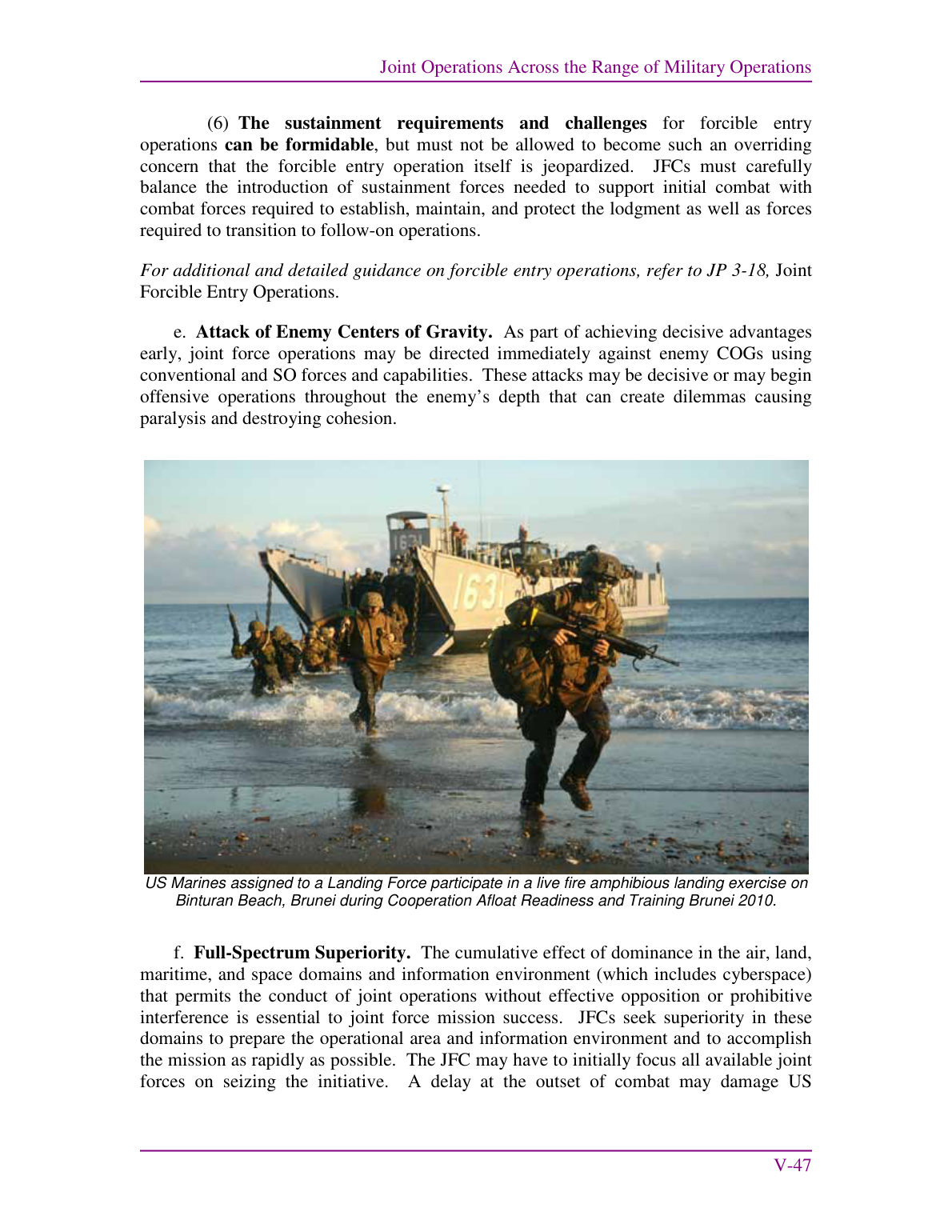
US Marines assigned to a Landing Force participate in a live fire amphibious landing exercise on
Binturan Beach, Brunei during Cooperation Afloat Readiness and Training Brunei 2010.