JP 3-60, page 32
Joint Targeting
Joint Publication: Joint Targeting
31 January 2013 public edition
Searchable page text (OCR / PDF)
Chapter II
II-2
JP 3-60
(2) Dynamic targeting is normally employed in current operations planning
because the nature and time frame associated with current operations (usually the current 24-
hour period) typically requires more immediate responsiveness than is achieved in deliberate
targeting. Current operations planning addresses the immediate or very near-term planning
issues associated with ongoing operations which usually occur in the joint operations center
(JOC) under the operations directorate of a joint staff (J-3).
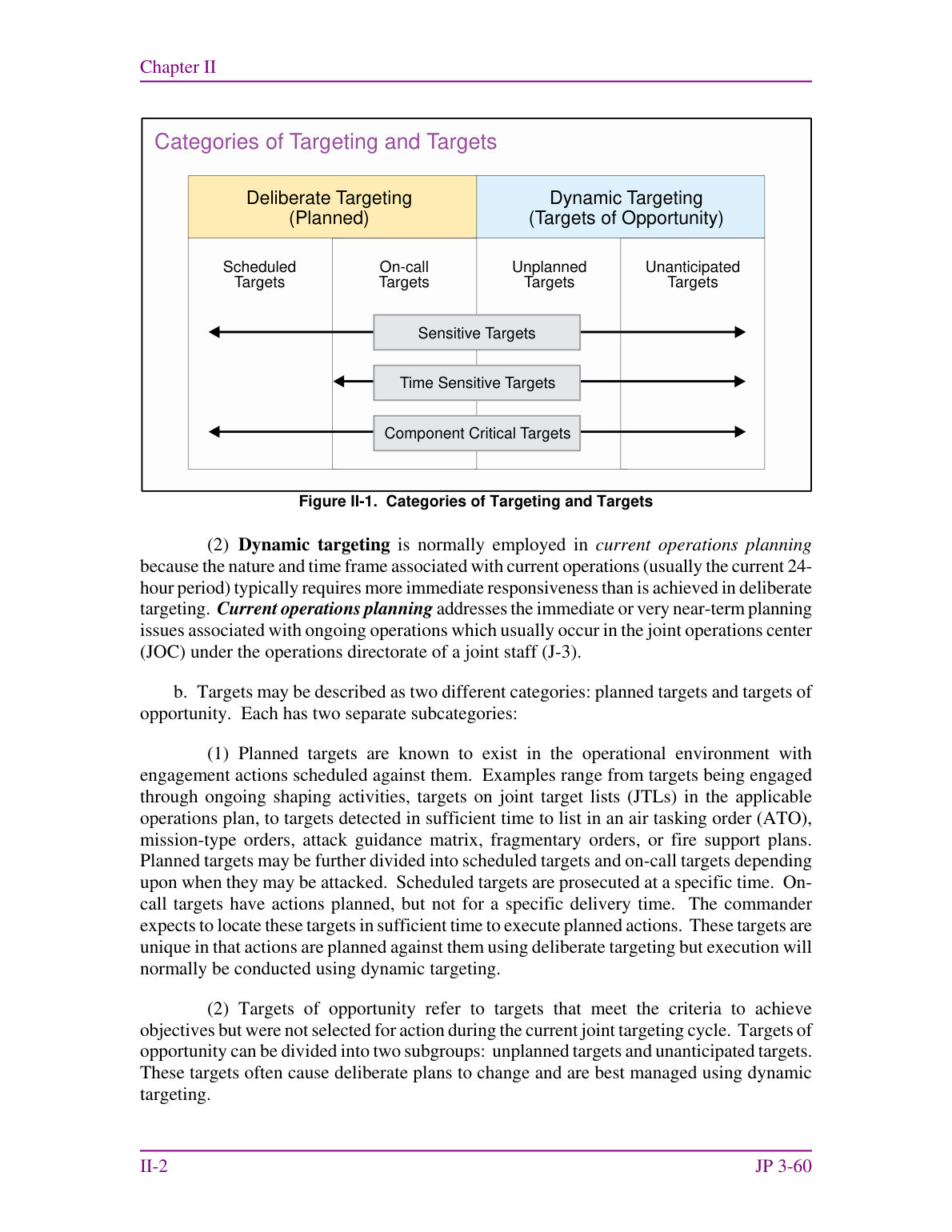
b. Targets may be described as two different categories: planned targets and targets of
opportunity. Each has two separate subcategories:
(1) Planned targets are known to exist in the operational environment with
engagement actions scheduled against them. Examples range from targets being engaged
through ongoing shaping activities, targets on joint target lists (JTLs) in the applicable
operations plan, to targets detected in sufficient time to list in an air tasking order (ATO),
mission-type orders, attack guidance matrix, fragmentary orders, or fire support plans.
Planned targets may be further divided into scheduled targets and on-call targets depending
upon when they may be attacked. Scheduled targets are prosecuted at a specific time. On-
call targets have actions planned, but not for a specific delivery time. The commander
expects to locate these targets in sufficient time to execute planned actions. These targets are
unique in that actions are planned against them using deliberate targeting but execution will
normally be conducted using dynamic targeting.
(2) Targets of opportunity refer to targets that meet the criteria to achieve
objectives but were not selected for action during the current joint targeting cycle. Targets of
opportunity can be divided into two subgroups: unplanned targets and unanticipated targets.
These targets often cause deliberate plans to change and are best managed using dynamic
targeting.
Figure II-1. Categories of Targeting and Targets
Categories of Targeting and Targets
Deliberate Targeting
(Planned)
Dynamic Targeting
(Targets of Opportunity)
On-call
Targets
Unanticipated
Targets
Scheduled
Targets
Unplanned
Targets
Time Sensitive Targets
Component Critical Targets
Sensitive Targets