MCRP 12-10B.1, page 265
Military Operations on Urbanized Terrain (MOUT)
Marine Corps Reference Publication: Military Operations on Urbanized Terrain (MOUT)
Public distribution statement A; S2 KOCOA cited as MCRP 12-10 b.1
Searchable page text (OCR / PDF)
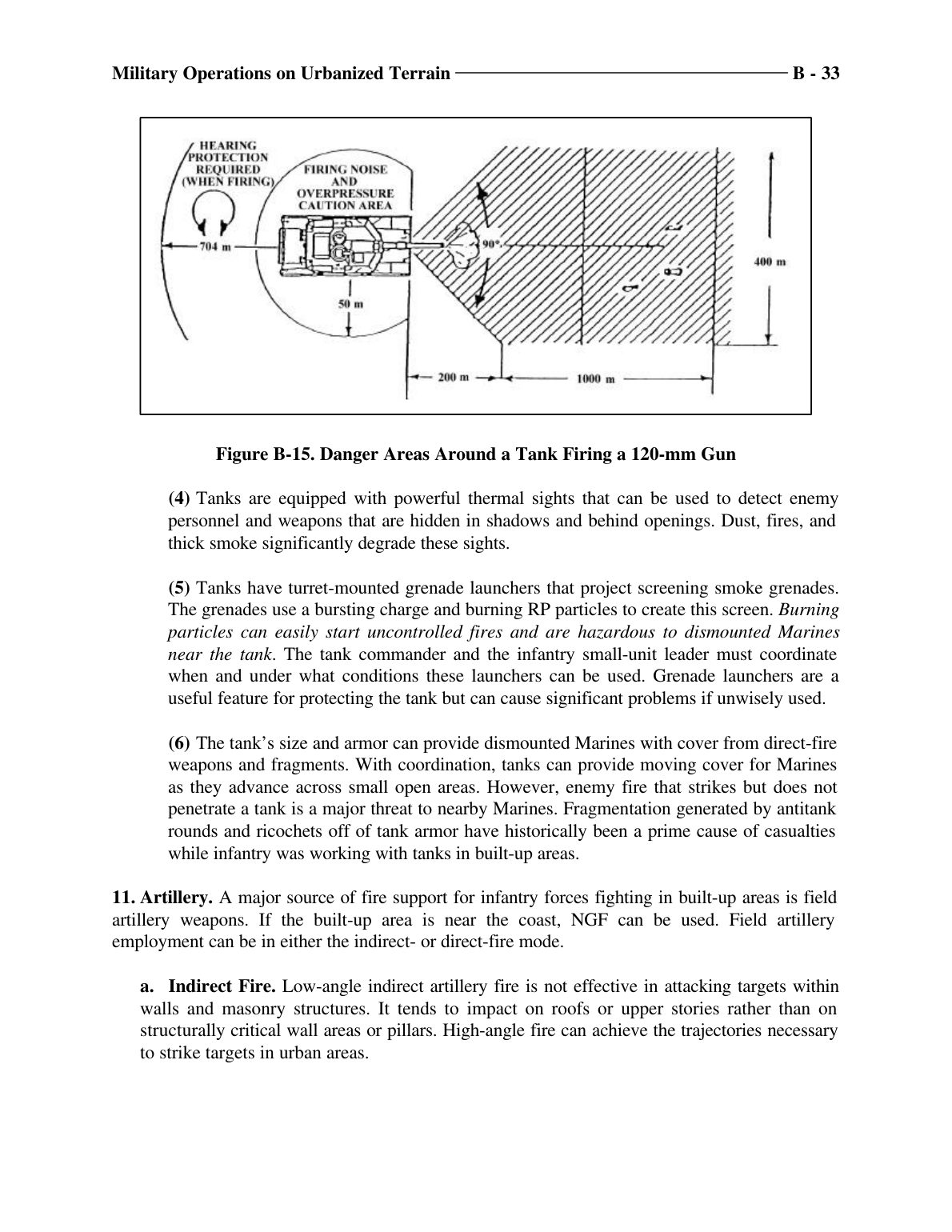
Figure B-15. Danger Areas Around a Tank Firing a 120-mm Gun
(4) Tanks are equipped with powerful thermal sights that can be used to detect enemy
personnel and weapons that are hidden in shadows and behind openings. Dust, fires, and
thick smoke significantly degrade these sights.
(5) Tanks have turret-mounted grenade launchers that project screening smoke grenades.
The grenades use a bursting charge and burning RP particles to create this screen. Burning
particles can easily start uncontrolled fires and are hazardous to dismounted Marines
near the tank. The tank commander and the infantry small-unit leader must coordinate
when and under what conditions these launchers can be used. Grenade launchers are a
useful feature for protecting the tank but can cause significant problems if unwisely used.
(6) The tank’s size and armor can provide dismounted Marines with cover from direct-fire
weapons and fragments. With coordination, tanks can provide moving cover for Marines
as they advance across small open areas. However, enemy fire that strikes but does not
penetrate a tank is a major threat to nearby Marines. Fragmentation generated by antitank
rounds and ricochets off of tank armor have historically been a prime cause of casualties
while infantry was working with tanks in built-up areas.
11. Artillery. A major source of fire support for infantry forces fighting in built-up areas is field
artillery weapons. If the built-up area is near the coast, NGF can be used. Field artillery
employment can be in either the indirect- or direct-fire mode.
a. Indirect Fire. Low-angle indirect artillery fire is not effective in attacking targets within
walls and masonry structures. It tends to impact on roofs or upper stories rather than on
structurally critical wall areas or pillars. High-angle fire can achieve the trajectories necessary
to strike targets in urban areas.
Military Operations on Urbanized Terrain
B - 33