Advanced search

34th street

About 297 results · showing 281–297 · page 15 of 15

Military Operations on Urbanized Terrain (MOUT)
Military manual · MCRP 12-10B.1

MCRP 12-10B.1, page 58

Military Operations on Urbanized Terrain (MOUT)

Marine Corps Reference Publication: Military Operations on Urbanized Terrain (MOUT)

…Moving by stealth on secondary streets, using the cover and concealment of alleys and buildings, the battalion may be able to seize key street junctions or terrain features, isolate enemy positions, and help following units move…
Military Operations on Urbanized Terrain (MOUT)
Military manual · MCRP 12-10B.1

MCRP 12-10B.1, page 213

Military Operations on Urbanized Terrain (MOUT)

Marine Corps Reference Publication: Military Operations on Urbanized Terrain (MOUT)

…For example, firing a tank main gun in dry, dusty, and debris-covered streets raises a dust cloud; a tank being driven in built-up areas produces more noise than one moving through an open field…
Military Operations on Urbanized Terrain (MOUT)
Military manual · MCRP 12-10B.1

MCRP 12-10B.1, page 71

Military Operations on Urbanized Terrain (MOUT)

Marine Corps Reference Publication: Military Operations on Urbanized Terrain (MOUT)

…Movement Down a Street In outlying areas, where the terrain is relatively open, a tank platoon reinforced with mechanized assets (tank-heavy task force) may be tasked as the reserve. However, if inside the urban area…
Military Operations on Urbanized Terrain (MOUT)
Military manual · MCRP 12-10B.1

MCRP 12-10B.1, page 69

Military Operations on Urbanized Terrain (MOUT)

Marine Corps Reference Publication: Military Operations on Urbanized Terrain (MOUT)

…Movement Down a Street. When moving in urban terrain, a rifle platoon normally follows the same principles of movement as in other environments. However, some movement techniques must be modified to adjust to the unique dangers…
Military Operations on Urbanized Terrain (MOUT)
Military manual · MCRP 12-10B.1

MCRP 12-10B.1, page 49

Military Operations on Urbanized Terrain (MOUT)

Marine Corps Reference Publication: Military Operations on Urbanized Terrain (MOUT)

…When an objective extends to a street, only the near side of the street is included. The final objective may be buildings or key terrain at the far edge of the built-up area. Key buildings…
Military Operations on Urbanized Terrain (MOUT)
Military manual · MCRP 12-10B.1

MCRP 12-10B.1, page 47

Military Operations on Urbanized Terrain (MOUT)

Marine Corps Reference Publication: Military Operations on Urbanized Terrain (MOUT)

…Tactical maps should be supplemented by city street maps that contain street names and information on the location of important buildings and transportation terminals. These city street maps should be distributed to all units operating within…
Military Operations on Urbanized Terrain (MOUT)
Military manual · MCRP 12-10B.1

MCRP 12-10B.1, page 78

Military Operations on Urbanized Terrain (MOUT)

Marine Corps Reference Publication: Military Operations on Urbanized Terrain (MOUT)

…The density of buildings, rubble, and street patterns will dictate the frontage of the unit. (b) O: Observation and Fields of Fire. Attackers must generally advance by crossing streets and open areas between buildings where they…
Military Operations on Urbanized Terrain (MOUT)
Military manual · MCRP 12-10B.1

MCRP 12-10B.1, page 275

Military Operations on Urbanized Terrain (MOUT)

Marine Corps Reference Publication: Military Operations on Urbanized Terrain (MOUT)

…Marines should move along each side of a street with the leading squad staying abreast of armored vehicles. When not accompanied by armored vehicles, Marines move in a single file along one side of the street…
Military Operations on Urbanized Terrain (MOUT)
Military manual · MCRP 12-10B.1

MCRP 12-10B.1, page 88

Military Operations on Urbanized Terrain (MOUT)

Marine Corps Reference Publication: Military Operations on Urbanized Terrain (MOUT)

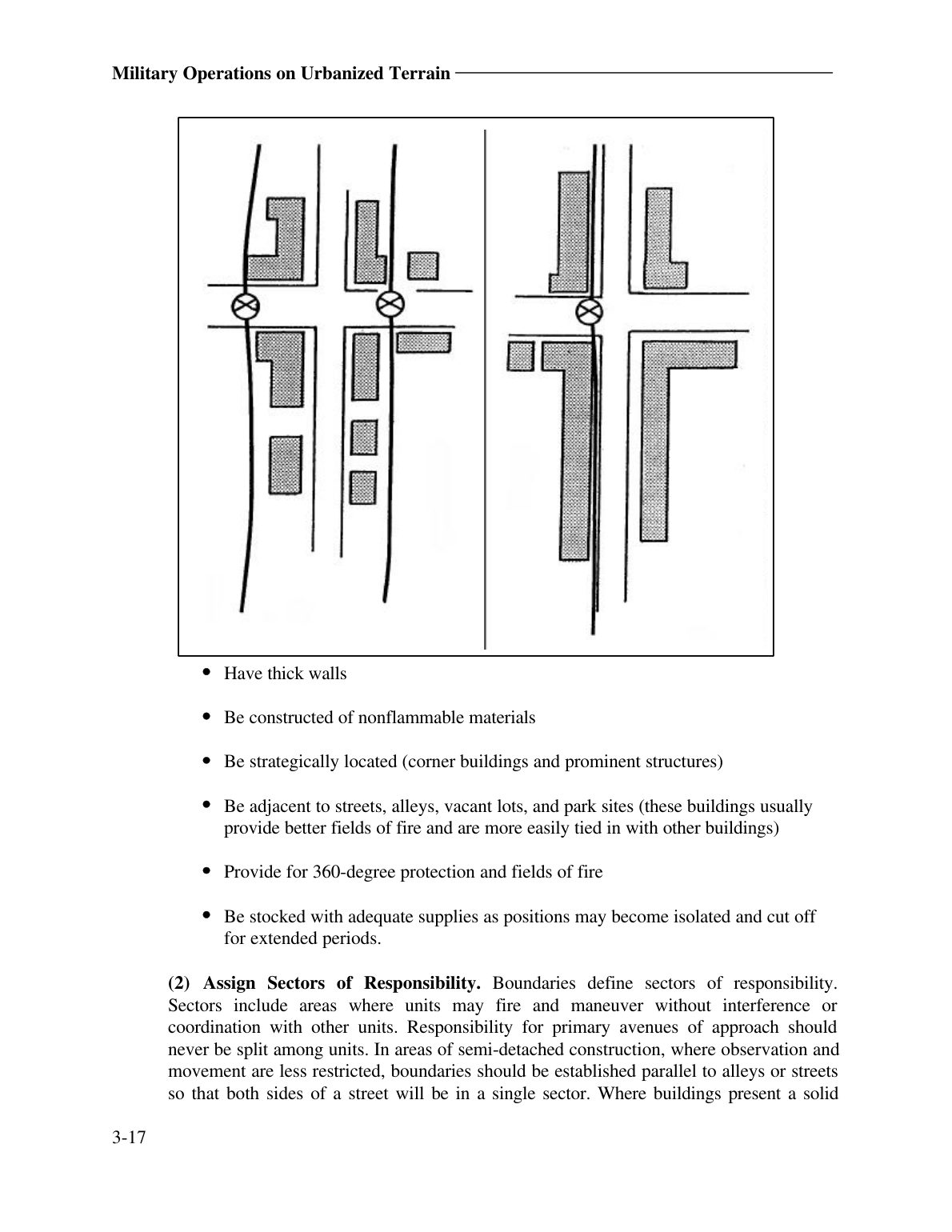
Have thick walls Be constructed of nonflammable materials Be strategically located (corner buildings and prominent structures) Be adjacent to streets, alleys, vacant lots, and park sites (these buildings usually provide better fields of fire and are…
Military Operations on Urbanized Terrain (MOUT)
Military manual · MCRP 12-10B.1

MCRP 12-10B.1, page 13

Military Operations on Urbanized Terrain (MOUT)

Marine Corps Reference Publication: Military Operations on Urbanized Terrain (MOUT)

…Buildings also provide antitank weapons optimum positioning to allow engagement from above, exploiting an inherent weakness found in most armored vehicles. (2) Street Level. While streets provide the means for rapid advance or withdawal, forces moving…
Military Operations on Urbanized Terrain (MOUT)
Military manual · MCRP 12-10B.1

MCRP 12-10B.1, page 347

Military Operations on Urbanized Terrain (MOUT)

Marine Corps Reference Publication: Military Operations on Urbanized Terrain (MOUT)

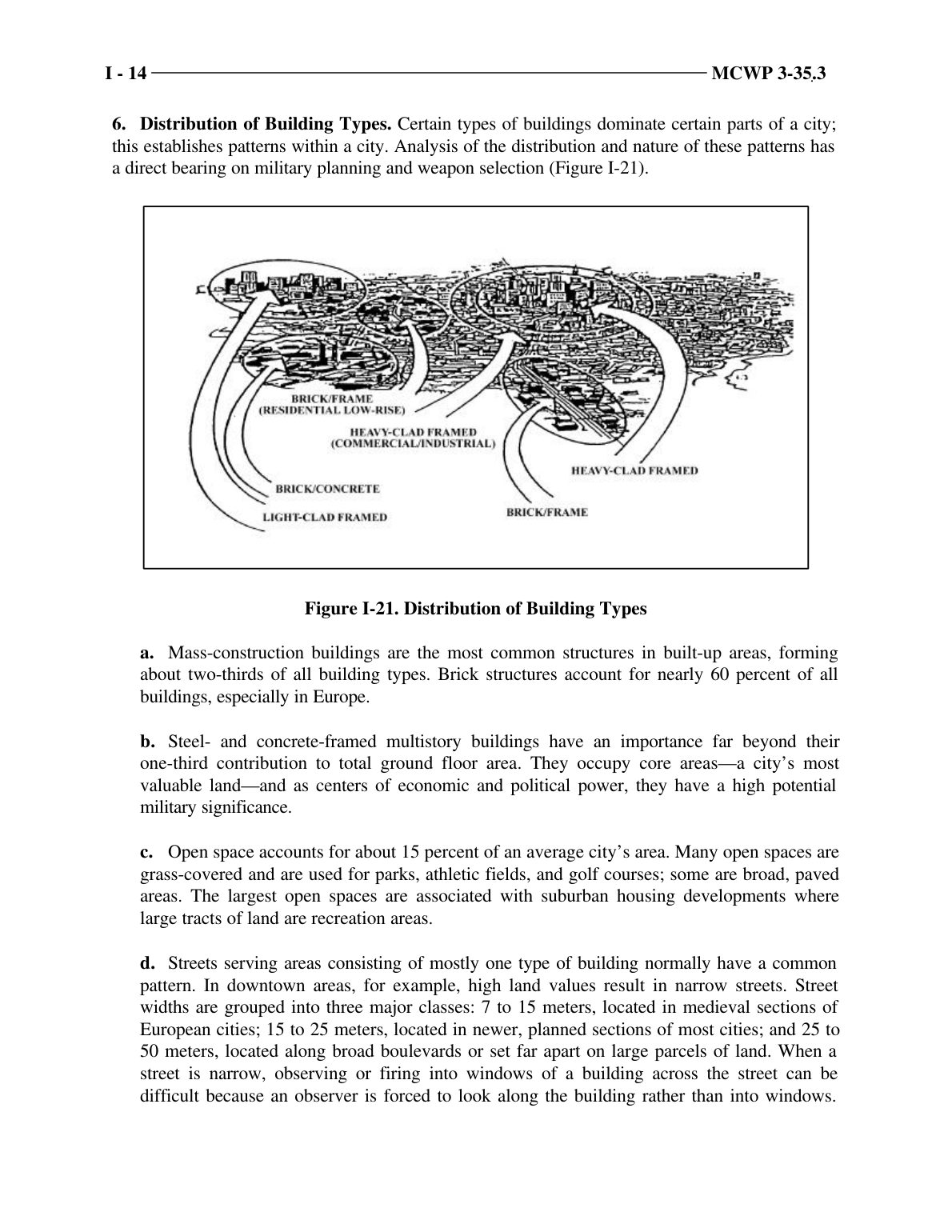
…In downtown areas, for example, high land values result in narrow streets. Street widths are grouped into three major classes: 7 to 15 meters, located in medieval sections of European cities; 15 to 25 meters, located…
Military Operations on Urbanized Terrain (MOUT)
Military manual · MCRP 12-10B.1

MCRP 12-10B.1, page 109

Military Operations on Urbanized Terrain (MOUT)

Marine Corps Reference Publication: Military Operations on Urbanized Terrain (MOUT)

…Built-up areas have certain aspects that favor infantry antiarmor operations. (1) Buildings provide cover and concealment for defending infantry. (2) The streets restrict armor maneuver, fields of fire, and communications, thereby reducing the enemy’s…
Military Operations on Urbanized Terrain (MOUT)
Military manual · MCRP 12-10B.1

MCRP 12-10B.1, page 16

Military Operations on Urbanized Terrain (MOUT)

Marine Corps Reference Publication: Military Operations on Urbanized Terrain (MOUT)

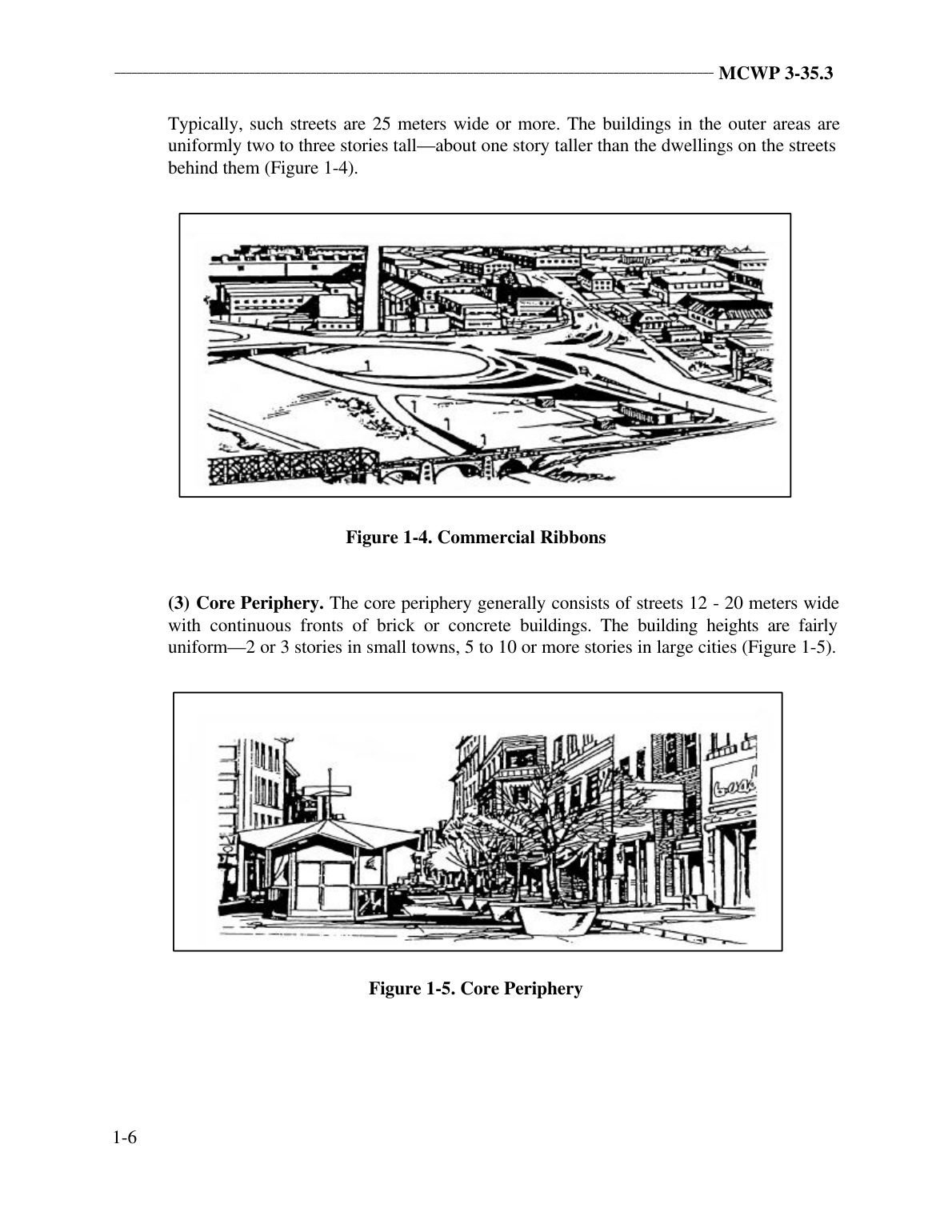
Typically, such streets are 25 meters wide or more. The buildings in the outer areas are uniformly two to three stories tall—about one story taller than the dwellings on the streets behind them (Figure 1…
Military Operations on Urbanized Terrain (MOUT)
Military manual · MCRP 12-10B.1

MCRP 12-10B.1, page 222

Military Operations on Urbanized Terrain (MOUT)

Marine Corps Reference Publication: Military Operations on Urbanized Terrain (MOUT)

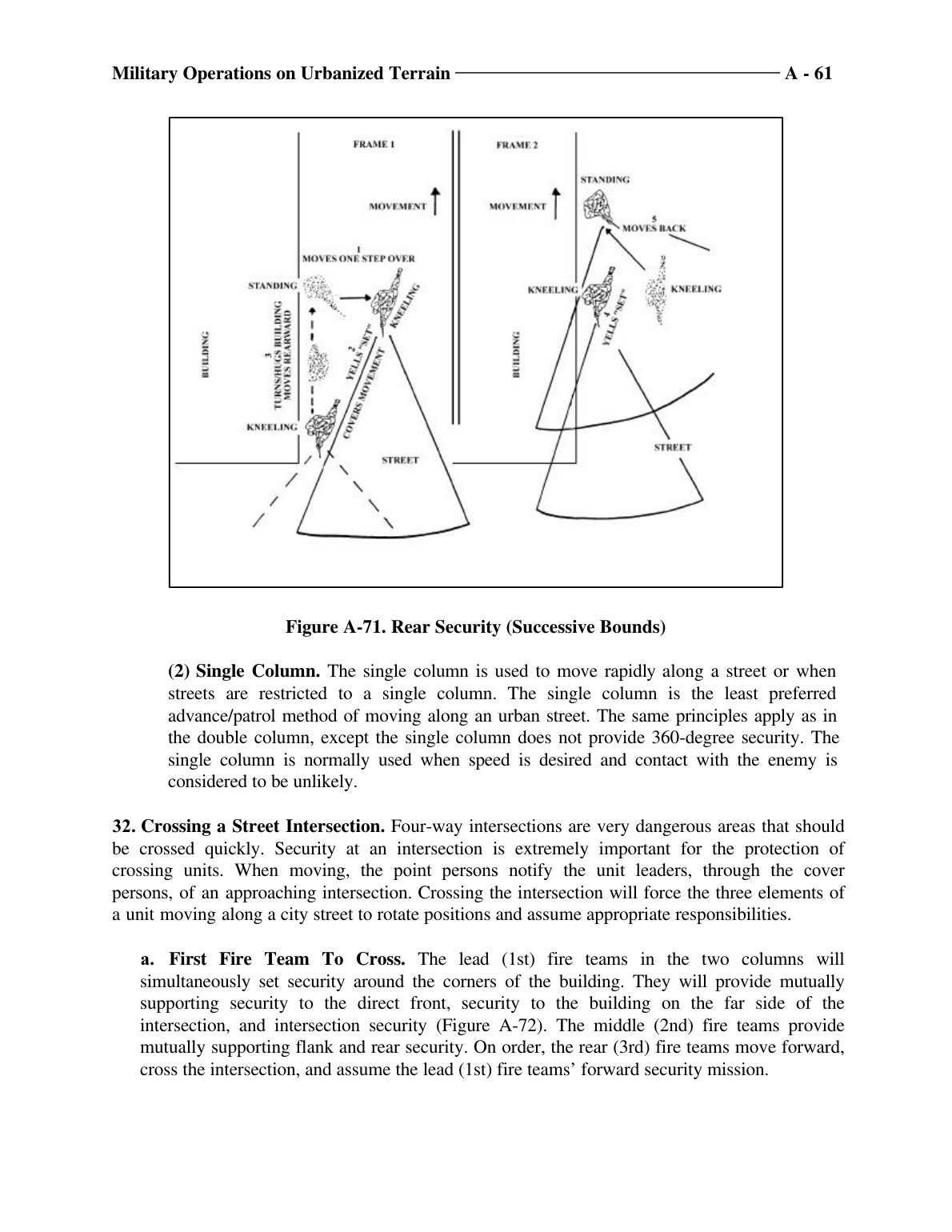
…The single column is used to move rapidly along a street or when streets are restricted to a single column. The single column is the least preferred advance/patrol method of moving along an urban street…
Military Operations on Urbanized Terrain (MOUT)
Military manual · MCRP 12-10B.1

MCRP 12-10B.1, page 218

Military Operations on Urbanized Terrain (MOUT)

Marine Corps Reference Publication: Military Operations on Urbanized Terrain (MOUT)

Section VII Advancing/Patrolling Along City Streets 31. Advancing/Patrolling Along City Streets. During MOUT operations, skills for advancing/ patrolling along city streets will be required. The platoon, squad, or fire team mission may be such…
Military Operations on Urbanized Terrain (MOUT)
Military manual · MCRP 12-10B.1

MCRP 12-10B.1, page 228

Military Operations on Urbanized Terrain (MOUT)

Marine Corps Reference Publication: Military Operations on Urbanized Terrain (MOUT)

…Fighting in the city destroys buildings, whose rubble then blocks streets. Street and road signs are destroyed during the fighting if they are not switched or removed by the defenders. Operations in subways and sewers present…
Military Operations on Urbanized Terrain (MOUT)
Military manual · MCRP 12-10B.1

MCRP 12-10B.1, page 51

Military Operations on Urbanized Terrain (MOUT)

Marine Corps Reference Publication: Military Operations on Urbanized Terrain (MOUT)

…Phase lines should be oriented on readily identifiable terrain features such as principal streets, rivers, and railroad lines. They should be placed on the near side of a street or open area. In an attack, a…