AFDP 3-60, page 30
Targeting
Air Force Doctrine Publication: Targeting
01 May 2026 (Wayback 2026-07-12; S2 Wire cited this URL as “JP 3-60”)
Searchable page text (OCR / PDF)
Air Force Doctrine Publication 3-60, Targeting
27
typically come from the ISRD’s TTA team.
The purpose of the assessment phase is to determine the degree of success in achieving
objectives, formulate any required follow-up actions, or indicate readiness to move on to
new tasks on the path to achieving overall JFC objectives. Assessment can happen
internal to the AOC, but reachback and federated partners can assist with post-attack
target assessment. Ideally, the same units that provide support for target development
should also assist with assessment, regardless of the means of attack.
TARGETING AND THE AIR TASKING CYCLE KEY PROCESSES
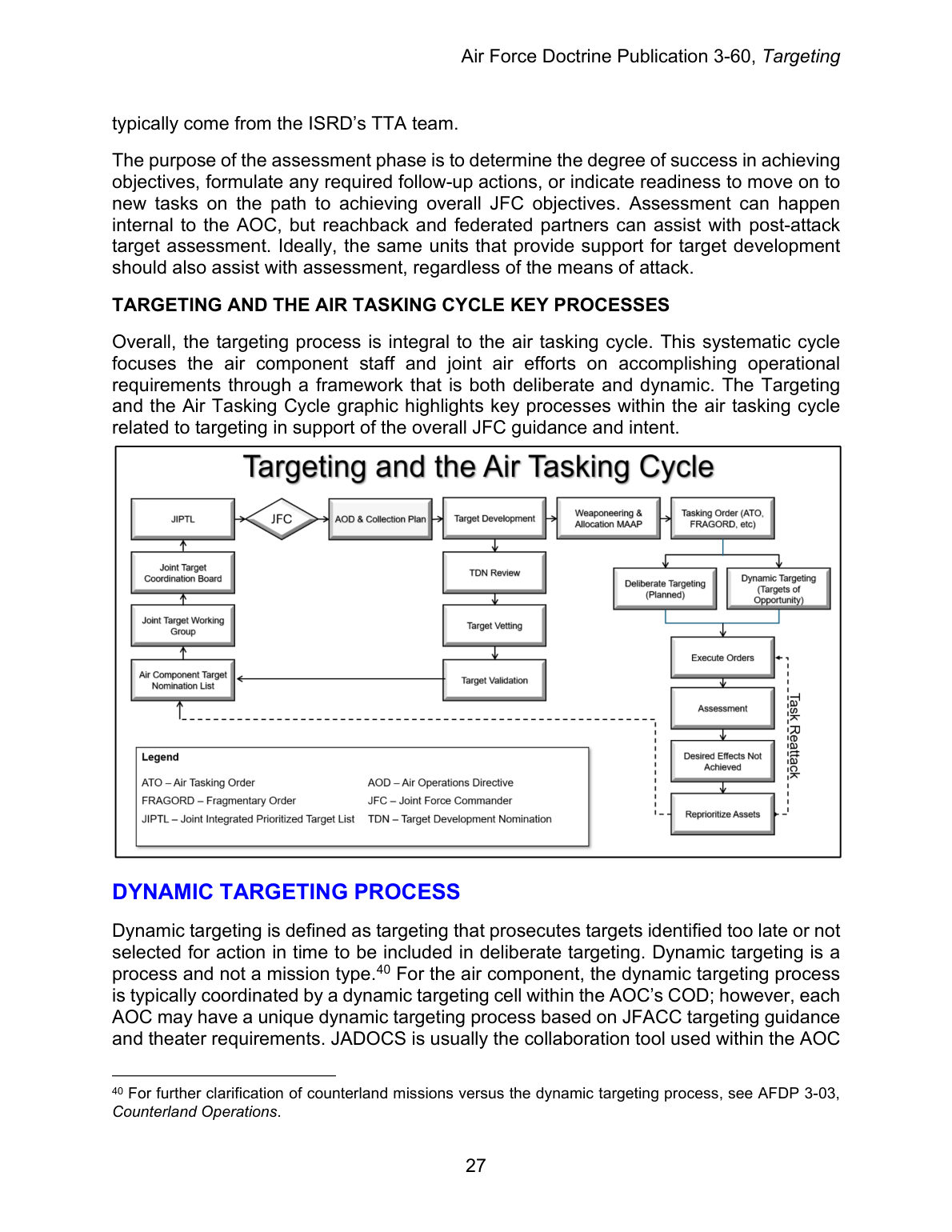
Overall, the targeting process is integral to the air tasking cycle. This systematic cycle
focuses the air component staff and joint air efforts on accomplishing operational
requirements through a framework that is both deliberate and dynamic. The Targeting
and the Air Tasking Cycle graphic highlights key processes within the air tasking cycle
related to targeting in support of the overall JFC guidance and intent.
DYNAMIC TARGETING PROCESS
Dynamic targeting is defined as targeting that prosecutes targets identified too late or not
selected for action in time to be included in deliberate targeting. Dynamic targeting is a
process and not a mission type.40 For the air component, the dynamic targeting process
is typically coordinated by a dynamic targeting cell within the AOC’s COD; however, each
AOC may have a unique dynamic targeting process based on JFACC targeting guidance
and theater requirements. JADOCS is usually the collaboration tool used within the AOC
40 For further clarification of counterland missions versus the dynamic targeting process, see AFDP 3-03,
Counterland Operations.