ATP 2-33.4, page 128
Intelligence Analysis
Army Techniques Publication: Intelligence Analysis
2014 public edition (Archive.org)
Searchable page text (OCR / PDF)
Appendix B
B-4
ATP 2-33.4
18 August 2014
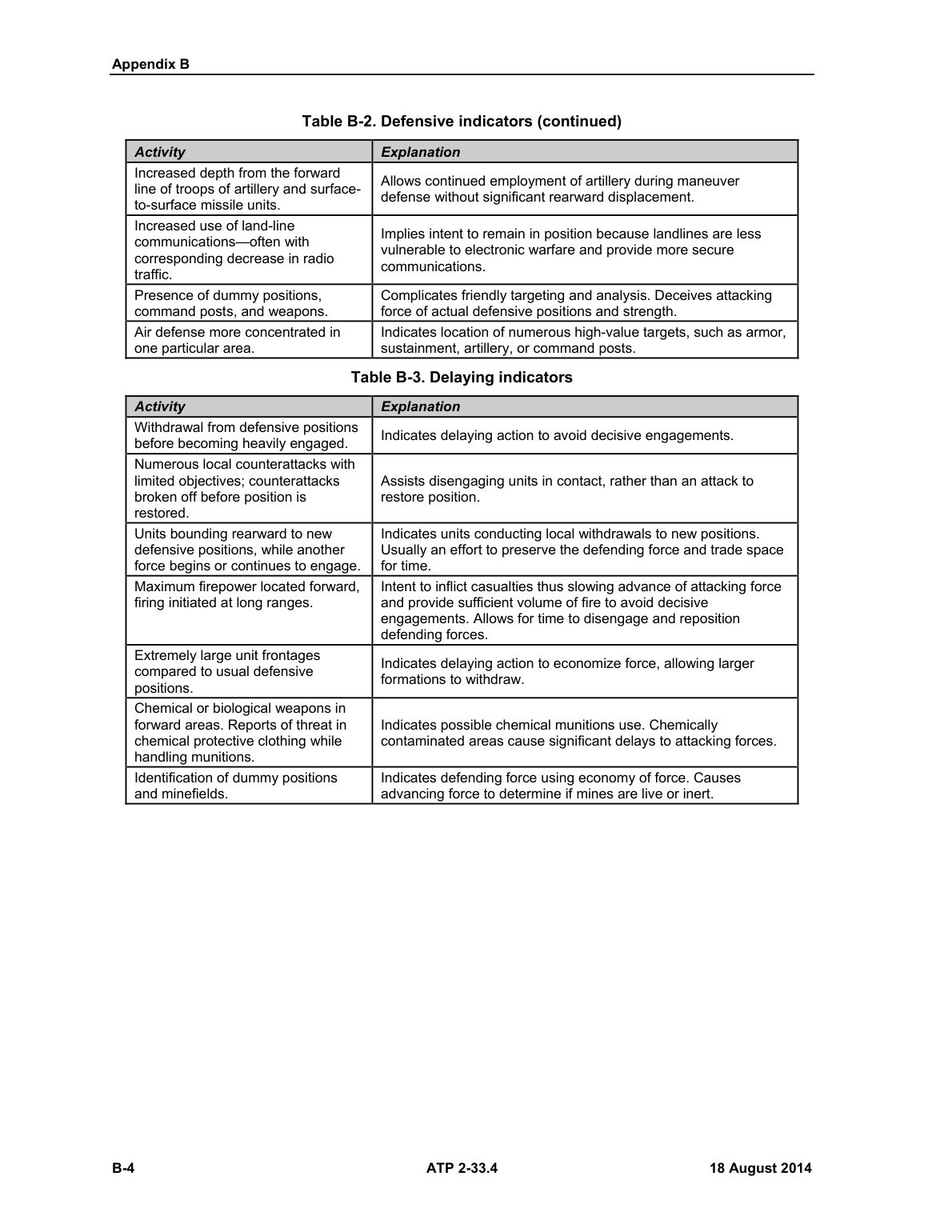
Table B-2. Defensive indicators (continued)
Activity
Explanation
Increased depth from the forward
line of troops of artillery and surface-
to-surface missile units.
Allows continued employment of artillery during maneuver
defense without significant rearward displacement.
Increased use of land-line
communications—often with
corresponding decrease in radio
traffic.
Implies intent to remain in position because landlines are less
vulnerable to electronic warfare and provide more secure
communications.
Presence of dummy positions,
command posts, and weapons.
Complicates friendly targeting and analysis. Deceives attacking
force of actual defensive positions and strength.
Air defense more concentrated in
one particular area.
Indicates location of numerous high-value targets, such as armor,
sustainment, artillery, or command posts.
Table B-3. Delaying indicators
Activity
Explanation
Withdrawal from defensive positions
before becoming heavily engaged.
Indicates delaying action to avoid decisive engagements.
Numerous local counterattacks with
limited objectives; counterattacks
broken off before position is
restored.
Assists disengaging units in contact, rather than an attack to
restore position.
Units bounding rearward to new
defensive positions, while another
force begins or continues to engage.
Indicates units conducting local withdrawals to new positions.
Usually an effort to preserve the defending force and trade space
for time.
Maximum firepower located forward,
firing initiated at long ranges.
Intent to inflict casualties thus slowing advance of attacking force
and provide sufficient volume of fire to avoid decisive
engagements. Allows for time to disengage and reposition
defending forces.
Extremely large unit frontages
compared to usual defensive
positions.
Indicates delaying action to economize force, allowing larger
formations to withdraw.
Chemical or biological weapons in
forward areas. Reports of threat in
chemical protective clothing while
handling munitions.
Indicates possible chemical munitions use. Chemically
contaminated areas cause significant delays to attacking forces.
Identification of dummy positions
and minefields.
Indicates defending force using economy of force. Causes
advancing force to determine if mines are live or inert.