Advanced search

steve wood

About 14 results · showing 1–14 · Edit filters

Military Operations on Urbanized Terrain (MOUT)
Military manual · MCRP 12-10B.1

MCRP 12-10B.1, page 213

Military Operations on Urbanized Terrain (MOUT)

Marine Corps Reference Publication: Military Operations on Urbanized Terrain (MOUT)

…on a street or in the halls of a damaged building create more noise than in a wooded area. Marines should learn to recognize signatures so they can locate and identify targets. Seeing and hearing assist…
Offense and Defense
Military manual · ADP 3-90

ADP 3-90, page 70

Offense and Defense

Army Doctrine Publication: Offense and Defense

…When facing armored enemy forces, dismounted infantry forces are most effective when fighting from prepared defenses or in close terrain, such as swamps, woods, hilly and mountainous areas, and urban areas. From those positions they can…
Military Operations on Urbanized Terrain (MOUT)
Military manual · MCRP 12-10B.1

MCRP 12-10B.1, page 261

Military Operations on Urbanized Terrain (MOUT)

Marine Corps Reference Publication: Military Operations on Urbanized Terrain (MOUT)

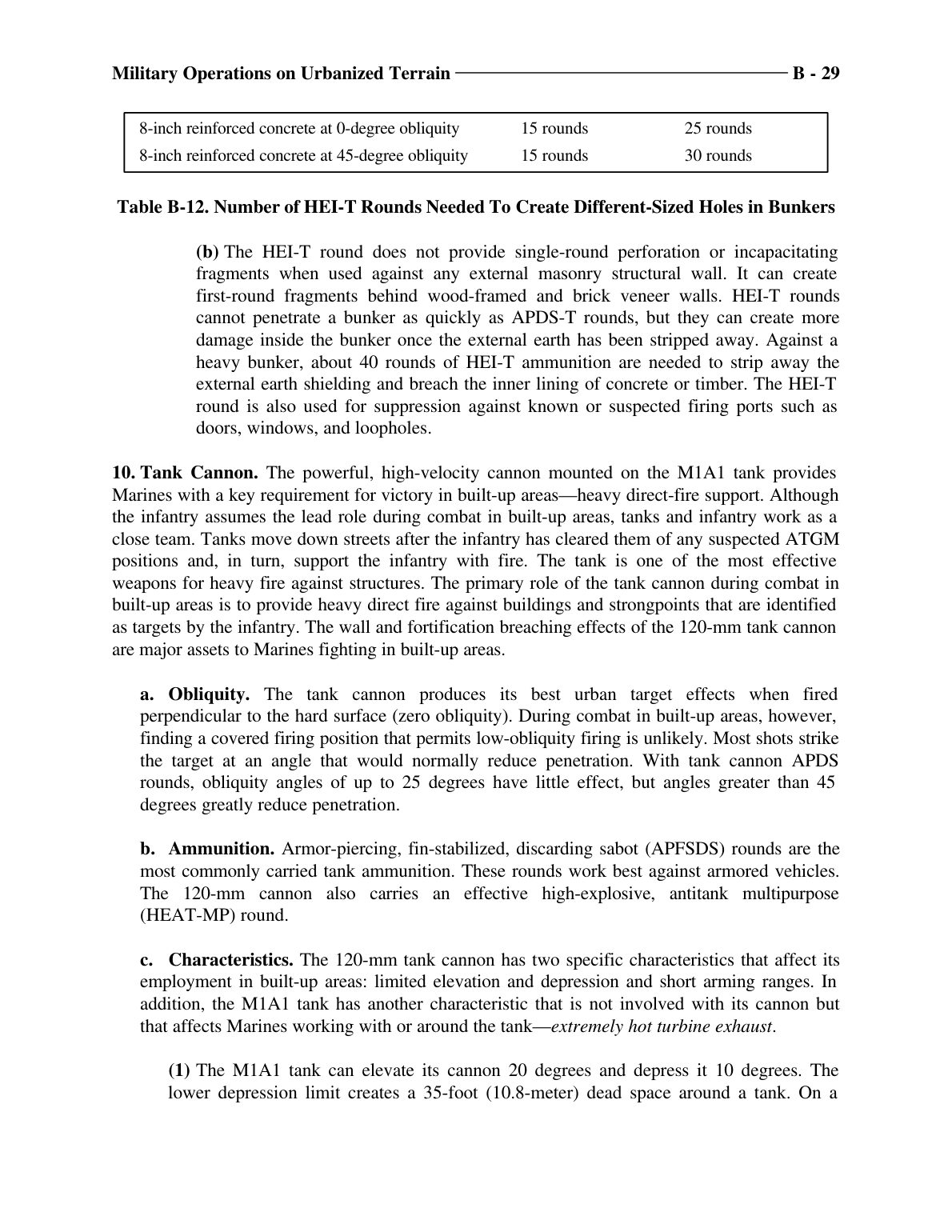
…It can create first-round fragments behind wood-framed and brick veneer walls. HEI-T rounds cannot penetrate a bunker as quickly as APDS-T rounds, but they can create more damage inside the bunker once…
Military Operations on Urbanized Terrain (MOUT)
Military manual · MCRP 12-10B.1

MCRP 12-10B.1, page 257

Military Operations on Urbanized Terrain (MOUT)

Marine Corps Reference Publication: Military Operations on Urbanized Terrain (MOUT)

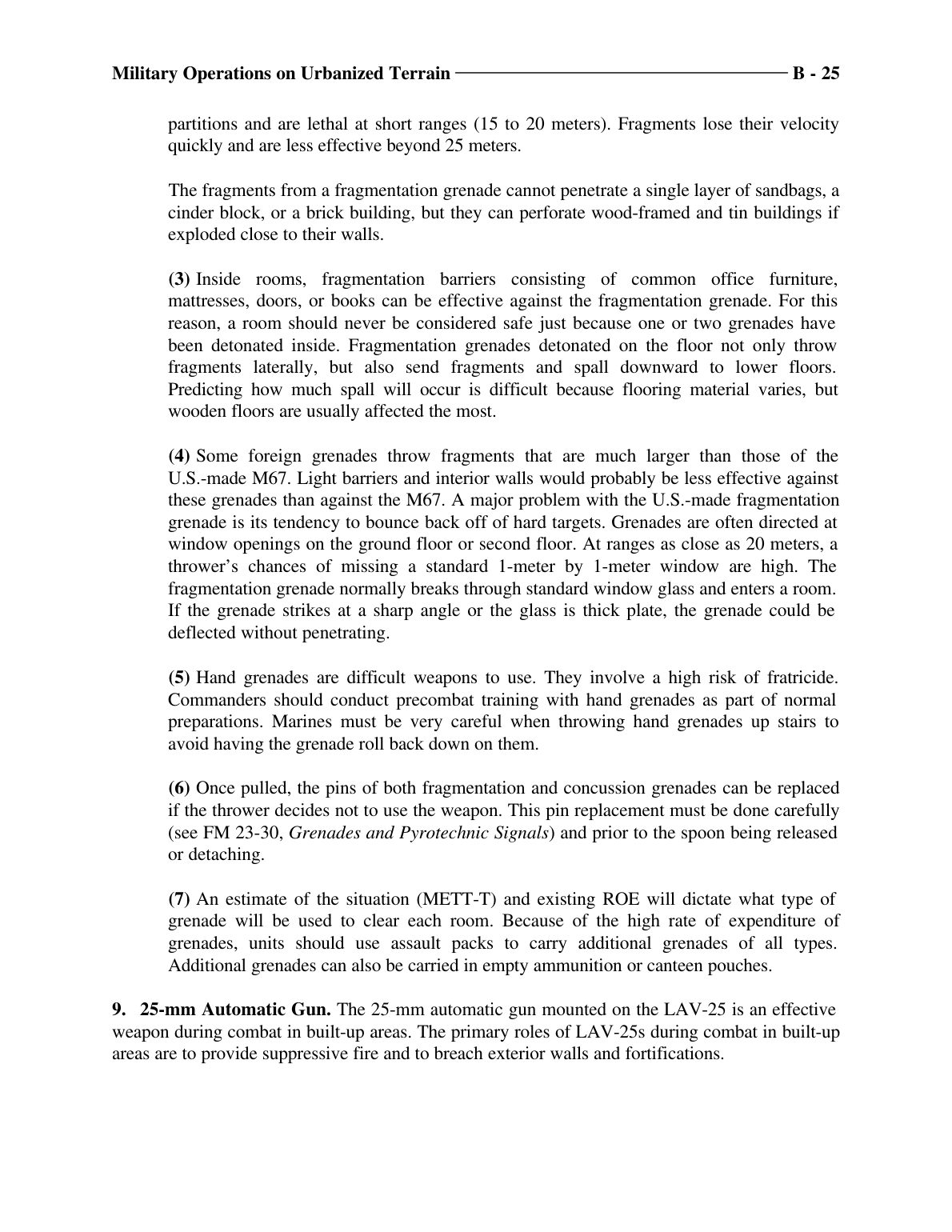
…The fragments from a fragmentation grenade cannot penetrate a single layer of sandbags, a cinder block, or a brick building, but they can perforate wood-framed and tin buildings if exploded close to their walls. (3…
Military Operations on Urbanized Terrain (MOUT)
Military manual · MCRP 12-10B.1

MCRP 12-10B.1, page 235

Military Operations on Urbanized Terrain (MOUT)

Marine Corps Reference Publication: Military Operations on Urbanized Terrain (MOUT)

…Stress causes the projectile to break up, and the resulting fragments are often too small to penetrate. (2) Even with reduced penetration at short ranges, interior walls made of thin wood paneling, sheetrock, or plaster offer…
Military Operations on Urbanized Terrain (MOUT)
Military manual · MCRP 12-10B.1

MCRP 12-10B.1, page 262

Military Operations on Urbanized Terrain (MOUT)

Marine Corps Reference Publication: Military Operations on Urbanized Terrain (MOUT)

…One HEAT round normally creates a breach hole in all but the thickest masonry construction—brick veneer and wood-framed constructions are demolished by a single round. Even the 120-mm HEAT round cannot cut all…
Military Operations on Urbanized Terrain (MOUT)
Military manual · MCRP 12-10B.1

MCRP 12-10B.1, page 234

Military Operations on Urbanized Terrain (MOUT)

Marine Corps Reference Publication: Military Operations on Urbanized Terrain (MOUT)

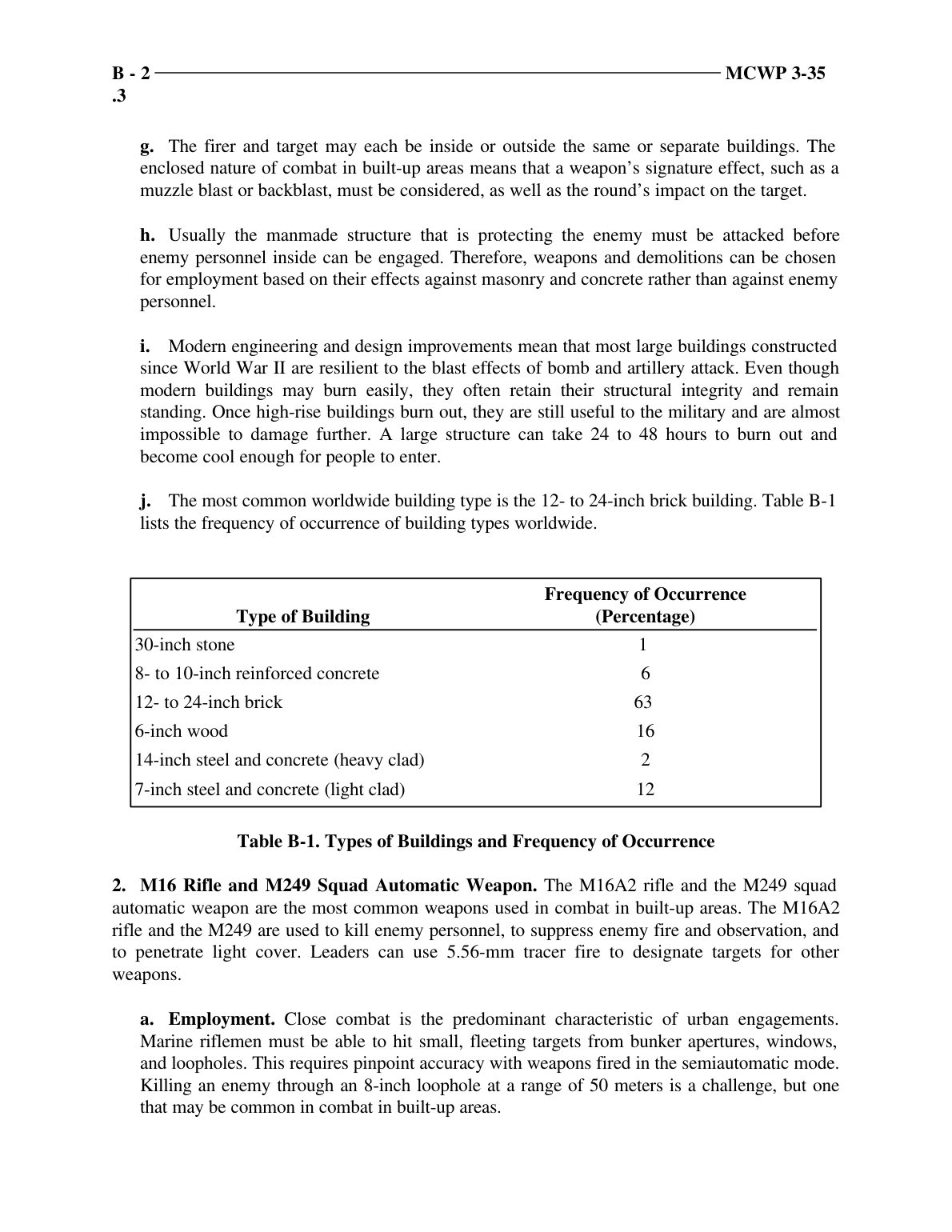
…Type of Building Frequency of Occurrence (Percentage) 30-inch stone 1 8- to 10-inch reinforced concrete 6 12- to 24-inch brick 63 6-inch wood 16 14-inch steel and concrete (heavy clad) 2…
Military Operations on Urbanized Terrain (MOUT)
Military manual · MCRP 12-10B.1

MCRP 12-10B.1, page 259

Military Operations on Urbanized Terrain (MOUT)

Marine Corps Reference Publication: Military Operations on Urbanized Terrain (MOUT)

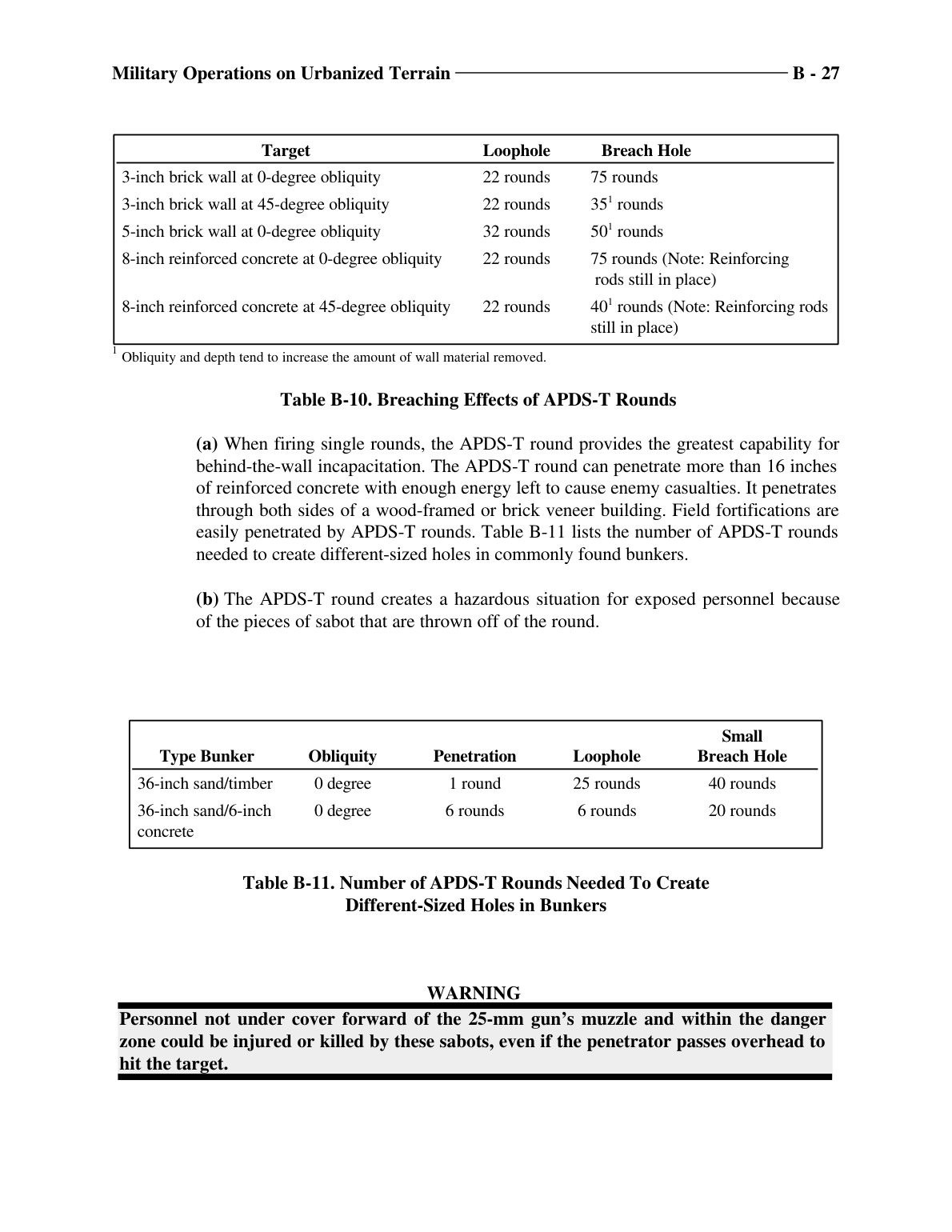
…It penetrates through both sides of a wood-framed or brick veneer building. Field fortifications are easily penetrated by APDS-T rounds. Table B-11 lists the number of APDS-T rounds needed to create different…
Military Operations on Urbanized Terrain (MOUT)
Military manual · MCRP 12-10B.1

MCRP 12-10B.1, page 284

Military Operations on Urbanized Terrain (MOUT)

Marine Corps Reference Publication: Military Operations on Urbanized Terrain (MOUT)

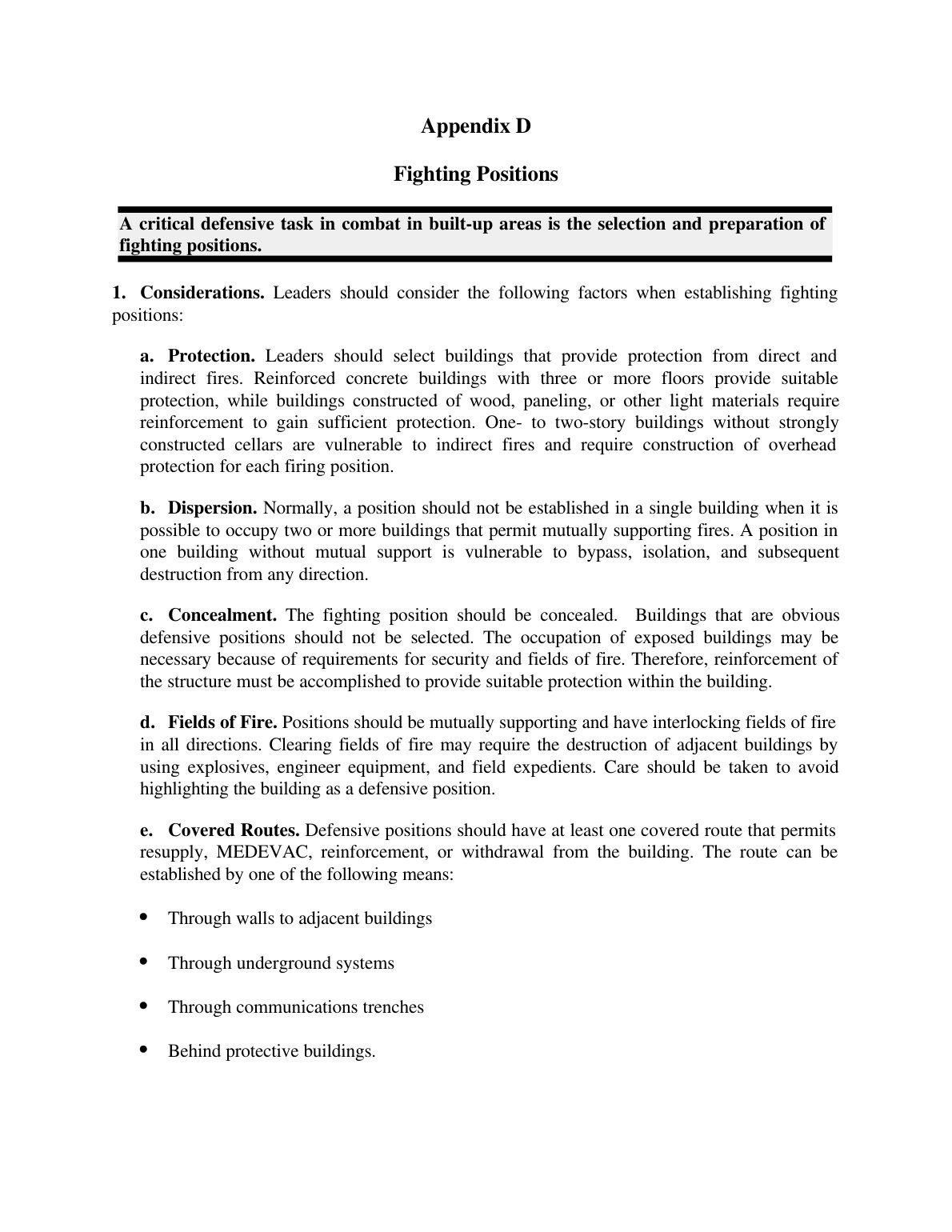
…Reinforced concrete buildings with three or more floors provide suitable protection, while buildings constructed of wood, paneling, or other light materials require reinforcement to gain sufficient protection. One- to two-story buildings without strongly constructed cellars…
Military Operations on Urbanized Terrain (MOUT)
Military manual · MCRP 12-10B.1

MCRP 12-10B.1, page 246

Military Operations on Urbanized Terrain (MOUT)

Marine Corps Reference Publication: Military Operations on Urbanized Terrain (MOUT)

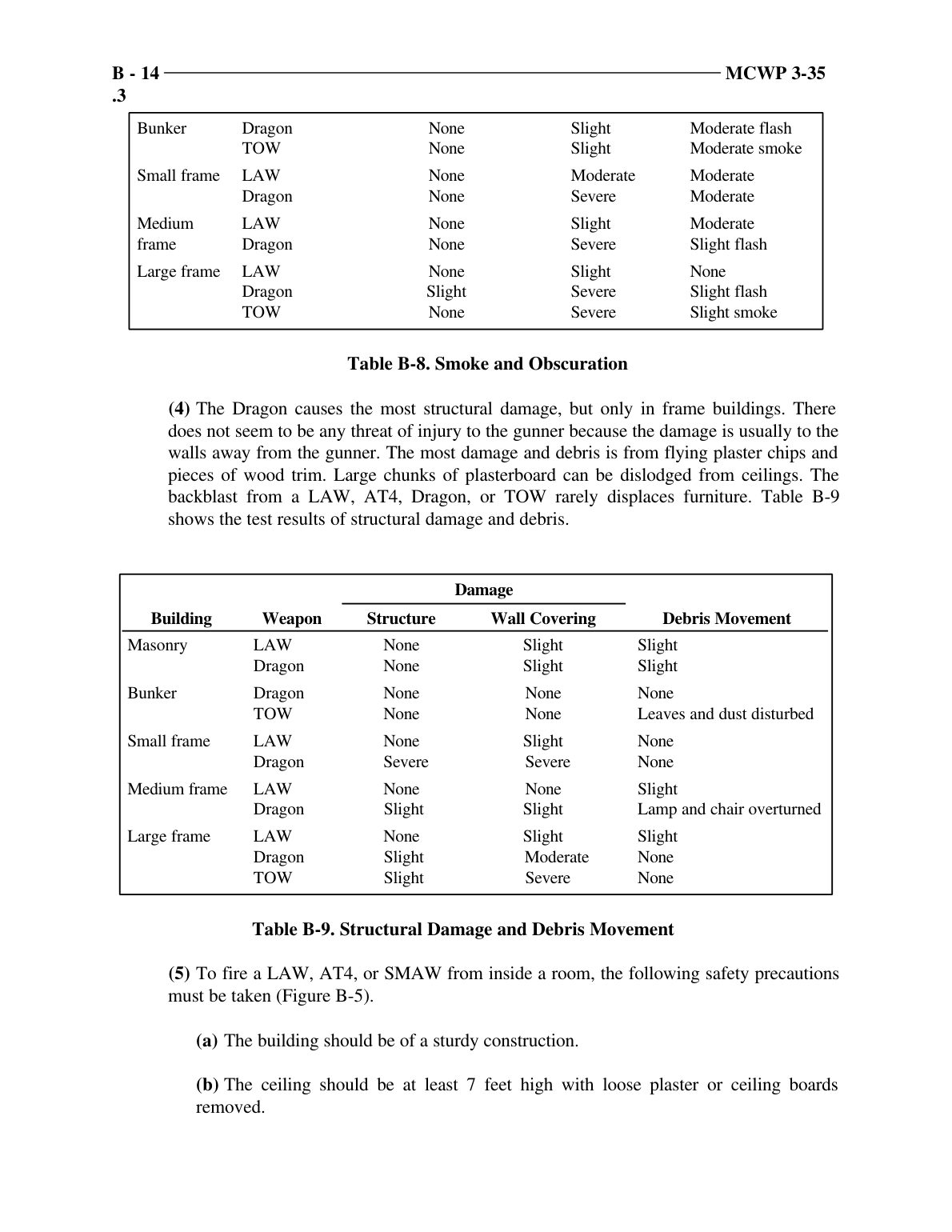
…The most damage and debris is from flying plaster chips and pieces of wood trim. Large chunks of plasterboard can be dislodged from ceilings. The backblast from a LAW, AT4, Dragon, or TOW rarely displaces furniture…
Military Operations on Urbanized Terrain (MOUT)
Military manual · MCRP 12-10B.1

MCRP 12-10B.1, page 346

Military Operations on Urbanized Terrain (MOUT)

Marine Corps Reference Publication: Military Operations on Urbanized Terrain (MOUT)

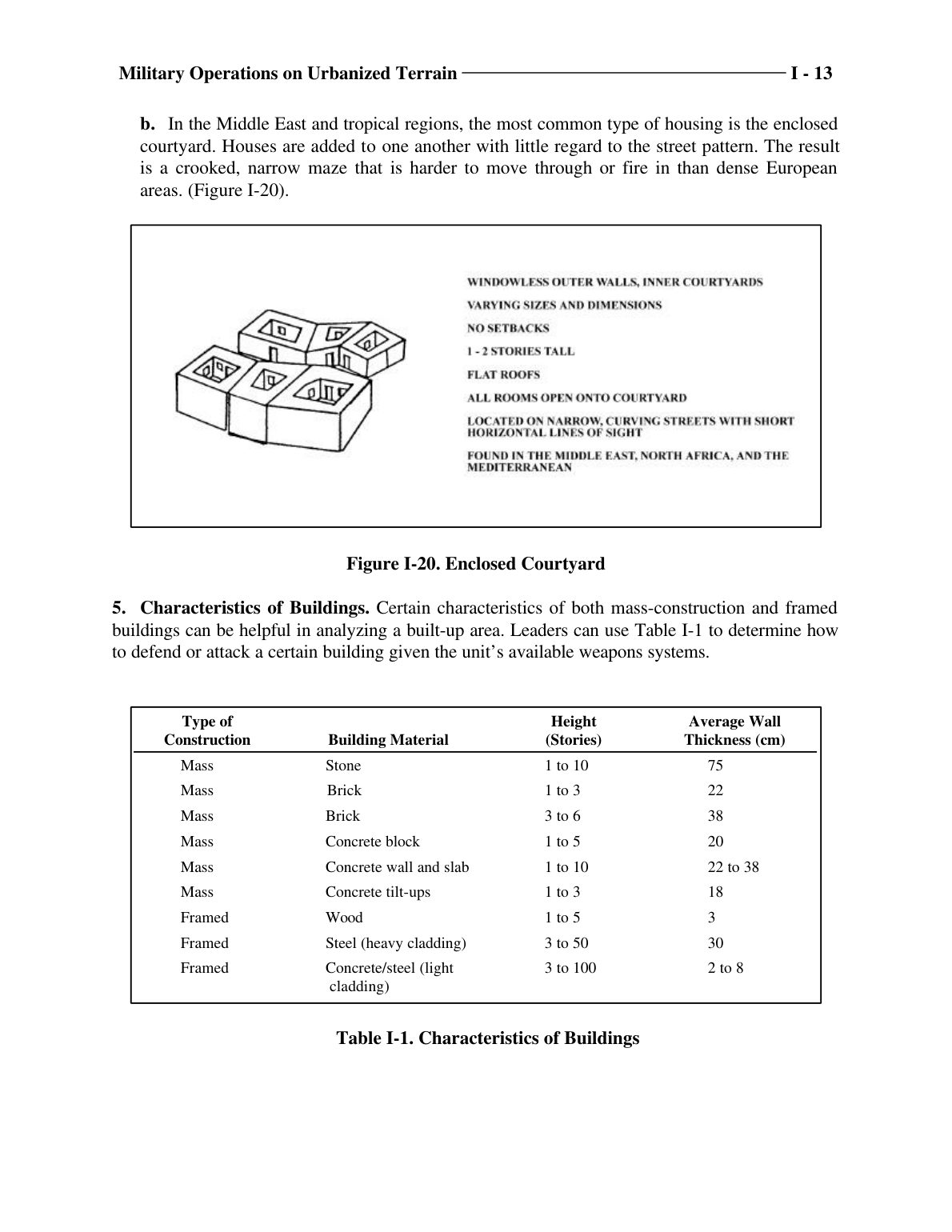
…and slab 1 to 10 22 to 38 Mass Concrete tilt-ups 1 to 3 18 Framed Wood 1 to 5 3 Framed Steel (heavy cladding) 3 to 50 30 Framed Concrete/steel (light cladding) 3…
Military Operations on Urbanized Terrain (MOUT)
Military manual · MCRP 12-10B.1

MCRP 12-10B.1, page 212

Military Operations on Urbanized Terrain (MOUT)

Marine Corps Reference Publication: Military Operations on Urbanized Terrain (MOUT)

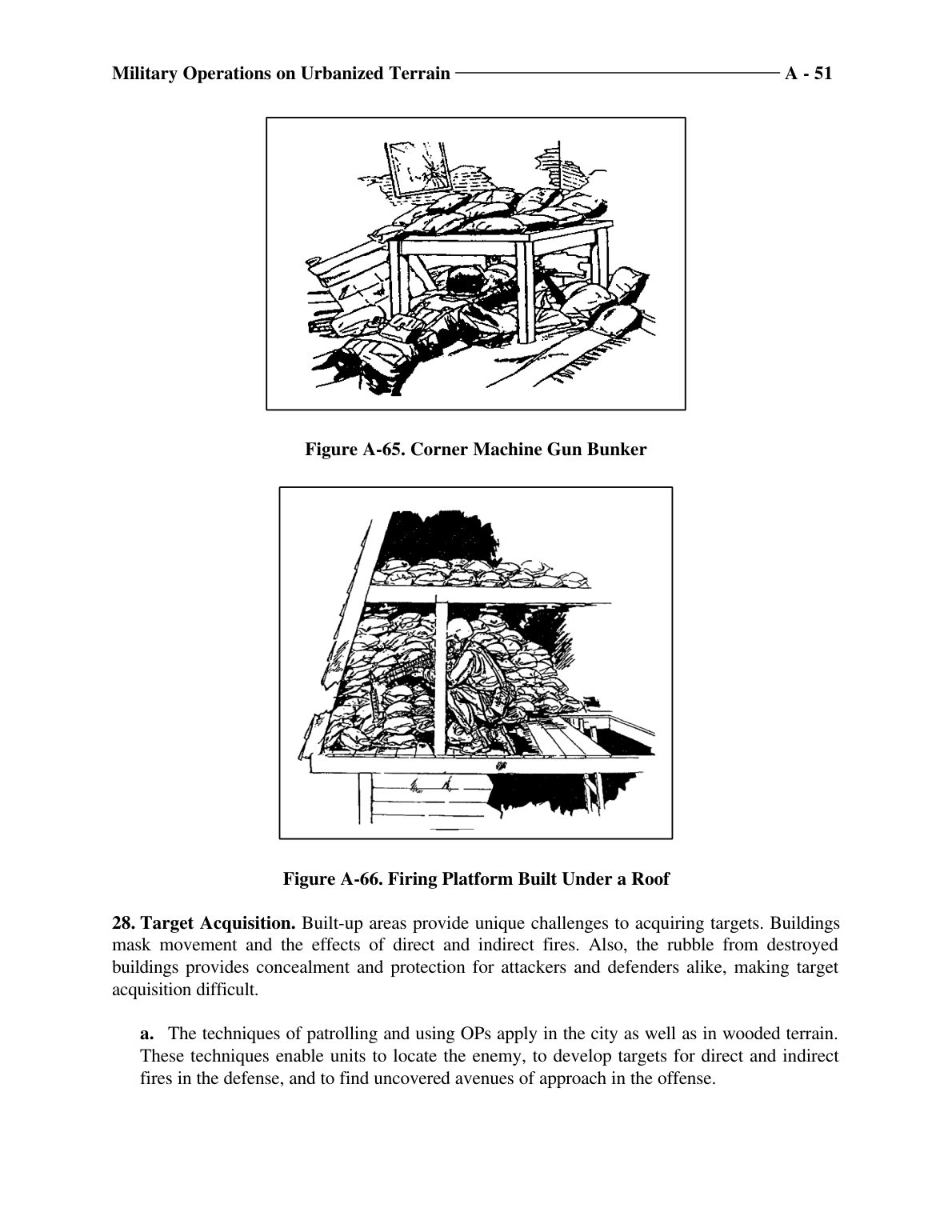
…The techniques of patrolling and using OPs apply in the city as well as in wooded terrain. These techniques enable units to locate the enemy, to develop targets for direct and indirect fires in the defense…
Military Operations on Urbanized Terrain (MOUT)
Military manual · MCRP 12-10B.1

MCRP 12-10B.1, page 249

Military Operations on Urbanized Terrain (MOUT)

Marine Corps Reference Publication: Military Operations on Urbanized Terrain (MOUT)

…Multiple AT4 rounds fired at the same area of a wood-framed wall usually produce a human-sized hole. The SMAW has a devastating effect against wood-framed walls. A single round produces a breach hole…
Military Operations on Urbanized Terrain (MOUT)
Military manual · MCRP 12-10B.1

MCRP 12-10B.1, page 344

Military Operations on Urbanized Terrain (MOUT)

Marine Corps Reference Publication: Military Operations on Urbanized Terrain (MOUT)

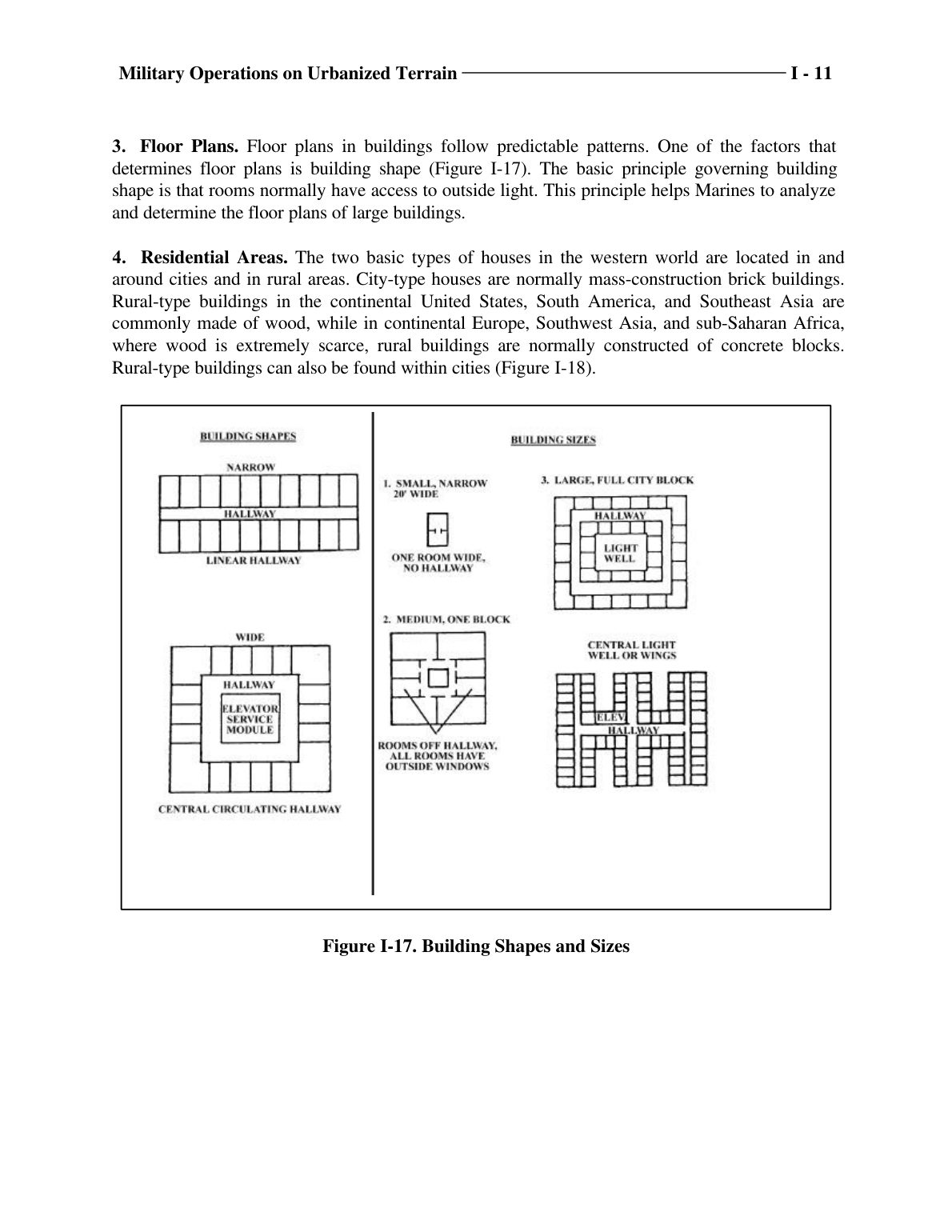
…Rural-type buildings in the continental United States, South America, and Southeast Asia are commonly made of wood, while in continental Europe, Southwest Asia, and sub-Saharan Africa, where wood is extremely scarce, rural buildings are…