Advanced search

west central midwest

About 278 results · showing 261–278 · page 14 of 14

Targeting
Military manual · AFDD 2-1.9

AFDD 2-1.9, page 46

Targeting

Air Force Doctrine Document: Targeting

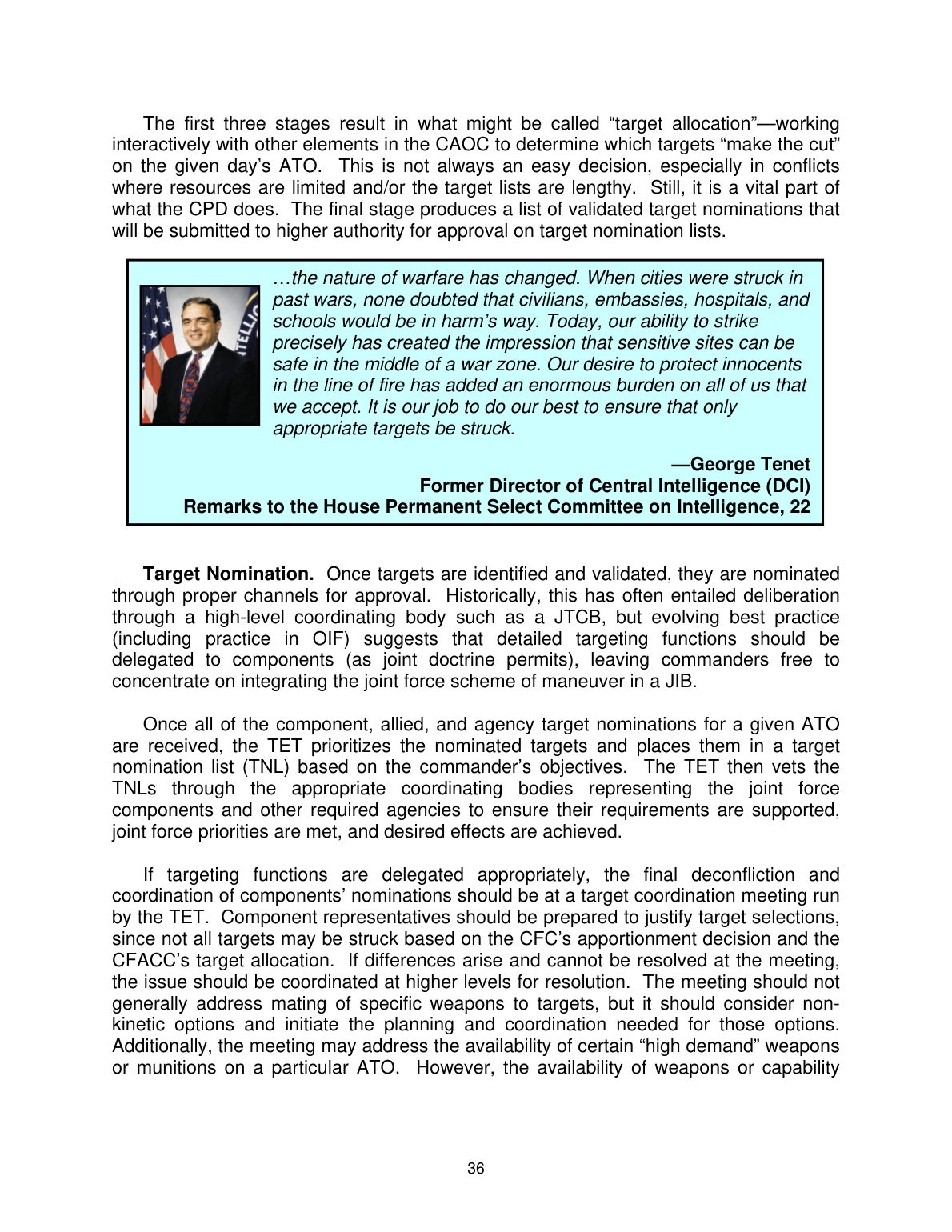
…It is our job to do our best to ensure that only appropriate targets be struck. —George Tenet Former Director of Central Intelligence (DCI) Remarks to the House Permanent Select Committee on Intelligence, 22 The first…
Intelligence Analysis
Military manual · ATP 2-33.4

ATP 2-33.4, page 66

Intelligence Analysis

Army Techniques Publication: Intelligence Analysis

…Analysts could assume a central figure in a network is the leader because of the number of connections to that individual. However, analysts should be aware that link diagrams do not depict time relationships. The Method…
Targeting
Military manual · AFDD 2-1.9

AFDD 2-1.9, page 4

Targeting

Air Force Doctrine Document: Targeting

…Targeting will continue to evolve as it assimilates the insights of effects-based operations, improvements in battlespace awareness, and other innovations, but it will always be central to the way the Air Force conducts operations. JAMES…
Targeting
Military manual · AFDD 2-1.9

AFDD 2-1.9, page 11

Targeting

Air Force Doctrine Document: Targeting

…Targeting is a central component of Air Force operational art, forming an essential link between strategy and the tactical application of air and space power. Strategy allows planners and commanders to choose the best ways to…
Intelligence Analysis
Military manual · ATP 2-33.4

ATP 2-33.4, page 37

Intelligence Analysis

Army Techniques Publication: Intelligence Analysis

…Add symbols or words to represent possible actions and outcomes around the central issue or problem. © Step 3. Link the possible actions and outcomes to the central issue or problem. If desired, use colors to indicate…
Targeting
Military manual · AFDD 2-1.9

AFDD 2-1.9, page 53

Targeting

Air Force Doctrine Document: Targeting

…Under the Air Force doctrine of centralized control and decentralized execution, unit commanders are given the freedom and flexibility to plan missions and delivery tactics as long as they fall within timing requirements, ROE, and intent…
Intelligence Analysis
Military manual · ATP 2-33.4

ATP 2-33.4, page 117

Intelligence Analysis

Army Techniques Publication: Intelligence Analysis

…The Central Intelligence Agency developed ACH in the 1970s as an intelligence methodology to evaluate multiple competing hypotheses and to foster unbiased conclusions. It is currently still in use by national-level intelligence analysts in various…
Targeting
Military manual · AFDD 2-1.9

AFDD 2-1.9, page 9

Targeting

Air Force Doctrine Document: Targeting

…for possible action to support the commander’s objectives, guidance, and intent. (Page 1) › Targeting is a central component of Air Force operational art, forming an essential link between strategy and the tactical application of air…
Intelligence Analysis
Military manual · ATP 2-33.4

ATP 2-33.4, page 76

Intelligence Analysis

Army Techniques Publication: Intelligence Analysis

…It is determined by the centrality of a node. 5-81. Nodes on the periphery receive very low centrality scores. However, peripheral nodes are often connected to networks that are not currently mapped. The peripheral nodes…
Intelligence Analysis
Military manual · ATP 2-33.4

ATP 2-33.4, page 70

Intelligence Analysis

Army Techniques Publication: Intelligence Analysis

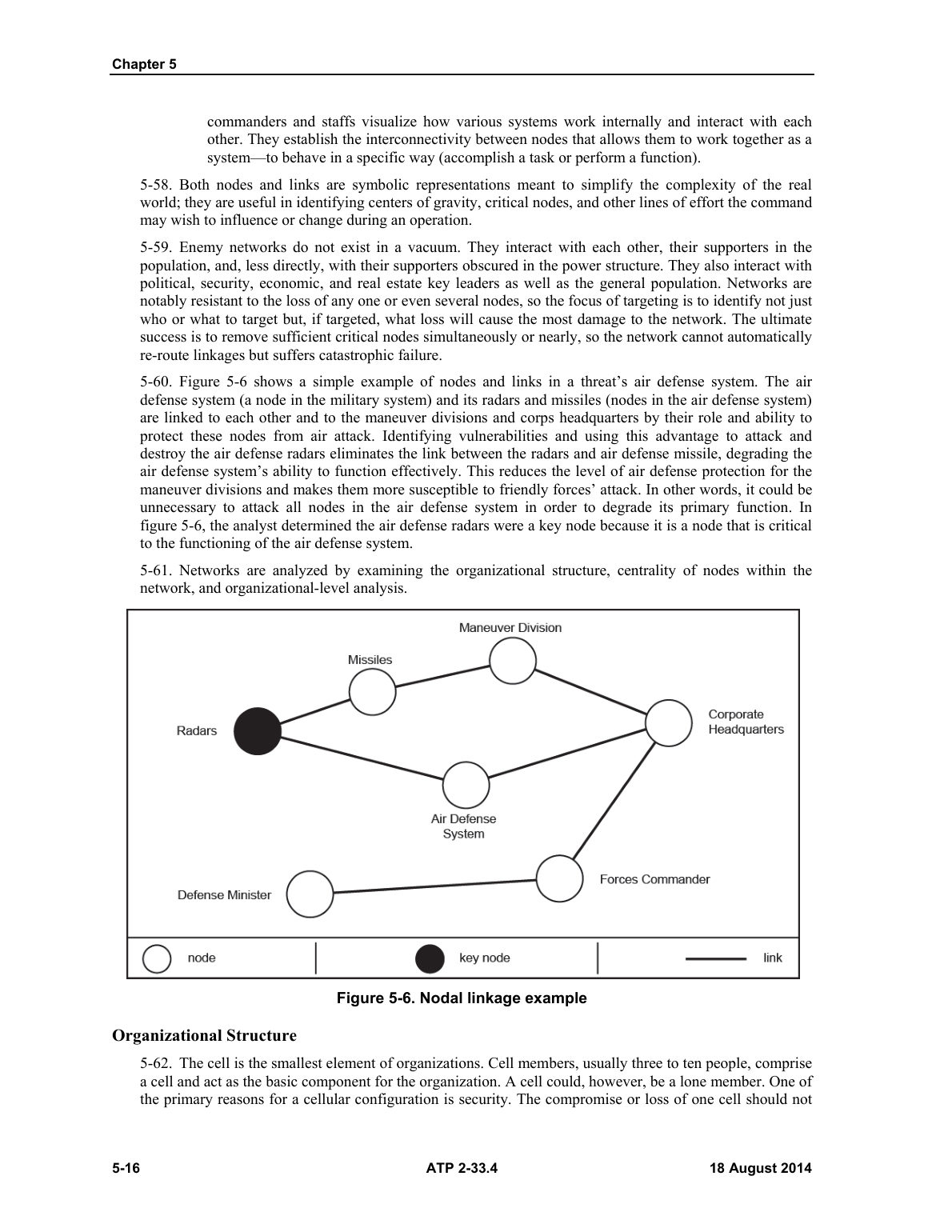
…Networks are analyzed by examining the organizational structure, centrality of nodes within the network, and organizational-level analysis. Figure 5-6. Nodal linkage example Organizational Structure 5-62. The cell is the smallest element of organizations…
Targeting
Military manual · AFDP 3-60

AFDP 3-60, page 8

Targeting

Air Force Doctrine Publication: Targeting

…Understanding a target’s decision-making process, sources of influence, or cultural factors can be critical to creating desired effects, especially when targeting a system’s central controlling function. As with functional characteristics, these are often…
Targeting
Military manual · AFDD 2-1.9

AFDD 2-1.9, page 54

Targeting

Air Force Doctrine Document: Targeting

…It is a central part of an effects-based approach to conflict. It consists of four distinct levels: tactical assessment (which includes assessment of physical damage), component-level operational assessment, CFC-level operational assessment, and national…
Intelligence Analysis
Military manual · ATP 2-33.4

ATP 2-33.4, page 68

Intelligence Analysis

Army Techniques Publication: Intelligence Analysis

…Determine centrality; examine network density and distance:  What is the centrality of each node within the network?  What role is each entity involved in the network?  Who or what forms a bridge or…
Intelligence Analysis
Military manual · ATP 2-33.4

ATP 2-33.4, page 69

Intelligence Analysis

Army Techniques Publication: Intelligence Analysis

…Review the clusters in the diagram for gaps, significant relationships, meanings of relationships, network structure, centrality, and network density and distance. Identify the clusters’ functions in the larger network.  Step 6. Chart the flow of…
Targeting
Military manual · AFDD 2-1.9

AFDD 2-1.9, page 15

Targeting

Air Force Doctrine Document: Targeting

…These characteristics can also be critical to targeting an enemy system, since nearly every system possesses some central controlling function, and neutralizing this may be crucial to obtaining the desired behavior. As with functional characteristics, these…
Intelligence Analysis
Military manual · ATP 2-33.4

ATP 2-33.4, page 26

Intelligence Analysis

Army Techniques Publication: Intelligence Analysis

…This type of argumentum ad populum does not assert “everybody is doing it,” but rather that “all the best people are doing it.” For instance, “The top analysts at the Central Intelligence Agency agree that my…
Intelligence Analysis
Military manual · ATP 2-33.4

ATP 2-33.4, page 78

Intelligence Analysis

Army Techniques Publication: Intelligence Analysis

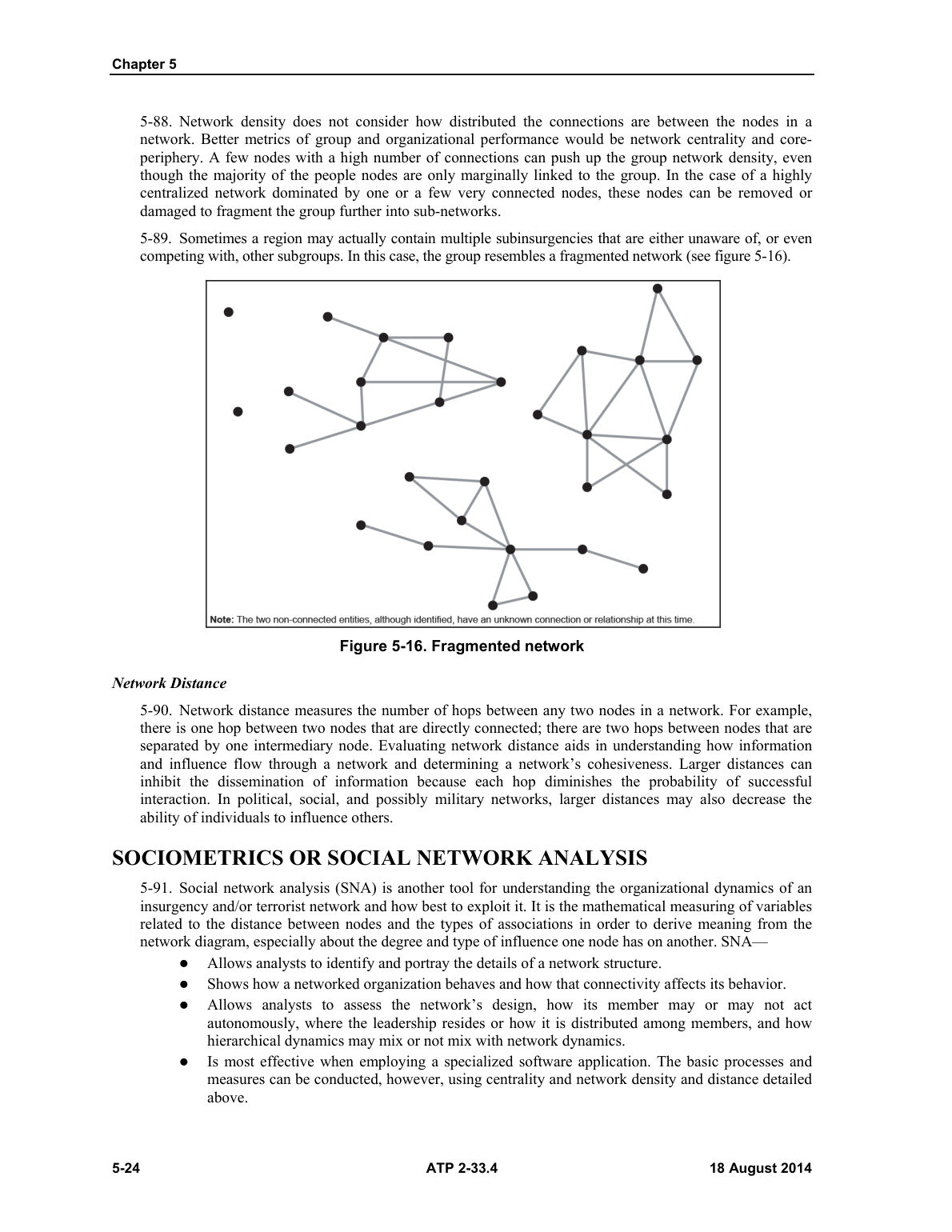
…Better metrics of group and organizational performance would be network centrality and core- periphery. A few nodes with a high number of connections can push up the group network density, even though the majority of the…
Intelligence Analysis
Military manual · ATP 2-33.4

ATP 2-33.4, page 75

Intelligence Analysis

Army Techniques Publication: Intelligence Analysis

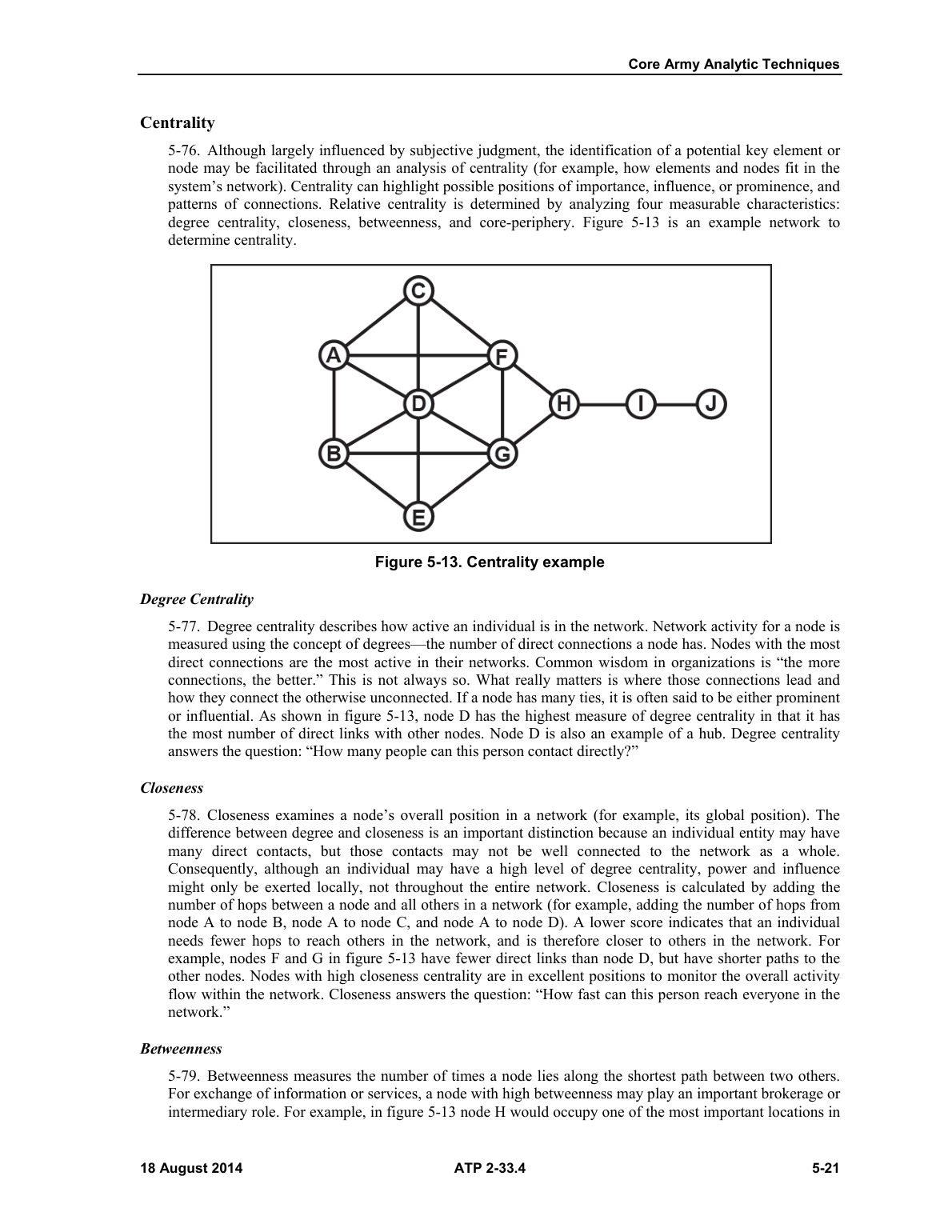
Core Army Analytic Techniques 18 August 2014 ATP 2-33.4 5-21 Centrality 5-76. Although largely influenced by subjective judgment, the identification of a potential key element or node may be facilitated through an…