Advanced search

whipple federal building

About 400 results · showing 361–380 · page 19 of 20

Military Operations on Urbanized Terrain (MOUT)
Military manual · MCRP 12-10B.1

MCRP 12-10B.1, page 238

Military Operations on Urbanized Terrain (MOUT)

Marine Corps Reference Publication: Military Operations on Urbanized Terrain (MOUT)

…It can also easily penetrate wooden-framed buildings. The .50-caliber round can penetrate all of the commonly found urban barriers except a sand-filled 55-gallon drum. (4) Wall Penetration. Continued and concentrated machine gun…
GhostNet Guide
S2 guide · GhostNet 1.5

GhostNet 1.5, page 41

GhostNet Guide

S2 Underground field guide: GhostNet Guide

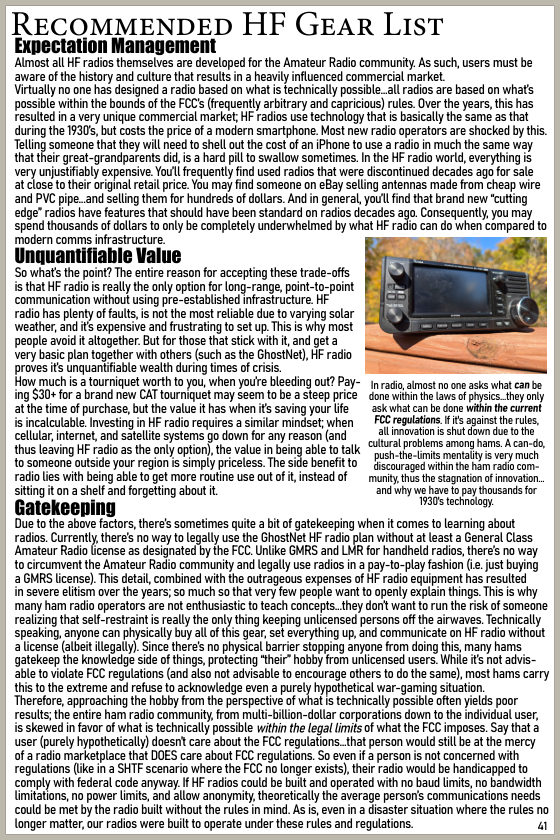
…So even if a person is not concerned with regulations (like in a SHTF scenario where the FCC no longer exists), their radio would be handicapped to comply with federal code anyway. If HF radios could…
Targeting
Military manual · AFDD 2-1.9

AFDD 2-1.9, page 49

Targeting

Air Force Doctrine Document: Targeting

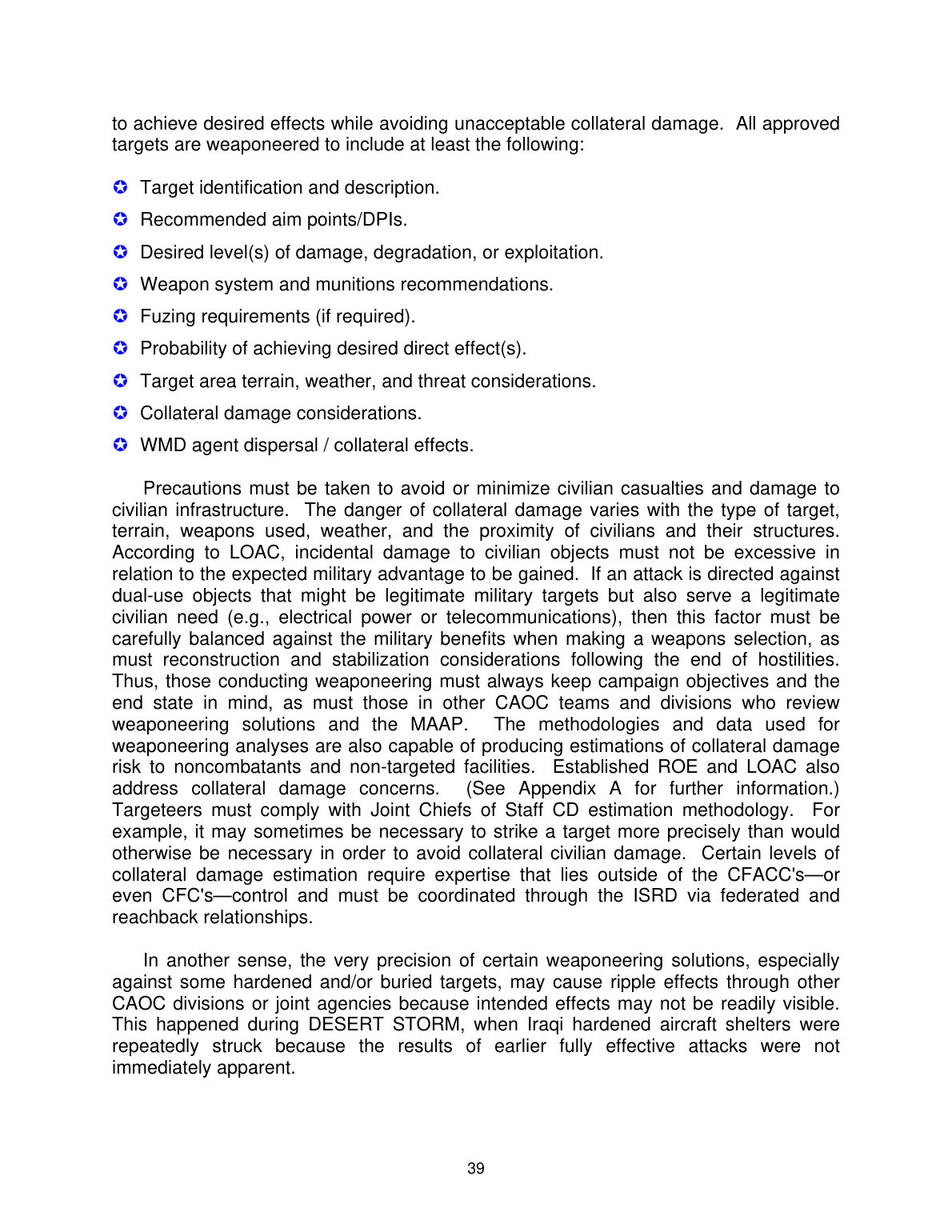
…Certain levels of collateral damage estimation require expertise that lies outside of the CFACC's—or even CFC's—control and must be coordinated through the ISRD via federated and reachback relationships. In another sense, the…
Military Operations on Urbanized Terrain (MOUT)
Military manual · MCRP 12-10B.1

MCRP 12-10B.1, page 46

Military Operations on Urbanized Terrain (MOUT)

Marine Corps Reference Publication: Military Operations on Urbanized Terrain (MOUT)

…of bridges Layout of underground networks such as subways, sewers, and utility ducts Types and construction of buildings Location of key communications and transportation facilities Location of canals and waterways. Information on port facilities should include…
GhostNet Guide
S2 guide · GhostNet 1.5

GhostNet 1.5, page 45

GhostNet Guide

S2 Underground field guide: GhostNet Guide

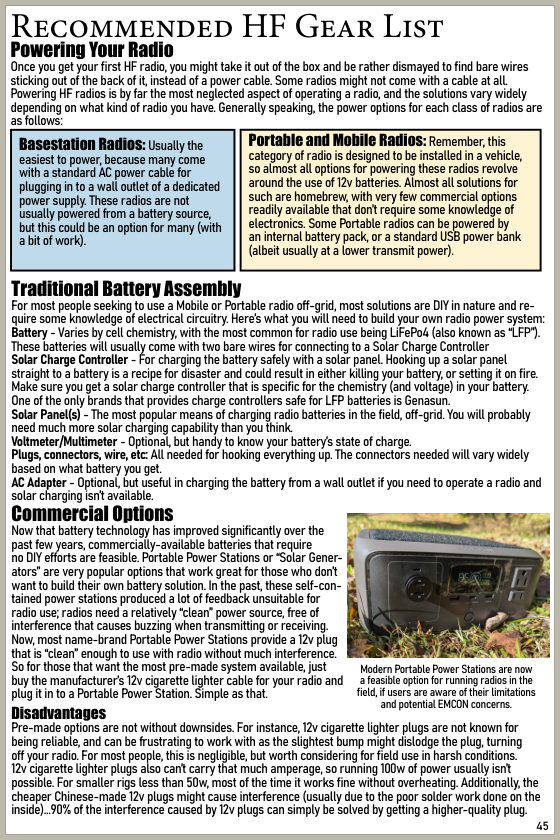
…Here’s what you will need to build your own radio power system: Battery - Varies by cell chemistry, with the most common for radio use being LiFePo4 (also known as “LFP”). These batteries will usually come…
Military Operations on Urbanized Terrain (MOUT)
Military manual · MCRP 12-10B.1

MCRP 12-10B.1, page 93

Military Operations on Urbanized Terrain (MOUT)

Marine Corps Reference Publication: Military Operations on Urbanized Terrain (MOUT)

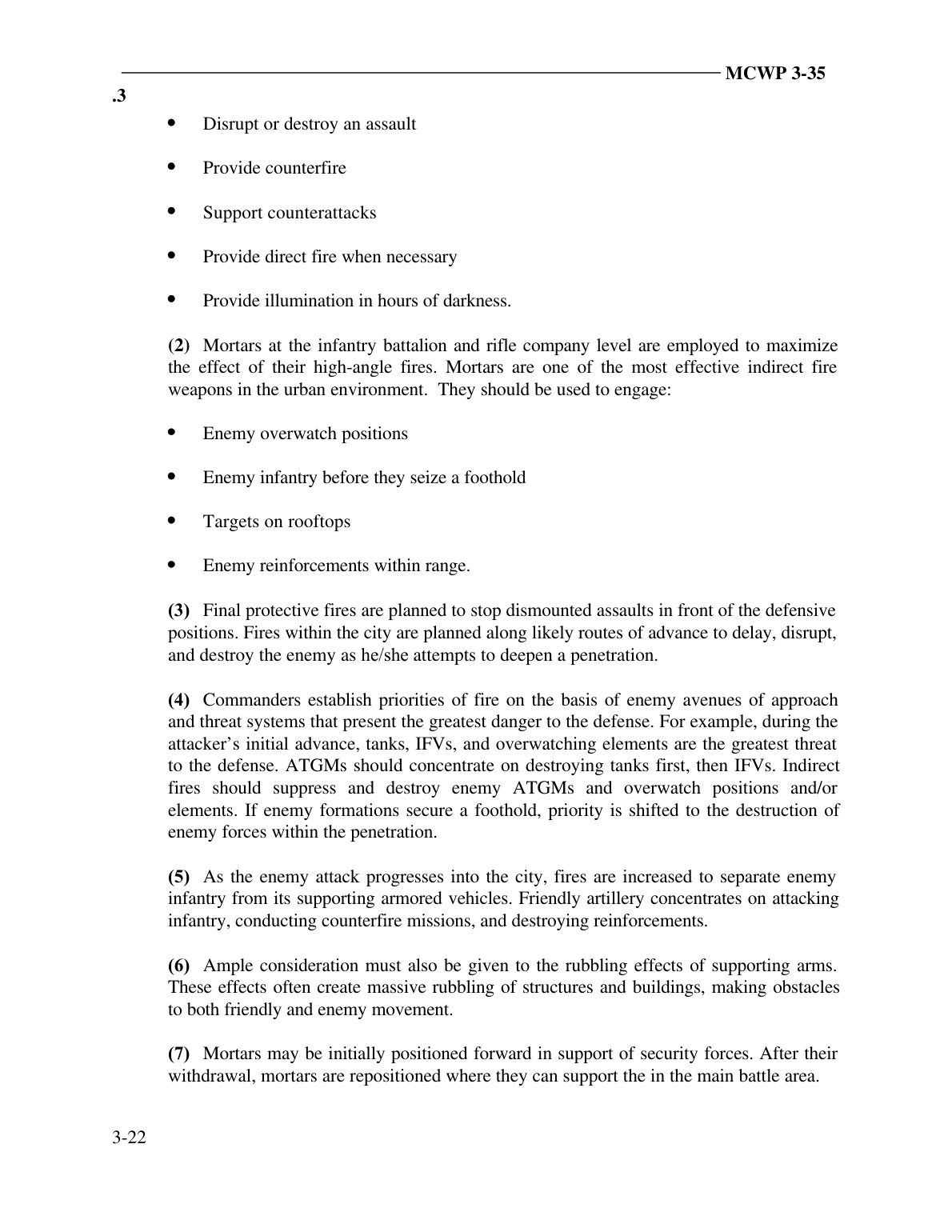
…These effects often create massive rubbling of structures and buildings, making obstacles to both friendly and enemy movement. (7) Mortars may be initially positioned forward in support of security forces. After their withdrawal, mortars are repositioned…
Military Operations on Urbanized Terrain (MOUT)
Military manual · MCRP 12-10B.1

MCRP 12-10B.1, page 101

Military Operations on Urbanized Terrain (MOUT)

Marine Corps Reference Publication: Military Operations on Urbanized Terrain (MOUT)

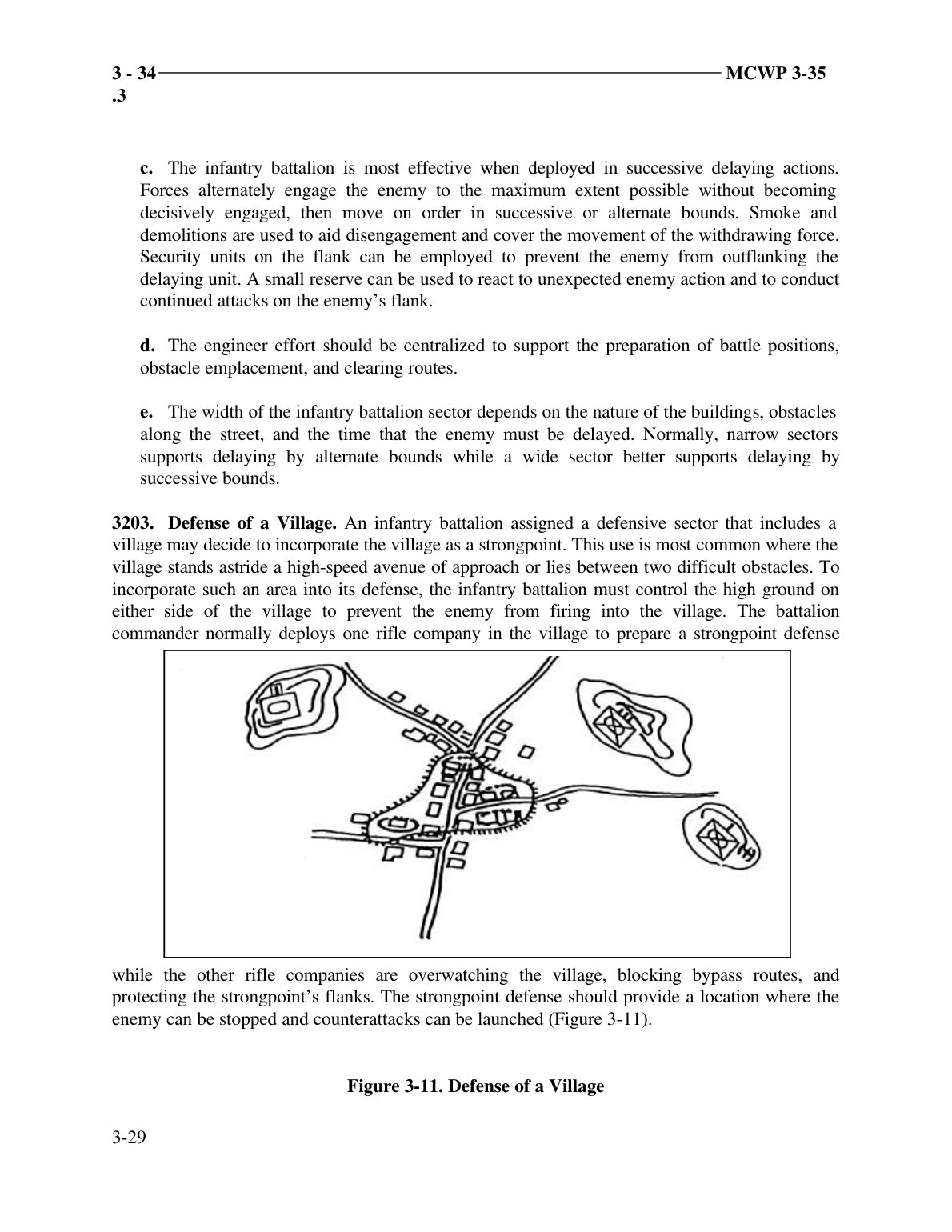
…The width of the infantry battalion sector depends on the nature of the buildings, obstacles along the street, and the time that the enemy must be delayed. Normally, narrow sectors supports delaying by alternate bounds while…
Military Operations on Urbanized Terrain (MOUT)
Military manual · MCRP 12-10B.1

MCRP 12-10B.1, page 52

Military Operations on Urbanized Terrain (MOUT)

Marine Corps Reference Publication: Military Operations on Urbanized Terrain (MOUT)

position is often behind or inside the last large building before crossing the LD. The LD should be located on the near side of an open area running perpendicular to the direction of attack, such as…
Military Operations on Urbanized Terrain (MOUT)
Military manual · MCRP 12-10B.1

MCRP 12-10B.1, page 259

Military Operations on Urbanized Terrain (MOUT)

Marine Corps Reference Publication: Military Operations on Urbanized Terrain (MOUT)

…It penetrates through both sides of a wood-framed or brick veneer building. Field fortifications are easily penetrated by APDS-T rounds. Table B-11 lists the number of APDS-T rounds needed to create different…
Military Operations on Urbanized Terrain (MOUT)
Military manual · MCRP 12-10B.1

MCRP 12-10B.1, page 109

Military Operations on Urbanized Terrain (MOUT)

Marine Corps Reference Publication: Military Operations on Urbanized Terrain (MOUT)

…Built-up areas have certain aspects that favor infantry antiarmor operations. (1) Buildings provide cover and concealment for defending infantry. (2) The streets restrict armor maneuver, fields of fire, and communications, thereby reducing the enemy’s…
Military Operations on Urbanized Terrain (MOUT)
Military manual · MCRP 12-10B.1

MCRP 12-10B.1, page 94

Military Operations on Urbanized Terrain (MOUT)

Marine Corps Reference Publication: Military Operations on Urbanized Terrain (MOUT)

…Dismounted and manpacked antiarmor weapons should be positioned in buildings and along routes where engagement distances are reduced but where surprise and ambush are ideal. e. Logistics. Just as in the offense, the defense utilizes a…
Defense Support of Civil Authorities
Military manual · JP 3-28

JP 3-28, page 130

Defense Support of Civil Authorities

Joint Publication: Defense Support of Civil Authorities

…Reliable communications and well-understood reporting requirements are essential for the JTF to effectively manage the building of capability for the CJTF. d. Onward movement operations include movement of personnel and accompanying material from reception facilities…
Military Operations on Urbanized Terrain (MOUT)
Military manual · MCRP 12-10B.1

MCRP 12-10B.1, page 110

Military Operations on Urbanized Terrain (MOUT)

Marine Corps Reference Publication: Military Operations on Urbanized Terrain (MOUT)

…The target reference points should be clearly visible through the gunner’s sights and should be relatively resistant to battle damage (for example, large buildings or bridge abutments, but not trees or cars). The three types…
Joint Targeting
Military manual · JP 3-60

JP 3-60, page 44

Joint Targeting

Joint Publication: Joint Targeting

…This process builds upon the analysis performed in target development, both for information that characterizes the physical, functional, and behavioral vulnerability of the target and for a connecting thread of logic to the JFC’s objectives…
Offense and Defense
Military manual · ADP 3-90

ADP 3-90, page 76

Offense and Defense

Army Doctrine Publication: Offense and Defense

…Folds in the earth, natural depressions, trees, buildings, and walls offer cover. If a commander deploys in flat terrain lacking cover, digging in or sandbagging can offer some protection. Units employ obscuration if they are moving…
Military Operations on Urbanized Terrain (MOUT)
Military manual · MCRP 12-10B.1

MCRP 12-10B.1, page 5

Military Operations on Urbanized Terrain (MOUT)

Marine Corps Reference Publication: Military Operations on Urbanized Terrain (MOUT)

…Attack of a Building 2-37 2403. Movement Down a Street 2-37 2404. Utilization of the Reserve 2-38 Chapter 3. Defensive Operations 3001. Introduction 3-1 3002 Decision to Defend 3-1 3003 Reasons…
Military Operations on Urbanized Terrain (MOUT)
Military manual · MCRP 12-10B.1

MCRP 12-10B.1, page 247

Military Operations on Urbanized Terrain (MOUT)

Marine Corps Reference Publication: Military Operations on Urbanized Terrain (MOUT)

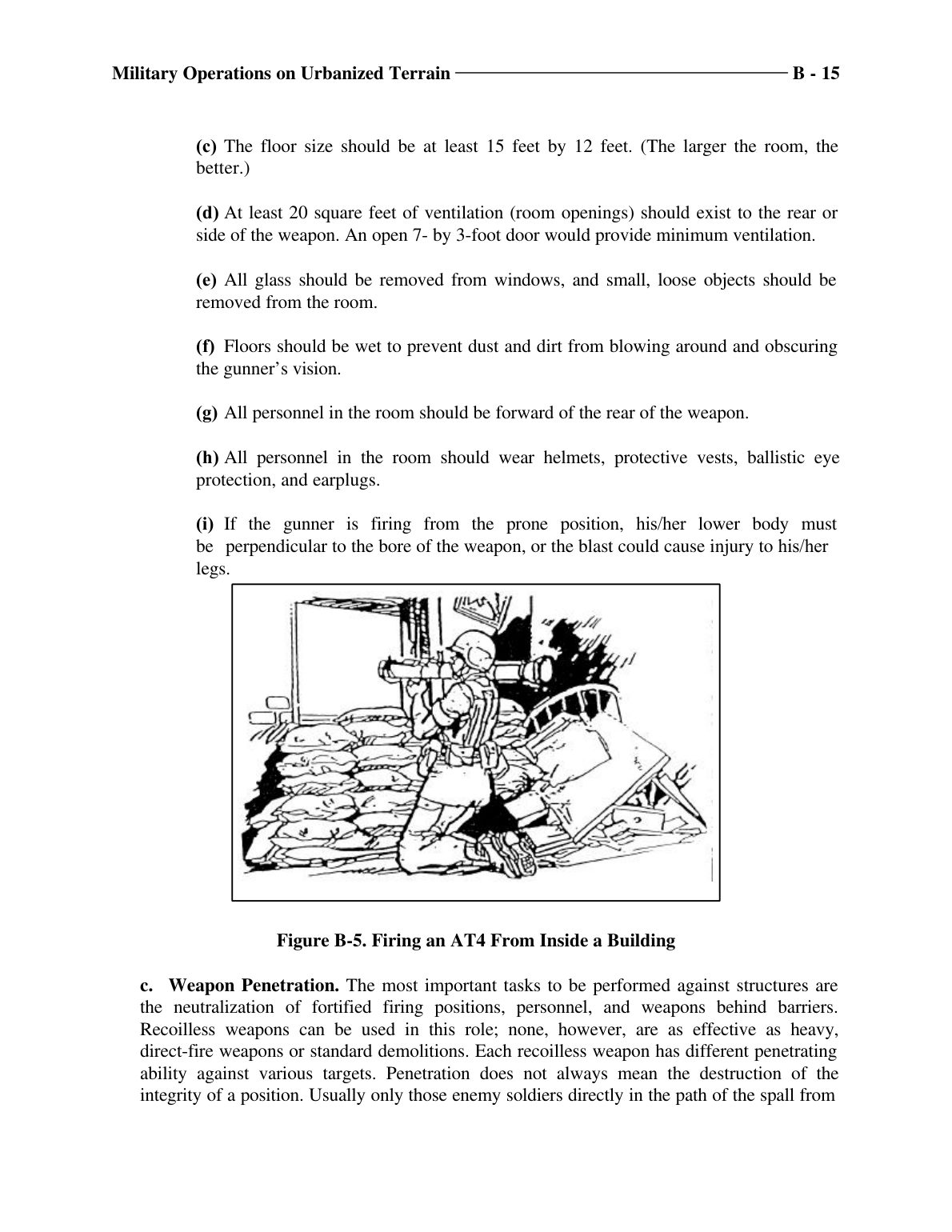
…Firing an AT4 From Inside a Building c. Weapon Penetration. The most important tasks to be performed against structures are the neutralization of fortified firing positions, personnel, and weapons behind barriers. Recoilless weapons can be used…
Military Operations on Urbanized Terrain (MOUT)
Military manual · MCRP 12-10B.1

MCRP 12-10B.1, page 197

Military Operations on Urbanized Terrain (MOUT)

Marine Corps Reference Publication: Military Operations on Urbanized Terrain (MOUT)

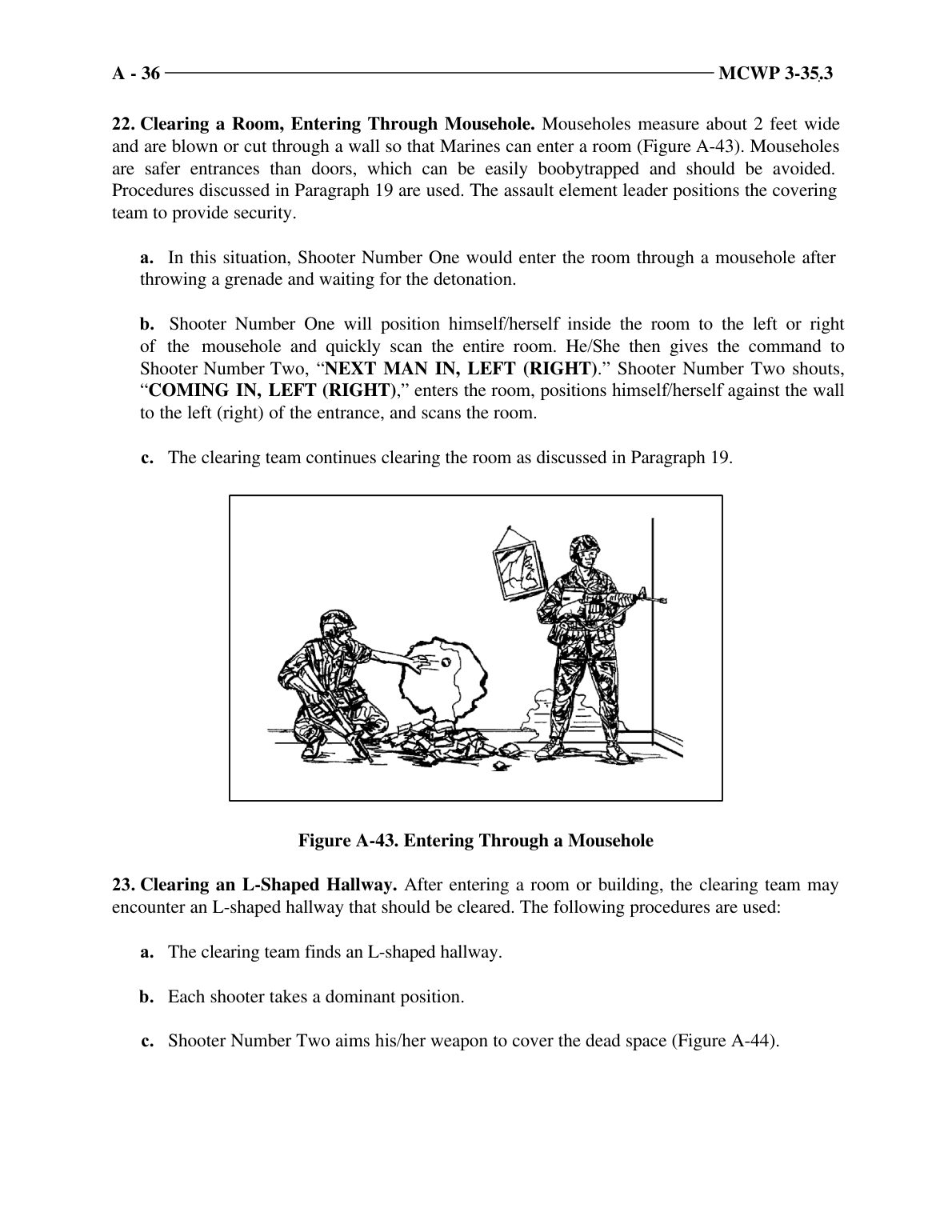
…After entering a room or building, the clearing team may encounter an L-shaped hallway that should be cleared. The following procedures are used: a. The clearing team finds an L-shaped hallway. b. Each shooter…
Military Operations on Urbanized Terrain (MOUT)
Military manual · MCRP 12-10B.1

MCRP 12-10B.1, page 43

Military Operations on Urbanized Terrain (MOUT)

Marine Corps Reference Publication: Military Operations on Urbanized Terrain (MOUT)

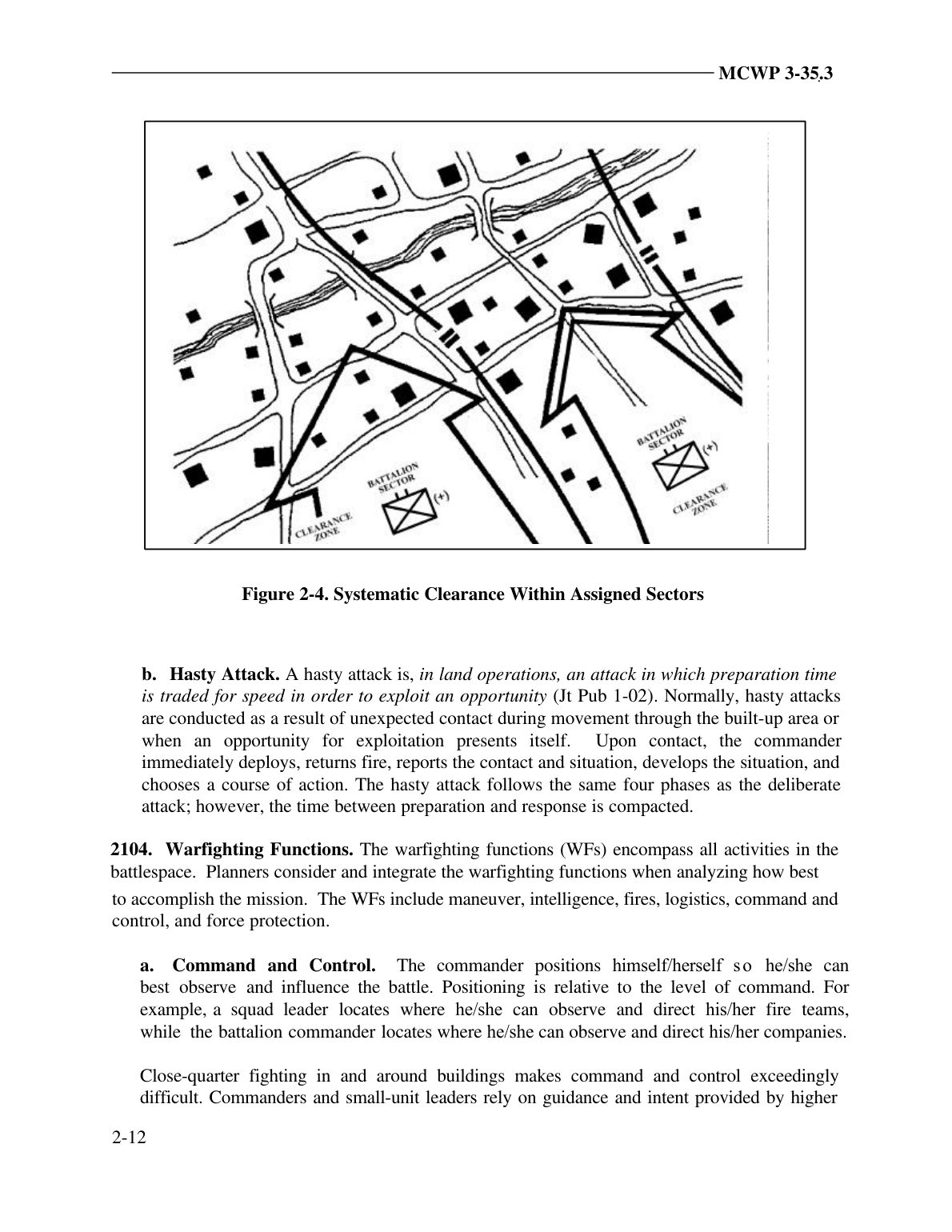
…Close-quarter fighting in and around buildings makes command and control exceedingly difficult. Commanders and small-unit leaders rely on guidance and intent provided by higher MCWP 3-35.3 2-12
Targeting
Military manual · AFDD 2-1.9

AFDD 2-1.9, page 84

Targeting

Air Force Doctrine Document: Targeting

…Assessment personnel should also cultivate relationships with federated partners during peacetime, to expedite flow of information once conflict begins. Finally, information and other non-kinetic weapons, as well as the low-intensity transnational nature of the…