Advanced search

department of state

About 400 results · showing 141–160 · page 8 of 20

Intelligence Analysis
Military manual · ATP 2-33.4

ATP 2-33.4, page 62

Intelligence Analysis

Army Techniques Publication: Intelligence Analysis

…Situational logic is the most common method of intelligence analysis and is sometimes called the area studies approach. This involves generating different hypotheses on the basis of considering concrete elements of the current situation. Broad, global…
Joint Targeting
Military manual · JP 3-60

JP 3-60, page 16

Joint Targeting

Joint Publication: Joint Targeting

…Joint Targeting Working Group The joint targeting working group (JTWG) supports the JTCB by conducting initial collection, consolidation, and prioritization of targets and synchronization of target planning and coordination on behalf of the JFC. The JTWG…
Joint Operations
Military manual · JP 3-0

JP 3-0, page 202

Joint Operations

Joint Publication: Joint Operations

Glossary GL-18 JP 3-0 directly involved in the conduct of major operations and campaigns involving combat. (Approved for incorporation into JP 1-02.) theater strategy. An overarching construct outlining a combatant commander’s vision…
Joint Operations
Military manual · JP 3-0

JP 3-0, page 163

Joint Operations

Joint Publication: Joint Operations

Joint Operations Across the Range of Military Operations V-57 (5) JFCs need to pay particular attention and give priority to activities impinging on and supporting the maneuver and interdiction needs of all forces. In addition…
Intelligence Analysis
Military manual · ATP 2-33.4

ATP 2-33.4, page 56

Intelligence Analysis

Army Techniques Publication: Intelligence Analysis

…Brainstorming, almost by definition, involves a group of analysts meeting to discuss a common challenge. A modest investment of time at the beginning or critical points of a project can take advantage of the group’s…
Joint Operations
Military manual · JP 3-0

JP 3-0, page 9

Joint Operations

Joint Publication: Joint Operations

Table of Contents vii II-2 Joint Operation Planning Process ...............................................................II-7 III-1 Command Relationships Synopsis ........................................................... III-3 III-2 Creating Shared Understanding ............................................................. III-12 III-3 Risk Management Process ..................................................................... III-16 IV-1 Visualizing…
Intelligence Analysis
Military manual · ATP 2-33.4

ATP 2-33.4, page 121

Intelligence Analysis

Army Techniques Publication: Intelligence Analysis

…Finally, the process is stopped after a predefined stop criterion (for example, number of rounds, achievement of consensus, and stability of results). The mean or median scores of the final rounds determine the results. Facts A…
Intelligence Analysis
Military manual · ATP 2-33.4

ATP 2-33.4, page 53

Intelligence Analysis

Army Techniques Publication: Intelligence Analysis

…All-source intelligence analysts study and provide mission-focused knowledge of the terrain and weather, civil considerations, and threat characteristics for a specified area or region of a foreign country— including the attitudes of the populace…
Joint Operations
Military manual · JP 3-0

JP 3-0, page 164

Joint Operations

Joint Publication: Joint Operations

…Enhancement of CBRN defense capabilities may reduce incentives for a first strike by an enemy with WMD. (c) The combination of active and passive defense can reduce the effectiveness or success of an enemy’s use…
Joint Operations
Military manual · JP 3-0

JP 3-0, page 54

Joint Operations

Joint Publication: Joint Operations

…Operations security (OPSEC) is an example of a defensive capability, and relates to the protection function. Regardless of these alignments, integration and synchronization across IO capabilities and actions is essential to many aspects of joint operations…
Intelligence Analysis
Military manual · ATP 2-33.4

ATP 2-33.4, page 10

Intelligence Analysis

Army Techniques Publication: Intelligence Analysis

…Summary of changes (continued) Chapter 3—Basic Structured Analytic Techniques Chapter 3 is a revision of portions of chapter 5 of the previous manual, which consolidated all the analytical tools and techniques. ATP 2-33.4…
Intelligence Analysis
Military manual · ATP 2-33.4

ATP 2-33.4, page 127

Intelligence Analysis

Army Techniques Publication: Intelligence Analysis

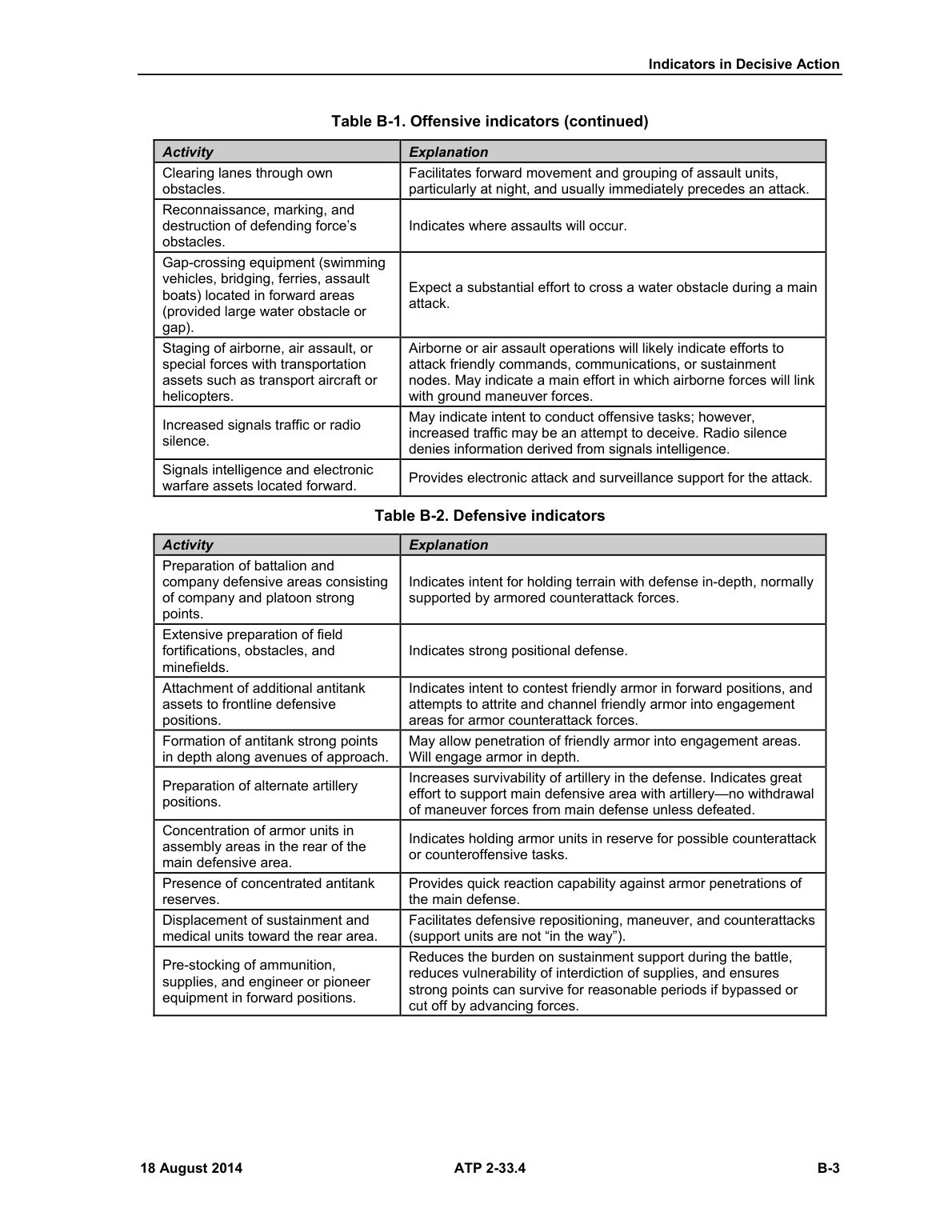
…Formation of antitank strong points in depth along avenues of approach. May allow penetration of friendly armor into engagement areas. Will engage armor in depth. Preparation of alternate artillery positions. Increases survivability of artillery in the…
Joint Operations
Military manual · JP 3-0

JP 3-0, page 81

Joint Operations

Joint Publication: Joint Operations

…Maintaining full-spectrum superiority contributes to positional advantage by facilitating freedom of action. See Chapter V, “Joint Operations Across the Range of Military Operations,” paragraph 14.f, “Full-Spectrum Superiority.” (3) At all levels of war…
Joint Targeting
Military manual · JP 3-60

JP 3-60, page 66

Joint Targeting

Joint Publication: Joint Targeting

…As an example, destruction of a headquarters element or capture of a terrorist senior leader will result in the loss of C2 and thus degrade the effectiveness of subordinate organizations. (c) Unintended Effects. Effects often spill…
Targeting
Military manual · AFDP 3-60

AFDP 3-60, page 35

Targeting

Air Force Doctrine Publication: Targeting

…COLE is a cyberspace operations weaponeering system that enables accurate characterization of targeted networks, identification of vulnerabilities, and matching capabilities to estimate the probability of success for cyberspace effects operations. Digital Precision Strike Suite Collateral Damage…
Joint Operations
Military manual · JP 3-0

JP 3-0, page 157

Joint Operations

Joint Publication: Joint Operations

Joint Operations Across the Range of Military Operations V-51 concentrating, opponents can be attacked, isolated at tactical and operational levels, and defeated in detail. At other times, JFCs may cause their opponents to concentrate their…
Intelligence Analysis
Military manual · ATP 2-33.4

ATP 2-33.4, page 87

Intelligence Analysis

Army Techniques Publication: Intelligence Analysis

…Regardless of the type of operation, all-source intelligence is the primary capability within the intelligence warfighting function that aids commanders understanding of their operational environment. ANALYTIC SUPPORT TO OFFENSIVE OPERATIONS 6-3. An offensive task…
Intelligence Analysis
Military manual · ATP 2-33.4

ATP 2-33.4, page 75

Intelligence Analysis

Army Techniques Publication: Intelligence Analysis

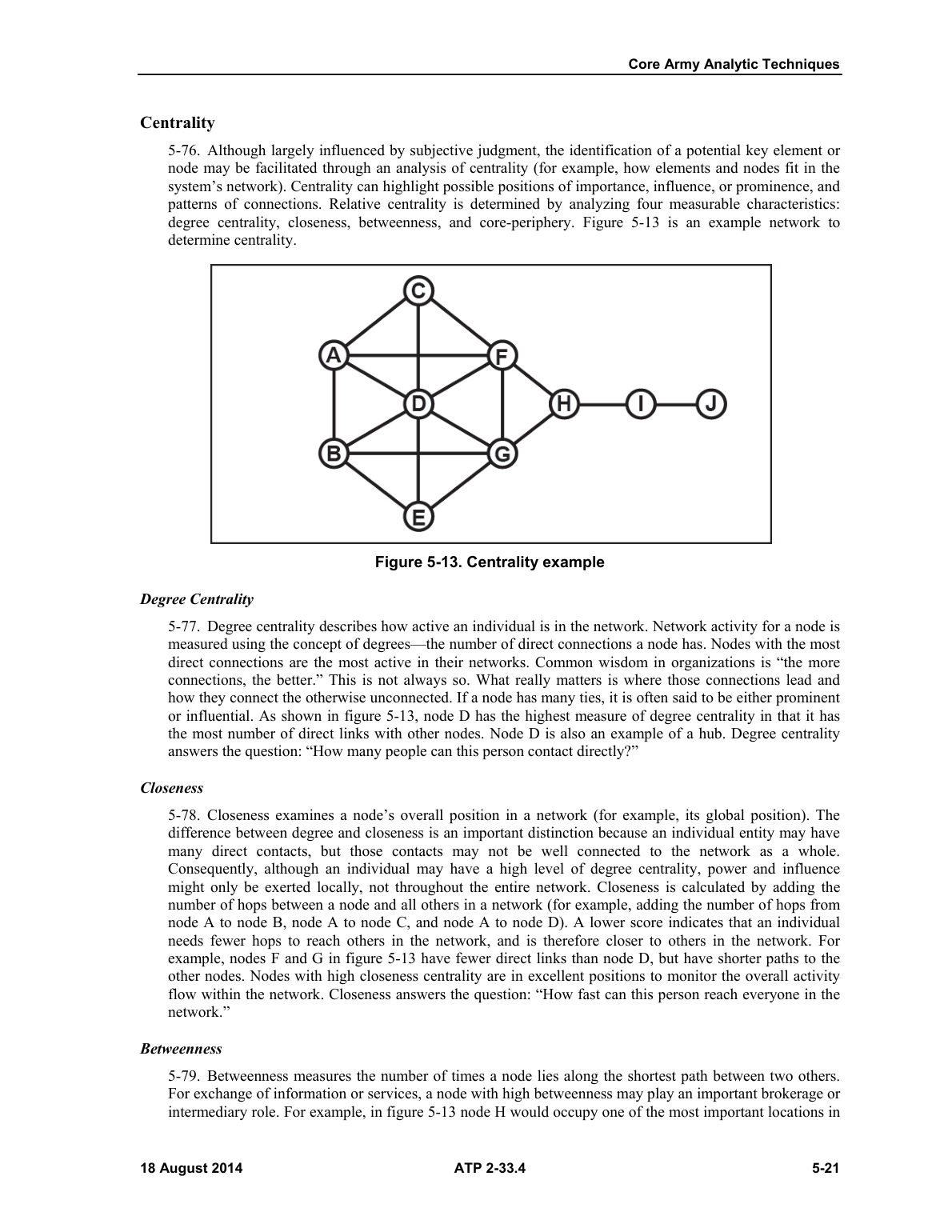
…As shown in figure 5-13, node D has the highest measure of degree centrality in that it has the most number of direct links with other nodes. Node D is also an example of a…
Joint Operations
Military manual · JP 3-0

JP 3-0, page 190

Joint Operations

Joint Publication: Joint Operations

…The source of power that provides moral or physical strength, freedom of action, or will to act. Also called COG. (JP 1-02. SOURCE: JP 3-0) chain of command. The succession of commanding officers from…
Intelligence Analysis
Military manual · ATP 2-33.4

ATP 2-33.4, page 69

Intelligence Analysis

Army Techniques Publication: Intelligence Analysis

…Network analysis is the analysis of how the nodes of a designated system function in relation to one another. Network analysis assists in identifying critical nodes of the system. Network analysis is comprised of identifying a…