Advanced search

j edgar hoover building

About 195 results · showing 21–40 · page 2 of 10 · Edit filters

Joint Targeting
Military manual · JP 3-60

JP 3-60, page 92

Joint Targeting

Joint Publication: Joint Targeting

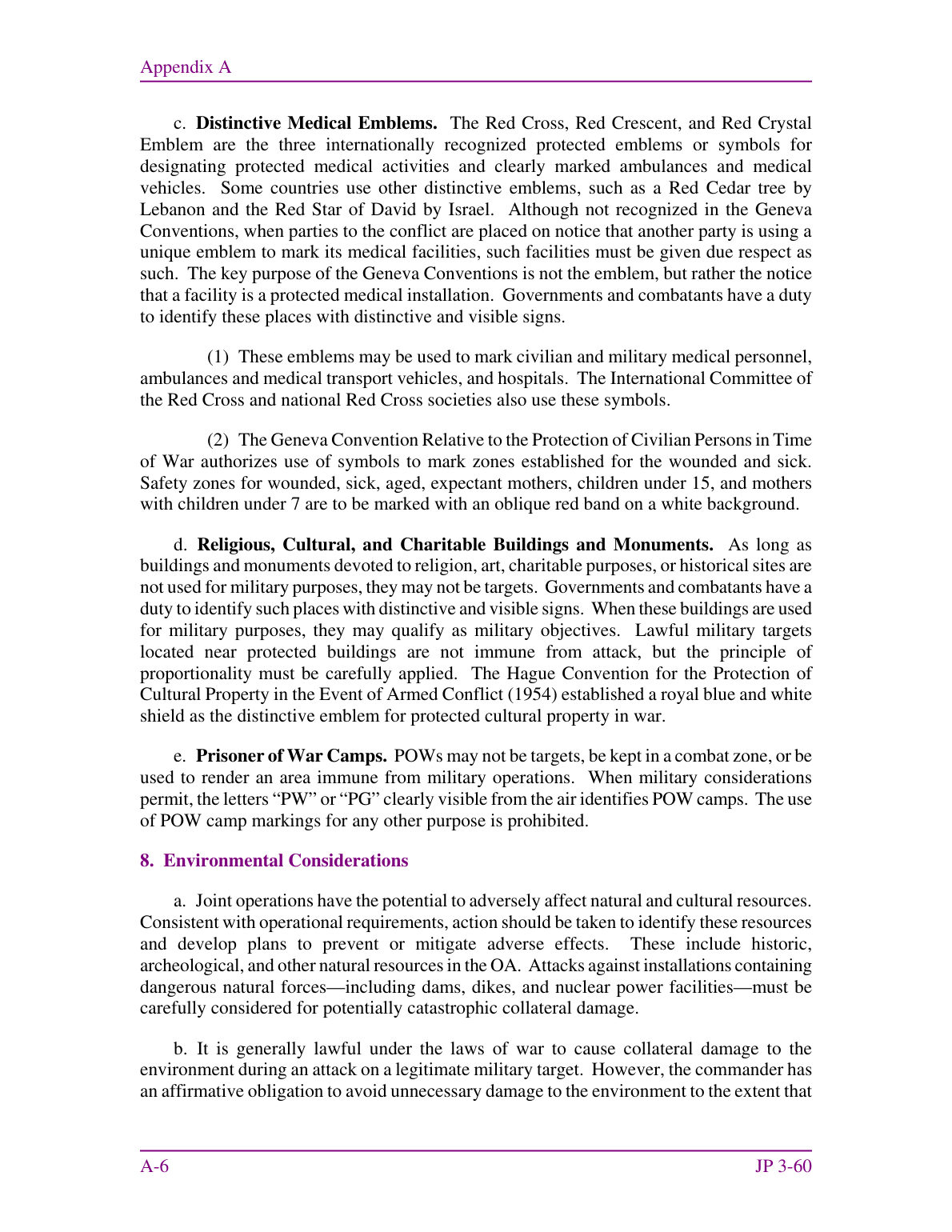
…Religious, Cultural, and Charitable Buildings and Monuments. As long as buildings and monuments devoted to religion, art, charitable purposes, or historical sites are not used for military purposes, they may not be targets. Governments and combatants…
Intelligence Analysis
Military manual · ATP 2-33.4

ATP 2-33.4, page 96

Intelligence Analysis

Army Techniques Publication: Intelligence Analysis

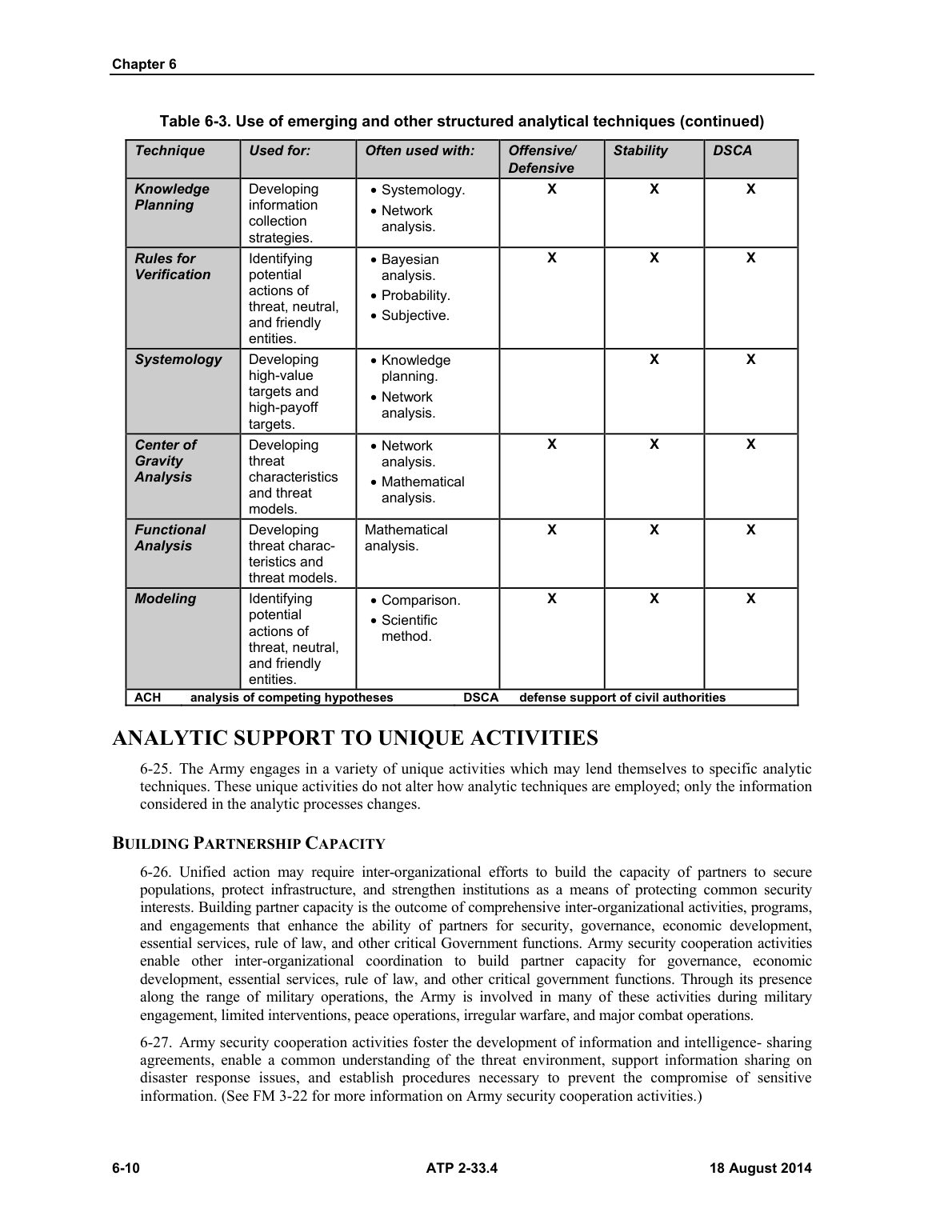
…Unified action may require inter-organizational efforts to build the capacity of partners to secure populations, protect infrastructure, and strengthen institutions as a means of protecting common security interests. Building partner capacity is the outcome of…
Intelligence Analysis
Military manual · ATP 2-33.4

ATP 2-33.4, page 87

Intelligence Analysis

Army Techniques Publication: Intelligence Analysis

…Additionally, analytical support to unique operations, including building partnership capacity, protection, and synchronizing information-related capabilities, are addressed. OVERVIEW 6-1. The overarching concept that directs the Army is unified land operations. ADP 3-0 establishes…
Targeting
Military manual · AFDD 2-1.9

AFDD 2-1.9, page 82

Targeting

Air Force Doctrine Document: Targeting

…Although some aspects of estimating CD occur during weaponeering, targeteers, in conjunction with intelligence analysts, can begin the process by applying general CD rules for identifying buildings, structures, areas, or other entities in proximity to an…
Offense and Defense
Military manual · ADP 3-90

ADP 3-90, page 52

Offense and Defense

Army Doctrine Publication: Offense and Defense

…Units can protect their flanks by denying enemy mobility corridors by building man-made obstacles, such as tank ditches, abatis, or road craters. 3-77. Countermobility during the offense requires rapid emplacement and flexibility. Obstacles deployed…
Offense and Defense
Military manual · ADP 3-90

ADP 3-90, page 35

Offense and Defense

Army Doctrine Publication: Offense and Defense

…Commanders generally choose one form on which to build a COA. A higher echelon commander rarely specifies the specific form of maneuver a subordinate executes. However, that higher echelon commander’s intent and guidance, along with…
Joint Targeting
Military manual · JP 3-60

JP 3-60, page 118

Joint Targeting

Joint Publication: Joint Targeting

…Metrics can either be inductive (directly observing the operational environment and building SA cumulatively) or deductive (extrapolated from what was previously known of the adversary and operational environment). Success is measured by indications that the effects…
Offense and Defense
Military manual · ADP 3-90

ADP 3-90, page 15

Offense and Defense

Army Doctrine Publication: Offense and Defense

…Commanders who understand this nuance can focus on knowledge that enables their abilities to anticipate opportunities and build flexibility into plans.
Offense and Defense
Military manual · ADP 3-90

ADP 3-90, page 57

Offense and Defense

Army Doctrine Publication: Offense and Defense

…They establish, train, rehearse, and exercise their units under CBRN conditions before deploying into a theater of operations and during temporary lulls to build Soldier confidence and competence in these environments. Leaders and Soldiers know the…
Offense and Defense
Military manual · ADP 3-90

ADP 3-90, page 49

Offense and Defense

Army Doctrine Publication: Offense and Defense

…Commanders build effective teams through professional development and training. During combat, they organize their forces to accomplish their missions based on their concept of operations. They assign responsibilities, establish or delegate appropriate command or support relationships…
Intelligence Analysis
Military manual · ATP 2-33.4

ATP 2-33.4, page 134

Intelligence Analysis

Army Techniques Publication: Intelligence Analysis

…Indicators of Suspicious Urban Activities Apartments, houses, or buildings being rented, but not lived in as homes. Slogans written on walls, bridges, and streets. Defacement of government and mission force information signs. Sabotage of electrical power…
Military Operations on Urbanized Terrain (MOUT)
Military manual · MCRP 12-10B.1

MCRP 12-10B.1, page 56

Military Operations on Urbanized Terrain (MOUT)

Marine Corps Reference Publication: Military Operations on Urbanized Terrain (MOUT)

…The tactical situation may require the immediate seizure of a building, industrial complex, or transportation site that is deemed decisive terrain. Examples of such objectives may include key bridges, intersections, railheads, or facilities that constitue the…
Military Operations on Urbanized Terrain (MOUT)
Military manual · MCRP 12-10B.1

MCRP 12-10B.1, page 258

Military Operations on Urbanized Terrain (MOUT)

Marine Corps Reference Publication: Military Operations on Urbanized Terrain (MOUT)

…In combat in built-up areas, however, finding a covered firing position that permits low-obliquity firing is unlikely unless the streets and gaps between buildings are wide. Most shots impact the target at an angle…
Defense Support of Civil Authorities
Military manual · JP 3-28

JP 3-28, page 88

Defense Support of Civil Authorities

Joint Publication: Defense Support of Civil Authorities

…This type of support is generally short in duration due to patient survivability time limitations and the ability to rapidly build appropriate force levels for these tasks. In situations where casualties are low and displaced persons…
Defense Support of Civil Authorities
Military manual · JP 3-28

JP 3-28, page 30

Defense Support of Civil Authorities

Joint Publication: Defense Support of Civil Authorities

…The national planning frameworks outline the strategy and doctrine for building, sustaining, and delivering core capabilities and set whole community roles and responsibilities. f. Federal Interagency Operational Plan (FIOP). The FIOPs, one for each mission area…
Military Operations on Urbanized Terrain (MOUT)
Military manual · MCRP 12-10B.1

MCRP 12-10B.1, page 261

Military Operations on Urbanized Terrain (MOUT)

Marine Corps Reference Publication: Military Operations on Urbanized Terrain (MOUT)

…The primary role of the tank cannon during combat in built-up areas is to provide heavy direct fire against buildings and strongpoints that are identified as targets by the infantry. The wall and fortification breaching…
Defense Support of Civil Authorities
Military manual · JP 3-28

JP 3-28, page 31

Defense Support of Civil Authorities

Joint Publication: Defense Support of Civil Authorities

Overview I-9 Preparedness System and is not a plan but a framework that sets the doctrine for how the nation builds, sustains, and delivers the response core capabilities and objectives the nation must accomplish across…
Military Operations on Urbanized Terrain (MOUT)
Military manual · MCRP 12-10B.1

MCRP 12-10B.1, page 20

Military Operations on Urbanized Terrain (MOUT)

Marine Corps Reference Publication: Military Operations on Urbanized Terrain (MOUT)

…The fighting was unusual in that combat was largely centered on seizure of street barricades rather than buildings. (Length of battle: 6 - 13 days) (Casualties: Marines, 2,383; others, estimated in the thousands) i. Jerusalem (1967…
Military Operations on Urbanized Terrain (MOUT)
Military manual · MCRP 12-10B.1

MCRP 12-10B.1, page 255

Military Operations on Urbanized Terrain (MOUT)

Marine Corps Reference Publication: Military Operations on Urbanized Terrain (MOUT)

…However, its effects are dramatic when thrown into a room or building. b. Effects. The M34 is used to ignite and destroy flammable objects, especially wooden structures. It is also used to create an immediate smoke…
Military Operations on Urbanized Terrain (MOUT)
Military manual · MCRP 12-10B.1

MCRP 12-10B.1, page 39

Military Operations on Urbanized Terrain (MOUT)

Marine Corps Reference Publication: Military Operations on Urbanized Terrain (MOUT)

…Composition and structure of buildings and roadbeds, cover and concealment opportunities, and other information not apparent in a map study may have a significant impact on the plan. (b) Phase II: Isolate the Objective. The objective…