Advanced search

department of state

About 400 results · showing 1–20 · page 1 of 20

Intelligence Analysis
Military manual · ATP 2-33.4

ATP 2-33.4, page 133

Intelligence Analysis

Army Techniques Publication: Intelligence Analysis

…Reports of thefts or sudden shortages of chemicals, which could be used in the clandestine manufacture of explosives. Reports of large open-market purchases of explosives-related chemicals without an identifiable industrial use. Appearance of manufactured…
Intelligence Analysis
Military manual · ATP 2-33.4

ATP 2-33.4, page 130

Intelligence Analysis

Army Techniques Publication: Intelligence Analysis

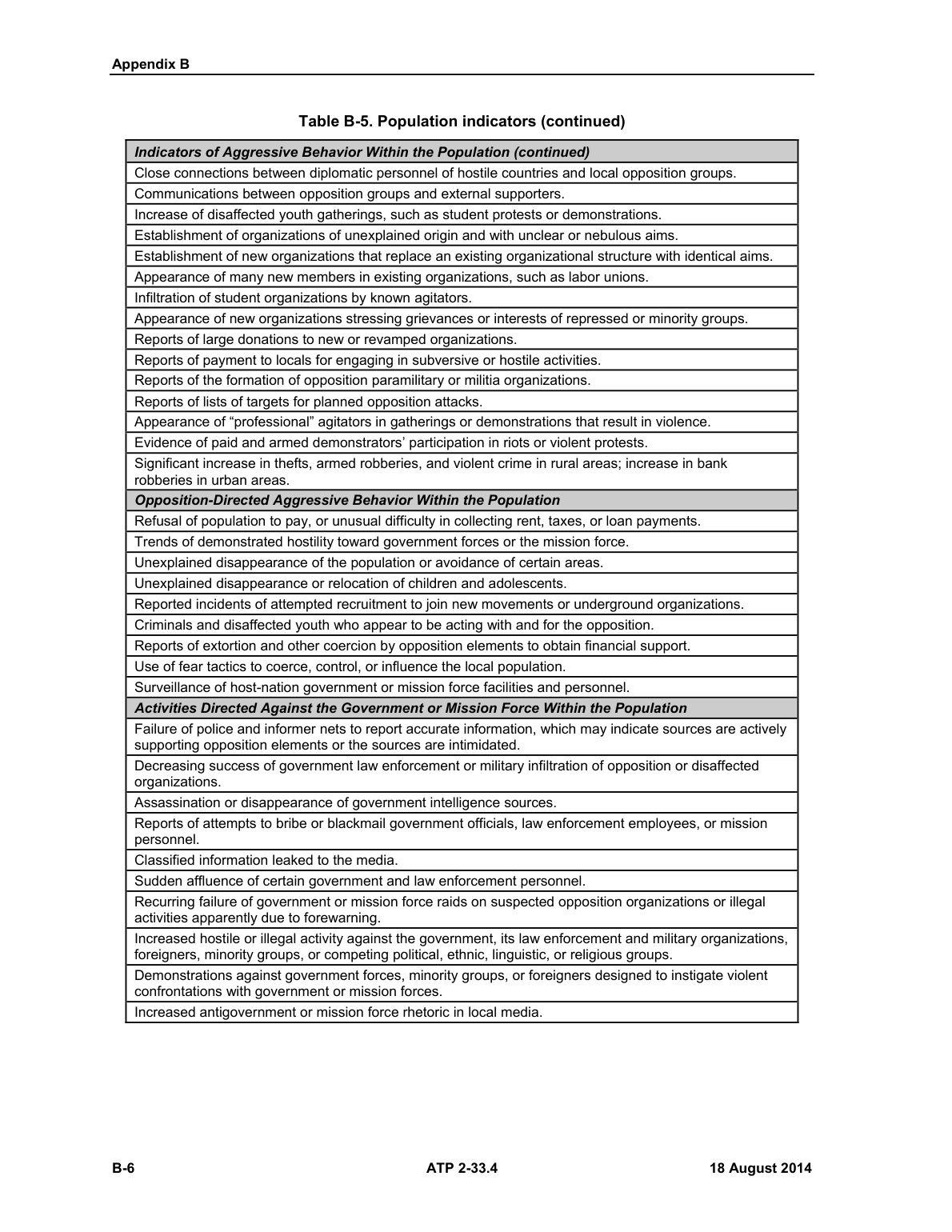
…Reports of large donations to new or revamped organizations. Reports of payment to locals for engaging in subversive or hostile activities. Reports of the formation of opposition paramilitary or militia organizations. Reports of lists of targets…
Intelligence Analysis
Military manual · ATP 2-33.4

ATP 2-33.4, page 41

Intelligence Analysis

Army Techniques Publication: Intelligence Analysis

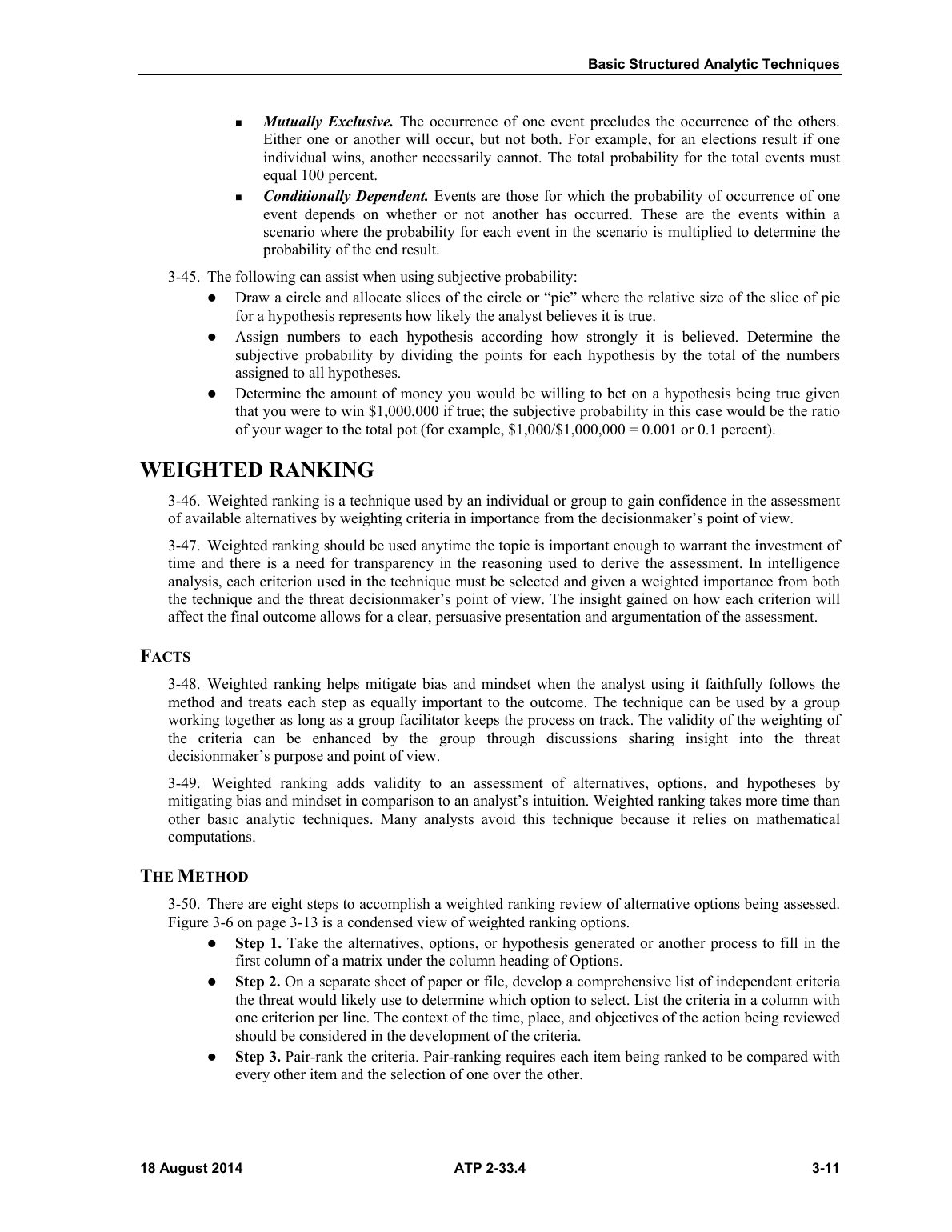
…The following can assist when using subjective probability: © Draw a circle and allocate slices of the circle or “pie” where the relative size of the slice of pie for a hypothesis represents how likely the analyst…
Intelligence Analysis
Military manual · ATP 2-33.4

ATP 2-33.4, page 42

Intelligence Analysis

Army Techniques Publication: Intelligence Analysis

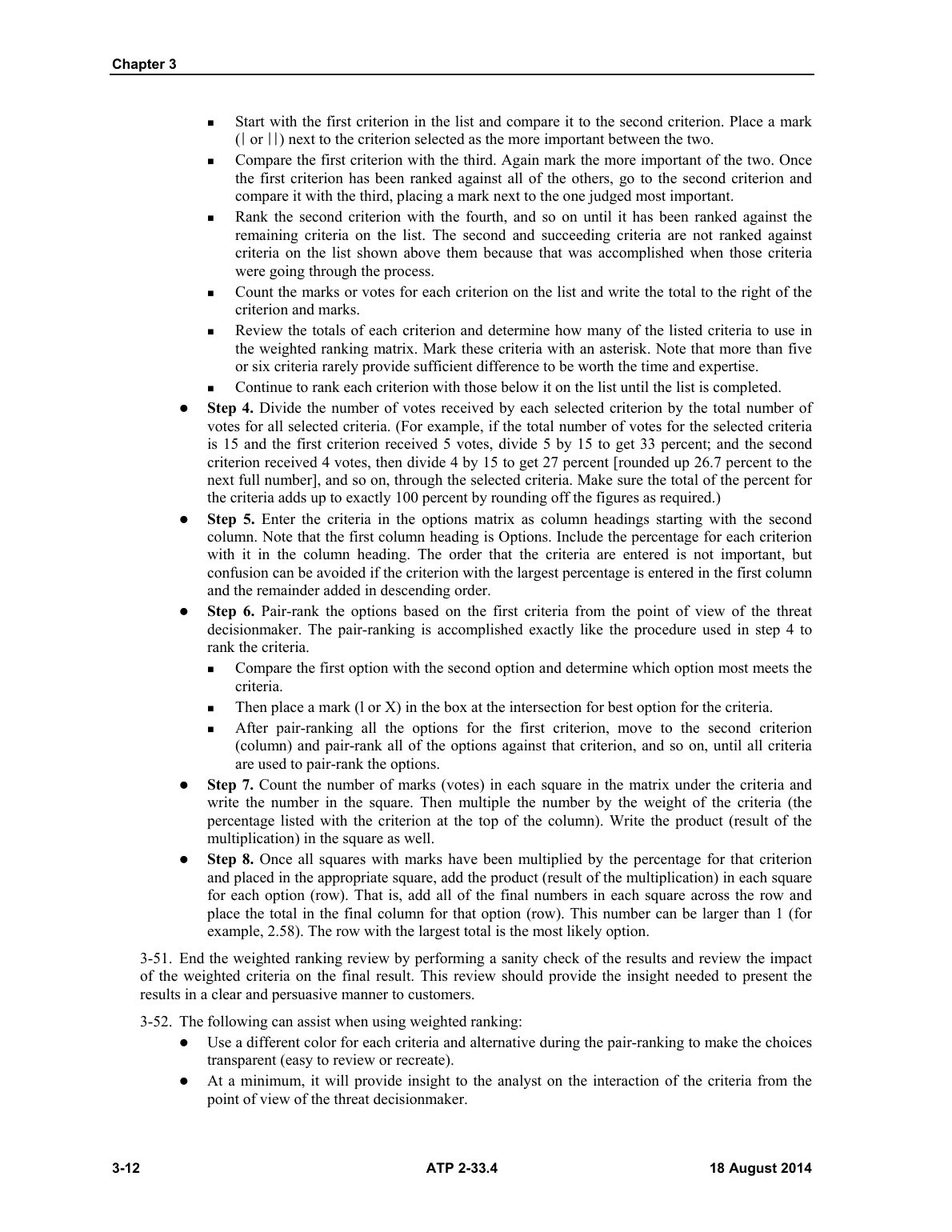
…Divide the number of votes received by each selected criterion by the total number of votes for all selected criteria. (For example, if the total number of votes for the selected criteria is 15 and the…
Joint Operations
Military manual · JP 3-0

JP 3-0, page 174

Joint Operations

Joint Publication: Joint Operations

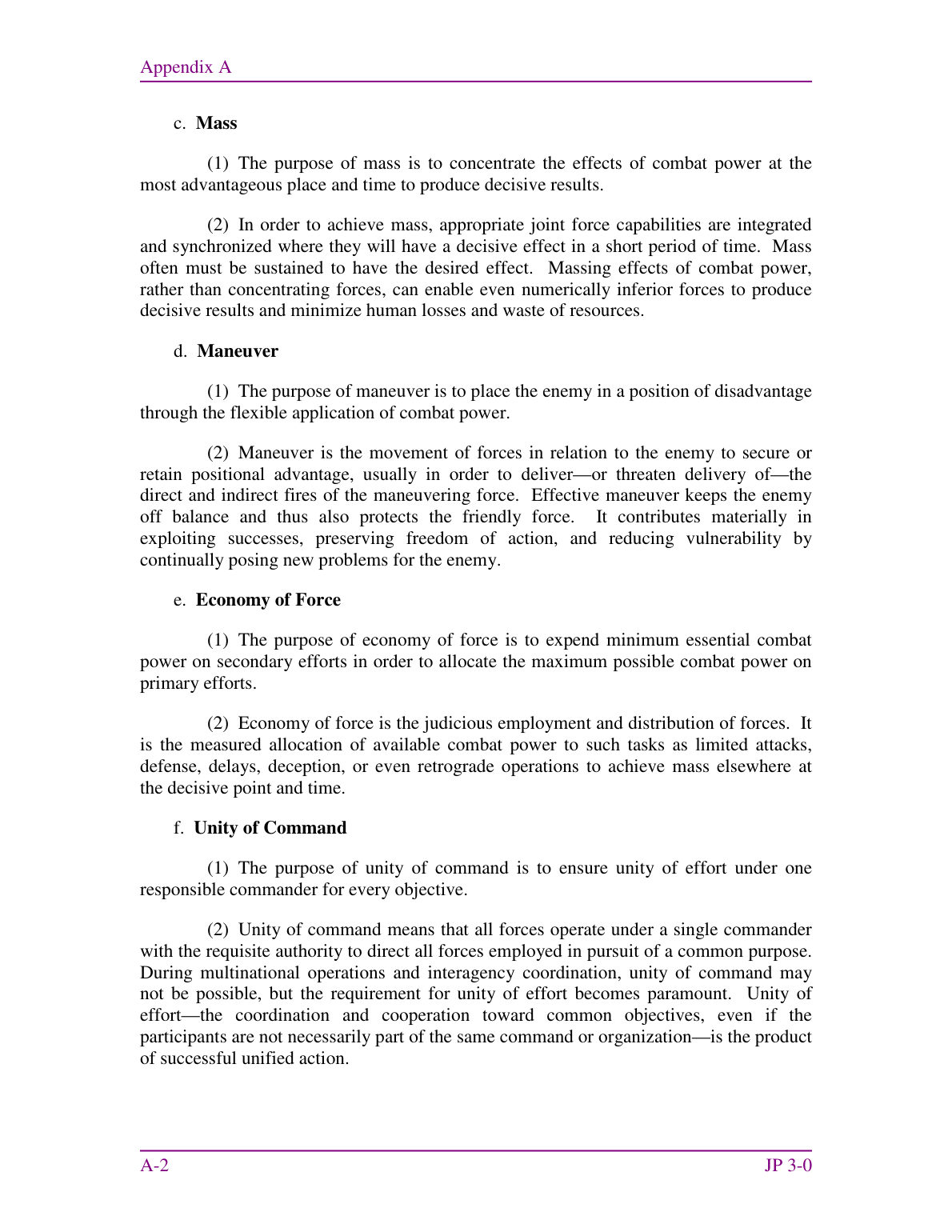
…Unity of Command (1) The purpose of unity of command is to ensure unity of effort under one responsible commander for every objective. (2) Unity of command means that all forces operate under a single commander…
Joint Operations
Military manual · JP 3-0

JP 3-0, page 138

Joint Operations

Joint Publication: Joint Operations

…Campaign planning has its greatest application in the conduct of large-scale combat operations, but can be used across the range of military operations. While intended primarily to guide the use of military power, campaign plans…
Joint Operations
Military manual · JP 3-0

JP 3-0, page 94

Joint Operations

Joint Publication: Joint Operations

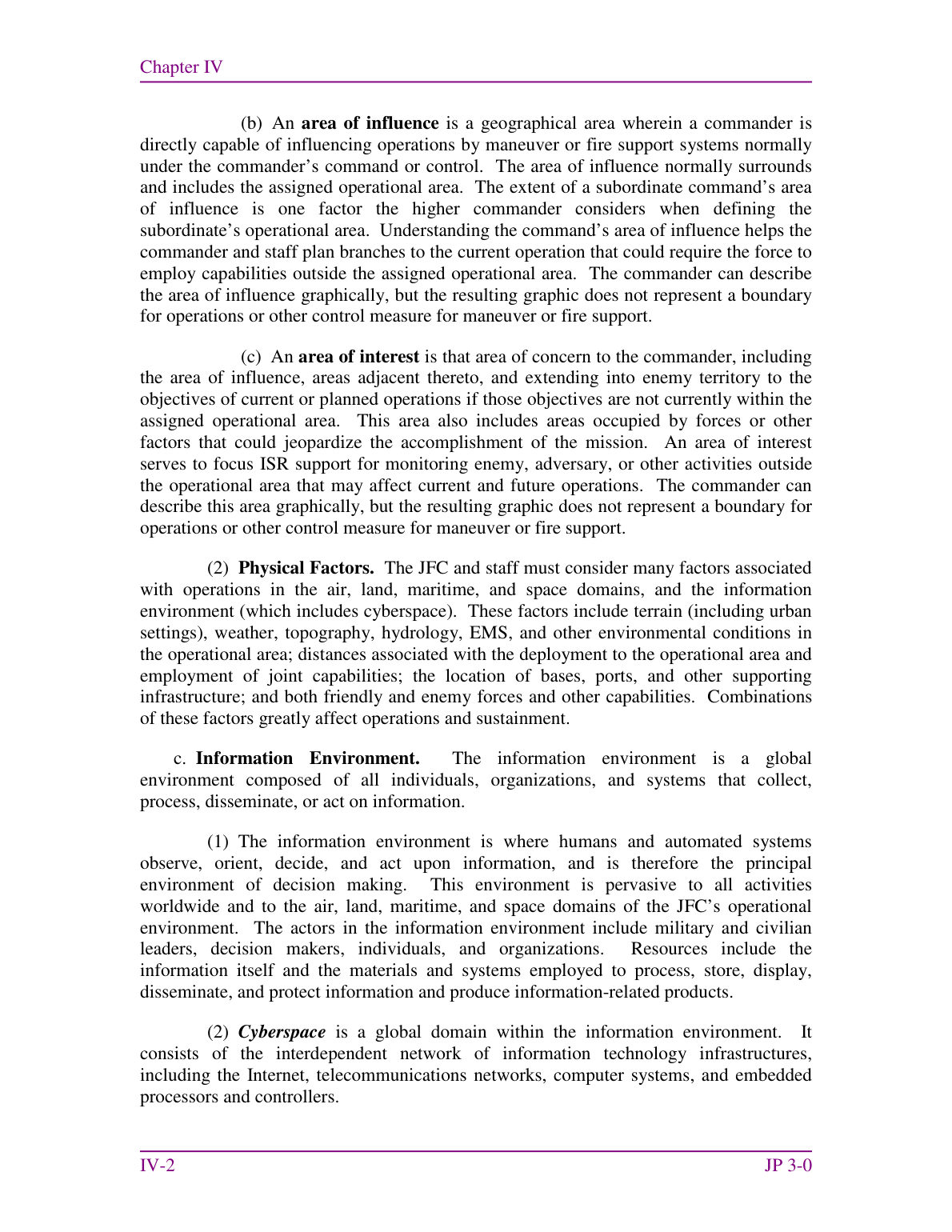
Chapter IV IV-2 JP 3-0 (b) An area of influence is a geographical area wherein a commander is directly capable of influencing operations by maneuver or fire support systems normally under the commander’s…
Joint Operations
Military manual · JP 3-0

JP 3-0, page 79

Joint Operations

Joint Publication: Joint Operations

…Under the law of war, the balancing of military necessity in relation to collateral damage is known as the principle of proportionality. Limiting collateral damage will not only reduce the requirement to address civilian claims but…
Joint Operations
Military manual · JP 3-0

JP 3-0, page 133

Joint Operations

Joint Publication: Joint Operations

Joint Operations Across the Range of Military Operations V-27 e. Strikes and Raids (1) Strikes are attacks conducted to damage or destroy an objective or a capability. Strikes may be used to punish offending nations…
Joint Operations
Military manual · JP 3-0

JP 3-0, page 90

Joint Operations

Joint Publication: Joint Operations

Chapter III III-38 JP 3-0 (b) The early introduction of preventive medicine personnel or units into theater helps protect US forces from diseases and injuries. It also permits a thorough assessment of the health…
Joint Targeting
Military manual · JP 3-60

JP 3-60, page 87

Joint Targeting

Joint Publication: Joint Targeting

…International Law and the Law of War Law of war is that part of international law that regulates the conduct of armed hostilities. It encompasses all international law for the conduct of hostilities binding on the…
Joint Targeting
Military manual · JP 3-60

JP 3-60, page 45

Joint Targeting

Joint Publication: Joint Targeting

The Joint Targeting Cycle II-15 (3) All estimates generated during this phase are situation-specific, reflecting the pairing of forces against targets under particular conditions of employment. As such, users of this information must use…
Joint Targeting
Military manual · JP 3-60

JP 3-60, page 117

Joint Targeting

Joint Publication: Joint Targeting

The Targeting Assessment Process D-9 target elements means an assessment cell can provide an estimate of success refined with the latest available information. As more definitive data becomes available, the assessment becomes less of an…
Joint Targeting
Military manual · JP 3-60

JP 3-60, page 93

Joint Targeting

Joint Publication: Joint Targeting

…To that end and as far as military requirements dictate, methods and means of attack should be employed with due regard to the protection and preservation of the natural environment. Destruction of the environment not required…
Joint Targeting
Military manual · JP 3-60

JP 3-60, page 48

Joint Targeting

Joint Publication: Joint Targeting

Chapter II II-18 JP 3-60 operational picture (COP) are critical elements during phase 6 of the joint targeting cycle where outcomes are analyzed and future actions are determined. (3) Targeteers work closely with planners…
Joint Targeting
Military manual · JP 3-60

JP 3-60, page 50

Joint Targeting

Joint Publication: Joint Targeting

Chapter II II-20 JP 3-60 Normally, a summary of the plan resulting from the force assignment process, once approved by the component commander, is briefed to the JFC. Generally, operations and intelligence staffs work…
Targeting
Military manual · AFDD 2-1.9

AFDD 2-1.9, page 53

Targeting

Air Force Doctrine Document: Targeting

…this does not imply any level of command authority over air assets.) It may be included as a section of or appendix to the SPINS (and thus of the ATO). Execution Planning and Force Execution Purpose…
Targeting
Military manual · AFDD 2-1.9

AFDD 2-1.9, page 50

Targeting

Air Force Doctrine Document: Targeting

40 It is critically important to stress that all estimates generated during this phase are situation-specific, reflecting the pairing of a particular force against a particular target, under a particular condition of employment. As such…
Targeting
Military manual · AFDD 2-1.9

AFDD 2-1.9, page 10

Targeting

Air Force Doctrine Document: Targeting

viii › Regardless of the level of assessment, the process of analyzing the adversary, choosing appropriate measures, evaluating progress, and recommending action consists of the same four basic steps: Define, monitor, analyze, and recommend. (Page 66) › Targeting…
Targeting
Military manual · AFDD 2-1.9

AFDD 2-1.9, page 51

Targeting

Air Force Doctrine Document: Targeting

41 CPD MAAP team, which takes the final prioritized list of weaponeered targets and allocates airpower by melding available capabilities and resources with the TET’s weaponeering recommendations. The result is a translation of the total…